Politics & Society
Our kids are missing out on critical thinking


Australia's NAPLAN results show most children meet basic reading standards, but critical literacy skills like analysing and verifying information point to worrying declines

Published 5 August 2026
Australia’s national NAPLAN results are out and at first glance there are few surprises. These standardised tests monitor students’ skills in reading, writing, spelling, punctuation and grammar, and maths annually for Years 3, 5, 7 and 9.
The good news is that the majority of Australian students have again reached proficiency standards in reading and writing literacy – marking almost 20 years of consistent achievement.
These results suggest two thirds of Australian students meet the reading standard, listed as 'strong' or 'exceeding proficiency level'.
But critics call that benchmark grossly inadequate and the levels fall well short of the 15 per cent increase called for by public-policy thinktank, The Grattan Institute.
It’s not hard to see why. The results again tell us that one in three primary and secondary students are unable to read proficiently.
We're still waiting for the National Assessment Program (NAP) results to be released, which are accompanying tests that also measure important lifelong skills in a sample of Australia’s Year 6 and Year 10 students.
The NAP tests rotate through science literacy, information and communication technology (ICT) literacy, and civics and citizenship on a three-yearly cycle.
Politics & Society
Our kids are missing out on critical thinking
These tests assess whether students can judge information critically, connect it to what they already know and apply it appropriately in context.
An important partner to surface-level literacy (reading, writing and spelling), deeper literacy signals whether a child can make logical decisions with information once they understand it.
In practice, surface-level literacy is following what a reality-TV cast say and do. Deeper literacy is realising that popular dating series Married at First Sight is less documentary than it is entertainment TV.
Over recent years, NAP results on two of these three subjects have sunk to their lowest levels since the testing began, in 2003.
This year assessed science literacy. The trends suggest students will continue to hover at just over 50 per cent reaching the standard level of ‘proficiency’. But these results mask concerning trends in other areas.
In 2025, Year 10 students’ literacy in ICT had fallen to a historic low of 39 per cent, declining by 29 per cent from the recorded high in 2008.
This means that as AI overviews reshape how we search the web, only one in three students in Year 10 can frame a basic search query and select a reliable source.
Fewer than nine per cent (although the exact number is not reported) can judge whether information from that online source is credible.
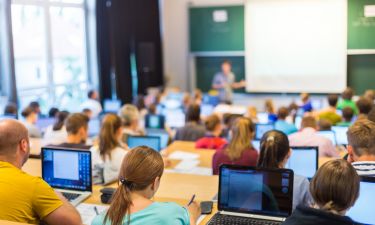
In 2024, just 28 per cent of Year 10 students reached the proficiency standard in civics and citizenship, which tests their grasp of Australia's democratic and legal systems. That's down from a high of 49 per cent in 2010.
So, at the very time only 15 per cent of Australians aged 18 to 24 trust our political parties, just a quarter can explain cause and effect between the processes of civic institutions and the outcomes they deliver.
My own research on reading and comprehension emphasises the importance of context in ‘reading’ situations and making sense of information.
Now that almost half of Australians get their news from influencers and content creators, and even mainstream outlets are trialling AI tools to help write stories, contextual literacy matters more.
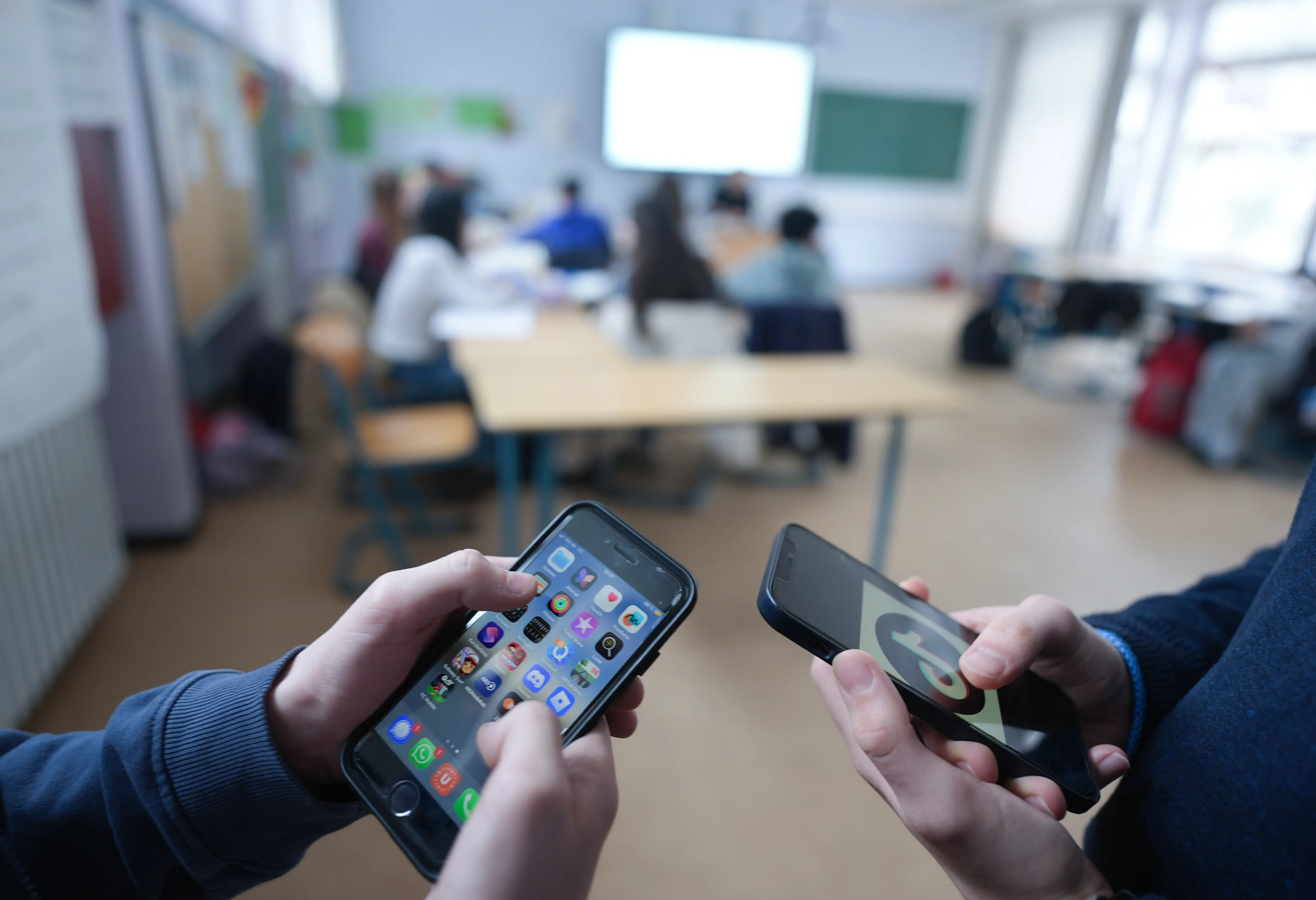
So, just as AI summaries make it harder to understand where information actually comes from, the skills to question and test what we read matter more than ever.
The blurring of truth is not new in politics. But the influence of social media, algorithms and AI on what we see and hear has raised the difficulty of filtering the many voices online and gauging information versus opinion.
This line between fact and fiction has been tested across the democratic world this past decade, with some of Australia's closest allies going through extraordinary political upheaval.
Much of that upheaval was driven by voters who felt shut out by politics. Populist campaigns tapped into that frustration, promising dramatic change.
Brexit is just one example. The 2016 vote split the United Kingdom, and the decade since has brought political turmoil, seven prime ministers and a country still deeply divided.
Health & Medicine
As AI gets smarter, are we getting dumber?
In the US, Donald Trump has been elected president twice in nine years. Far from healing existing divides, Americans now see their country as more split than at any point since the Civil War.
In fact, a recent survey by American broadcaster PBS found more than a third of Americans believe violence may be necessary to get the country back on track.
This question of whether young Australians can make sense of what's in front of them comes exactly at the moment the world is becoming harder to read.
The central tenet of democracy is the right to vote for change and for leaders who reflect your values.
Yet in each of these international examples, campaigns were accused of swaying the results through misinformation and unrealistic promises, exacerbated by online tools.
Australia too is seeing falling confidence in the political system. Only 43 per cent of voters aged 18 to 24 see democracy as preferable to other forms of government.
Promises of change are seeing right-wing populist party One Nation, led by Pauline Hanson, reportedly gain ground, notably in Victoria, a historically progressive state.
If Australia takes one lesson from the UK and the US, it's that voters can't rely on the truthfulness of politicians.
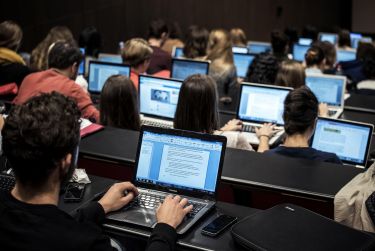
Which is why our education system must teach and fund deeper literacy skills, the basis of a healthy democracy, at every age.
Most importantly, these skills must be seen as essential outcomes of every curriculum, as valued as reading and writing.
Every student has the right to finish school equipped with the literacies they need to navigate decisions that will define their future, and the future of all Australians.