
Health & Medicine
The promise and peril of AI chatbots in healthcare


While synthetic data generated by AI is exciting, some types of research cannot (and probably should not) be synthetic, particularly for the most vulnerable in our society


Published 18 November 2025
Have you ever wondered why a cafe opens in the next suburb, but not yours? Or found your favourite product available in one city but not another, even though it’s the same supermarket?
It can be hard to understand how and why corporations make decisions about the products they develop, where they open stores or how they communicate with the public.

Most commonly, important input into these decisions is usually research data collected from surveys, public records, interviews or the first-hand experience of people the corporation is interested in.
Lately, however, there has been a lot of talk about the potential of ‘synthetic data'. In this case, the term ‘synthetic’ refers to data generated by AI models to mimic ‘real-world’ information.
Imagine, for example, that you own a supermarket chain and want to open a new store.
Using your customer data from your company’s other supermarkets and drawing on publicly available information about the location you want to open in you could, with artificial intelligence (AI), create a synthetic data set.
Using this information, you could then make decisions about which types of products to stock and what type of revenue you might make.
Health & Medicine
The promise and peril of AI chatbots in healthcare
So ‘synthetic data’ is not based on information about actual people in that area, but rather a likelihood of what people think and do, based on several different factors like statistics on household structure, income and the shopping behaviours of similar people.
Recently, synthetic data has been utilised to replicate personality types and create ‘digital twins’ that can simulate how individuals will respond to various situations.
If synthetic data becomes sufficiently powerful and abundant, as some marketing commentators have proposed, corporations would have less need to conduct research with actual people and customers.
This would, some believe, lead to more agile and faster decision-making while reducing the risk of issues related to privacy and confidentiality.
While the promise of synthetic data may be exciting, there are some types of research that cannot (and probably should not) be synthetic.
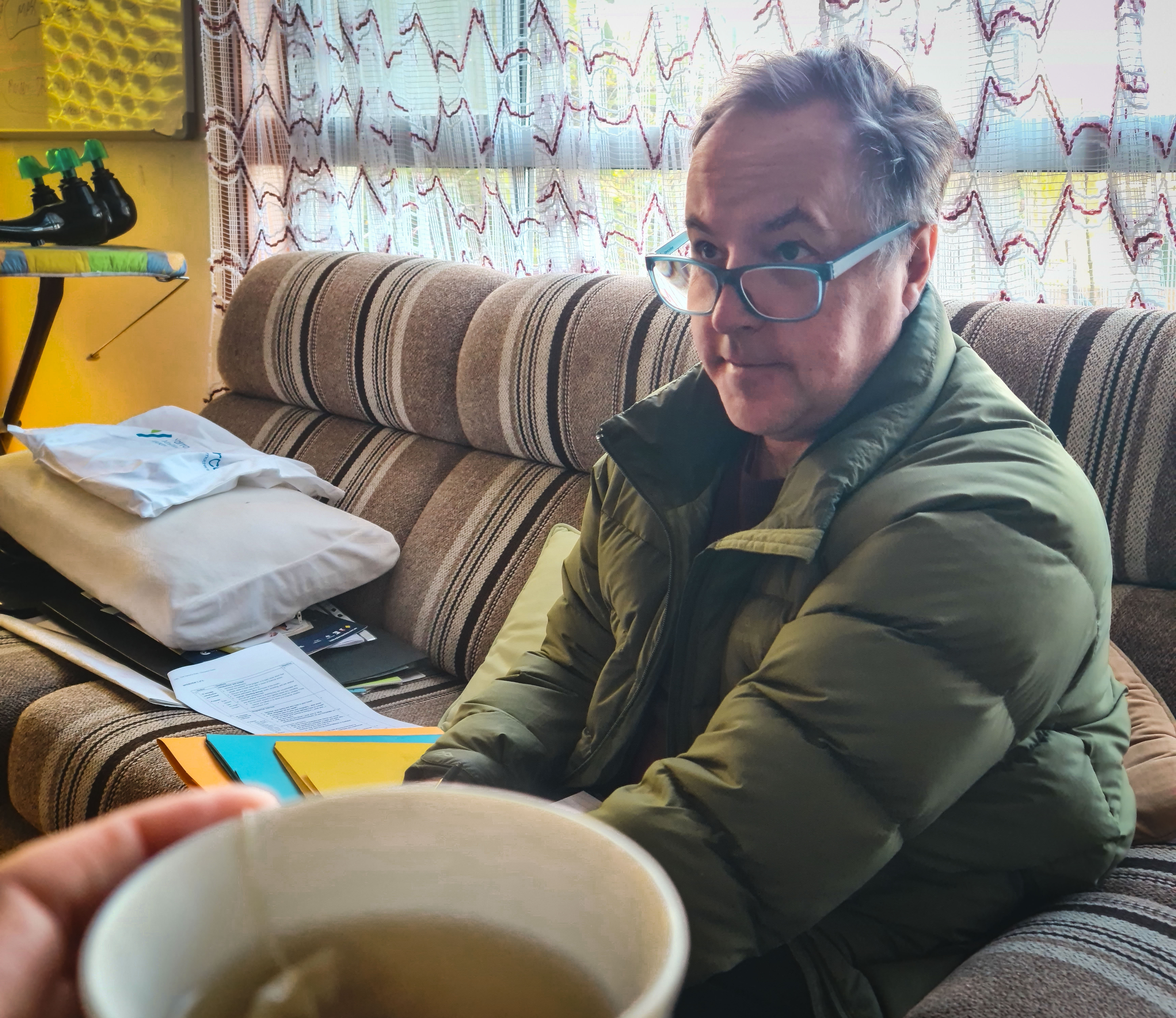
Take, for example, the recent collaboration between Yarra Valley Water (a water corporation servicing Melbourne’s eastern and northern suburbs) and the University of Melbourne’s Critical Ethnography Lab (CiEL).
In 2024, amid the cost-of-living crisis, Yarra Valley Water (YVW) sought to understand why the uptake of its financial hardship program, WaterCare, was lower than expected.
WaterCare is designed to assist customers experiencing financial difficulty in paying their water bills by offering advice, flexible payment options and information about relevant concessions.
Recognising that some customers were unable to pay their water bills but not seeking support, YVW partnered with our team in CiEL to understand how WaterCare could help more people.
Working with the YVW data and insights teams, our researchers identified Melbourne’s northern suburbs as a key area where customers were experiencing financial hardship.

Politics & Society
The law relies on being precise. AI is disrupting that
From there, we began reaching out to community hubs in these suburbs to recruit people who described themselves as in financial hardship.
We then invited them to participate in ethnographic research, a form of qualitative (non-numeric) research that seeks to understand the ‘why’ and how’ of human experiences in the context in which they happen.
Ethnographic research typically involves participant-observation, where the researcher observes and interacts with the people (or things) they study.
Ethnographers (the people who do ethnographic research) are trained to look holistically at various phenomena and consider people’s perspectives as well as their relationships, history and environment.
Unlike synthetic data, which relies on AI-generated models and probabilities, ethnographic research provides direct, first-hand observations and interactions with real people in their natural environments.
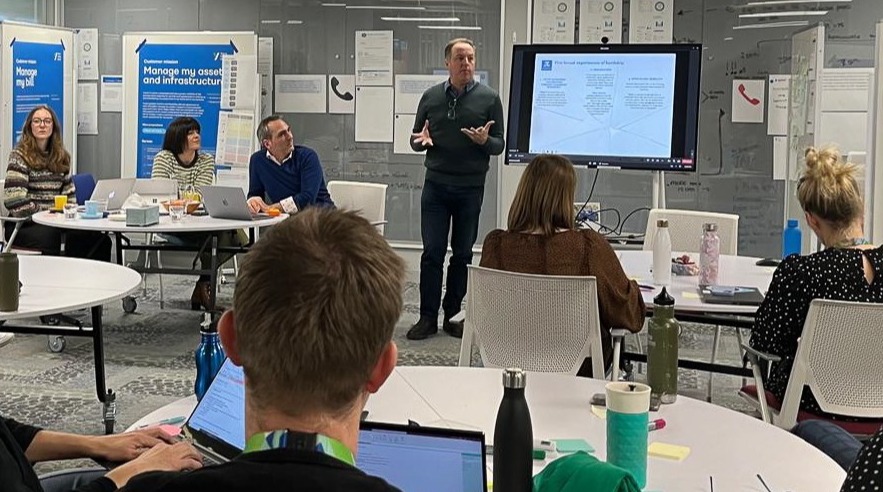
This approach captures nuances, cultural contexts and human experiences that may be overlooked or misrepresented in simplistic interviews or surveys, as well as in synthetic data sets.
To answer Yarra Valley Water’s questions about the low uptake of WaterCare, CiEL researchers visited customers’ homes and community spaces, observed their strategies for managing bills and water, as well as learning about their relationships, rituals and routines.
Our team was then able to identify ways that the WaterCare program could better reach people where they were making decisions about bills and water usage.
For example, we found several ‘thrift-brokers’, people who are active on local WhatsApp groups, community groups and special interest settings, can help to spread the word about financial tips and tricks.

Health & Medicine
As AI gets smarter, are we getting dumber?
We also gained an understanding of how shame plays a role for people dealing with financial hardship.
We learnt that some types of language and imagery did not resonate with the program’s target audience and could instead make people less likely to access a hardship program.
For example, some people assumed that the hardship programs were “not for them” when images of YVW customers looked too polished or if they were set in studios rather than in familiar environments, like people’s homes.
Similarly, some images of YVW staff that were intended to come across as friendly and open seemed incongruent for conversations regarding financial hardship – which are typically more serious.
Through this research, CiEL and YVW collaborated to identify ways in which the WaterCare program and its communications could be better tailored for their audiences.

From this collaboration, it is apparent that there are some things synthetic research (and most quantitative or number-based forms of research) cannot do.
We could see how people organise bills in their homes and contextualise how they discuss finances, a topic often associated with complex and emotions like shame.
Importantly, ethnographic research provides an understanding of the realities of daily life that can prevent people from engaging with programs like WaterCare (or indeed, surveys).
This could include caring responsibilities, illness and the mental load of managing a household on a limited income in an increasingly expensive economy.
These types of findings are difficult to capture in synthetic datasets, which are often based on survey or purchased data.
Finally, this form of qualitative research allows connections between real people.
Several people expressed appreciation for YVW's investment in understanding the impact of bills on their daily lives.

As one of the people working with us commented: “I was telling my friends about this and saying how good it is that Yarra Valley Water cares enough to do this: they actually want to hear our stories.
"It would be good if the energy companies did it”.
YVW was also able to connect with the real stories, which impacted their marketing and community outreach teams, helping to inform their strategy for WaterCare communications.
Having heard from customers, YVW shifted their marketing, focusing on in-home settings that reflected a more natural family environment to help customers better connect with the message.
As Yarra Valley Water Divisional Marketing Manager, Nicole Bradley, explained, the project has “further grounded us in the lived realities of our customers and deepened our empathetic approach to engaging with and supporting customers experiencing financial difficulty.”

While synthetic data offers exciting possibilities, the YVW case study shows us the enduring value of ethnographic research.
This holistic approach provides insights that go beyond numbers and probabilities, delving into the nuanced and sometimes messy realities of people's lives.
Ultimately, while synthetic data may simulate a generalised reality, ethnographic research allows us to understand the details and connect with them.
As technology continues to change, the human touch provided by ethnographic research remains an indispensable tool for organisations seeking to make a meaningful impact on people's lives.