

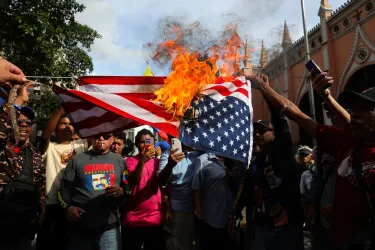
The clash between Latin American nationalism and Trump's America
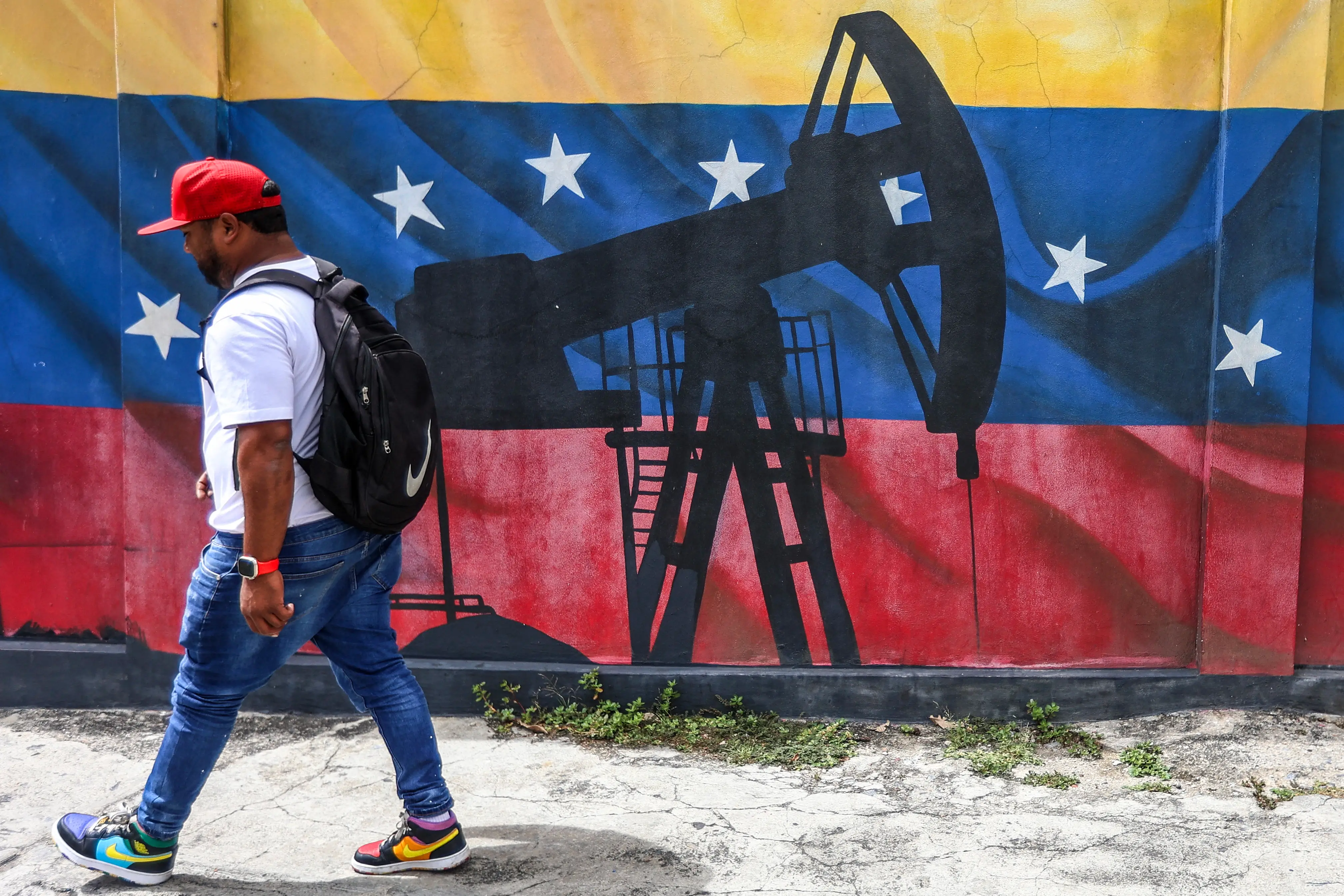
The US has long sought control over Latin American resources, but Trump’s latest attacks in Venezuela go a step further in his attempts to deny their economic sovereignty

Published 28 January 2026
Over the last month, Donald Trump has upped the ante in Venezuela with sea and land attacks and the capture of President Nicolás Maduro, who assumed leadership in 2013 after the death of Hugo Chávez.
But if we wind the clock back to Bolivia under president Evo Morales, we can see a not-so-different US foreign policy in the not-so-distant past – albeit with a starkly different outcome.
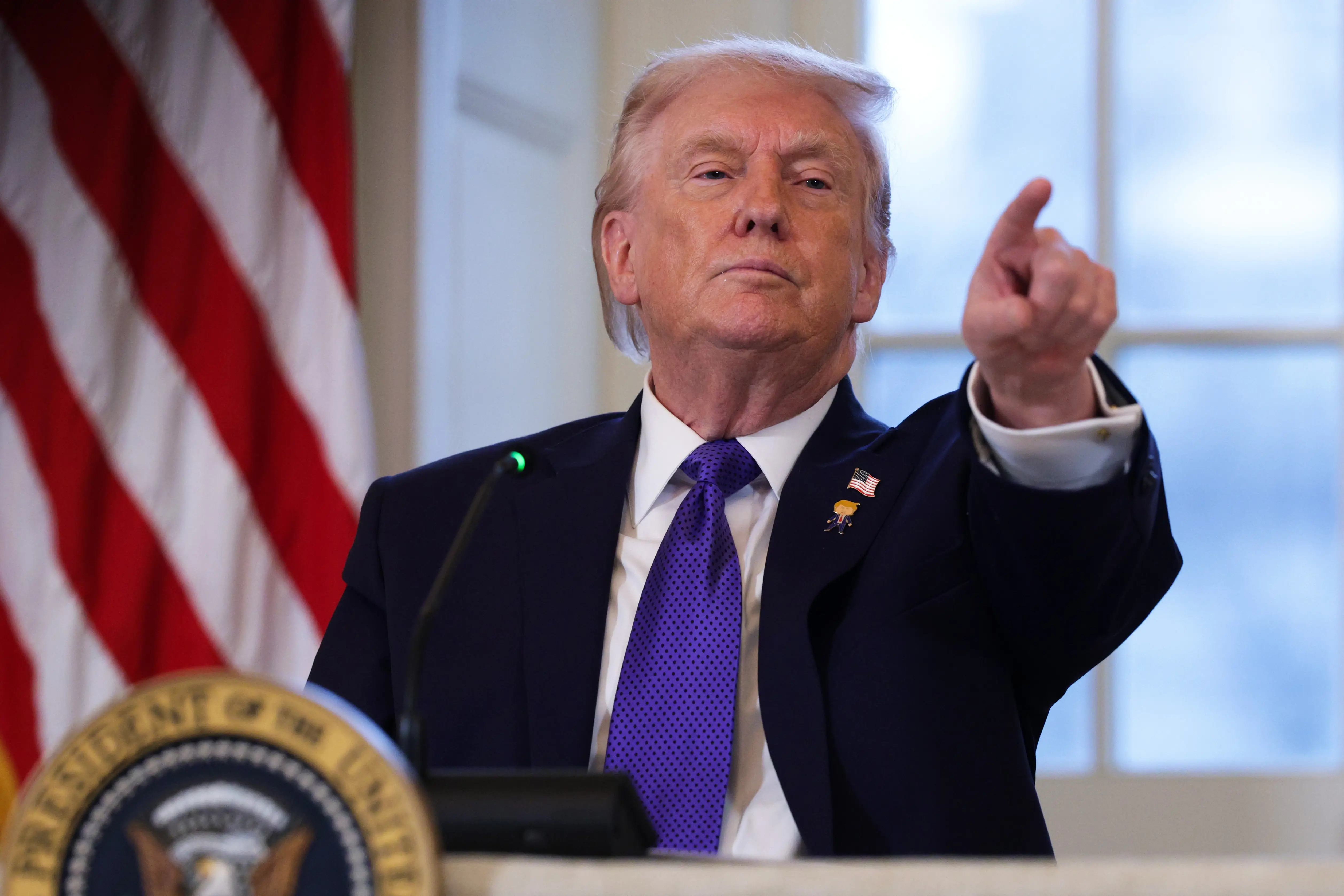
Chávez, Maduro and Morales each belong to political movements that promote greater economic sovereignty through resource nationalism and alternative development pathways to those offered by the US.
Here lies the issue.
Washington has long viewed the nationalisation of strategic energy resources in Latin America as a threat to its economic and security interests.
And these recent developments in Venezuela and Bolivia reflect an enduring clash between Latin American nationalism and US dominance.
Across his two terms, Trump has intensified efforts to undermine resource nationalism, reopen strategic energy sectors to US investment, limit competitor’s market access and maintain US influence in both countries.
So, what does this mean for Latin America moving forward?
Strategic support of opposition figures
Trump administrations have disputed election outcomes in Latin America on multiple occasions, signalling clear preferences for opposition candidates more amenable to US investment.
If we look back at 2024, when Maduro was returned to power in what was a highly contested election, Trump claimed Venezuelans were subject to a “fake promise of free and fair elections”.
Instead, the Trump administration at the time recognised opposition candidate Edmundo González, backed by opposition leader María Corina Machado who had been barred from running by the country's Supreme Court.
Machado has previously called for increased US investment in Venezuela’s energy sector and was involved in the failed 2002 far-right coup attempt against Hugo Chávez.

US involvement in that attempted coup has been heavily debated.
Similarly, the Trump administration publicly endorsed the controversial claims of the Organization of American States (OAS) – a Washington-based multilateral body – that Morales’ 2019 Bolivian election win was marred by irregularities.
The then-US Secretary of State, Mike Pompeo, called for a second-round vote in support of the main opposition candidate, Carlos Mesa, who was more favourable to US relations and investment in Bolivia’s energy industry.
Selective counter-narcotics rhetoric
The Trump administration has also relied on counter-narcotics rhetoric to justify pressure on Latin American governments pursuing resource nationalism.

Politics & Society
How China’s chip strategy outsmarts Trump’s tariff trap
Using what critics describe as “opaque metrics of progress”, Trump has disproportionately scrutinised Venezuela and Bolivia under Maduro and Morales – rather than allies in the region with often equally poor or worse performance.
Ahead of Bolivia’s 2019 elections, Trump designated both Bolivia and Venezuela as countries that had “failed demonstrably” to meet their obligations under international counter-narcotics agreements.
But the UN 2020 drug report suggests drug production had declined in Bolivia from 2017 to 2018, while Venezuela was not mentioned at all as a centre of production.
The same report shows that Colombia under President Iván Duque performed worse than both countries on key counter-narcotics indicators.
And yet Duque, who was highly responsive to US investment in the energy sector, received praise for his efforts in rolling back cocaine production.
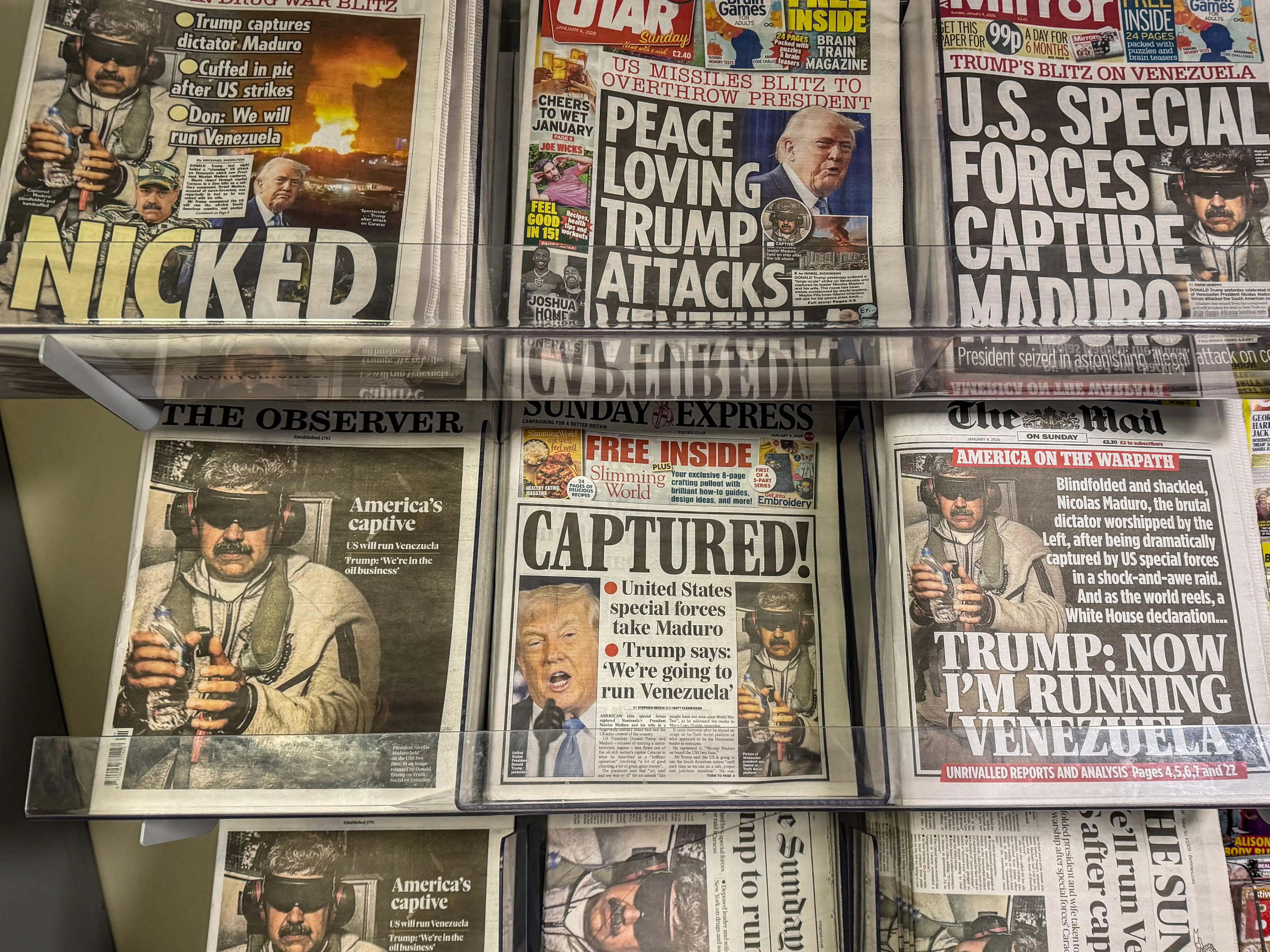
More recently, Trump justified attacks on Venezuela and the capture of Maduro by claiming US forces were targeting narco-terrorists transporting “big bags of cocaine and fentanyl", portraying Maduro as a drug kingpin.
Again, the UN 2025 drug report and last year's US Drug Enforcement Administration (DEA) National Drug Threat Assessment refuted claims that Venezuela was a producer or key trafficking route for either drug.
The threat of economic sovereignty
US perceptions of Chávez and Morales as strategic threats began after Chávez prioritised state control of Venezuela’s oil industry in 2001.
Five years later in Bolivia, Morales nationalised the hydrocarbon industry. The US framed both countries' actions as emblematic of a “growing rejection of free markets” and a "decline of US influence".
Politics & Society
US uncertainty has left key countries rethinking their Trump ties
Trump’s foreign policy presents a continuation of these kinds of threat assessments.
The US's controversial claims surrounding Bolivian and Venezuelan elections, its support of opposition figures in favour of US investment and its unsubstantiated attacks on each country’s counter-narcotics cooperation reveal its efforts to manage these threats.
Across both cases, these narratives have been mobilised to remove leaders advancing economic sovereignty, reopen energy markets to US capital, limit competitor’s market access and preserve US dominance in a region it views as its own backyard.
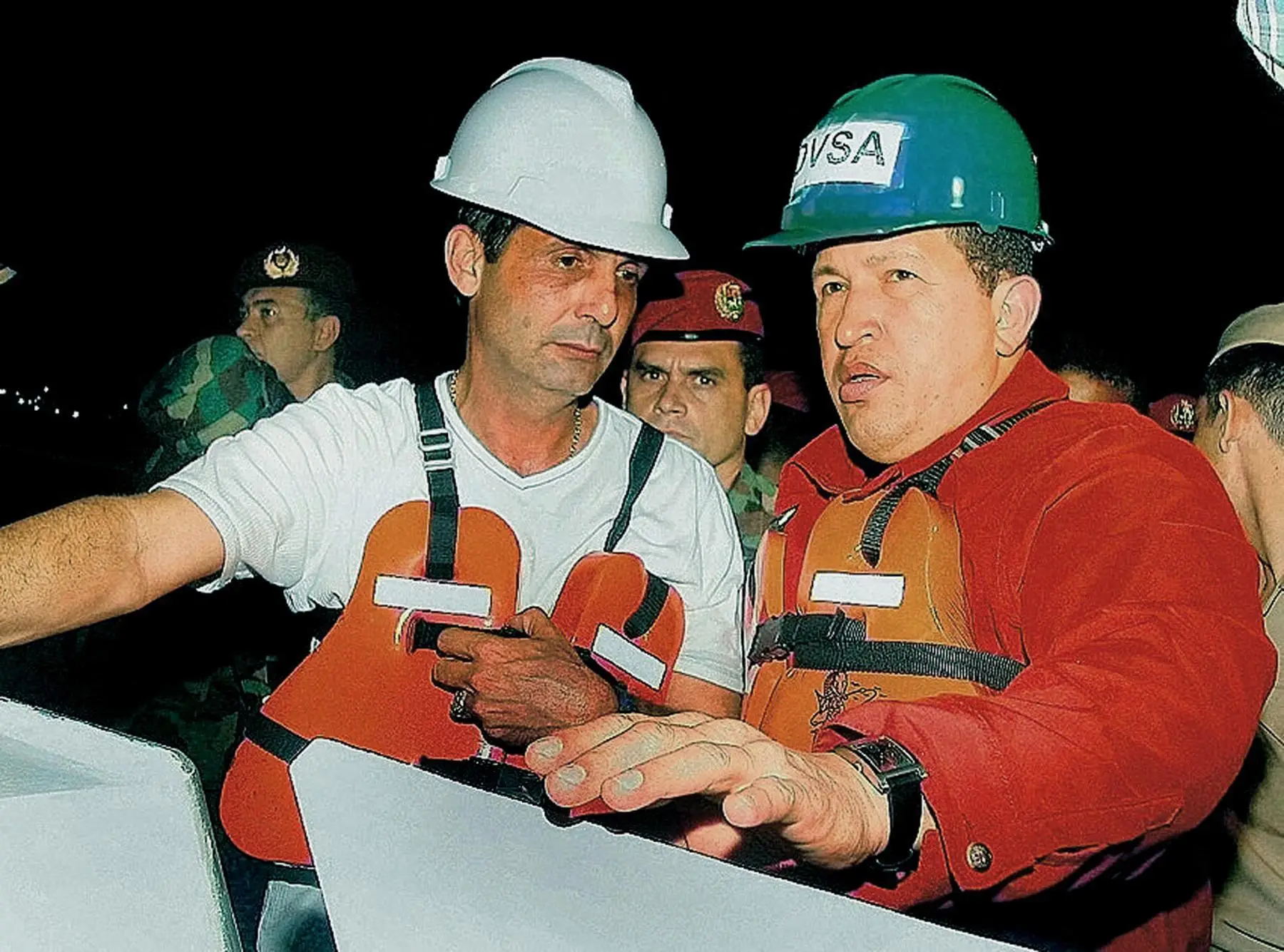
In Venezuela, this agenda has focused on restoring US access to Venezuelan oil markets – and Trump has since struck a deal with interim leader, Delcy Rodríguez, allowing greater US control over Venezuela’s oil.
Likewise, throughout his first presidency, Trump sought to reverse Morales’ nationalisation of Bolivia’s lithium industry and secure US access to the critical mineral essential to the green energy transition.
Between 2017 to 2019, the US Department of Energy awarded grants to two US companies – Lilac Solutions and EnergyX – for lithium extraction projects in Bolivia’s salt flats, signalling their interests.
At the same time, the Wilson Center – a non-partisan policy forum chartered by the US Congress – released reports criticising Bolivia’s lithium nationalisation and calling for “a new lithium law that allows for the participation of private companies” and “US collaboration”.
Countering strategic competitors
The Trump administration is also working to reduce competitor’s footholds in energy industries across Latin America.
Discussion & Debate
‘I am watching the US enthusiastically leap into an authoritarian regime’
In particular, if we look at the US 2025 National Security Strategy, Washington wants to marginalise China because its economic models are perceived as threats to the prosperity of capitalism and US influence in Latin America.
Following Maduro’s capture, Trump demanded that Venezuela's interim leader, Rodríguez, remove China, Russia and Iran from any role within the country’s oil production.
And we've seen something similar in Bolivia.
US Senator Ted Cruz, close ally of Trump throughout his first presidency, warned against “China’s predatory investments” within the Lithium Triangle - a region of the Andes rich in lithium reserves spanning parts of Argentina, Bolivia, and Chile.
Escalation sets a dangerous precedent
US objectives towards Venezuela and Bolivia aim to constrain efforts toward economic sovereignty and prevent ties with partners that challenge US influence.

While US objectives under Trump have remained the same across his two terms, the attacks in Venezuela and capture of Maduro under the pretence of counter-drug operations represent an escalation.
Trump appears more emboldened in his second term, returning to a form of overt US intervention not seen in Latin America for a long time.
And it sets a dangerous precedent for any future Latin American attempts at economic sovereignty – at least, that is, in Trump’s America.