
Politics & Society
Australia's happiness crisis could cost us our global mojo


Imagine a future where everyone has enough, on a planet that stays liveable. A new report makes a compelling case it's within reach

Published 20 July 2026
It turns out it is entirely possible to live in a world of sufficient material comfort for everyone while staying within our planet's ecological limits.
That is the central finding of the Global Justice Report, launched by French economist Thomas Piketty, best known for Capital in the Twenty–First Century.
Behind him stands team of 45 contributors including economists and social scientists, drawing on data from more than 200 researchers.
In the face of the interlocked global threats dubbed the ‘polycrisis’, it can be hard to find any positive projections.
But the report shows a possible future in 2100 where the global average income is €5000 per person per month (around AU$8000) – that’s an annual salary of around AU$99,000 – while still limiting global warming below 2°C.
The report doesn’t shy away from the changes that will be necessary to make this happen.
It includes changing eating habits, new global wealth and income taxes, reforming the international financial system and shifting from material to immaterial goods in our economies.
In doing so, it offers a blueprint for the global campaign for justice.
Politics & Society
Australia's happiness crisis could cost us our global mojo
Today, the aspirations of the majority of the world’s people in low- and medium-income countries are set out in the Sustainable Development Goals.
Achieving these goals relies upon developed countries following through on their commitments, including through official development assistance.
In a world where the United States and many other donors have made savage cuts totalling around a third of official development assistance, this is no longer realistic.
Instead, developing countries are promoting an agenda which focuses on stemming the flow of resources from poorer countries to rich countries.

This includes debt cancellation, taxation of multinational companies and changing the systems which make it hard for developing countries to access finance on global markets.
We’ve seen this laid out at the UN Conference on Financing for Development, the Bridgetown Initiative on the International Development and Climate Finance Architecture and the UN Tax Convention process.
The Global Justice Report brings these strands together into a manifesto for a just distribution of economic and ecological resources.
It also links areas that are often seen as separate, connecting the liveability of the planet with inequality, and connecting domestic and international inequality.
The report's key message is that staying within ecological limits requires reducing inequality on both fronts, specifically by taxing billionaires and the wealthiest people in the wealthiest countries to fund the global energy transition.

The report is clear-eyed about the opposition this idea could provoke, as well as the vast sums the ultra-rich could spend on persuading the public that what's good for billionaires is good for everyone. This sounds all too plausible.
The irony is that under the report's projections, the vast majority of people in rich countries – everyone but those at the very top – would come out ahead.
Many people are already seeing their quality of life decline as the climate changes.
At the heart of the report is the idea of sufficiency. It’s about enough, rather than ever more.
It means working less and consuming less while shifting growth away from high-emissions industries like construction and manufacturing, and moving towards health, education, leisure and culture. Halving working hours would transform family and community life.
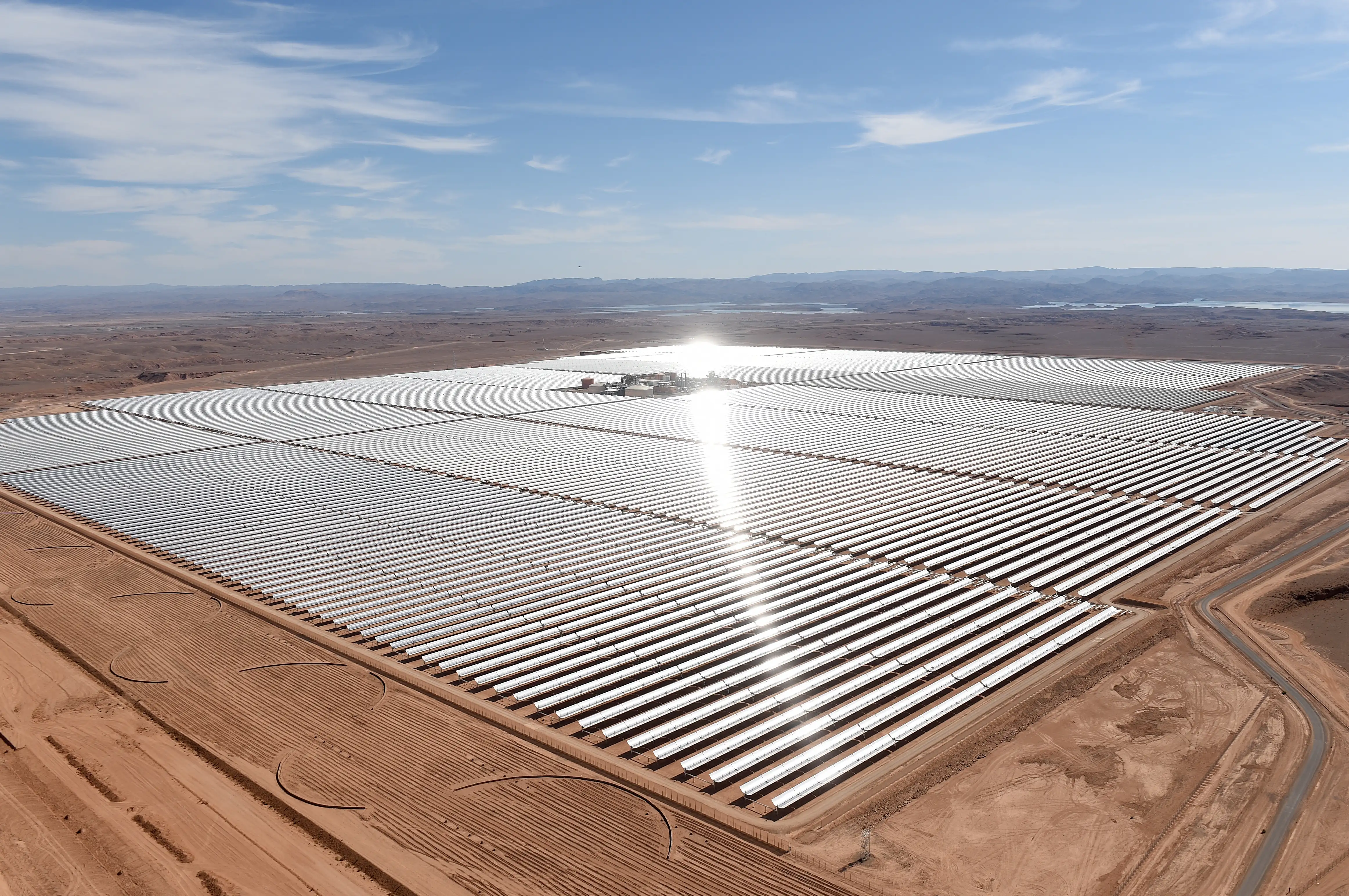
Whether any of this comes to pass will be a matter of political mobilisation. Bold reforms may actually be easier to build support for than conservative ones as they offer something worth fighting for.
Piketty himself is under no illusions saying there is, "a huge cultural, intellectual, political battle" underway, "and we all have a role to play.”
The report refuses to be fatalistic. Change on this scale has happened before.
For example, over the twentieth century, the Nordic countries reduced the gap between the highest and lowest incomes and wealth shares to become some of the most equal societies in the world.
Politics & Society
Tech multinationals are saying ‘goodbye globalism, hello geopolitics’
If nothing else, the Global Justice Report is a reminder that our global future is made by the choices we make today.
"It is good to know we can combine an equal world with staying within carbon budgets," says environmental economist and report co-author, Cornelia Mohren. "It makes me feel hopeful."
In the middle of the current polycrisis, hope grounded in evidence is worth holding onto.