Health & Medicine
As AI gets smarter, are we getting dumber?


From wedding vows to retirement speeches, AI is increasingly ghost writing our most intimate moments, and our brains seem to sense something is wrong

Published 13 May 2026
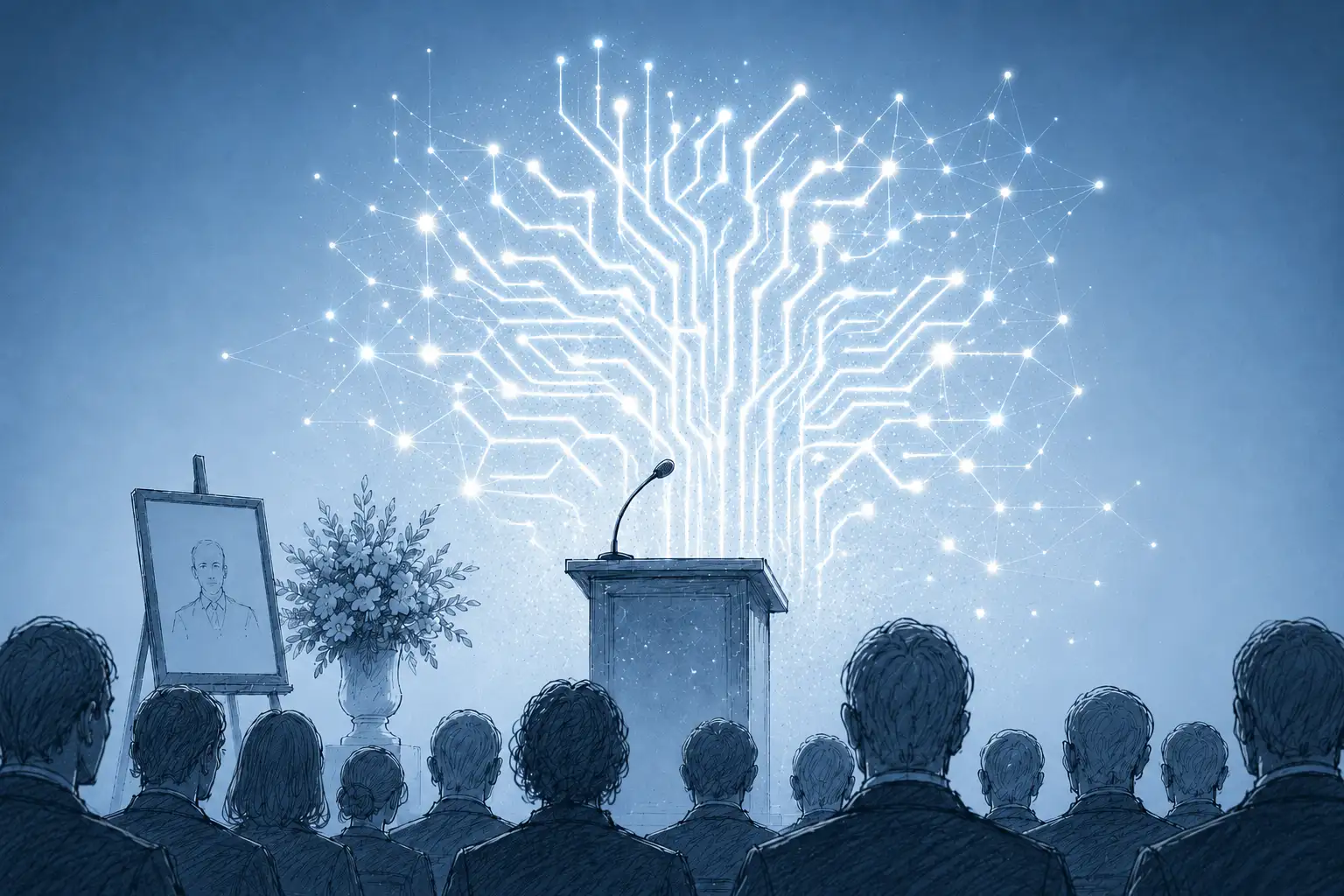
There was something a bit off about a speech at one of my recent colleague’s retirements. It was beautifully written, very generously worded and the pacing was impeccable.
And yet, I hate to say it, it was utterly lifeless.

It was as though someone had dressed a mannequin in a suit, painted a warm smile on its face and handed it the microphone.
Initially no one could put their finger on it, though I think by about the third paragraph everyone felt that artificial intelligence (AI) was clearly at play here.
I don’t want to judge the speaker because not everyone finds it easy to come up with the right words to say at occasions like this. For people with dyslexia, for those writing in their second or third language, or even just feeling very stressed, AI can be a lifeline.
But I think the truth is that AI is encroaching on some of the most hallowed territory in our very human personal communications. It’s in retirement speeches, birthday tributes, eulogies and even more personal messages to lovers and friends.
Some of us seem to have handed over one of the most intimate acts of our human expression, the way that we communicate with each other, to a machine trained on bits and pieces scraped up from the internet.
And I think it comes with a heavy cost.
Health & Medicine
As AI gets smarter, are we getting dumber?
People are now even using AI to write their wedding vows.
These are the very words you are supposed to stand in front of everyone you love and say in a heartfelt way. Something original that only you, as you embark on a life together, could possibly mean.
Instead, we get three qualities; a colon, an em dash, warmth, commitment and growth, and a tidy conclusion. The room applauds but nobody cries.
Research is beginning to catch up with what our gut has been telling us.
A psychology study published in Frontiers in Psychology found that human brains actually show less beta wave activity, a strong marker of cognitive processing, when exposed to an AI-synthesised voice rather than natural human speech.
The study looked at synthesised voices rather than written text but it demonstrates how our brains pull back when they detect that something almost-human is not quite human.
It’s like the brain has registered that this is not a real person, even if it’s not sure why.
Our brains and hearts are searching for an anchor, that very particular human emotional cadence, the little mistakes, the unexpected word choices, the slightly tangential or illogical phrases that tell you that a real person is probably speaking to you.
Although AI is trained to be fluent and coherent, once the human bumps have been sanded back it all just feels way too smooth and shiny; a sort of ‘uncanny valley’ of language emerges.
And then your brain tunes out, as it feels it has no real stake in the words. This is the discomfort many of us are feeling when bombarded with AI-generated text.
After you’ve read a lot of essays, as many academics like myself have, you really do begin to recognise AI’s fingerprints.
There’s a sense that the piece has been organised according to some schema that’s not quite human and there’s a whole lot of classic grammatical devices at play.
Politics & Society
When AI seems to know you better than you know yourself
Too many em dashes rather than complete sentences. A propensity for words used over and over again like ‘delve’ and ‘nuance’ and ‘quietly’.
This is not just my impression.
Research analysing more than fifteen million biomedical abstracts in Science Advances found that words including ‘meticulously’, ‘underscore’ and ‘intricate’ spiked sharply after the public release of ChatGPT. This isn’t because the science suddenly became more intricate and meticulous, but because a significant fraction of academic writing had been processed by a large language model (LLM).
The research here is complex though, and I should acknowledge that in blind tests, where people read isolated samples out of context, humans are actually quite poor at picking AI text.
But a eulogy or wedding speech is not a blind test. We are listening for someone we know and what registers is the absence of that specific human we came to hear.
This is what worries me most. If academic writing is being absorbed by AI’s voice, what happens when our love letters, our toasts and our grief are too?

Here is where I think AI gets genuinely mischievous. The real danger is not that we will be caught out using AI, it’s that we will forget we used it at all.
We are all very susceptible to underestimating just how much AI has been helping us with our writing to the point where we can delude ourselves about our own brilliance.
We might start using AI as scaffolding, to adjust a phrase or fix up some grammar, but once we realise just how capable it is, it’s very easy to use it more extensively.
Then we gradually become comfortable believing that the final piece is essentially our own.
Research from the 2025 CHI Conference on Human Factors in Computing Systems found that knowledge workers using generative AI reported measurable reductions in their own critical thinking. The more they trusted the AI, the less they thought critically about its output.
Health & Medicine
‘I think I have AI anxiety’
To put it less subtly, we start to believe our own bullsh*t. And the voice in our head, the one that used to sound like us, starts to sound slick and weirdly articulate, just like everybody else.
It’s a bit ironic, because studies confirm that when people know that a message was AI-authored, they tend to rate it as less sincere and less authentic, but we often don’t extend this same scepticism to ourselves.
In an era where words are literally cheap, it’s easy to forget that genuine human expression doesn’t start with the words. It starts with the feelings – pride, grief, gratitude, love – often imperfect and visceral.
And the words are just the way we convey those feelings to another human being.
AI works the other way around.
It starts with clever words: articulate, confident, beautifully structured, but unfortunately there’s nothing behind them.

This is not to criticise the technology. It is, as advertised, a very sophisticated pattern-matcher that has never felt anything.
It’s worth remembering that when expressing emotion to the people you love, they do not need or want a polished version of someone or something else. They want you, maybe tidied up a little, maybe with the rambling bits edited out, but fundamentally, recognisably, you.
AI can help carry your words, but it cannot replace what the words are supposed to carry.
So, write your own speeches, your own wedding vows, your eulogies for a good friend.
Write your own difficult emails, with their imperfect sentences and slightly wrong words and sometimes risky, tangential, idiosyncratic little phrases that are entirely yours.
Use AI by all means, for background information, for suggestions and for tidying up, but always keep your sense of human expression at the core of it.
Because what the people who love you are listening for is not an AI imitation. It is you.