Politics & Society
Don’t let AI give your eulogy


Generative AI is built on the work of humans but these creatives are rarely remunerated. If we don’t protect them now, entire categories of labour risk being obliterated


Published 21 July 2026
We’ve all seen the headlines about how generative artificial intelligence (AI) is shaping the future of work, and just last week, Australian Prime Minister Anthony Albanese announced a new national plan for AI.
But we’re also hearing that young people entering the job market are pessimistic about the potential threat it poses to their future.

AI is already changing the way we work. The question is whether humans stay in the mix.
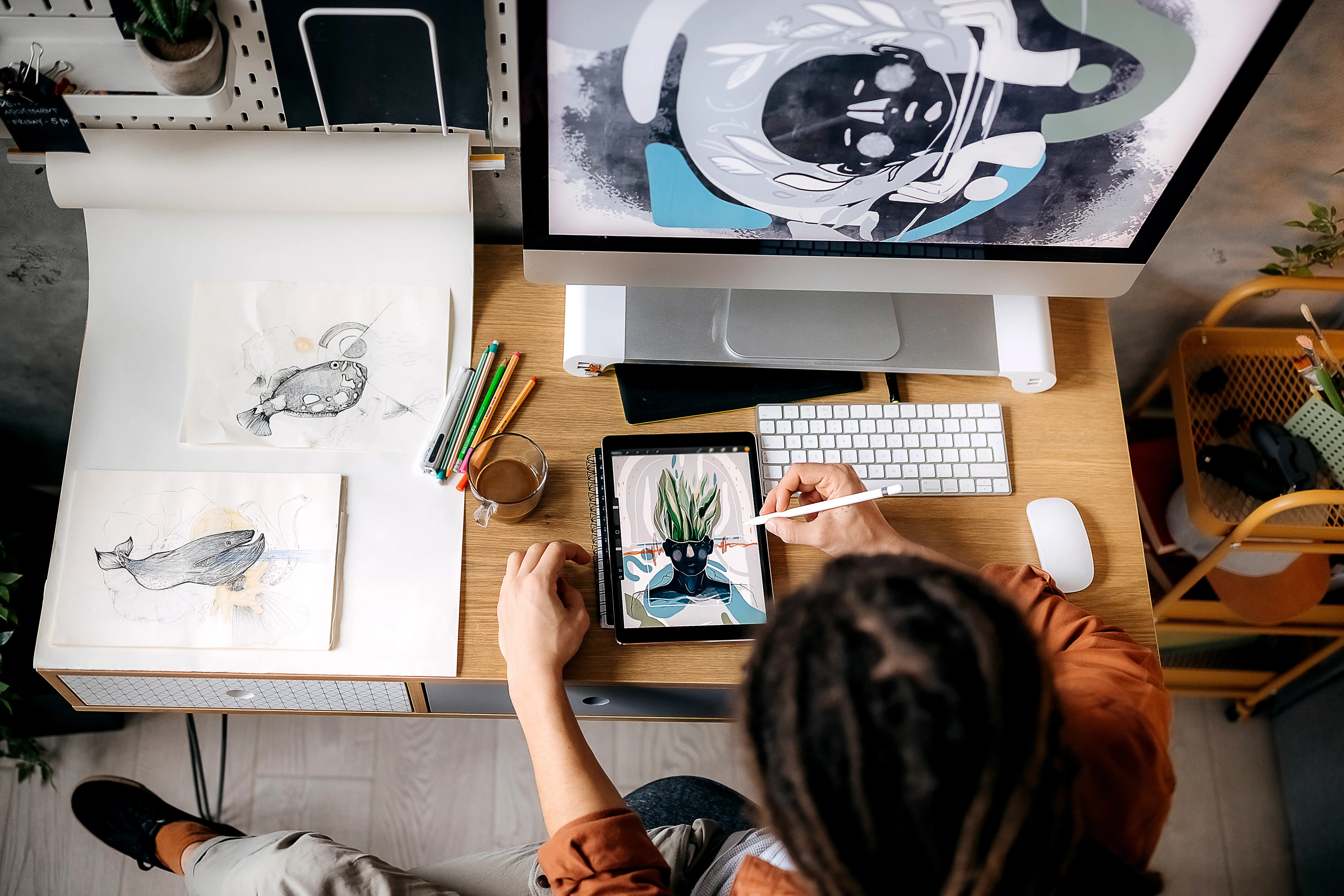
Creative industries around the world – from illustrators and session musicians to voice actors and copywriters – are grappling with what generative AI means for their survival.
But AI's impact on creative labour offers us a useful lens to understand its effects on how we work more broadly.
Some people argue that AI learns like humans do by creating new content from any examples it can find.
Politics & Society
Don’t let AI give your eulogy
AI foundation models work by breaking vast datasets into tokens and then learning to predict how those tokens – whether they’re words, images or something else – should follow in response to a prompt.
This is just the latest step in humanity’s historical process of datafication, which traces how human effort is converted into digital information, often so it can be bought and sold.
The way generative AI technologies break down existing content into data and reproduces it is similar to human processes of content creation and innovation, like remixing an original song or writing an academic essay.
Explicitly ‘copying’ pre-existing work in this way is not new, nor is it always a bad thing.
For decades, queer fanfiction writers have reworked the classics, carving out a space for characters they could identify with when the industry prevented it from happening. And musicians have popularised new genres of music by sampling classics and remaking them.
So, if human remixing breathes new life into old works, why does it feel so different when the remixer is AI or a major corporation?
There are two main issues here.
Firstly, AI borrows content the way Disney appropriates from Germanic, Chinese, Native American and Pacific-Islander lore, but unlike global entertainment corporations, AI can recreate almost any style, almost instantly.
Secondly, it is much easier for AI and large corporations to remake content without seeking consent, credit or compensation from creators.
Gen AI tools can spit out a recipe from a cookbook, with no acknowledgement of the cook who created it in the first place. And Disney can use its resources to frame adopting mythology as cultural celebration.
Sciences & Technology
Will a computer take your job?
Licence holders – the people who own the rights to a creative work – can seek recourse when their copyrighted material is misused.
Recently, AI company Anthropic was made to pay $US1.5 billion for allegedly pirating books to train its AI bots. The company was ordered to pay around $US3,000 dollars to the authors of each of the 500,000 books that were illegally used.
But this kind of recourse, while essential, doesn’t address the existential threat that generative AI poses to many creatives.
For us, the central question focuses on who gets to remix old work: a person reworking a classic or software?
Some experts frame AI's challenge as a labour power issue rather than a rights issue and while we agree, the remixing question cuts deeper because it goes to the value of creative labour itself.
Undoubtedly, creatives need to receive a greater share of profits from their work. We also need to protect creatives’ ability to both hone their skills and pay their bills.
As it stands, when Disney remixes lore, creatives are still paid. When generative AI produces the content, it’s those responsible for enabling the technology that benefit.
We need to ensure demand for creative work doesn't simply vanish.
It matters that humans can afford to learn their craft, practise it and drive innovation. Geographic protectionism is not going to help creatives, as we’ve seen with the US threat to tariff films made abroad.
Perhaps what creatives in the age of generative AI need is a different kind of protection, one that focuses not on where work is made; but on the effect of datafying creative work made by real humans.
Sciences & Technology
Is today the day the music dies?
For example, companies that host services which generate design, music or voiceovers could pay a special levy to firms who hire humans to do the work.
Australia needs people who can make us laugh, cry, think and dance as much as it needs people who can create AI software. The powerful, ever-growing corporations that collect rent from businesses operating in digital space do neither.
Developing both workforces is critical to Australia’s future. But the talents of software engineers need not be developed at the expense of creatives.
And creative industry workers aren't the only ones threatened by datafication. Generative AI models are built on the creative output of all workers.
If the people behind AI outputs can no longer learn fundamental skills while paying the bills, the remixing will go on with no humans left in it, leaving the expression of the human condition to be determined by AI alone.