
Arts & Culture
Art can be anywhere


A new policy promises round-the-clock graffiti reporting and removal. But do these proposed changes accurately reflect Melbourne's love-hate relationship with urban culture?

Published 30 October 2026
For over two decades now, Melbourne has been celebrated as one of the graffiti capitals of the world.
Despite bringing in AUD$4.5 million to the city every year through tourism, urban art remains divisive.

In 2005, the City of Melbourne adopted its first Graffiti Management Plan.
The plan outlined Council’s “get tough on graffiti approach” and stated that “the City of Melbourne will do everything in its power to eradicate this vandalism.”
It defined graffiti as “tagging and/or stand-alone stencils”.
That same year, Carl Nyman and Jake Smallman published their book, Stencil graffiti capital: Melbourne, declaring Melbourne the best city in the world for stencil art.
By 2026, the contradictions are blowing up on multiple fronts.
Arts & Culture
Art can be anywhere
There were 100,000 visitors at art collector couple Sandrew’s The Outsiders street art exhibition.
Nearly 10,000 signatures were gathered to keep the infamous Pam the Bird on Melbourne's Bolte Bridge.
And yet, it was later removed at a cost exceeding AUD$100,000, in what was possibly the world’s biggest and most widely broadcast graffiti removal operation.
And the City of Melbourne spent AUD$2,818,006 in the 2025 financial year on graffiti removal, facilitated in part by the introduction of a QR code graffiti reporting system.
In a seemingly more tolerant policy space, why are graffiti management costs so high, and what community outcomes do they bring?
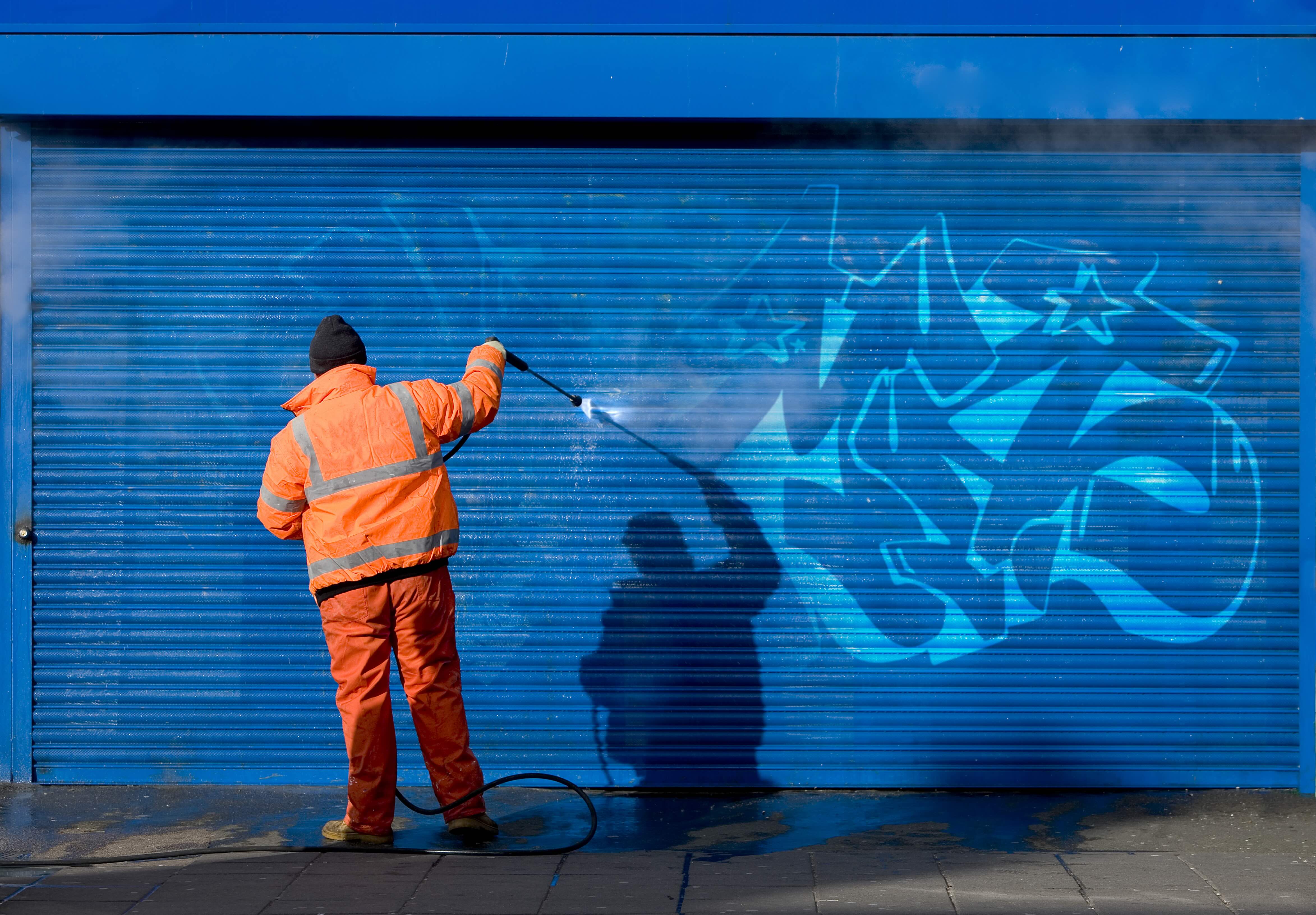
The proposed 2026 draft Policy is the City of Melbourne’s most extensive one yet.
It defines graffiti as unauthorised marking and specifically includes non-aerosol media like posters and stickers.
Authorisation refers to the consent of the property or asset owner; compliance with any relevant heritage approvals and planning permits; and adherence to the Victorian Graffiti Prevention Act of 2007.
So, what changes are in the new Policy?
Graffiti definitions: The previous policy, which has been in place since 2021, contained a “legal graffiti” category which is now gone.

Arts & Culture
How Melbourne grows as a cultural capital
This implies that graffiti is always unauthorised and creates a greater division between “graffiti” (previously defined as tagging and/or stand-alone stencils), “street art” and “murals” – which the new policy all but outlines as non-overlapping categories.
Council recognises street art’s contribution to the city’s cultural identity and, for the first time, marks out seven “organic” “street art precincts” which it declares areas of minimal intervention.
Hosier Lane, the most Instagrammed spot in the whole of Australia, is prominently mentioned.
Opt-out removal model: this means that graffiti on private property may be removed unless the owner actively opts out – so council has access to private surfaces without the need for notice or written consent.
The opt-out model is not common in any comparable cities.

New York City’s 311 system offers free removal from private property with 35 days' notice and Greater London has a similar notice-based system in most boroughs.
The proposed Melbourne model implicitly positions all owners as anti-graffiti by default, even when that might not be the case.
24/7 enforcement standards: The new policy signals an overall shift to a standardised service approach with detailed and ambitious specifications.
Offensive graffiti is to be removed in one hour, with other graffiti taking up to three days in the “Central City” and 12 days in “Outside City” – all in a 24/7, 365-day operational commitment.
This service standard is not comparable to any other Council service like street cleaning, rubbish, public toilets, parking or any other enforcement of local laws.
So why is it that graffiti takes such high precedence?

Arts & Culture
Gulliver’s Travels predicted AI 300 years ago
The proposed policy increasingly separates authorised visual production from unauthorised graffiti, even when the cultures overlap.
The recognised “street art precincts” are dense with tagging, much like the highly active surfaces of “graffiti hotspots” which the policy targets. Faced with either, you would hardly be able to tell them apart.
The separation is not true to the culture, and it fails to recognise that these visual forms belong to overlapping communities – a co-produced environment I have previously referred to as urban visual justice.
In public art specialist Shaun Hossack's words, “Melbourne’s street-art reputation was not built through permission slips”.
And removal budgets remain substantial, with annual expenditures steadily rising. The City of Yarra, for instance, increased its AUD$1million removal budget by 50 per cent in 2025, despite 2024 surveys showing that only one per cent of residents viewed graffiti as an issue.

The new policy is a step in the same direction, although no mention is made of costs.
These examples lay bare the competing interests councils face in managing public images like graffiti.
On one hand, they seek to safeguard property and maintain urban order by criminalising graffiti.
On the other, they celebrate street art as a symbol of creativity, community and cultural capital.
Balancing these concerns with the democratic potential of visual expression remains an unresolved challenge, even in a city as culturally progressive as Melbourne.
Here in Melbourne and internationally, we have come a long way from zero tolerance policies which framed graffiti as a threat to private property, public space and urban order.
Alternative welfarist and community-driven policies like harm minimisation and negotiated consent introduced permissioned walls and tolerance zones, youth diversion programmes and hybrid models combining rapid removal with designated areas for sanctioned graffiti.
My own concept of “the right to the surface” was adopted in Oslo after a long period of zero tolerance.
However, while the “war against graffiti” may have largely ceased on paper, battling vandalism continues to dominate as the main mode of engagement in media discourse and municipal politics.
The new framework aspires to a “shared commitment between asset owners, occupiers, government agencies and the community”, but has no mention of the writers themselves, their varying motivations and types of creative outputs.
Graffiti writers and informal communities should be directly and respectfully engaged in the graffiti management process.

Community engagement should go beyond QR codes on bins.
The Council needs to guide and capture community expectations and responses through more than just graffiti reporting.
Quantitative removal data should be balanced with qualitative evidence about cultural value, participation and public attitudes.
If this policy is a “data-driven” approach to graffiti management, could Melbourne move to a value-driven approach supported by data?
We have an opportunity to balance removal, enforcement and creative production – and genuine visual justice.
Feedback can be shared on the proposed City of Melbourne graffiti management policy before November 5, 2026.