Health & Medicine
Taking a close look at the evidence behind ‘IVF add-ons’



Egg freezing has gone up by more than 500 per cent in less than a decade, but it's an expensive and uncertain procedure. A free, evidence-based resource is now helping women think it through


Published 9 October 2026
Egg freezing is on the rise.
More than 22 000 women in Australia and New Zealand underwent elective egg freezing between 2009 and 2023. Uptake has increased sharply, and there’s little sign it will slow down anytime soon.
However, egg freezing isn’t a straightforward decision. There’s a lot to consider, and many women feel overwhelmed and unsure what to do.
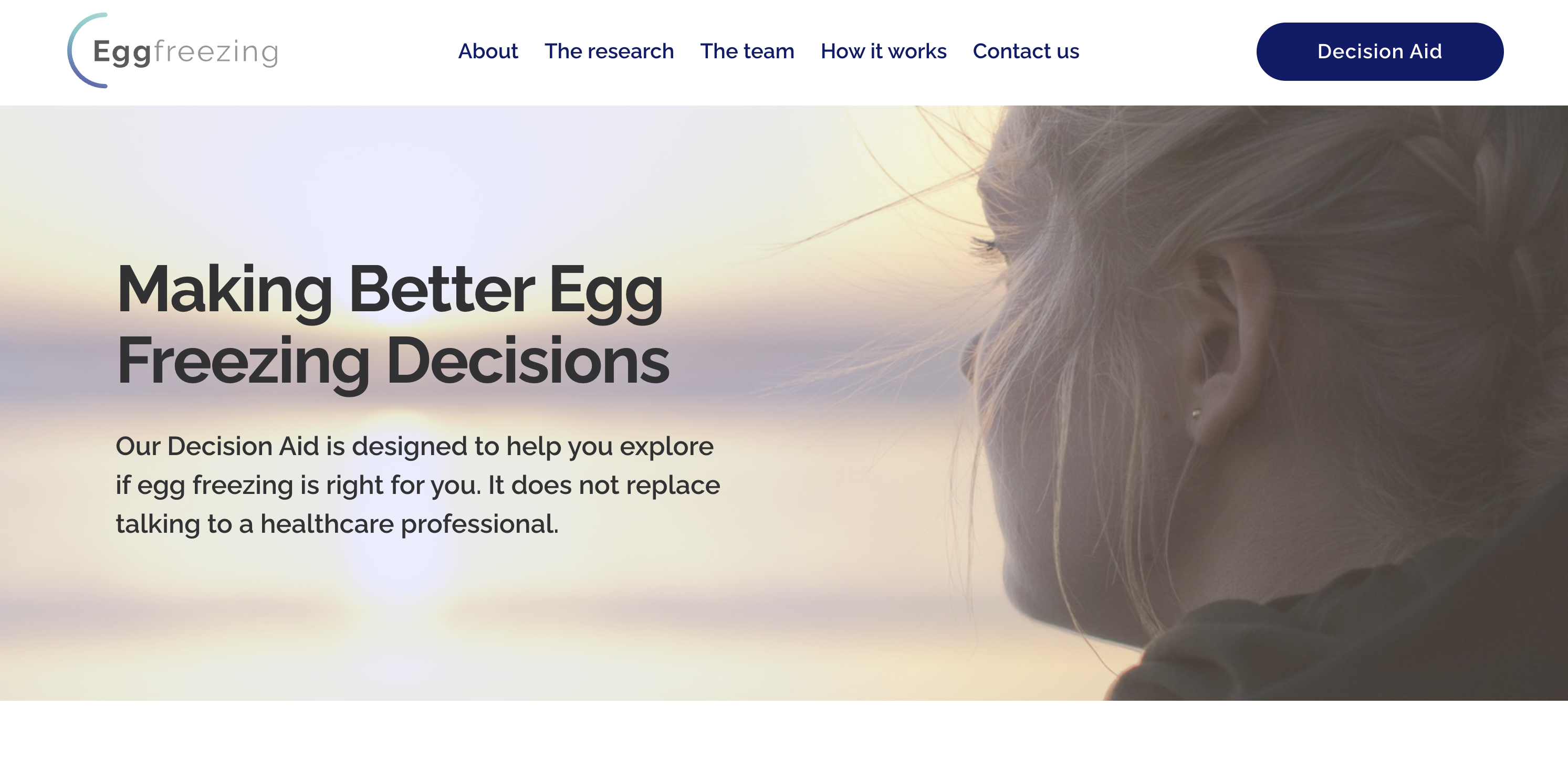
A new evidence-based Egg Freezing Decision Aid has been launched to help women navigate this complex and personal decision.
So, why are more women freezing their eggs? For many, a key reason is not having a partner to start a family with.
Some researchers have linked this to a broader social issue described as the ‘gender mating gap’, where highly educated, professional, heterosexual women – who are more likely to freeze their eggs – have a smaller pool of eligible and compatible male partners to enter into parenthood with.
Health & Medicine
Taking a close look at the evidence behind ‘IVF add-ons’
Meaning, the rise in egg freezing may reflect individual responses to broader social challenges many women face.
Egg freezing decisions aren’t simple. They involve weighing up both the treatment required now and planning for an uncertain future.
Practical questions include: What does the process involve? How will it fit around my commitments? What will it cost, particularly if more than one cycle is needed?
Other questions look further ahead: Will I ever use the eggs? What if treatment does not result in a baby? How might I feel about having eggs I no longer need?

These questions can be difficult to answer when future relationships, circumstances and wishes are uncertain.
Egg freezing has pros and cons that need to be considered.
It offers the possibility of using eggs collected at a younger age to try for a baby later if a person is unable to get pregnant naturally.
But it’s expensive, involves an invasive procedure and carries health risks.
There is also no guarantee that a cycle will produce eggs suitable for freezing, or that frozen eggs will ultimately lead to a baby. It’s therefore unsurprising that many women feel uncertain about what to do.
Business & Economics
Thinking about using donated eggs to start a family?
Our research found that 78 per cent of women who had considered egg freezing experienced high ‘decisional conflict ’, meaning they struggled to decide whether to freeze their eggs.
This can make it harder to move forward and may increase the risk of future regret.
Finding reliable, trustworthy information is part of the challenge.
Many places offer information about egg freezing, but it’s often oversimplified, unbalanced, and may be influenced by commercial interests.
Women tell us they want easily accessible, reliable information, but it can be tricky to know where to find it.

Another challenge is that egg freezing is a highly personal decision. People weigh up the pros and cons differently depending on their values, circumstances and priorities.
For example, the possibility of having a genetically related child in the future might make egg freezing feel worthwhile for one woman.
Whereas another may decide that the financial cost, treatment burden, and uncertainty of ever using her eggs outweigh that potential benefit.
This is why it’s important that people have the right information and decision support when considering if egg freezing is right for them.
Health & Medicine
Freezing eggs for IVF: Waste not, want not
Our team has created a free, independent, evidence-based website (Egg Freezing Decision Aid), dedicated to helping women decide whether egg freezing is right for them.
Grounded in research, it was developed using best-practice standards, with experts in fertility and reproductive decision-making, as well as women with lived experience of navigating this personal decision.
Users of the website will find clear, balanced, evidence-based information about egg freezing procedures, health risks, success rates, costs, and other options to consider.
An interactive exercise lets women weigh the pros and cons of egg freezing, providing a starting point for reflection and helping them decide whether their preference for egg freezing aligns with their personal priorities.
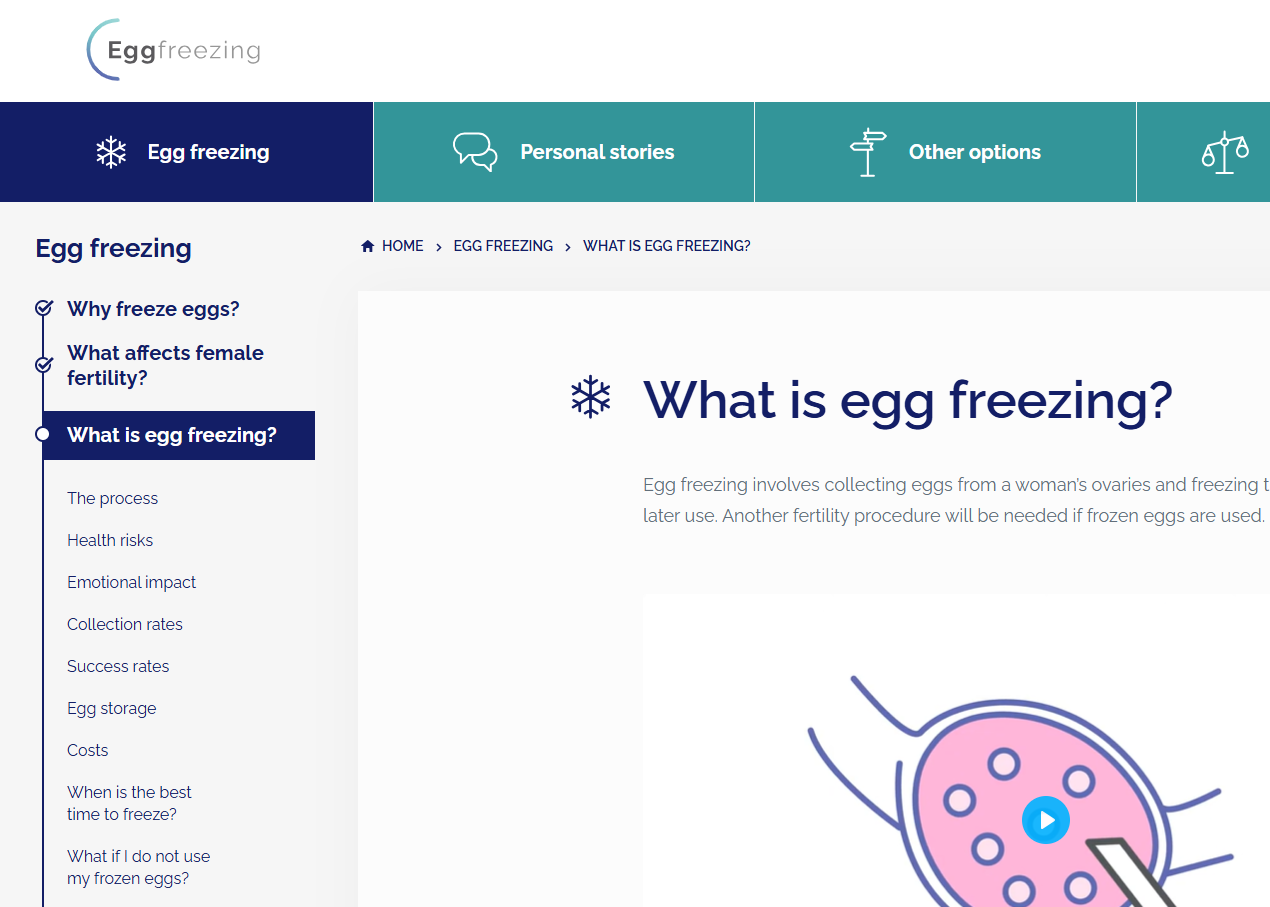 The evidence-based Egg Freezing Decision Aid provides easily accessible, reliable information. Graphic: Supplied
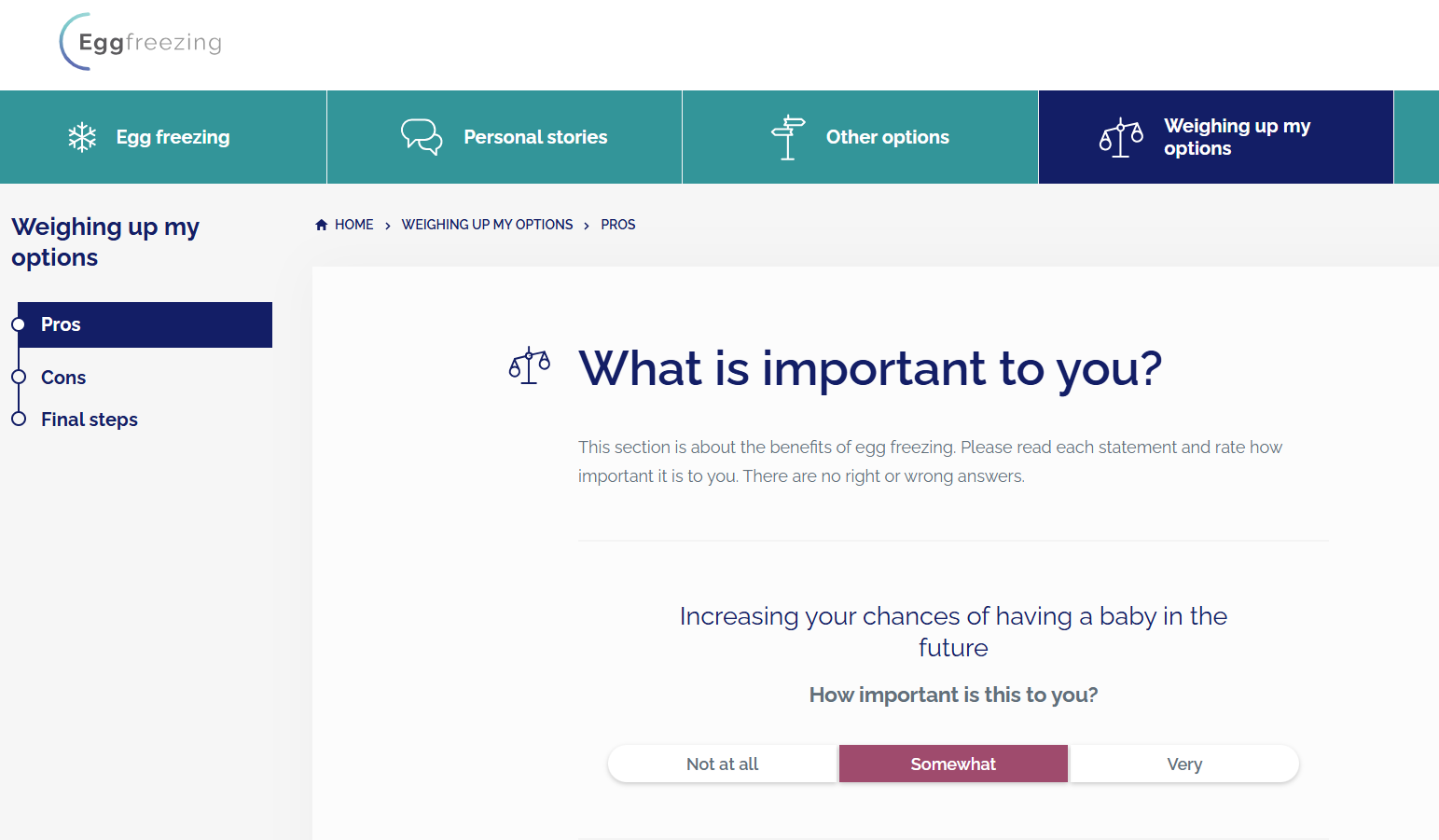 An interactive exercise lets women weigh the pros and cons of egg freezing. Graphic: Supplied
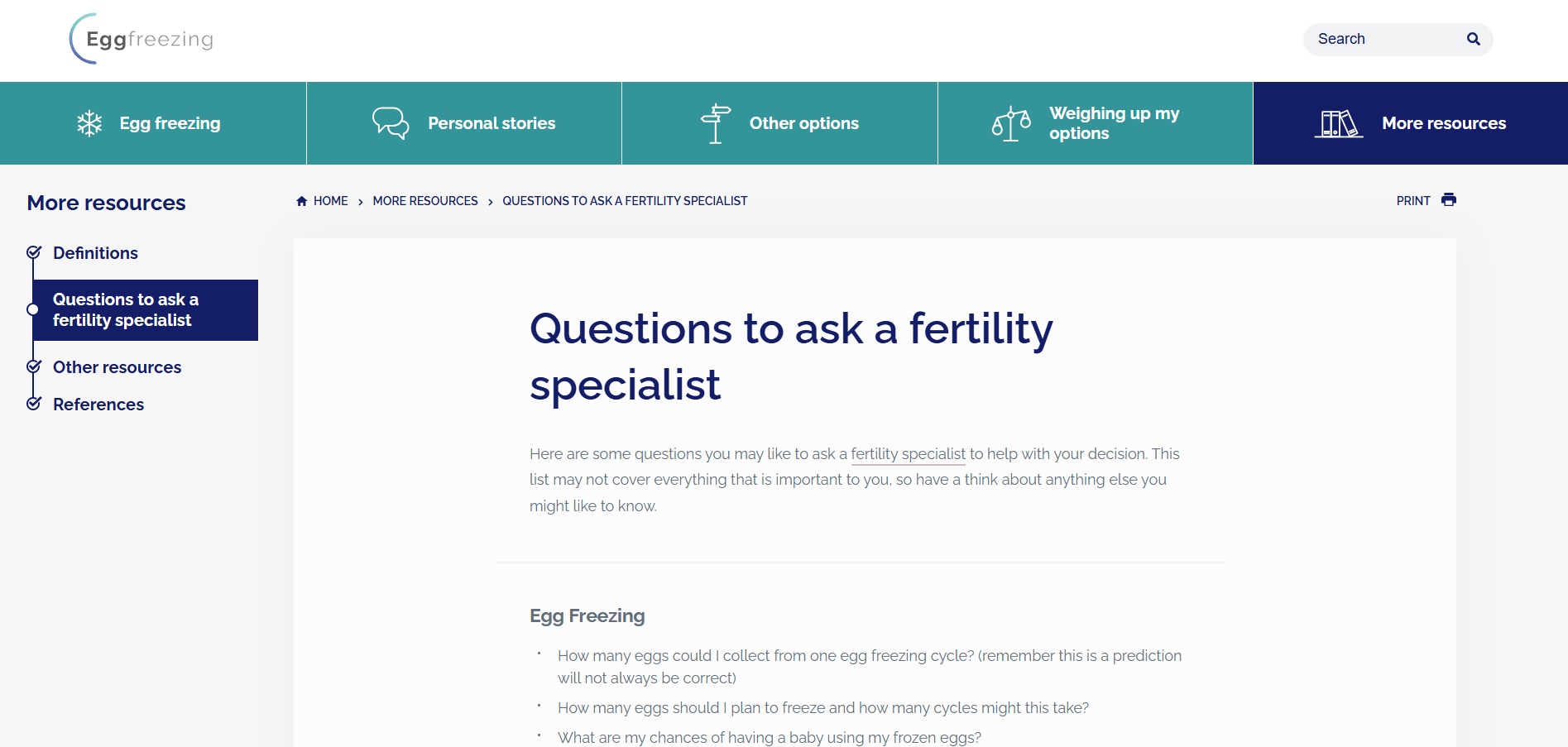 The website includes personal stories and a list of questions to use when seeing a fertility specialist. Graphic: SuppliedThe evidence-based Egg Freezing Decision Aid provides easily accessible, reliable information. Graphic: SuppliedAn interactive exercise lets women weigh the pros and cons of egg freezing. Graphic: SuppliedThe website includes personal stories and a list of questions to use when seeing a fertility specialist. Graphic: Supplied
1 / 3
There are also personal stories and a question prompt list that can be used when seeing a fertility specialist.
Our Decision Aid has been evaluated in a national randomised controlled trial involving 306 women.
Those who received the Decision Aid had significantly less decisional conflict and felt more informed and prepared to decide (when compared to existing egg freezing information alone).
Importantly, the website did not increase distress.
The online tool can be used before or alongside a clinical consultation to help women explore their options and prepare questions for a health professional.
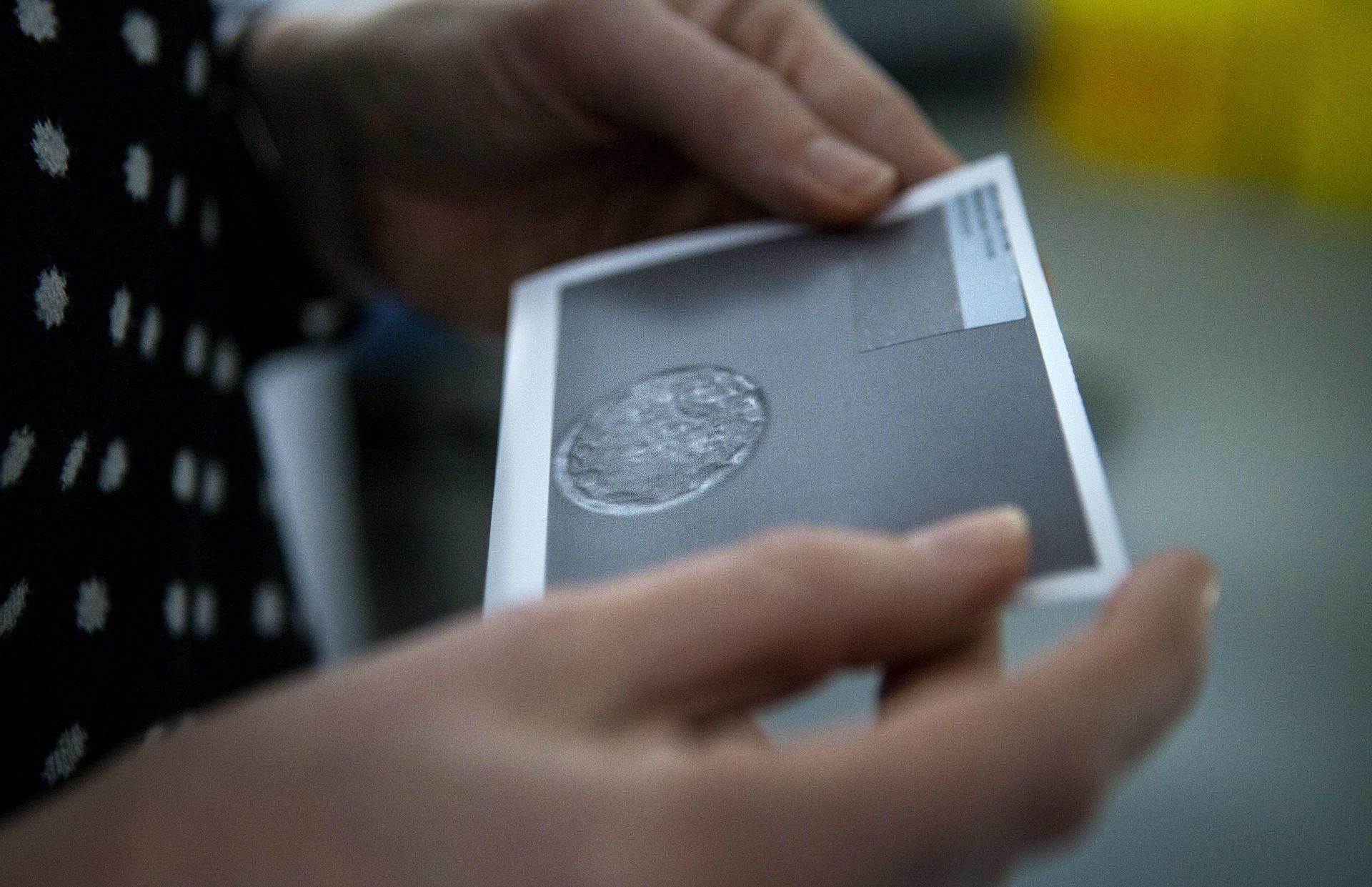
Ultimately, egg freezing is a complex and personal decision.
So, it’s time we provide women with the right resources to decide if egg freezing is right for them.
The Egg Freezing Decision Aid is available at: https://eggfreezing.org.au/