
Politics & Society
Don’t write off One Nation’s election chances


One Nation's vision of a monocultural Australia is unworkable and exclusionary, but the harder truth is that no major party has offered a shared vision that all Australians can identify with

Published 24 June 2026
Something historic happened at Australia’s National Press Club this month: the far-right politician Pauline Hanson gave the address.
This was her first appearance at the Canberra institution after 30 controversial years in federal politics and could represent a fundamental shift in Australian political culture.
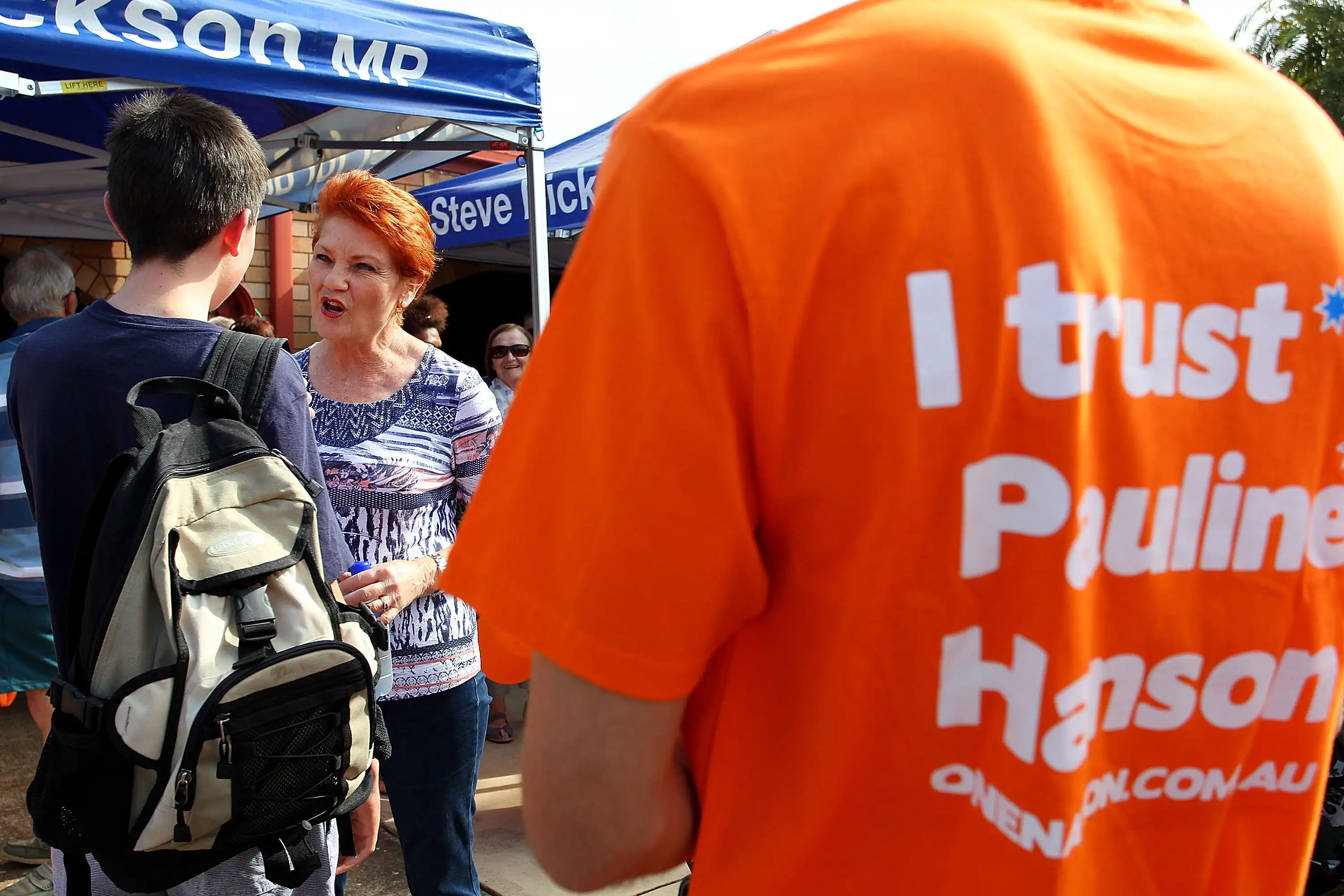
Her much-reported and criticised speech covered a wide range of topics.
Moving from immigration to Western civilisation to housing to radical Islam to the cost of living to climate change to energy policy, Hanson was intent on offering the image of someone with a cohesive set of policies on all major political issues in Australian political life.
Or at least the issues she thinks are major.
Hanson’s views on most of these subjects are not particularly unique.
There’s now a widespread view in politically minded circles that a new and challenging crisis is confronting diverse liberal-democratic states like Australia.
Whether we call Hanson’s views populist, reactionary, hard-right, or what have you, they are part of something broader going on in the world.
Politics & Society
Don’t write off One Nation’s election chances
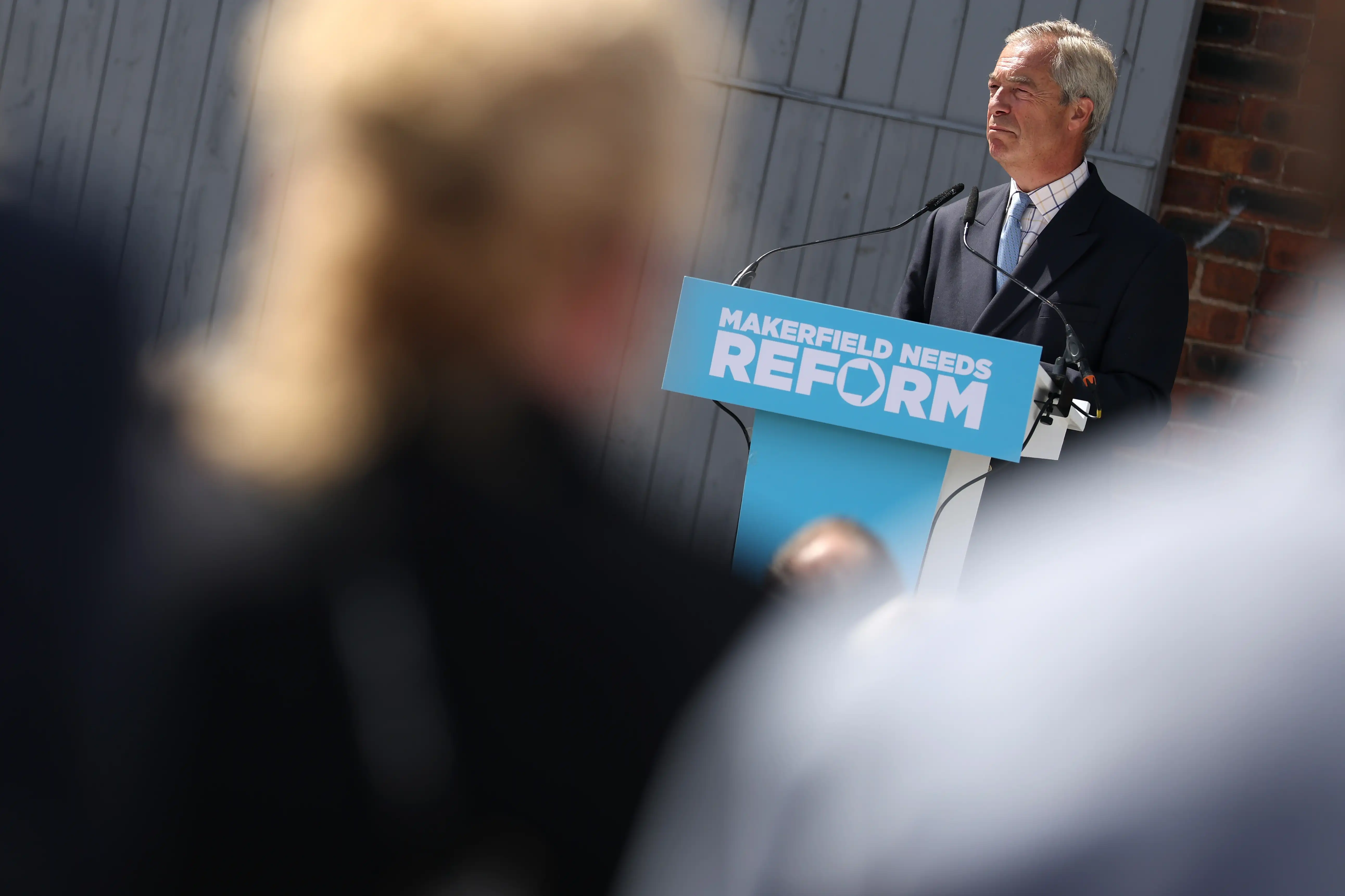
President Trump has been the usual headline for this trend. But the success of Nigel Farage’s Reform party in the United Kingdom, the Alternative for Germany (AfD), Javier Milei in Argentina and many other examples make this a global narrative.
And therein lies Hanson’s true significance and power.
Hanson’s rising polls and support are tapping into a set of tensions and conflicts that are real and powerful.
There are many good explanations for this: rising inequality, global instability, political alienation and disempowerment, as well as the deep cracks appearing in liberal-democratic capitalist states.
All of these are important, exposing the fundamental dimensions of a crisis of which Hanson is merely a symptom.
But what is missing in these explanations can be found in Hanson’s very remarks and their first target.
She began, "Undeniably immigration or immigration policy has our country in the state of crisis”. She went on to say that central to this crisis is “the utterly flawed policy of multiculturalism".
Her main argument is that Australia should not be multicultural, but rather “monocultural”, living under “one cultural umbrella”.
Hanson went on to highlight the "shocking" figures around how many Australians were born overseas (32 per cent), had a parent born overseas (51.5 per cent) and speak a language other than English at home (23 per cent).
For her, Australians (minus these groups, of course) never chose this multiculturalism.
Beyond the fact that these numbers actually demonstrate successful linguistic integration on Hanson’s own terms (more people speak English at home in second-generation households than first-generation), her concerns reveal something very important.
Politics & Society
Your social media feed is changing democracy
Her unease over immigration, hostility to diversity and a desire to reassert an identity under threat all frame multiculturalism as the enemy of some beleaguered group: hostile to its values and identity and bound to erode them.
Hanson speaks of "Western civilisation" and a "Judeo-Christian society", describing both as central to "national identity and Australian values".
She calls for "Australians first", for taking the country back and for Australia to "re-assert its values… honour its traditions… reinforce that we are one nation under one flag".
Here, she is positioning herself as the voice of what some would call ‘the majority’ of Australians: a purportedly dominant section of the population that claims the authority to define what Australia really is and who really owns it.
For Hanson, immigration numerically undermines this group as well as its identity and symbols.
And multiculturalism is the ideological threat. For her, it legitimises displacing the 'majority' by suggesting “all cultures are allowed equivalence to ours”.
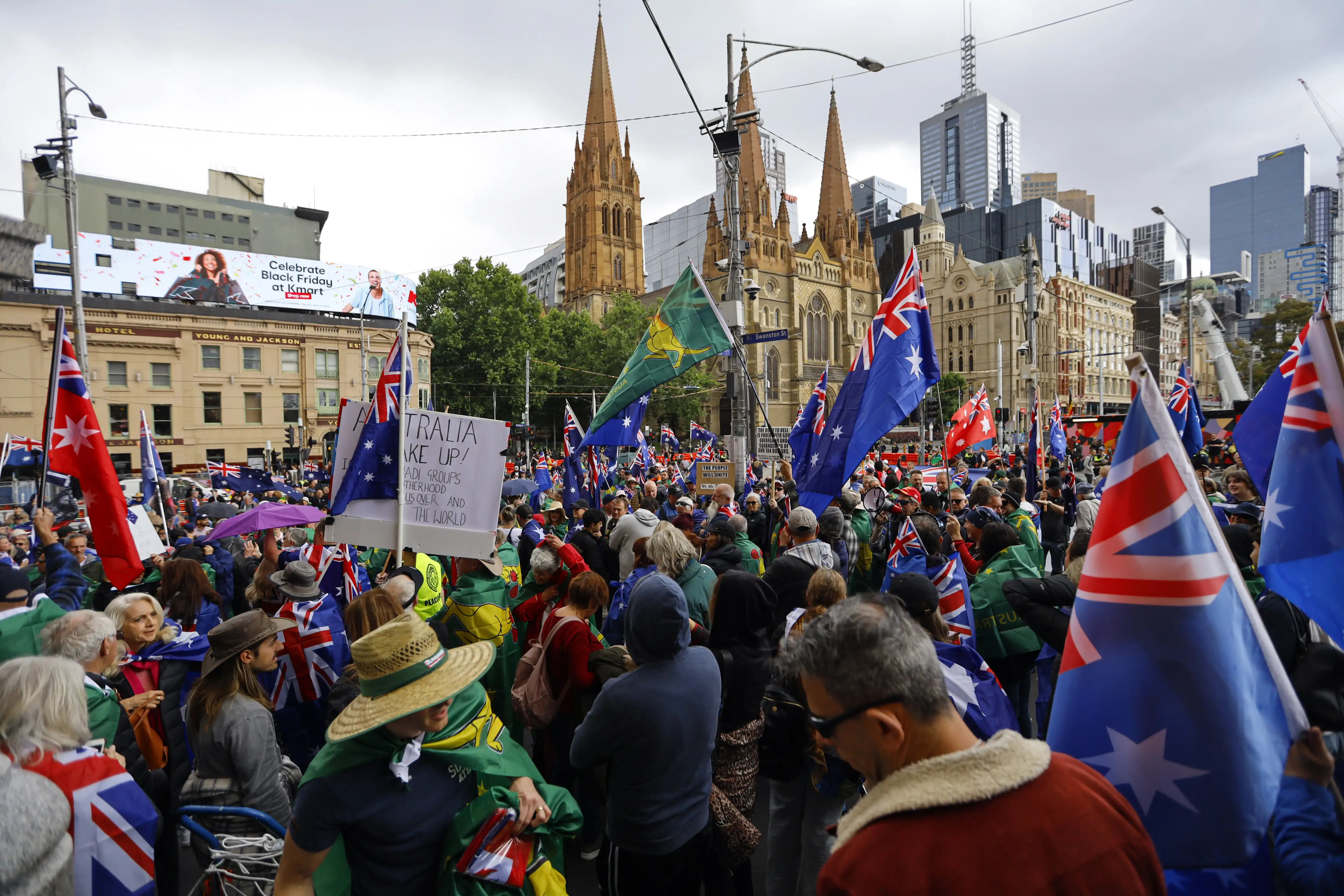
So, her problem with immigrants is a problem with their impact on the symbols and culture of Australian national life.
Australia is often held up as one of the most successful multicultural democracies, scoring quite highly on the Multiculturalism Policy Index, but the country’s relationship to multiculturalism is complex.
It has limited formal or symbolic commitments to multiculturalism: there is no multiculturalism legislation or constitutional commitment, as there is in other countries.
That said, Australia does have a well-established language of multiculturalism.
As a migrant, one of the first songs I learned (after the anthem) was I Am Australian by the Australian band, The Seekers, which another migrant introduced me to. It has the lyrics: “We are one, but we are many. And from all the lands on earth we come… I am, you are, we are Australian.”
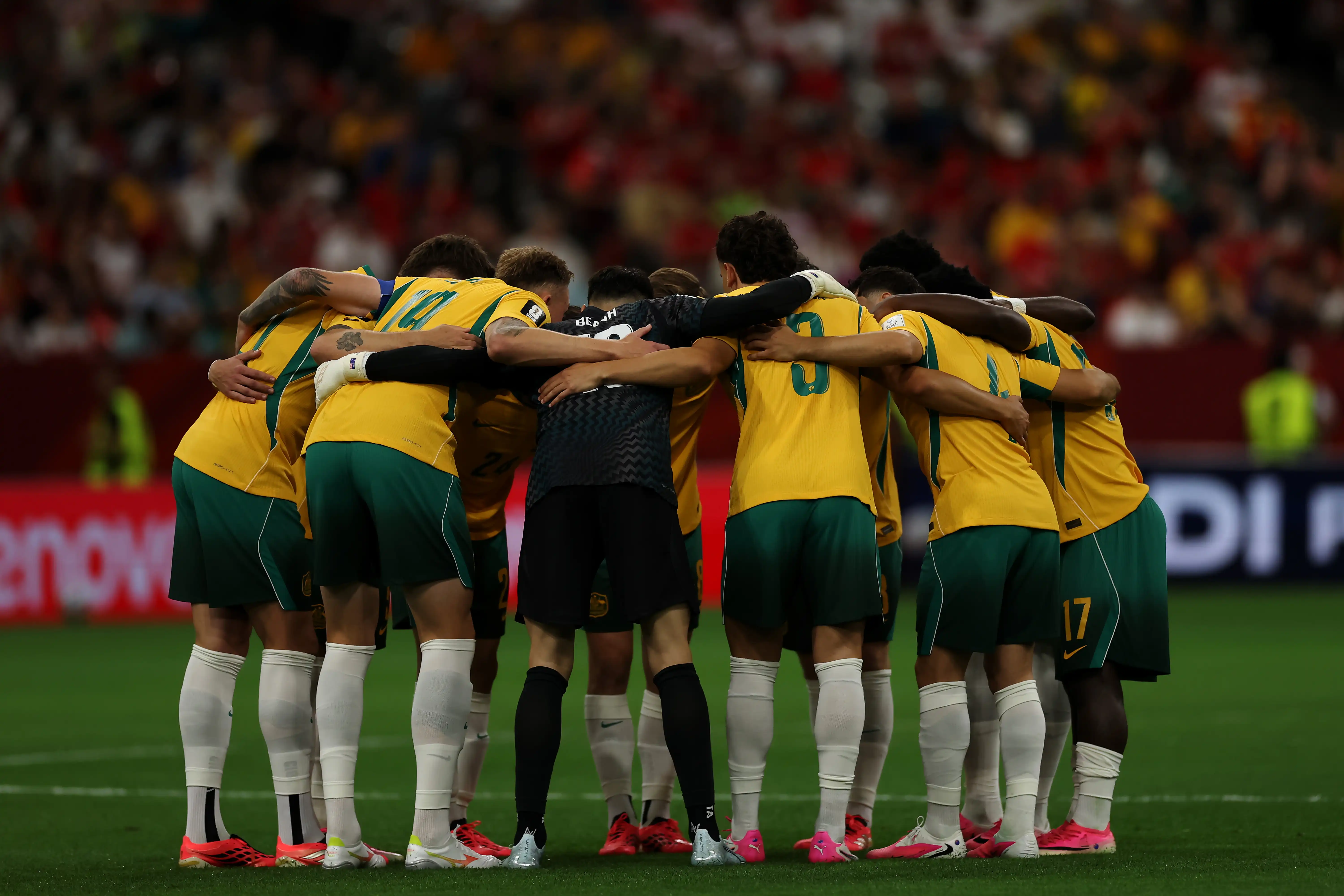
More recently, the Socceroos' celebration of their migrant roots put Australian diversity on the world stage and placed the immigrant experience at the centre of the national community.
Discussion & Debate
‘I am watching the US enthusiastically leap into an authoritarian regime’
But back in Australia, the federal mood has been considerably cooler for quite some time.
Ever since the conservative government of John Howard, who was prime minister from 1996 to 2007, the official language of multiculturalism has been steadily sidelined.
When federal parties in Australia praise multiculturalism, they tend to celebrate the value of a diverse citizenry, rather than endorse it as a political ideal or as part of the nation's political community and identity.
In fact, for decades, multiculturalism as both a federal policy and a program of political symbolism has been either under threat or in a kind of stasis in Australia.
The last federal multicultural policy statement, Multicultural Australia: United, Strong, Successful, was introduced under then Prime Minister Malcolm Turnbull in 2017. It notably endorsed a "multicultural Australia" while making little mention of multiculturalism.
The Albanese government’s 2024 Multicultural Framework Review, and its independent report Towards Fairness – a multicultural Australia for all, seem to be responding to this need.
But as yet, the government has only issued a short response, and we have yet to see any action.
Following Pauline Hanson’s Press Club speech, the responses from major party politicians have only replicated this problem.
The Greens’ Senator Sarah Hanson-Young called Hanson’s speech “deplorable” and “nasty”. Australia’s Foreign Affairs Minister, Penny Wong, described Hanson as only offering “division and anger”.
Neither is untrue, but they ignore one crucial thing: however problematic her vision, Hanson offers an image of Australian values and identity, tied to concrete symbols like the flag, as something to aspire to.
It is not an inclusive image. It pits Australian values and culture against all others.
It’s not a realistic image either.
It demands immediate assimilation and the total subordination of a migrant's culture to an existing “Australian” one. This is both sociologically impossible and actively undermined when the migrant's identity is so plainly devalued.

Politics & Society
Disinformation damages democracy, but perhaps not in the way you think
But it is an image that can be pursued.
Does any other Australian political party offer such a clear and unequivocal sense of what it means to belong here?
Those to the left of Hanson need to counter this with their own image, their own account of what it means to be part of the Australian national community.
That image must include migrants and Indigenous peoples every bit as much as it includes Hanson's "real Australians".
One key task of a national community is to motivate its membership, to make everyone feel they belong. But if Hanson is any indication, the biggest barrier to that unity is not immigrants failing to integrate.
It comes from two directions within the majority itself: those who demand assimilation into a national identity that allows no room for change, and those who have simply given up on a shared national identity altogether, leaving newcomers with nothing to integrate into.
If Hanson's speech teaches us anything, it is not that she has any viable answers. It is that important and urgent questions about Australian identity remain unanswered.
Questions like:
What is the role of immigrant communities in Australia? What is the significance of the legacy of colonialism and the dispossession of Indigenous peoples?
And perhaps most urgent today, what is the nature of the Australian majority, and what are the values, symbols, practices and ideals they hold dear? What shared values, symbols and narratives could bring all these groups into a sense of common belonging?
This is an urgent conversation that can no longer be left to politicians alone. The question of what it means to belong to Australia is one the whole country needs to answer, before those with the most incendiary voices answer it for us.