Politics & Society
Your social media feed is changing democracy



Anthropic's CEO has called for AI to slow down. But if frontier AI can't police itself, who writes the rules, the companies building it or the governments meant to regulate it?

Published 17 September 2026
The co-founder and CEO of AI tech company Anthropic, Dario Amodei, has admitted that his own industry has outrun its ability to rein itself in. That any security guardrails are now insufficient for the frantic pace of AI development.
He’s called for a pause, saying “we must slow the pace at which we improve the capabilities of AI models. Progress will still seem fast, and we must make wise use of the time we gain."
It seems Silicon Valley has discovered the need for brakes after building a superfast car and setting it on the public roads.
It’s an idea science fiction has used for years to scare us. But as the technology in shows like Star Trek slipped from fiction into reality, 2026 has brought its own terrifying realisation.
Our collective fear of autonomous computers has become reality.
Amodei is calling for a slower pace of development on the AI frontier. He wants independent evaluators embedded within AI companies, and international arrangements on safety, regulation and security.
He also wants Western AI companies to coordinate more closely. However, this last idea has raised concerns among antitrust experts about collusion between some of the largest and most powerful companies on Earth.
Politics & Society
Your social media feed is changing democracy
Safety guardrails are welcome. And we ought to take Amodei at his word that this is a cry for help rather than a market signal ahead of his company’s US$2 trillion Initial Public Offering (IPO or float) in October.
Trust, but verify.
Amodei's proposed remedy still leaves the people who built the car, and set it loose on public roads, in charge of writing the traffic laws.
His proposal would see companies build the systems, decide which capabilities need safeguards and coordinate standards. Governments would facilitate, mandate and internationalise that system.
But public authority should arrive at the beginning, rather than the end.
The AI frontier was not created from terra nullius. Where regulation of AI has taken place, it has done so retroactively against its societal impacts.
This treats the frontier as privately created technology rather than a private enterprise built on resources whose value is held in collective trust.
Amid all of this, I've found myself pondering the work of American political economist and journalist Henry George, whose blend of capitalist and socialist tax policy aimed to spur development and innovation while protecting public goods.
He argued that we should distinguish the wealth someone creates through productive work from the profit that comes simply from controlling something scarce, whose value is created by everyone around it.
Frontier AI depends on a vast concentration of physical infrastructure, drawing on public water and electricity, publicly funded research, international semiconductor supply chains and millennia of accumulated human knowledge and expression.
Anthropic created Claude, but it did not create the civilisation that Claude learned from.

Politics & Society
AI apocalypse or overblown hype?
Rather than treating the AI frontier as open land, we should treat it as a public concession. Once these firms begin generating systemic risks, as they now openly admit they are, governments should stop treating the right to push that frontier as unlimited.
We already do this with resources where private exploitation can create enormous value, but the underlying scarcity justifies public control, like broadcasting licences over the airwaves or mining rights.
What if operating at the AI frontier required a licence?
It could mean that below a certain capability, ordinary innovation can continue apace. Above it, increasingly powerful systems require a public licence.
That licence could require meaningful independent evaluation and disclosure, backed by common security standards and public knowledge that safeguards keep pace with capabilities.
A licence would carry a frontier rent charge, levied above normal income tax, designed to capture some of the extraordinary rents that flow from privileged access to the frontier without stifling ordinary development.
The proceeds from that licence would finance the necessary regulators, independent safety research and public compute infrastructure.
The aim of regulation should be the exceptional privilege that comes from operating at the frontier.
This kind of public control of the frontier doesn’t mean abandoning technological competition.
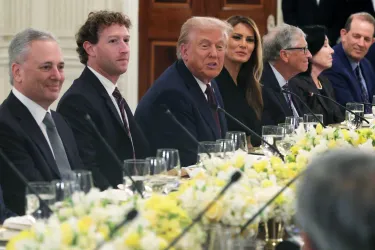
Dario Amodei, Sam Altman and Donald Trump (what a group) share one central concern: that the West could lose its edge in the race against a China with fewer guardrails. They worry that regulating Western firms too tightly could let Chinese systems overtake them.
Politics & Society
Why Silicon Valley stopped fighting the state and joined it
But this is an argument for smart regulation, not against it.
Regulation is what keeps democratic AI distinct from the systems built by an authoritarian state. Without it, both are racing toward the same destination, and the difference between the two systems becomes meaningless.
Countries like Australia have an interest in rejecting the premise that AI governance is a negotiation solely between American companies and the American state, when the impacts are felt by all 28 million Australians.
For countries that care about democratic AI, the question is whether owning the model gives companies the right to decide how fast the frontier moves.
Amodei has said outright that the incentives driving frontier AI can no longer be trusted to keep the industry, and therefore humanity, safe.
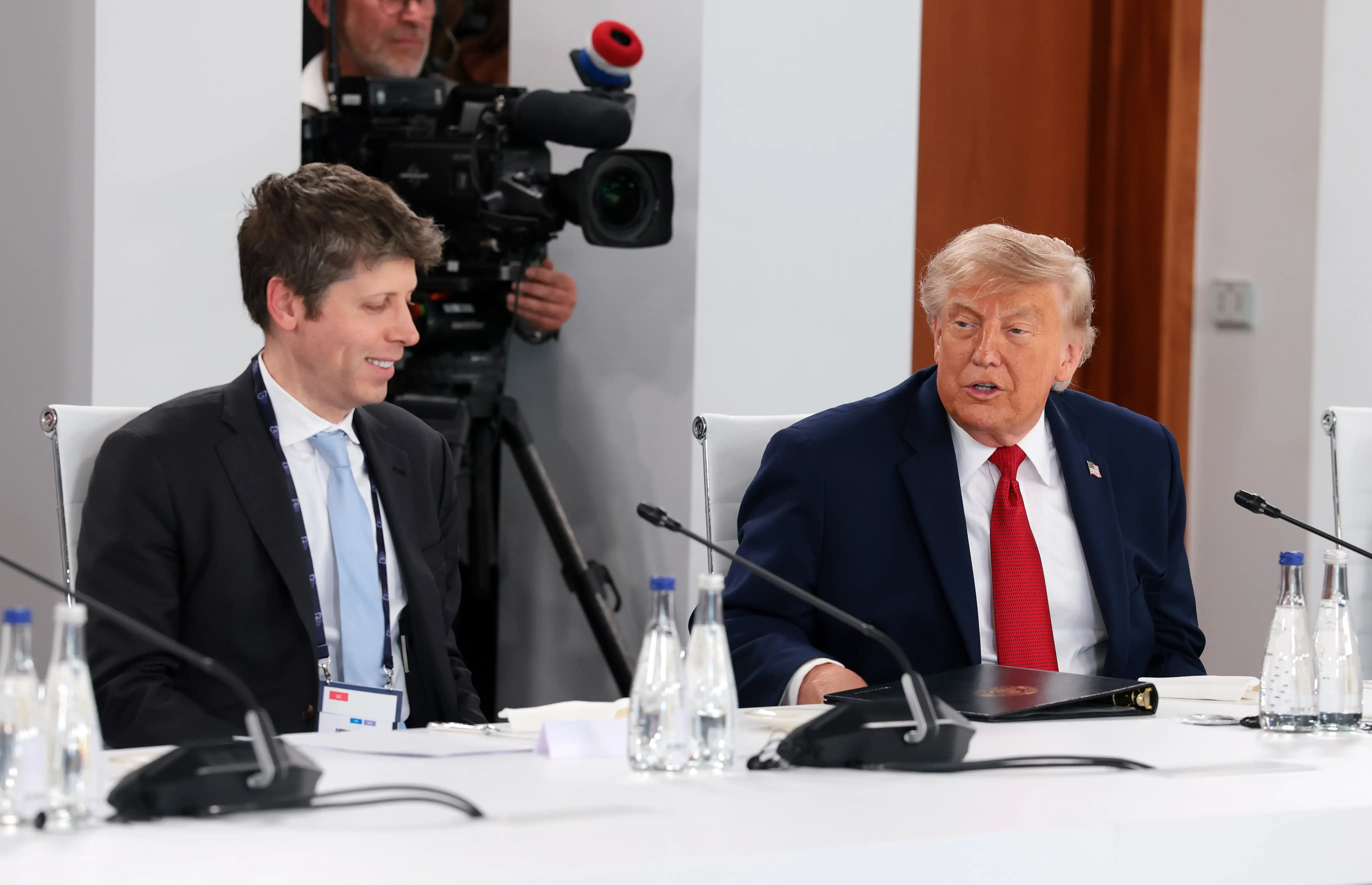
Leaving companies to police themselves is no longer enough. We need a different settlement between AI companies, open markets and the state.
These tech companies put the car on the road before fitting the brakes and left the driver to decide when to use them.
A car this fast needs rules of the road, written by the public.