


Preventing sexual violence at universities takes more than piecemeal education
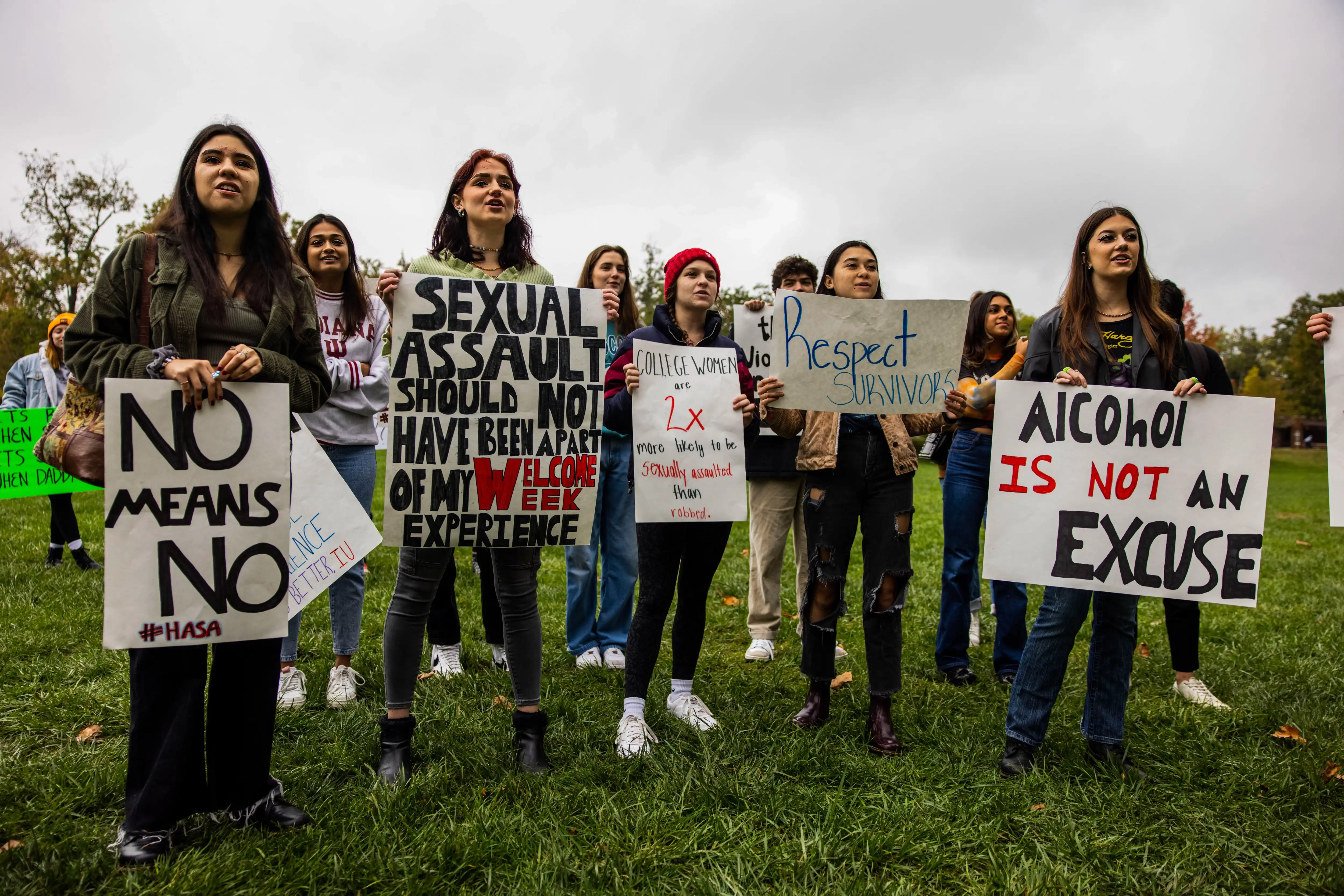
Australian universities are required to implement evidence-based prevention programs for sexual violence, but the available evidence is often US-centric, non-inclusive and siloed


Published 11 August 2026
The scale of sexual violence in Australian universities is alarming.
The most recent National Student Safety Survey found that one in six students were sexually harassed and one in 20 were sexually assaulted since starting university.

Students who face intersecting forms of inequality – LGBTIQA+ students, international students and students of colour – are even more likely to experience sexual violence.
A lot needs to be expected of universities in responding to this level of violence, especially those occurring on campuses. But how effective are current prevention programs? Not just in Australia, but globally?
Our latest paper reviews the research on prevention programs at universities in high income countries.
We wanted to assess how impactful they have been, and importantly, what sort of blueprint they set out for future research-informed approaches.
The answer, unfortunately, remains the same – not enough is being done to stop these incidents before they occur.
Demand for action
Since the groundbreaking 2015 US documentary, Hunting Ground, and several Australian reports documenting no improvement in rates of sexual violence, there has been groundswell student activism for universities to act.
Universities are well placed to prevent sexual violence, but they must recognise that sexual violence is more than an interpersonal issue – it’s a structural one.
In the hierarchical and patriarchal university setting, power dynamics and inequalities must be addressed so people feel comfortable reporting and disclosing to the support services available.
It was these structures that greatly contributed to the systemic problems shown in the US documentary. And it is happening in Australia too.

Following the National Higher Education Code to Prevent and Respond to Gender-based Violence enacted earlier this year, universities are now required to implement evidence-based prevention programs.
But what are they to do when so much of this evidence is US-centric, non-inclusive and lacks a whole-of-system approach?
One-off interventions won’t do
Since 1985, most efforts to prevent sexual violence in any setting have focused on changing attitudes, beliefs and knowledge.
This has often been done through things like bystander approaches – strategies that train people to safely intervene when they witness harmful, disrespectful, or dangerous behaviour.
But behaviour change has not followed, and few to none of these programs have resulted in significant change in victimisation or perpetration.
To address the structural conditions that enable sexual violence in universities, prevention needs to go beyond one-off interventions and piecemeal education programs that focus only on these factors.

Health & Medicine
No place for ‘good bloke’ excuse
In addition to shifting community attitudes, interventions must enable program and policy development, empower victim-survivors and bystanders, and break down power dynamics and gendered norms.
For our study, we used the whole-of-university framework from primary prevention peak body Our Watch as the bar for best practice.
The framework maps change across five domains, the where, and three levers, the how.
The domains are student life, teaching and learning, the workplace, research, and business and operations. The levers are values and behaviours, structures and policies, and culture and norms.
The wrong kind of evidence
We looked at 40 studies of sexual violence prevention programs in universities since 2012. And our findings are of significant concern.

Firstly, only three of the 40 studies were from outside the US or Canada, so there’s a clear lack of cross-cultural validity in what’s available. This is problematic for two reasons.
While the studies make universal claims for sexual violence prevention at universities, there’s no guarantee that these 37 studies hold up in different social and cultural contexts.
By assuming an American audience, this body of research also risks perpetuating US imperialism, adding to the considerable risks to validity and intersectionality.
Secondly, the studies tended to target majority white participants who were cisgender heterosexual women, with a limited focus on LGBTIQA+ communities, international students or staff, and students of colour.
And further gaps exist when Our Watch’s framework is applied.

Programs were heavily weighted towards the teaching and learning domain, neglecting integral aspects of student life, business and operations, workplace culture and policies, and equity in research.
These programs were also heavily weighted towards one lever: values and behaviour.
This can include approaches like one-off education sessions targeting healthy relationships or self-defence which, while beneficial, do little to shift the systemic problems, gender norms and power dynamics that enable and perpetuate violence.
Work to be done
Australian universities are tasked with implementing evidence-based prevention programs to prevent gender-based violence. But the kind of evidence they use to guide them must be relevant.

What we need are whole-of-university programs that meaningfully address what drives sexual violence and, therefore, what ultimately prevents it.
While primary prevention programs for sexual violence are vital, they are relatively new.
Interventions should be context-specific, intersectional and focus on university-wide capability to create safe and respectful cultures. One in six students is a shocking statistic and the response needs to recognise this.
The new legislation provides the impetus for universities to act, supported by a strong funding and resource commitment.
Developing, implementing and evaluating new and better sexual violence prevention programs for Australia's university staff and students must be a priority. And it must be guided by the right evidence.
If you are in immediate danger, call 000.
If you or anyone you know needs help or support, you can contact:
1800RESPECT on 1800 737 732, text 0458 737 732 or online chat - available 24/7.
Lifeline on 13 11 14 offers 24-hour crisis support.
Men's Referral Service on 1300 766 491. Support for men, including those wanting to change their own behaviour.
Contact your university's safety or community team and ask about support services.