

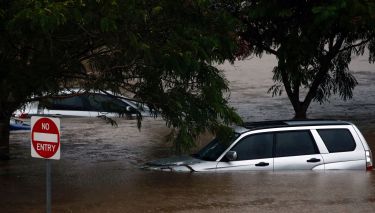
Rising sea levels projected to cost Australia more than $855 billion
Using two climate scenarios, new economic modelling shows the costs of rising seas and storm surges – and the need to rethink where we build and how to protect coastlines


Published 10 September 2026
In Australia, when we think about the impacts of climate change, we tend to focus on heatwaves and bushfires.
And rightly so. But what about rising sea levels and storm surges?
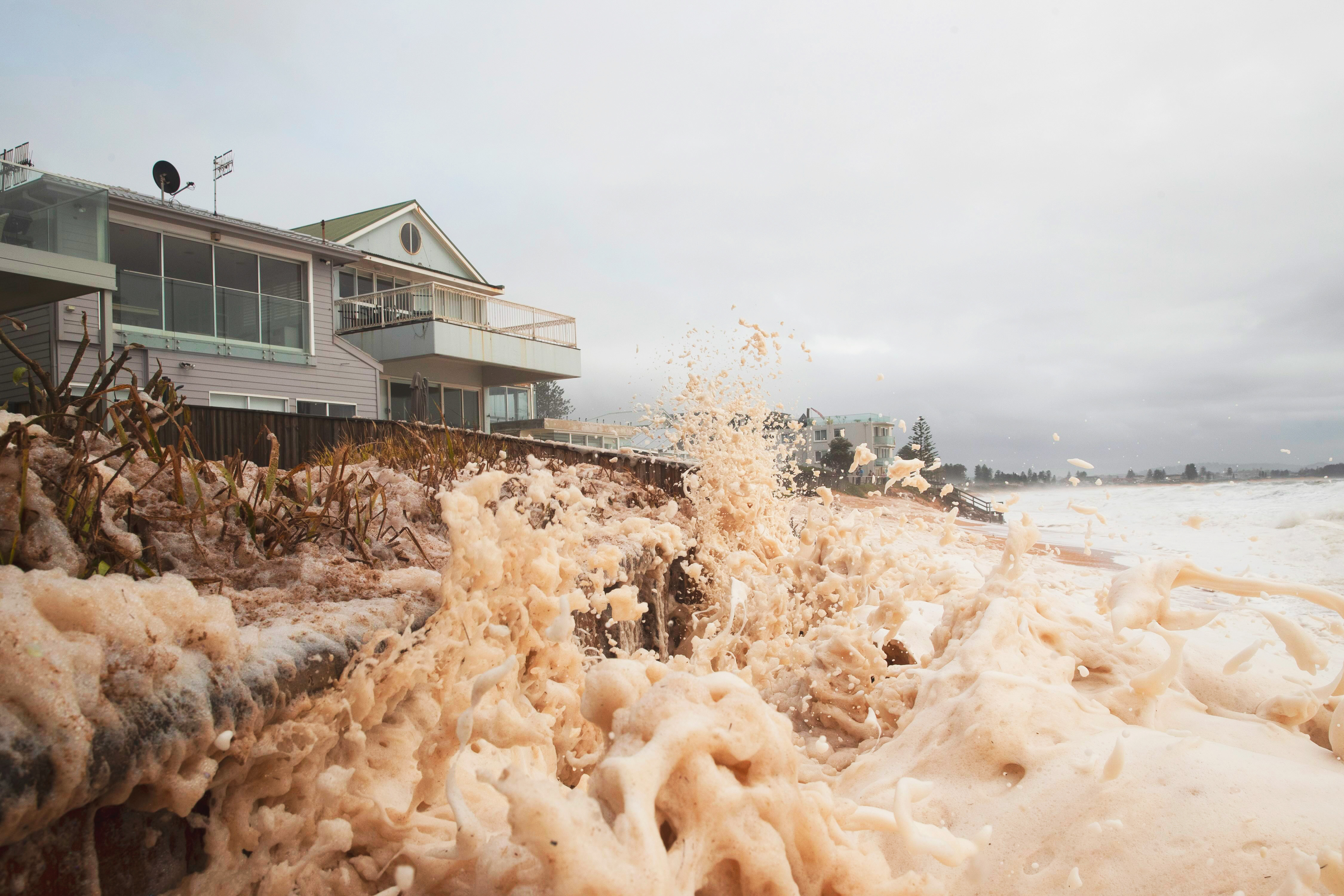
We know that glaciers worldwide, along with the Greenland and Antarctic ice sheets, are melting.
We also know the ocean is getting hotter, and that all of this is raising sea levels and intensifying storm surges along the coast.
So, what does this mean for Australia?
Given that roughly half of the Australian population lives within seven kilometres of the coast, it’s serious.
Recent work, led by our team from the University of Melbourne and the Australian National University – now published in Scientific Reports and highlighted in a companion report by the Climate Council – spells out just how serious this is.
Rising seas mean more than altered coastlines.
It means saltwater intrusion into our vital freshwater sources, destruction of residential and commercial properties, damaged infrastructure and ecosystems, loss of farmland, and much more frequent, higher-magnitude flooding and storm surges.
Our study focuses on flooding from sea level rise and storm surge across all major assets.
We analysed specific economic losses to residential and commercial properties in each state, damage to environmental areas and reserves, infrastructure (including roads, powerlines, transport and water treatment plants), agricultural lands, industrial facilities, mining, and beaches.
This allowed us to develop first-of-its-kind estimates of the nationwide economic damages from sea level rise and storm surge, for each State and the Northern Territory. And our estimates show billions, potentially trillions, are at stake.
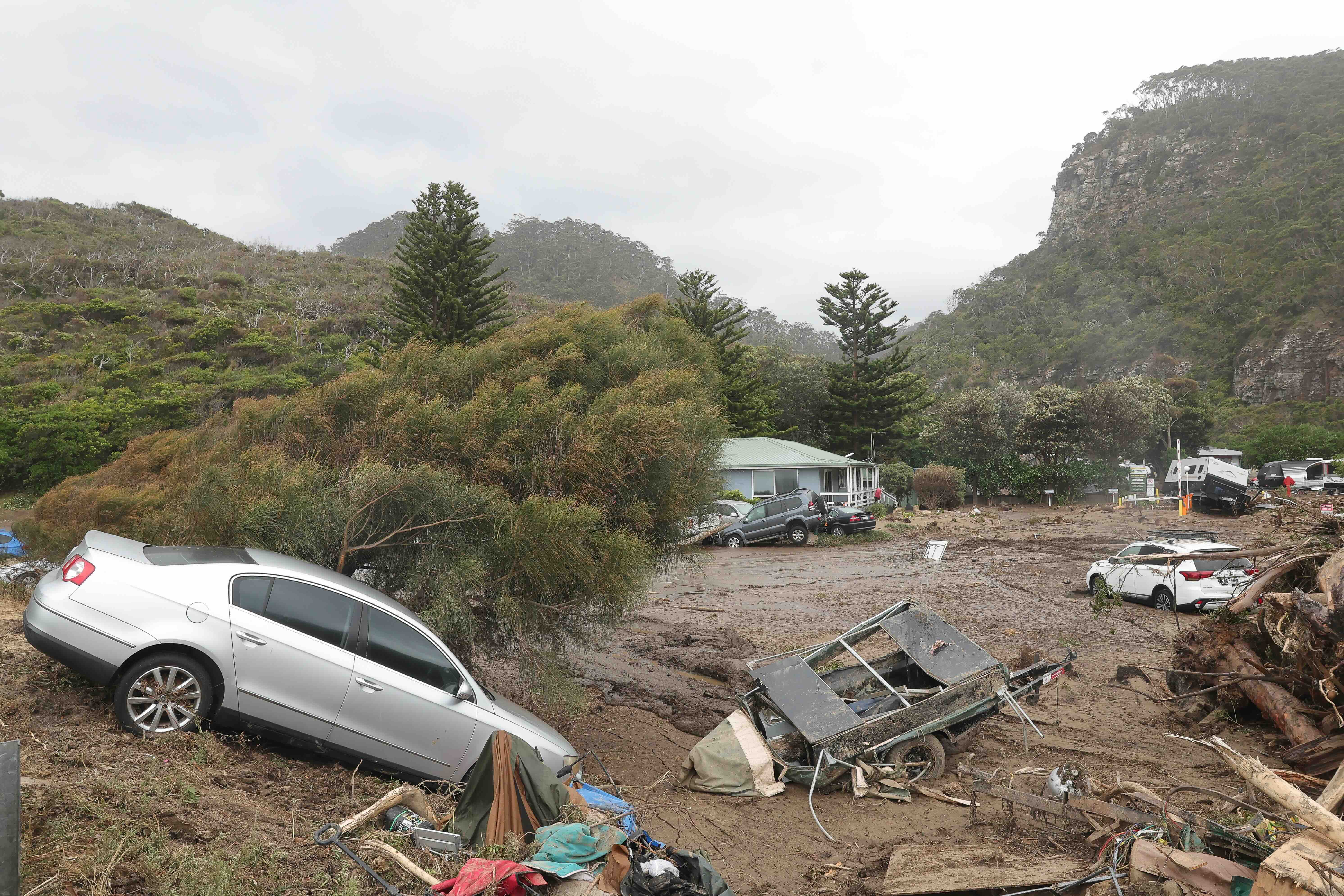
Our research uses a future scenario developed by the Intergovernmental Panel on Climate Change (IPCC) called SSP2-4.5, which is an intermediate greenhouse gas and global response scenario leading to around 2.7°C of average global warming above preindustrial levels by 2100.
This is seen as broadly consistent with a continuation of current climate policies, but well above the 1.5°C safe climate change level agreed to in the Paris Agreement.
But the peer-reviewed publication in Scientific Reports also considers that global warming based on additional fossil fuel emissions could reach near or above 4⁰C.
Specifically, our study presents the impacts of sea level rise on land use and assets across 1156 coastal sub-regions and 239 coastal ‘hot spots’ in Australia, based on prior estimates of sea level rise to 2100.
Our work then uses highly detailed spatial modelling and land use data to determine which assets, across up to 88 land use categories (depending on sub-region), would be inundated or flooded by sea level rise and storm surge.
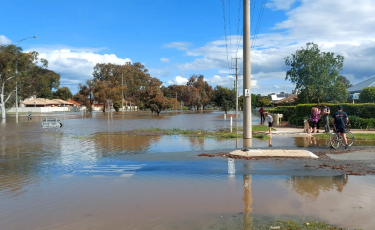
The final challenge was to estimate the economic damages resulting from this inundation for each asset class, as a follow-on from a study we did for Victoria.
The resulting national economic damages range from AUD$866 billion to AUD$1.9 trillion.
These esimates use an annual 5 per cent discount rate for future yearly damages – as is usual for economists who argue that future damages are worth less today since dollars today can earn a rate of return.
However, undiscounted future damages are even more staggering.
So, when it comes to intergenerational assets damaged by climate change, this may be the better metric.
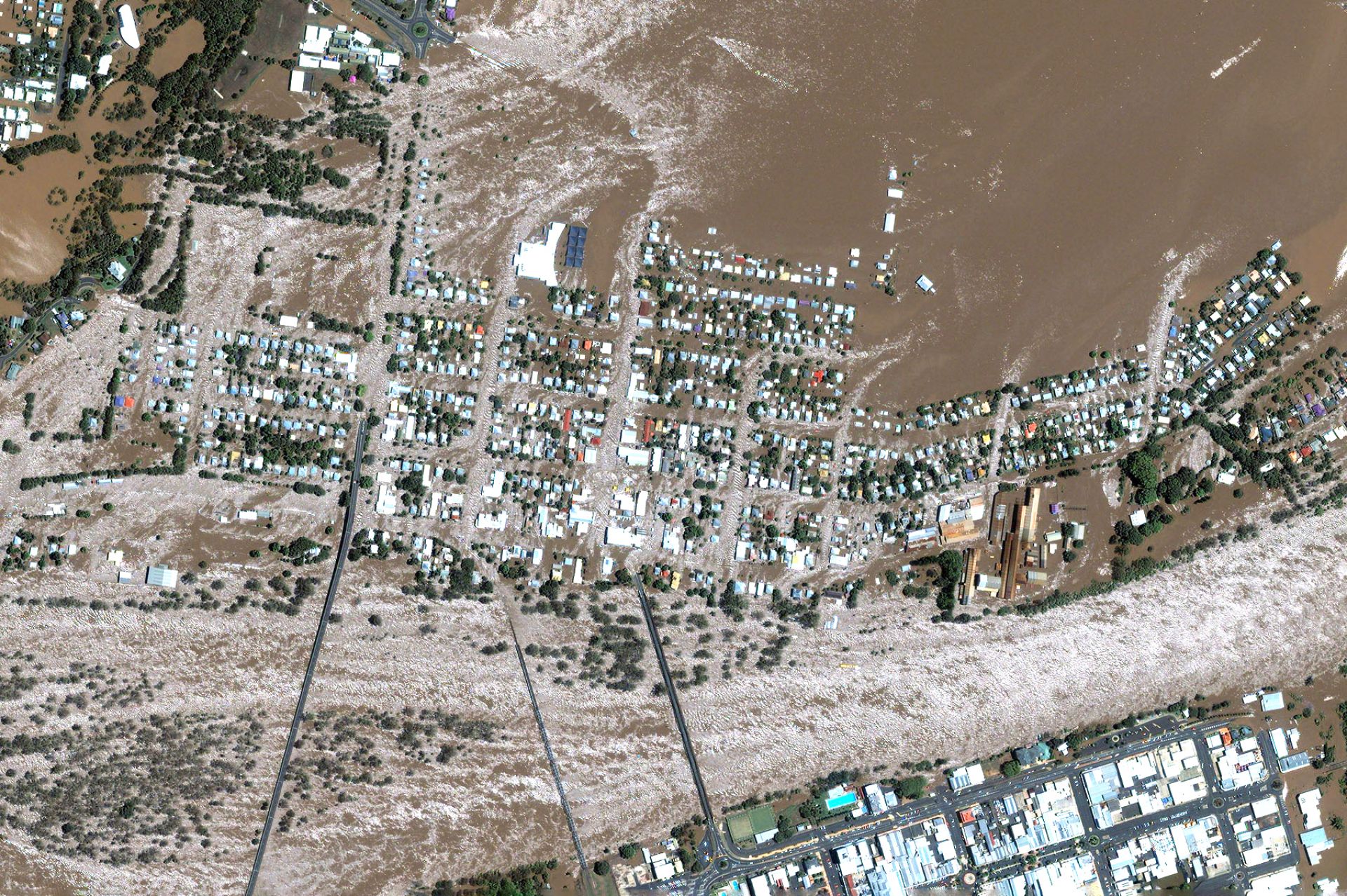
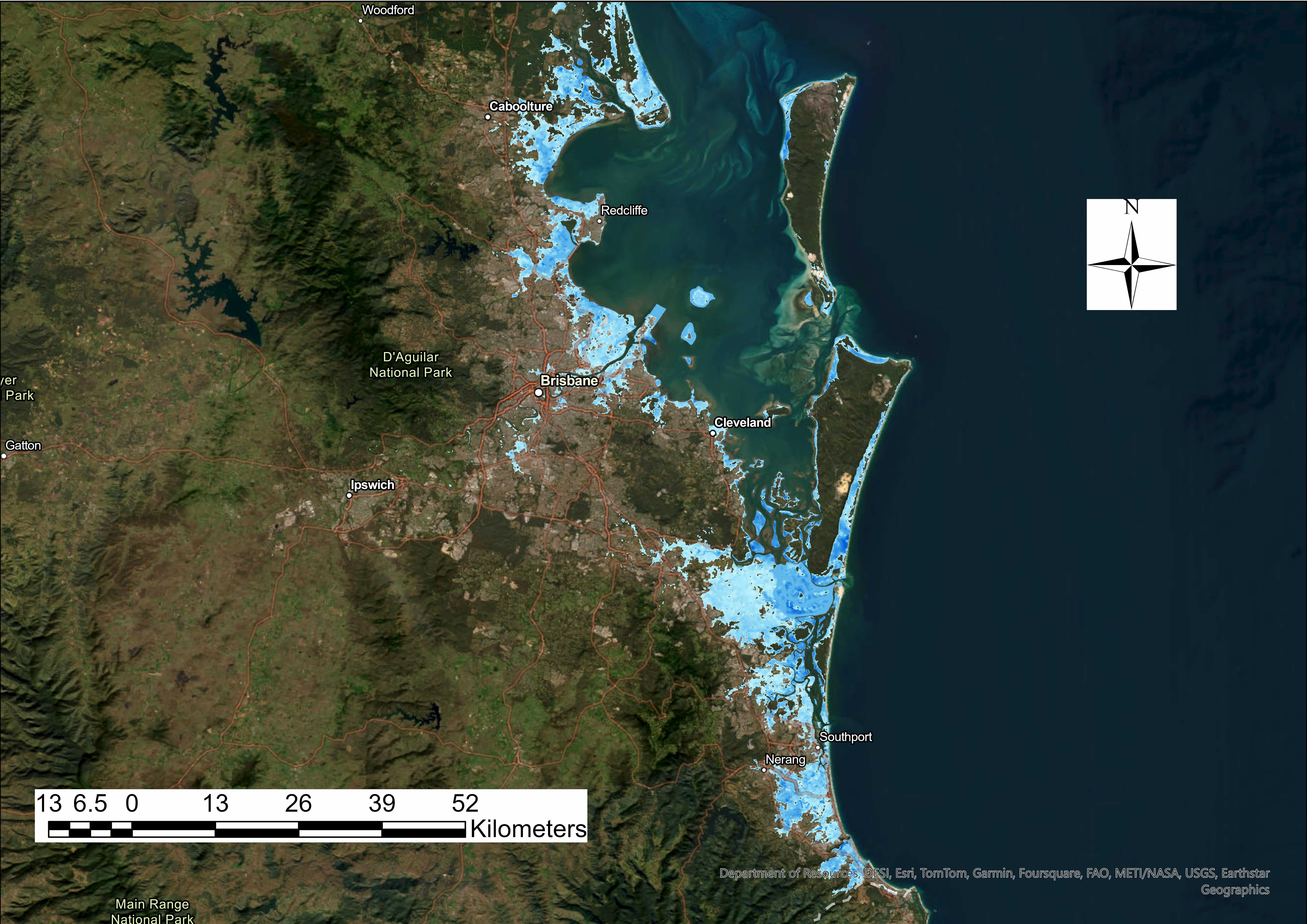 Flood inundation from sea level rise and storm surge for Southeast QLD, RCP4.5, year 2100. Graphic: Kompas, et al. (2026)
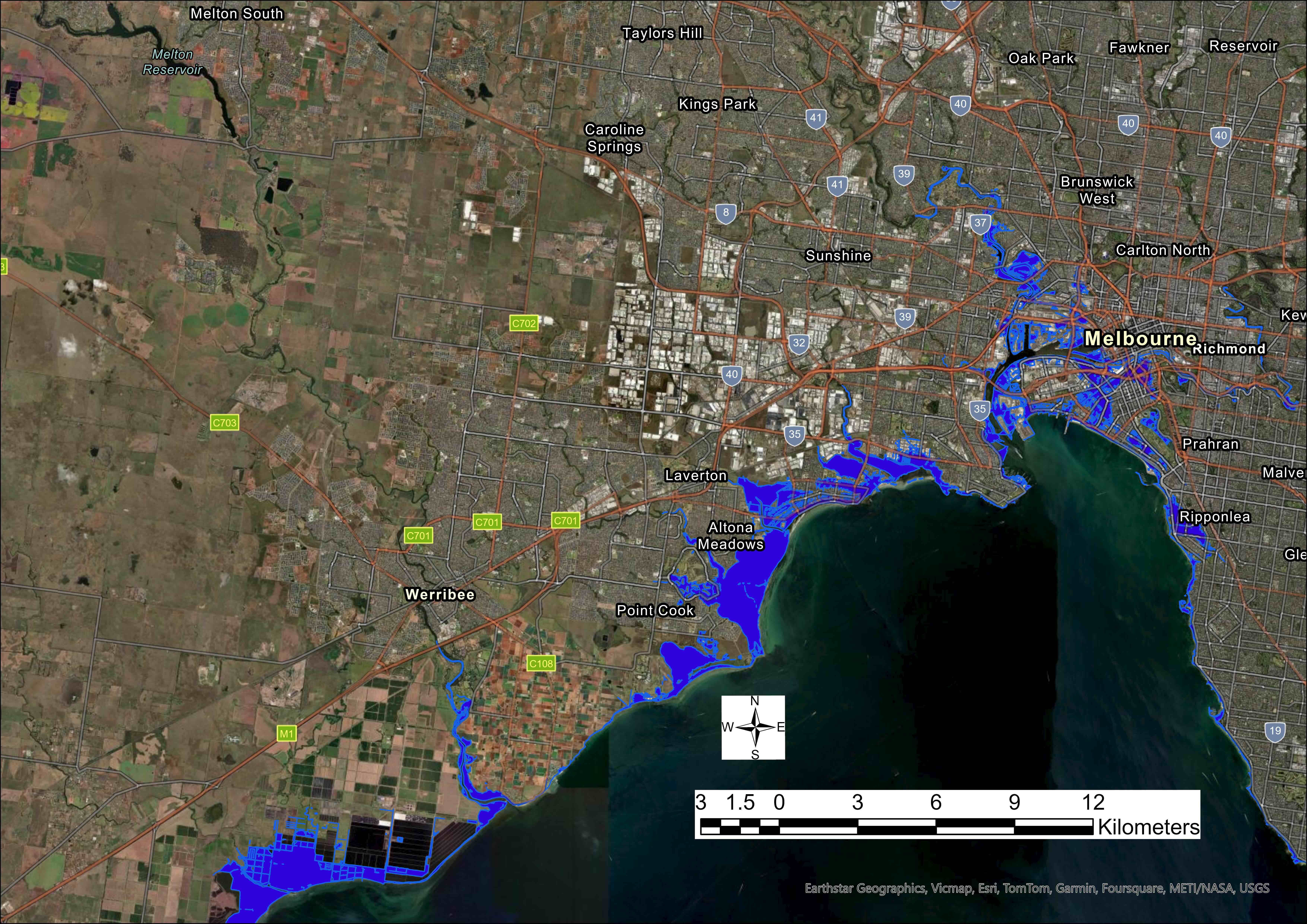 Flood inundation from sea level rise and storm surge for Victoria, RCP4.5, year 2100. Graphic: Kompas, et al. (2026)
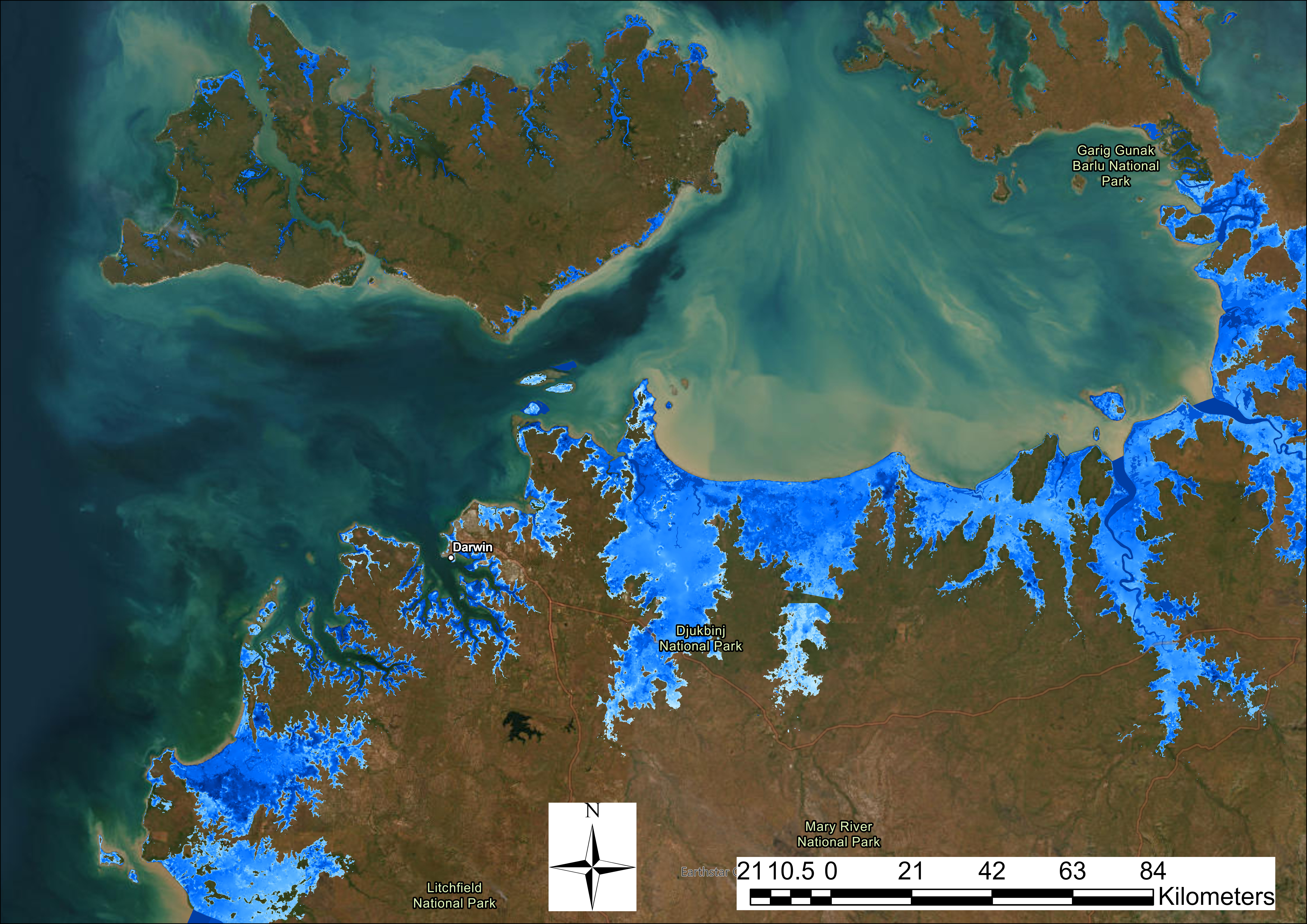 Flood inundation from sea level rise and storm surge for Northern Territory, RCP4.5, year 2100. Graphic: Kompas, et al. (2026)Flood inundation from sea level rise and storm surge for Southeast QLD, RCP4.5, year 2100. Graphic: Kompas, et al. (2026)Flood inundation from sea level rise and storm surge for Victoria, RCP4.5, year 2100. Graphic: Kompas, et al. (2026)Flood inundation from sea level rise and storm surge for Northern Territory, RCP4.5, year 2100. Graphic: Kompas, et al. (2026)
1 / 3
And the direct costs of these impacts are not shared equally.
Of all jurisdictions, the Northern Territory will suffer the largest proportional annual loss relative to its economy of between 3.7 and 5.9 per cent.
The remaining affected states are Queensland (1.46 to 3.58 per cent annual losses), Western Australia (1.74 to 3.08 per cent annual losses), South Australia (1.16 to 3.28 per cent annual losses), Victoria (0.99 to 1.94 per cent annual losses), and Tasmania (0.65 to 1.93 per cent annual losses).
New South Wales is the least affected state, with proportional annual losses relative to its economy of between 0.65 and 1.87 per cent.
Damages are still very profound but smaller as a fraction of a larger economy.
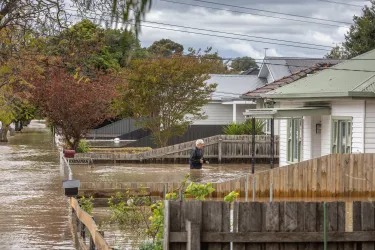
Under the 2.7⁰C temperature-increase scenario, Queensland 93,157 homes at risk, the most of any state.
They are followed by New South Wales (71,210) and Western Australia (51,366), with over 619,000 hectares of farmland in danger nationwide.
The Gold Coast is financially the most exposed with a potential economic loss of AUD$84.4 billion.
The study’s projected costs, as high as they are, do not account for many non-market losses and environmental damages, like losses in mangroves, biodiversity and heritage sites, or vast damages from coastal erosion.
Meaning the actual cost to Australians will be much greater than the study’s estimates.
So, what do we, as Australians, need to do about it?
First, Australia must do its part to reduce greenhouse gas emissions and harmful land use change, the principal causes of climate change and ocean warming.
Second, governments at all levels must go beyond planning and effectively adapt and respond to the tsunami of costs and consequences coming our way from rising seas.
Acting now is not something that can be put off any longer.
Australians must also prioritise the most vulnerable and those communities least able to get out of the way of sea-level rise.
Sciences & Technology
Extreme weather is Australia's new normal
This means financially supporting Indigenous communities in Tropical Australia so that they can develop their own adaptations to sea-level rise and storm surge.
Acting now also means no longer permitting new dwellings in highly vulnerable locations and ensuring prospective buyers understand the risks of acquiring existing dwellings in high-risk places.
In many cases, retreat from the coast will also be necessary.
But how can we pay for it?
One suggestion is to impose a small levy, based on land values, on all land vulnerable to sea-level rise.
This fund will share the burden and could support any action that reduces risk and increases resilience.
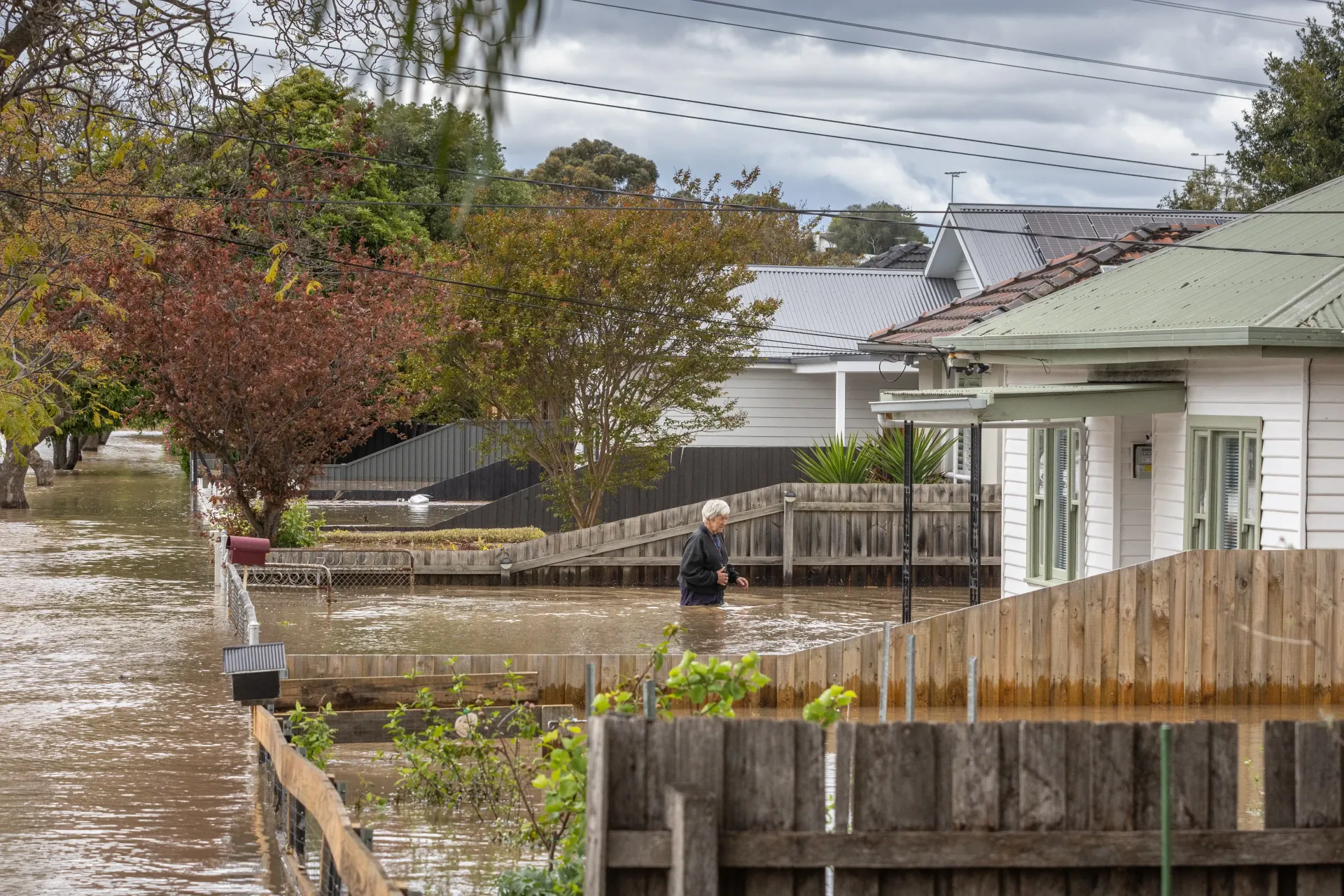
To make sure polluters pay, this multi-billion-dollar sea-level rise ‘response fund’ should be supplemented by a pollution tax based on the greenhouse gases emitted by large polluters in Australia.
The numbers don’t lie.
Australians face a huge bill as a coastal nation threatened by rising sea levels.
As a nation, we need to advance our actions to both reduce greenhouse gases and respond to this slow-moving tidal wave of costs and consequences.
By acting now, not later, and by sharing the burden while prioritising the most vulnerable, we can avoid the worst from rising seas.
The study was led by Professor Tom Kompas at the University of Melbourne, with co-authors Dr Tuong Nhu Che and Emeritus Laureate Professor Quentin Grafton at the Australian National University.