Politics & Society
65,000 Years: A short history of Australian art


This isn't just another art exhibition; it’s a must-see that challenges everything you think you know about Australian history – and it’s in its final weeks

Published 11 November 2025
I cannot impersonate an art critic. So, thank goodness this expertise or any qualifications are not necessary for me to urge – no, to beg, to insist – that you visit the exceptional exhibition that is 65,000 Years: A Short History of Australian Art at the Potter Museum.
For many Australians, it’s slowly dawning on us that we were badly misled when we were taught Australian history at school.

Captains Cook and Phillip, Port Arthur penal settlement, the Mutiny on the Bounty, the Rum Rebellion, the Gold Rushes – these tidbits, little episodes in our national timeline, were gift-wrapped and presented as seminal, only possible because the colonists, as civilised settlers, prevailed against the wild landscape and its savage inhabitants.
In stuffy classrooms, we were never taught the truth.
A teacher was never going to be able to stand in front of a restless mob of unmotivated teens and catalogue decades of violent massacres, rape and poisonings of our original Indigenous inhabitants.
It was impossible when I was in short pants and remains awkward today for many.
Politics & Society
65,000 Years: A short history of Australian art
For example, my education missed the fact that there were permanent settlements of First Peoples. I had not heard about the Gunditjmara people’s ancient aquaculture system, Budj Bim, about eel farming and traditional land management.
Nor was I taught the systems of familial connection to Country that were only recognised after Indigenous land rights campaigner, Eddie Mabo, went to court in the 1980s.
I knew nothing of water holes that were filled with poisons, or troopers tracking down and wiping out entire extended families in ruthless hunting parties that were rarely called to account.
Truth-telling – that is, the process of acknowledging and sharing a more accurate and complete history of our nation – can help bring the past to light, allowing us to confront and rethink it.
But truth-telling can be done in many different ways.
Over the past four years or so, the Yoorook Commission in Victoria – a precursor to the groundbreaking Victorian Treaty – heard dozens of witnesses from First Nations communities graphically describe their often distressing family stories, matched by at times excruciating evidence from historians.
Bureaucrats have been asked to try to account for their predecessor’s policies, often exposed as inexplicably heartless when seen through today’s eyes.
Matching that overdue forensic examination of the state’s past abuse of our original inhabitants, the University of Melbourne itself embarked on a reckoning.
Dhoombak Goobgoowana is a searching inquiry into the practices that stained the past – including eugenics – that, just a few generations ago, would have likely secured the commissioning of a statue honouring a professor, but are now a source of institutional shame.
Politics & Society
‘What version of the past is promoted and what’s obscured?’
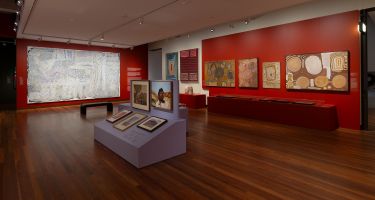
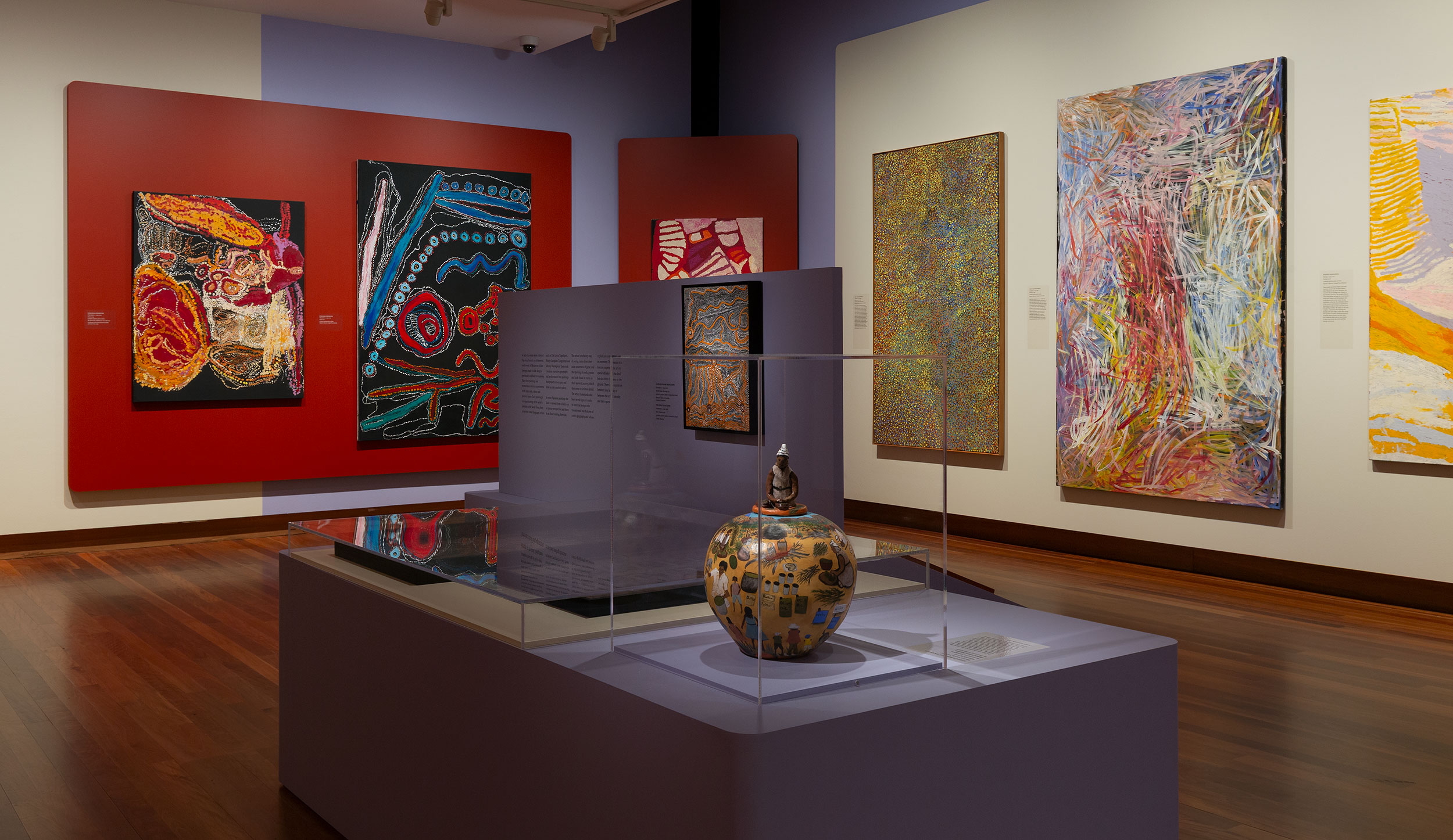
That soul-searching has contributed to the 65,000 Years: A Short History of Australian Art exhibition, which marks the re-opening of the Potter Museum of Art, after an extensive refurbishment.
And it delivers magnificently.
Jointly curated by the University of Melbourne’s energetic Associate Provost, Professor Marcia Langton AM, senior curator Judith Ryan AM and associate curator Shanysa McConville, in consultation with Aboriginal and Torres Strait Islander artists and custodians of traditions, the exhibition tells us a story in a way we have never seen it told before.
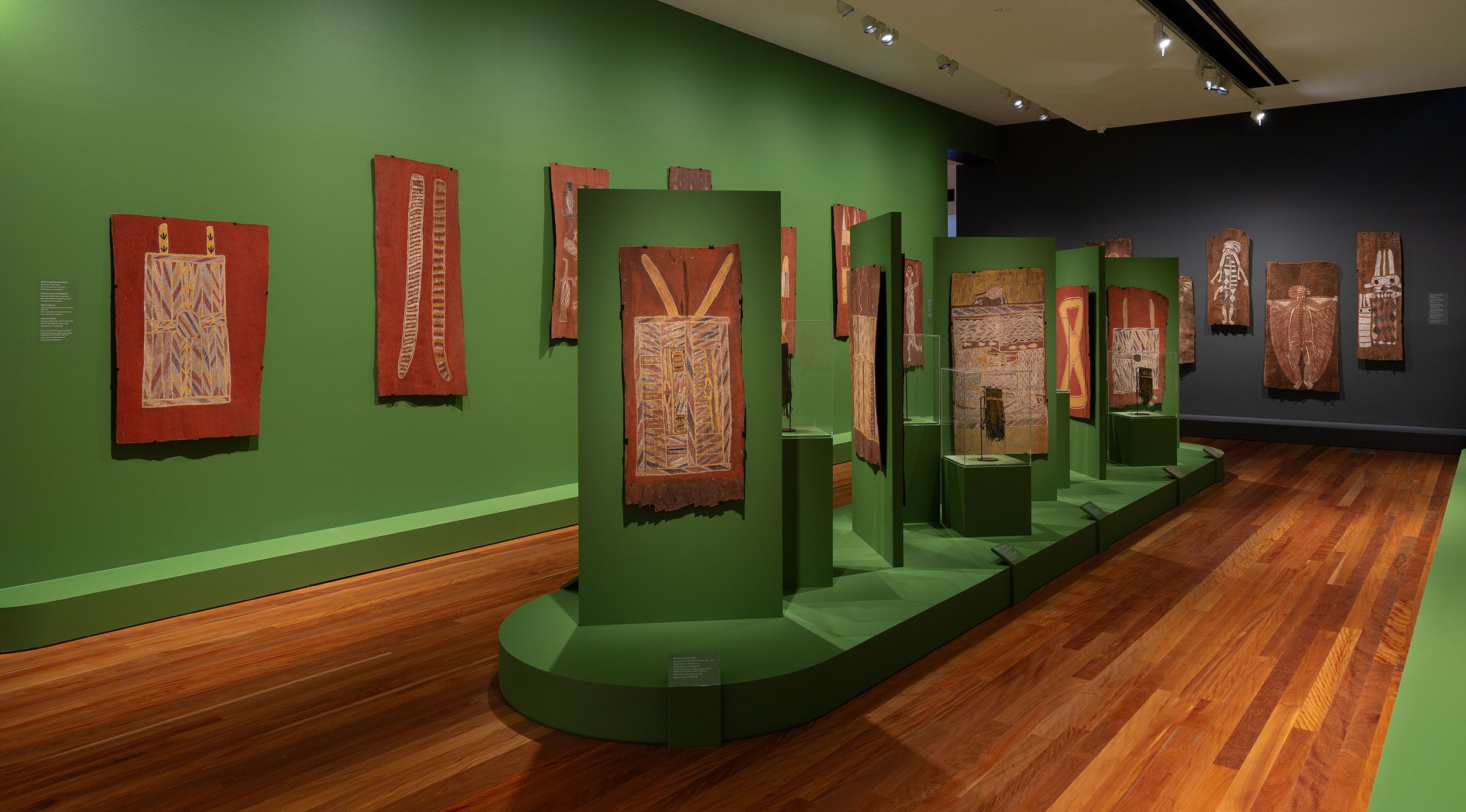
Gathering artworks from public and private collections around the continent and overseas, it tells our story from a First Nation’s perspective.
Depicting the earliest experiences of people who were there for the arrival of Europeans, through paintings, objects and drawings that document the impact of white settlement.
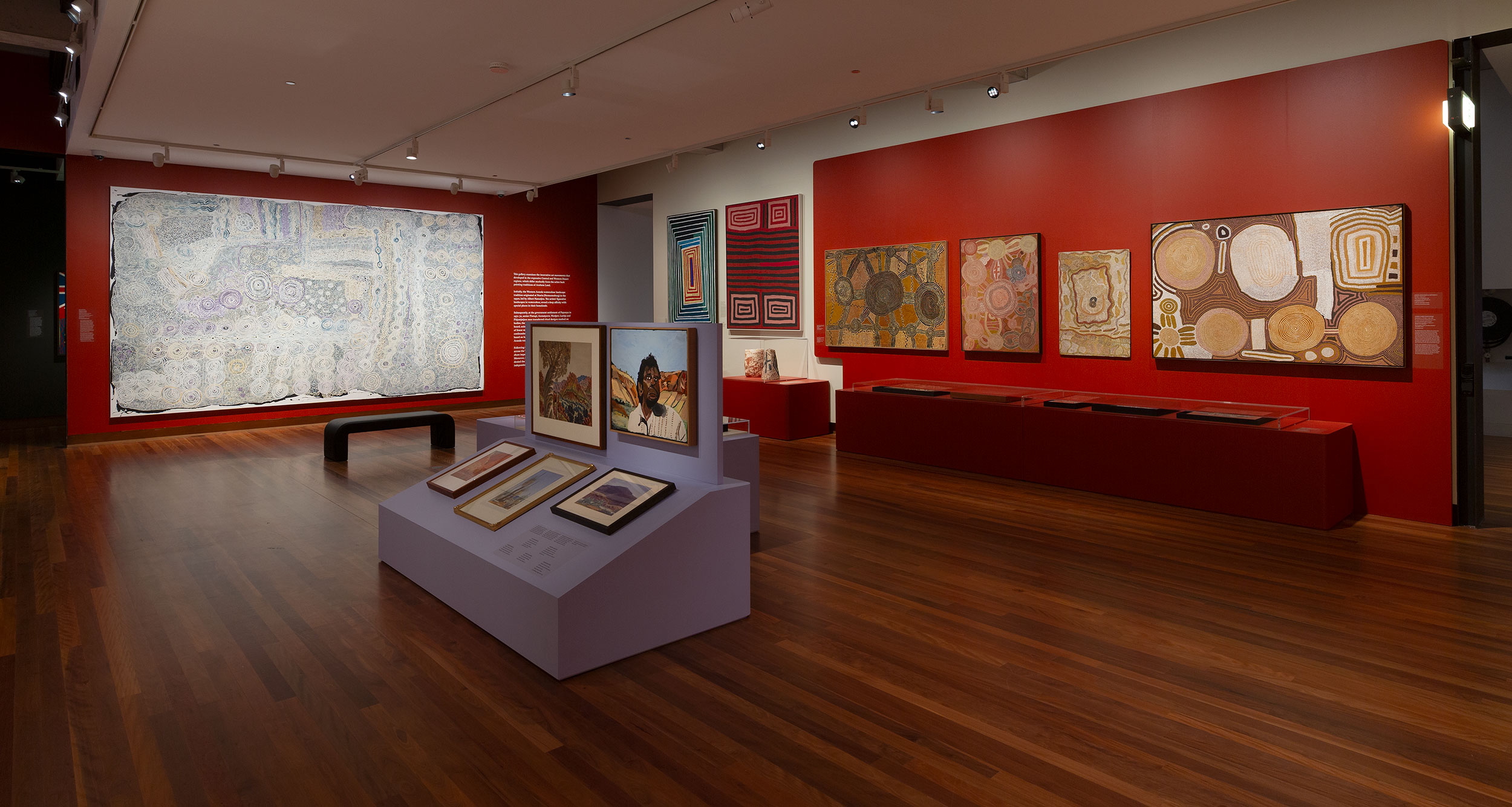
It advances right through our recorded history up to a celebration of contemporary Indigenous art and emerging Indigenous artists.
It is confronting and revealing. But also exuberant and exhilarating.
If, like me, you thought you knew our story, that you were aware of how early Australia was forged, that you had consumed enough accounts by the likes of Henry Reynolds, Bruce Pascoe, Marcia Langton and others documenting the mythology of our colonial past – think again.
And visit 65,000 Years: A Short History of Australian Art before it’s too late.
The exhibition, 65,00 Years: A Short History of Australian Art is open to the public at the University of Melbourne’s Potter Museum of Art until 23 November, 2025. Entry is free.