
Health & Medicine
Brush your teeth. It could save your life



Molar incisor hypomineralisation (MIH) can weaken children's teeth, leaving them painful and prone to decay. A new study has narrowed down the hunt for a solution


Published 3 August 2026
Somewhere in Australia, a child is wobbling a baby tooth loose as an adult one pushes up behind it. For one in seven Aussie kids, that new tooth arrives already weak, marked with a creamy white or brownish patch in the enamel.
It’s called molar incisor hypomineralisation, or MIH. While you may not have heard of it, many parents may know it as chalky teeth or cheese teeth.
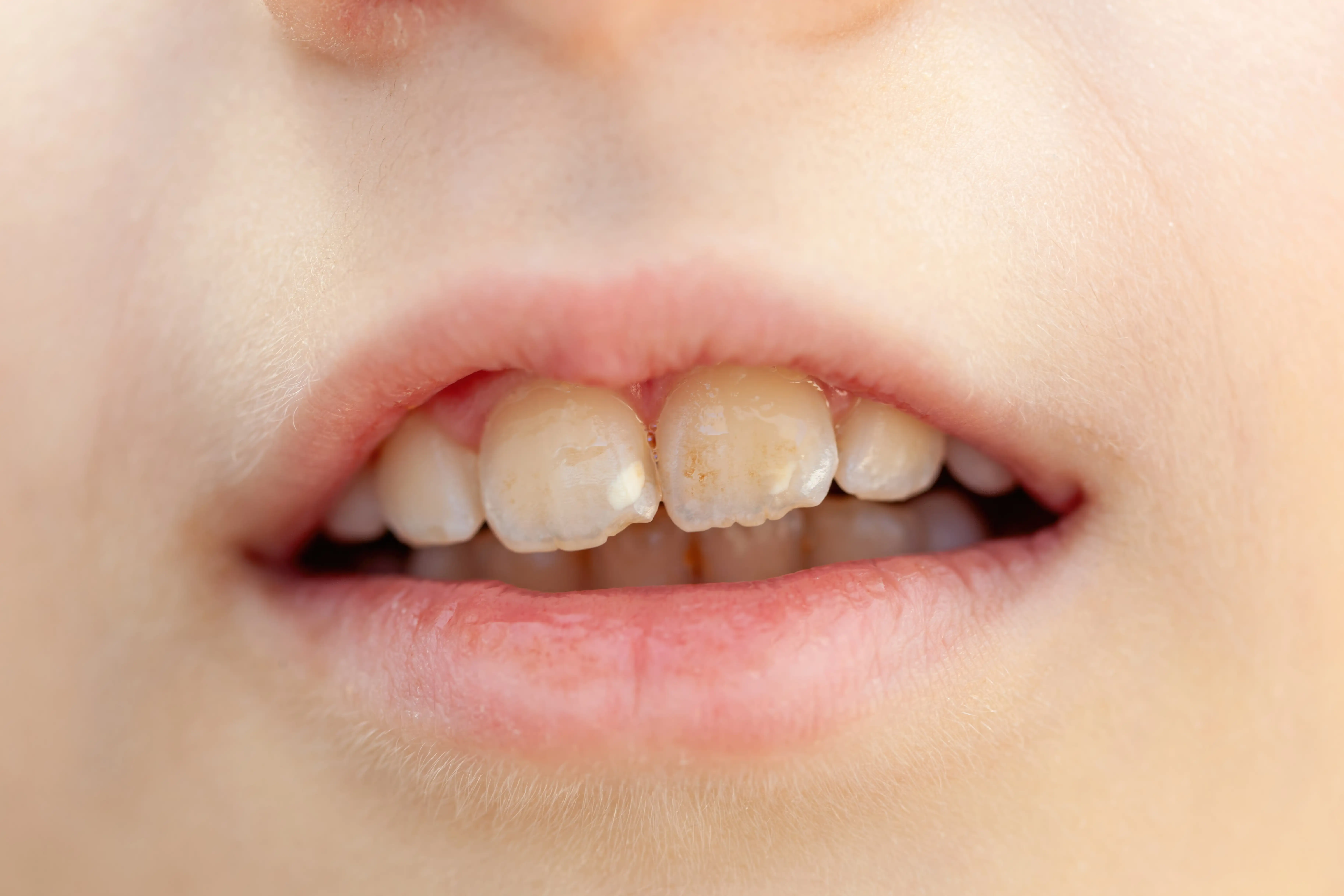
The patches are spots where the enamel formed with too little mineral, so it is softer and weaker than it should be. Unlike a cavity, which is a hole worn through by acid from sugar-loving bacteria, MIH is there from the very start.
It’s built into the tooth as it forms, like a birthmark.
It usually appears on a child’s first adult molars and front teeth, which come through between five and seven years of age.
Weak enamel is a serious concern. These teeth can be painfully sensitive, and prone to chipping and decay even during ordinary chewing.
Children with MIH need nearly five times as much dental treatment by the age of 18 as those without it. The numbing injections needed for dental work also tend to work poorly on these teeth, which can make treatment harder and more distressing.
Health & Medicine
Brush your teeth. It could save your life
Importantly, no one knows what causes MIH or how to prevent it. And it’s this mystery that sent us hunting for an answer.
For years, the trail led towards inflammation. An important clue was timing.
MIH has been linked to illnesses and high fevers in early childhood, the very time when adult teeth are quietly forming inside the jaw.
Fevers and infections can trigger systemic inflammation, the body's whole-of-system response to threat. And science already knows that inflammation can disrupt developing tissues.
So, the theory was that early inflammation interferes with enamel while it forms, leaving teeth weak with chalky patches.

But most studies relied on parents recalling which illnesses their child had had years before. And this is where a rare piece of Australian science came in.
The Barwon Infant Study has followed around a thousand children in Victoria's Barwon region from before birth to the age of 13.
It was designed to trace how the earliest years of life shape later health, gathering something no parent's memory could: real blood samples, banked at key moments through early childhood.
We used this data to measure two markers of inflammation at five points across the window when MIH teeth develop: 28 weeks into pregnancy, at birth, at six and twelve months and at four years of age.
Then we examined the teeth. Nearly 500 children had standardised dental checks at an average age of around 12 years old.
For the first time, we could test the inflammation theory against laboratory measures rather than recollection.

Health & Medicine
Why those sugar-free products damage your teeth
Our research, published in the Journal of Dental Research, found there was no meaningful link between early-life inflammation and the risk of developing MIH.
While that might sound like a dead end, it’s the opposite. Ruling out a leading explanation is how science tightens its search.
It means we can look harder at where the answer might actually be. So where is that? Most likely, it’s a mix of genes and environment.
Children with MIH are also more prone to other developmental problems with their teeth, including missing teeth, which could hint at a genetic thread.
But it’s not simply passed down – studies of twins show the environment plays its part too.

So, the cause is probably not a single culprit but several acting together, which is part of why it has been so difficult to pin down.
The rest of the challenge is timing.
These teeth form over years, from pregnancy to around age four, then wait unseen in the jaw until they grow (or erupt). By the time a dentist spots MIH, the damage is already done.
A common assumption is that bad teeth mean bad habits, that any dental problem could have been brushed away.
MIH is a developmental condition. A parent could not have prevented it and a child is not to blame for it.
This matters, because tooth decay is still widespread in Australia, affecting more than 40 per cent of school-aged children.

Health & Medicine
The stories our teeth can tell
For kids with MIH it can be even harder. Weak teeth can crumble while eating, trapping food and bacteria. Sensitive teeth can hurt too much to brush.
What parents can do is stay alert.
As the first adult teeth arrive around age five, watch for chalky patches, and keep up regular dental check-ups. Catching MIH early is the best way to head off the pain and decay that can follow.
For now, our search continues.
Because MIH is probably the result of several factors at once, the next answers are likely to come from very large studies that pool children across different countries and populations.
By understanding what weakens enamel as it forms, it may be possible to identify those fragile spots before teeth break down and, one day, prevent MIH before it starts.