Politics & Society
US uncertainty has left key countries rethinking their Trump ties


While the world's attention is focused on Iran, back in Washington, a US Supreme Court ruling is quietly stripping Trump of one of his most powerful foreign policy tools

Published 5 March 2026
Over the last 80 years, the American Presidency has grown monumentally in both size and scope.
The founders of the country were adamant about freeing themselves from the rule of a monarch across the sea – doing everything in their power to set up a system of government that would keep the power of any one individual in check.

For most of American history, the most powerful single person was not the President, but actually the Speaker of the House, as the representative of the legislative branch.
That dynamic changed after two world wars and the emergence of the United States as an empire in its own right.
Congress has explicitly granted the President significant power, but Presidents have claimed more from ambiguous laws and regulatory definitions, enabled by a court system happy to acquiesce in the name of quick action and national security.
This doctrine of power accumulation has been supercharged under Donald Trump, a President uniquely uninterested in the arduous process of lawmaking, in favour of faster command by fiat and suggestion.
The boldest of these moves has been his economy-shifting use of tariffs under the International Emergency Economic Powers Act of 1977 – a law ironically passed at the time to define and limit unilateral Presidential authority.
Politics & Society
US uncertainty has left key countries rethinking their Trump ties
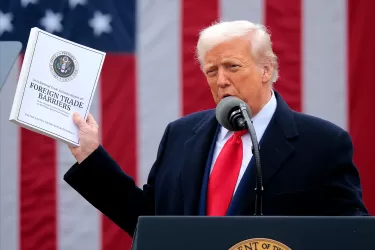
In his second term, Trump has made significant and broad use of the law to enact sweeping tariffs across the world.
These tariffs have become a favourite weapon in his exercise to recreate a global order in his own image.
Over the past year, we have seen sanctions (or at least the threat of them) deployed to force countries to play by Trump’s rules, lest they lose access to the United States’ markets.
This power, unrestricted by Congress or the courts, was key to the deals he trotted around the world to make.
But recently, the US Supreme Court ruled that his use of emergency powers was unlawful and that the tariffs themselves do not stand.
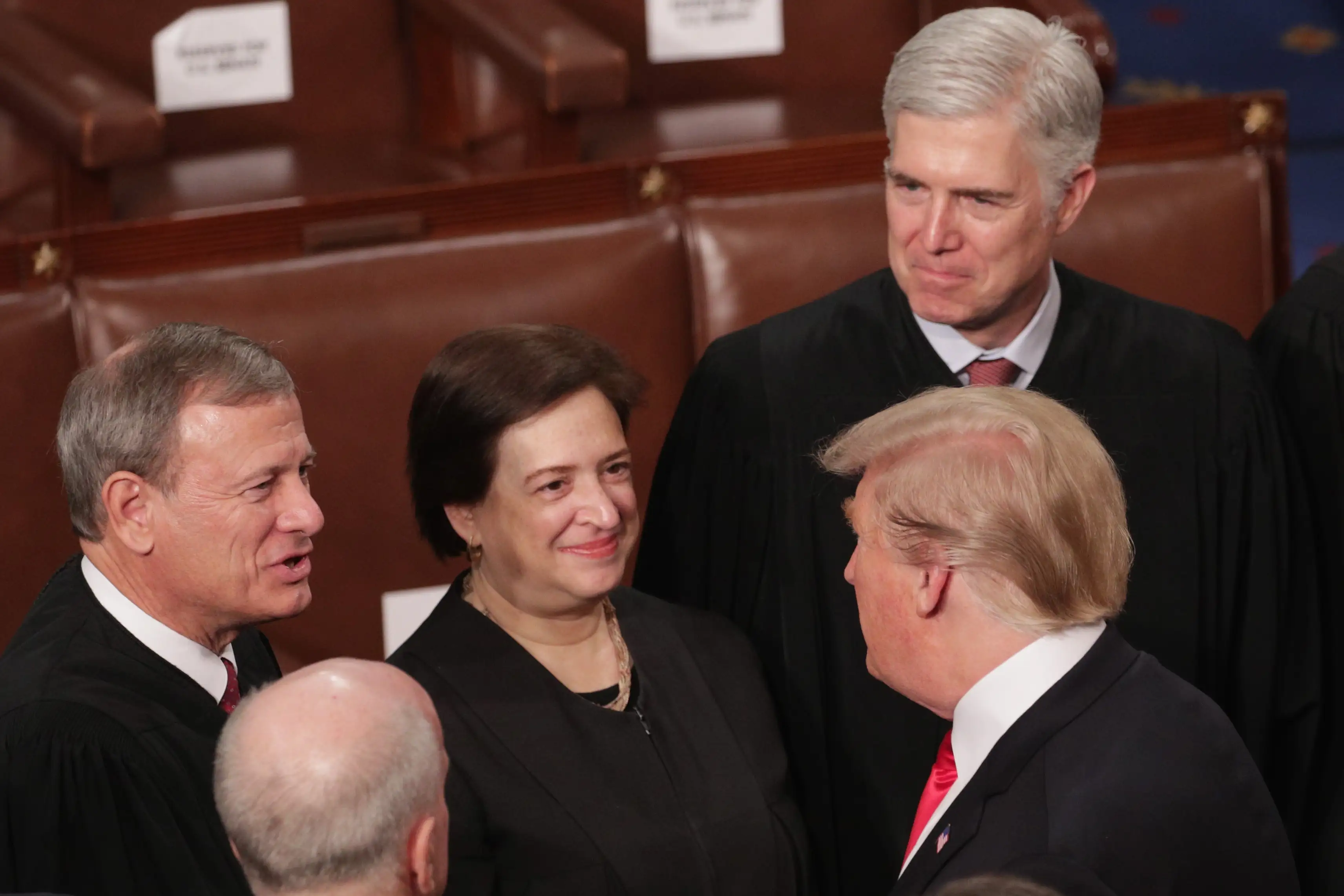
The $US175 billion in refunds his administration would owe was beside the point for Trump, who felt personally betrayed by two Justices he himself had appointed.
The ruling sets a precedent that could topple much of the Presidential power we have come to accept. The great expanse of the American executive is based on loose readings of regulatory frameworks, which the Justices have now clearly said belong in the hands of Congress.
Justice Gorsuch, Trump’s first nominee to the Court, wrote:
“…most major decisions affecting the rights and responsibilities of the American people (including the duty to pay taxes and tariffs) are funnels through the legislative process for a reason. Yes, legislating can be hard and take time. And, yes, it can be tempting to bypass Congress when some pressing problem arises. But the deliberative nature of the legislative process was the whole point of its design.”
He calls the legislative process “the bulwark of liberty”.
Politics & Society
Is the US Government handing its tariff decision making to AI?
These comments have put the Trump administration in a particular bind.
President Trump is uninterested in legislating – the only bills of any significance that have been passed are budget bills, and even those have been grinding affairs. The Department of Homeland Security currently sits without funding, with no firm deal on the horizon.
So, his primary leverage in foreign policy has evaporated with a 20-page ruling from the Supreme Court.
Without tariffs at his disposal, Trump will turn to blunter instruments.
Perhaps further sanctions or blacklisting entities from using the New York banking system, through which a great majority of international financial transactions flow, thanks to the status of the US Dollar as the global reserve currency.

But that tool is already weakened.
Trump has also already shown a penchant for short, sharp military strikes.
The US and Israel’s recent strike on Iran is the latest case in point. With sanctions the regime had long found ways around, and his tariff power removed, economic coercion was off the table – so Trump turned to force without Congress' approval, taking out much of the Islamic Republic's leadership.
Similarly, January’s capture of Nicolas Maduro is turning the Venezuelan oil market into an opportunity for Trump and his allies to expand their power over the hemisphere.
All of this and Trump continues to rattle sabres over Greenland.
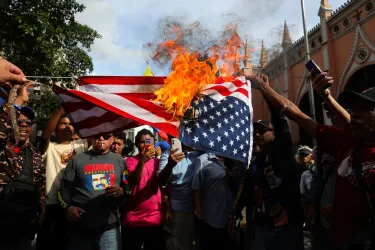
To date, he has shown little interest in rebuilding the broad alliances of most former American Presidents.
His year-long trade wars and harassment of other countries has weakened that position, making it difficult to imagine countries like Turkiye, South Africa or Mexico rejoining his side.
Trump is not known for his stability nor his logic in decision-making. He looks for flashy media coverage and opportunities for grift well before operating within some liberal doctrine to promote democracy or human rights.
And so, he will look to the resources available to him and him alone.
The US Supreme Court ruling offers the possibility of institutional strength that may well rebuff the worst instincts of the Trump administration.

A Republican Congress has yet to show any interest in checking Trump's authoritarian ambition, but the midterms are approaching fast – and with them, the possibility of a Democratic majority in both chambers.
If that happens, with a Supreme Court locating its own courage, Trump may find himself without the unilateral authority he promised himself in his administration’s blueprint – Project 2025.
And if that happens, if the institutions of the United States hold firmer than many of us expect, then Trump will find himself checked.
It’s naïve to ignore the possibility that this could push him into a corner, sparking an international or constitutional crisis.
But for today, there is a glimmer of hope that the institutions, which have long held the ambitions of any one man in check, may live to survive another day.