
Politics & Society
‘The field of Indigenous Studies simply gets on with the job’


Australia's Indigenous-led truth-telling process is an opportunity to create a new generation of leaders who will transform higher education

Published 12 November 2025
Since his election in the United States, President Donald Trump has sought to undermine academic freedom and interfere with the independence of universities by defunding or outlawing activities that do not align with his political agenda.
A primary target of Trump's efforts has been diversity, equity and inclusion.
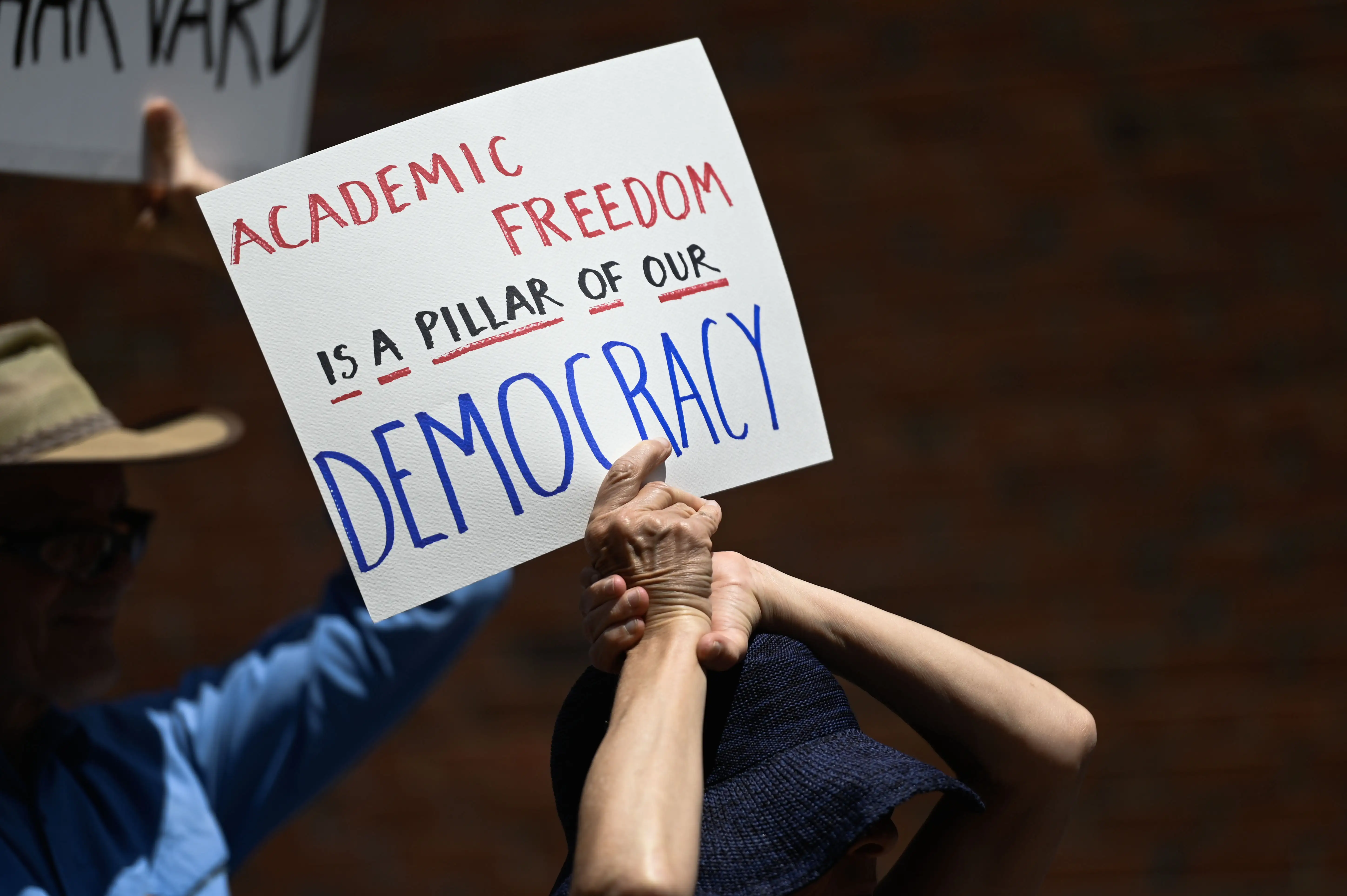
These moves have been accompanied by claims that institutions like Harvard only serve the ‘woke’ agendas of minority groups.
In part, Trump's political attacks against the university have been a reaction to research that has questioned national mythologies and replaced these with historical fact.
In recent times, Harvard University and several other universities (including St Mary's College of Maryland, the University of Virginia and the University of North Carolina at Chapel Hill) have committed to a serious interrogation of their historic associations with slavery.
Efforts to tell the truth and seek justice are central to the remit of a university as an institution. The suggestion that they play to marginal interests is incorrect.
In Australia, at a 2019 symposium, Gunditjmara Elder Uncle Jim Berg challenged the University of Melbourne to tell the truth.
Politics & Society
‘The field of Indigenous Studies simply gets on with the job’
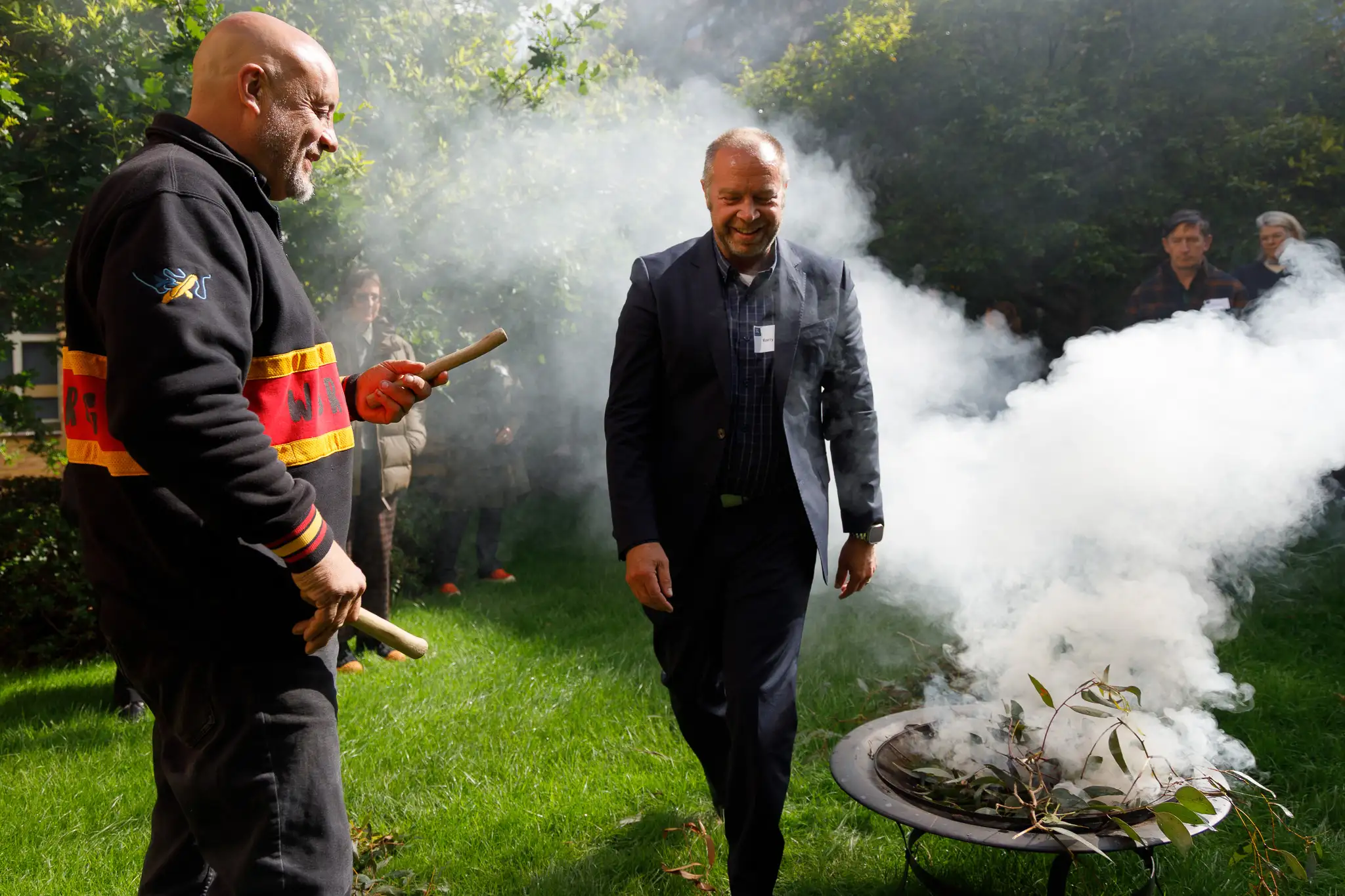
In answer, then Vice-Chancellor Duncan Maskell commissioned Dhoombak Goobgoowana, which can be translated as ‘truth-telling’ in the Woi Wurrung language of the Wurundjeri Woi Wurrung people on whose unceded lands several University of Melbourne campuses are located.
The two volumes of Dhoombak Goobgoowana are the result of the first Indigenous-led institutional truth-telling process in the world.
Indeed, their publication helps to position the University of Melbourne as the global leader in truth-telling processes that are Indigenous-led and committed to outcomes that are the result of independent scholarly research rather than institution-led reports.
I’ve noted that previous reviews have congratulated the University of Melbourne for commissioning Dhoombak Goobgoowana.
But, as the book depicts a history of systematic racism perpetrated against Indigenous people in the name of research and teaching, it is not something that should lead to celebratory backslapping.
Instead, I asked why it took so long for a community of scholars purportedly committed to evidence-based truth to stop telling themselves lies?
Now is a time to discuss and reflect; and ask, what might be the consequences of this work for the short and the long term? How might truth-telling change the way our institutions work, and what will the impact be for reshaping relations between Indigenous peoples and settler-colonial states like Australia?
Much has and will be said about the meaning of truth-telling and the responsibilities it holds for settler-colonial Australia.
It has implications for government, institutional, and corporate practices, as well as for the scholarly discipline of history, and on how individual citizens understand their place in the present and how it connects to the ancient past of this continent.
I am a person whose origins are Anangu Pitjantjatjara in the cross-border region of South Australia, Western Australia and the Northern Territory. This makes me Indigenous.

But my British gold-mining origins in central western Victoria also position me as a settler-colonist and direct beneficiary of the stolen wealth my ancestors extracted from the unceded territories of the Wathaurong people.
Can we really expect settler-colonial Australians to tell the whole truth and nothing but the truth if we ourselves do not do the same? We might ask what the implications of truly being honest with ourselves might be for Indigenous people in Australia today?
Recognising the great diversity of Indigenous peoples and their situations and therefore the difficulties of generalising, I’ll focus on higher education and the community of Indigenous scholars of which I am a part.
Truth-telling in our everyday work means not falsifying personal histories.
Truth has too often fallen victim to the demands of the performative and the insatiable settler-colonial desire for more ‘trauma porn’ that continues to position us as victims rather than agents of history.
Truth-telling compels us to follow this simple course of action: when you don't know your family lineage or your specific affiliation to Country and Kin, say so.
At a time when Indigenous knowledges are gaining currency within the university, it's becoming even more critical that Indigenous scholars tell the truth.
We need to be honest in admitting that many of us have, through no fault of our own, become disconnected from the Indigenous knowledge systems that are our heritage to claim.
Truth-telling demands that we concede what we don't know. That the true professors of Indigenous knowledges are lore/law men and women who continue to hold and carry knowledge outside of the Western academy, often in the most difficult and fragile situations.
In other words, truth-telling requires us to recognise that identity position may be a prerequisite to knowledge, but it is certainly no guarantee, given the last two centuries of Indigenous experience on this continent.
Politics & Society
What Canada can teach us about truth-telling and justice
In conceding this point, truth-telling requires us to admit that sometimes non-Indigenous people possess and understand more about Indigenous knowledge systems than we ourselves do.
Committing to truth-telling also compels us to concede that all too often, the models and attributes of leadership we have aspired to and adopted have been the very antithesis of leadership that is based in the values of ancient Australia: honesty, respect, humility and reciprocity that we often advocate in our words but fail to live up to through our actions.
Truth-telling requires us to admit that often we lead through fear and the threat of conflict rather than as our ancestors taught through love, respect and gentle influence.
Now is an important moment in Australian higher education as those who have led Indigenous higher education initiatives since the 1990s transition into retirement.
This moment is one of immense challenge. There is so much work needed to ensure pipelines are built to educate and train the next generation of Indigenous researchers, teachers, and administrators who will lead the system into the future.
With this challenge comes new possibilities.
One possibility is that the critical emerging scholarly project of Indigenous-led truth-telling is harnessed to build the Indigenous higher education leadership of the future.
For example, nurturing the research and practice of Indigenous PhD students in a variety of disciplines through the frame of truth-telling will create the next generation of Indigenous leaders to carry Australia’s higher education forward for the next fifty years.
We need a leadership based on the truth that the old ways are often the best ways. I encourage all to consider the implications of truth-telling for future Indigenous leadership.
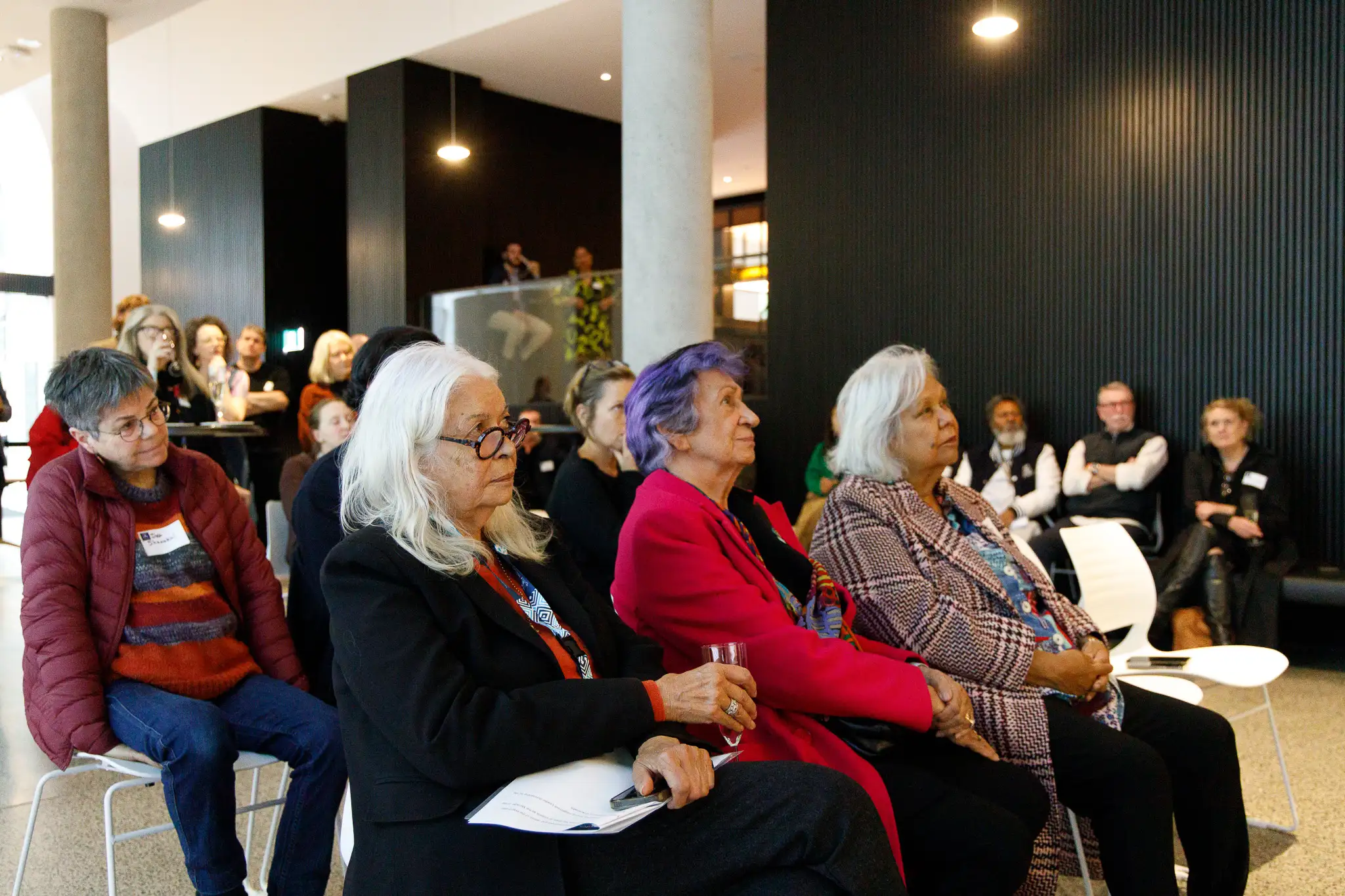
The International Truth-Telling Solutions: Beyond Dhoombak Goobgoowana Symposium brings together some of the world’s leading figures from the fields of history, health, education, legal reform, land justice, and cultural revitalisation to address the practical applications and implications of truth-telling for public institutions and policymakers. This symposium is one part of the University of Melbourne’s broader commitment to truth-telling and takes place from 11 to 14 November.