Sciences & Technology
After a bushfire, people need new housing fast. This might be the answer


Flooding, displacement and housing insecurity are no longer distant issues. Houses that move with people are helping communities in Bangladesh adapt to a changing environment

Published 9 July 2026
Imagine living in a home that you could simply pick up and move when extreme weather strikes.
Instead of bricks and mortar, it’s made from materials sourced from the local environment and, if weather conditions change, you pack it up and rebuild it in a safer location.
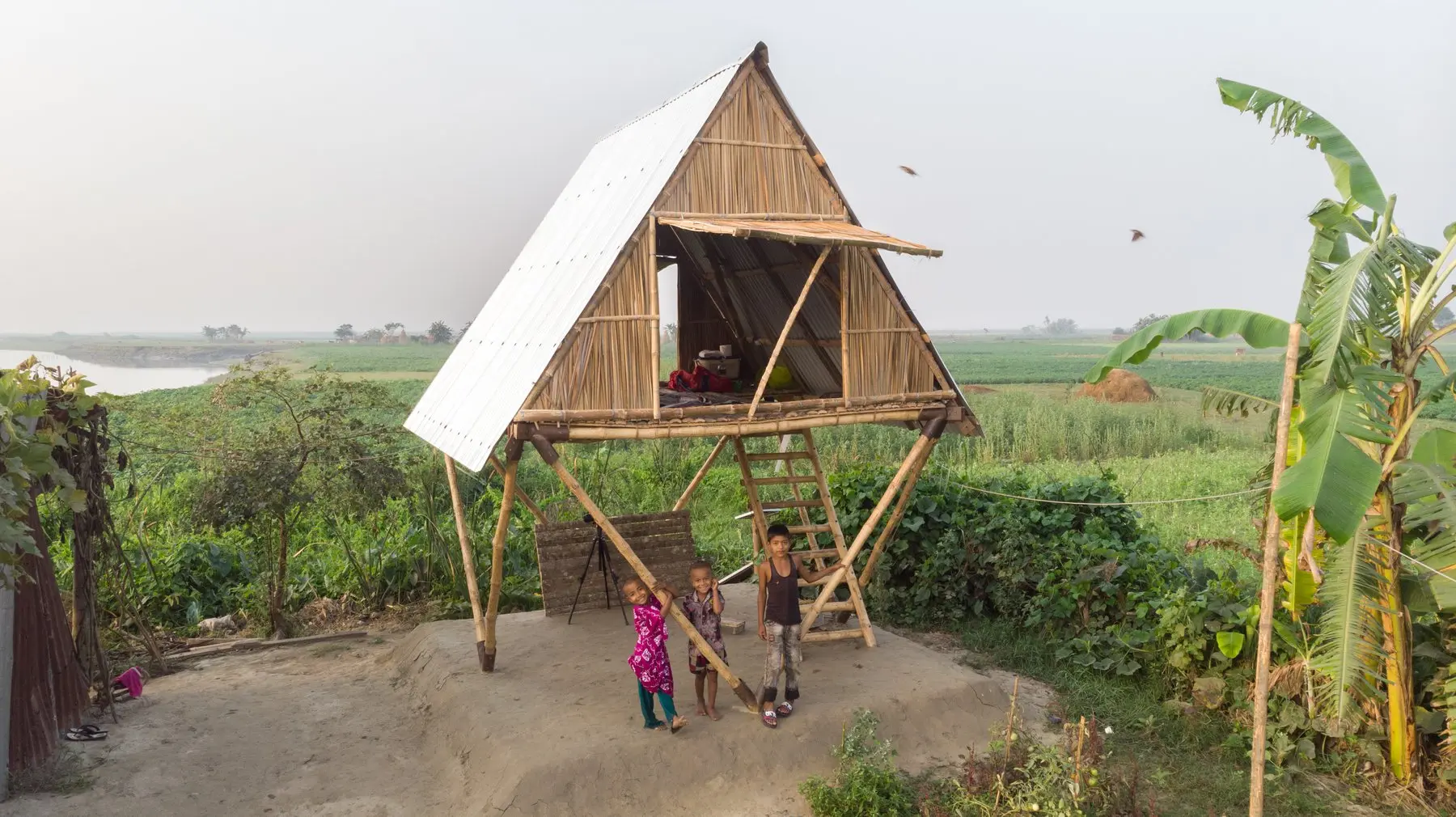
That’s exactly what Khudi Bari, developed by Bangladeshi firm Marina Tabassum Architects, is doing.
The award-winning project, which translates roughly to "tiny house" in Bengali, was developed for communities living along Bangladesh's flood-prone riverbeds.
It offers new ways to think about the concept of ‘home’ amid climate change and times of uncertainty.
Rather than building heavy infrastructure in an environment with shifting soil conditions, Khudi Bari moves with the landscape and evolves as river flows change and sediment moves.
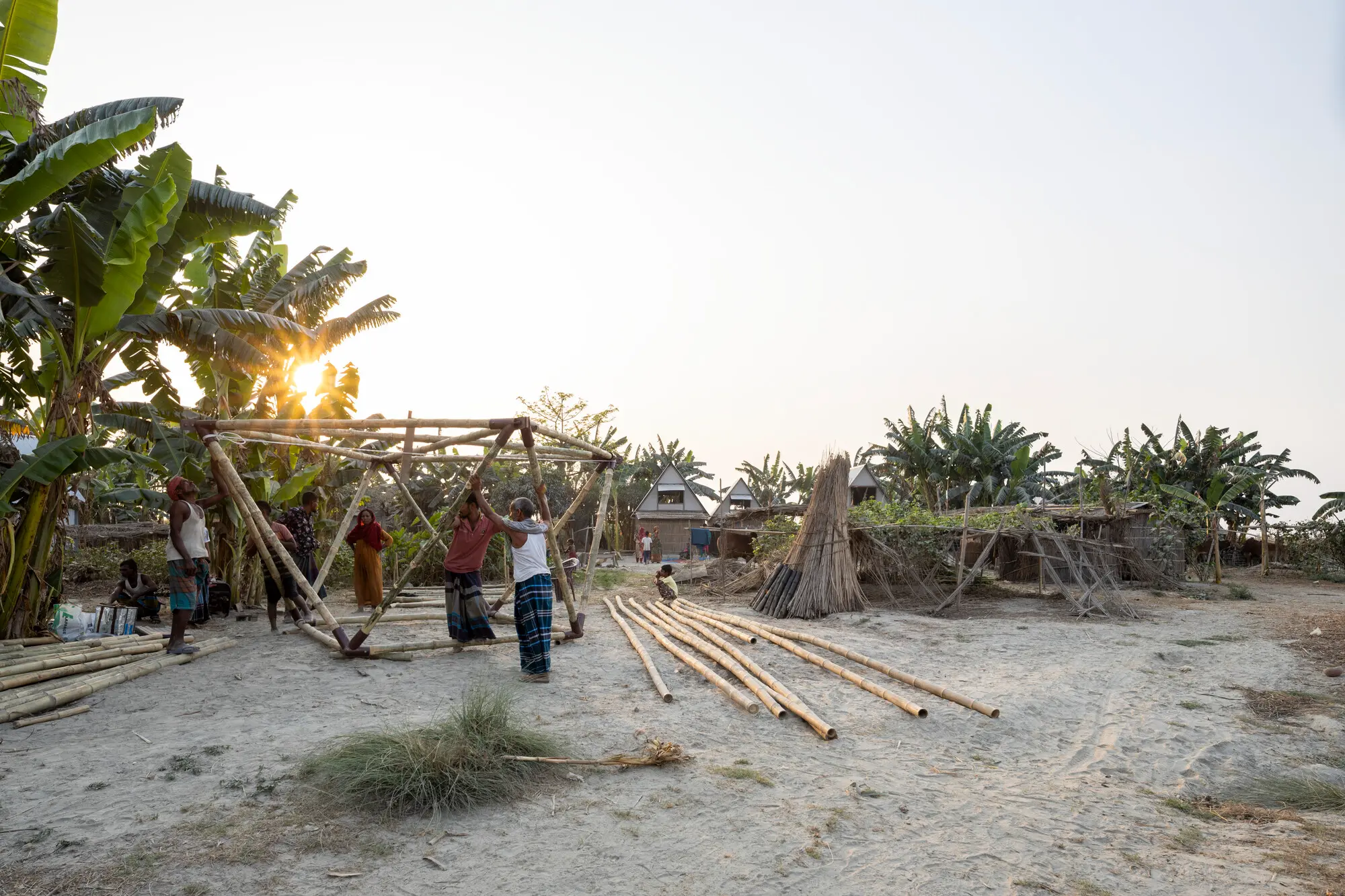
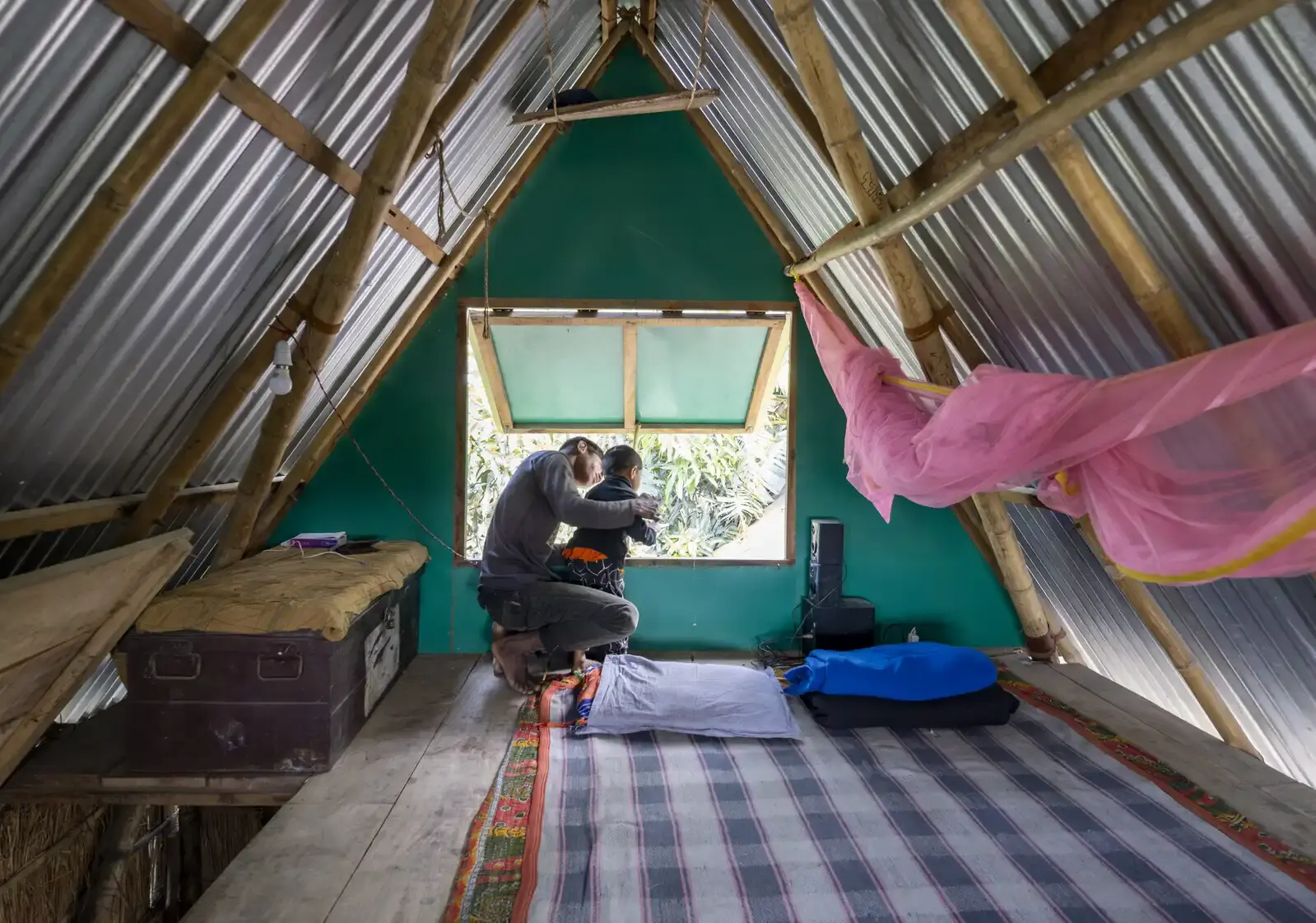
The modular, lightweight structures are made from locally sourced bamboo that can be dismantled, transported and rebuilt.
They take around three days to assemble and as little as three hours to dissassemable, with a two-storey design that creates refuge on the upper level from high water levels.
Sciences & Technology
After a bushfire, people need new housing fast. This might be the answer
In 2025, Khudi Bari received the Aga Khan Award for Architecture, one of the most significant prizes in architecture, making Tabassum the only Bangladeshi architect to receive the award twice.
Flooding, displacement and housing insecurity are no longer distant issues.
They are increasingly part of everyday life across many parts of the world, including Australia, where recent floods and bushfires have reminded us just how vulnerable our housing can be to extreme conditions.
In response, Australia’s National Emergency Management Agency has advised us to make homes more resilient: elevating floor levels, strengthening and deepening foundations, using robust building materials and sealing openings.
These strategies are important.
They help us to protect our homes against environmental disaster while holding onto the idea of permanence.
But Khudi Bari suggests another concept of home.
Rather than asking how homes can better resist crisis, Khudi Bari asks whether homes might adapt to it instead.
It suggests that safety and resilience can come not from permanence, but from the ability to move, rebuild and respond to change. It’s a project that invites us to rethink home, belonging and community.
We often associate home with being anchored to the ground: stability, an address, access to services, a place to return.
Sciences & Technology
We've forgotten how to build houses
But perhaps belonging doesn't only come from concrete foundations and permanent attachment to a piece of land.
Maybe it also comes from being part of a community, having agency and the ability to build and rebuild when circumstances change.
It’s about touching the environment lightly and, when necessary, finding ways to adapt and begin again.
The project has been described as an “engaging solution for the nomadic condition of the climate-displaced communities” – people who have found that moving can be a way of staying connected to place.
And, while there are significant differences between Bangladesh's floodplains and our environment in Australia, we’re not as unfamiliar with moving houses as we might think.
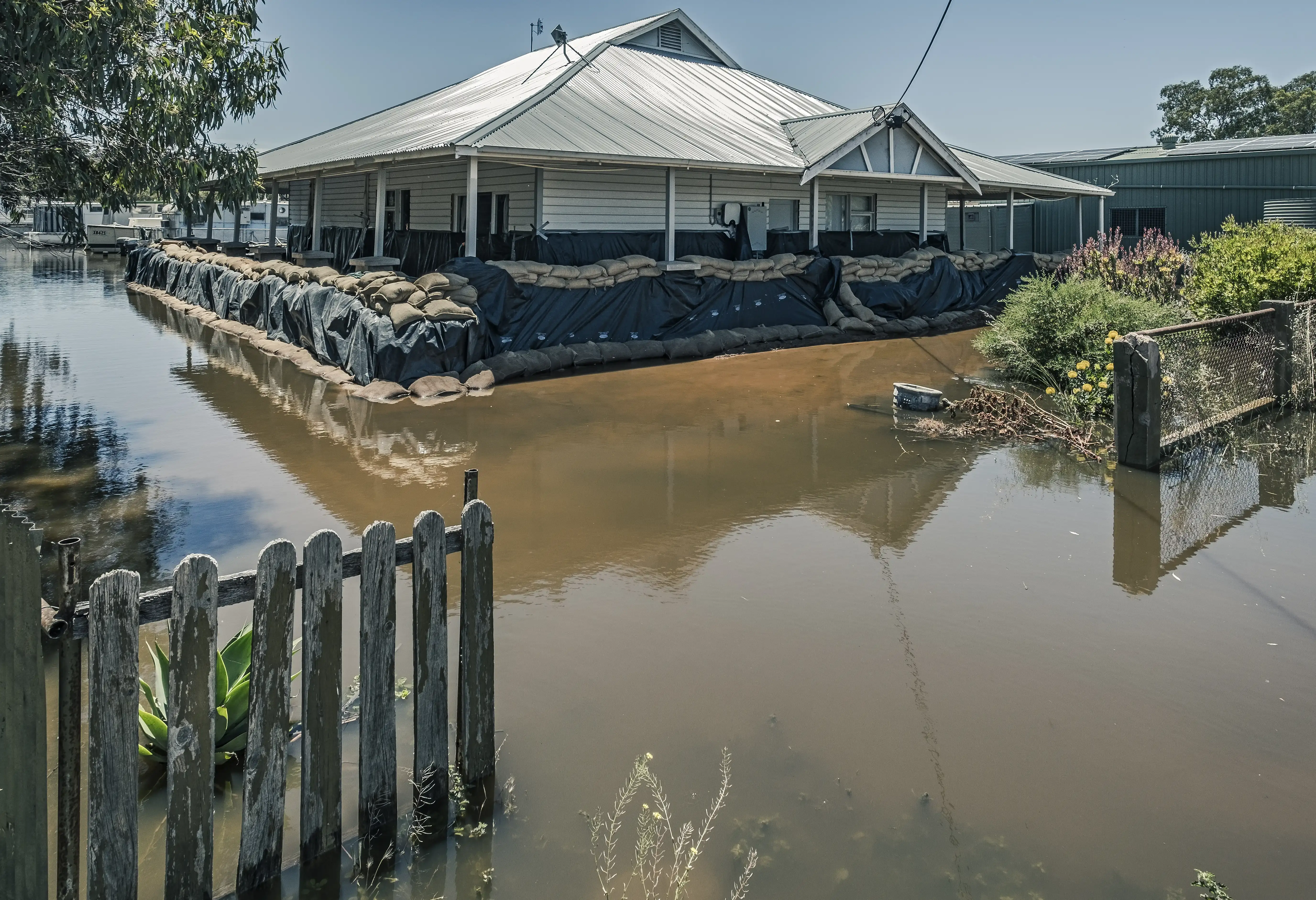
Australia’s extreme weather has prompted conversations about how and where we rebuild, and whether homes should remain in places that are becoming increasingly vulnerable to environmental crisis.
Long before discussions on climate adaptation, relocating houses was already part of Australian life.
The moveable Queenslander was once a feature of the state's social history, cut from the ground and trucked to a new block as families expanded, relocated or adjusted to changing circumstances.
Houses could move with people, separating the home itself from the land on which it sat.
More recently, it’s not been the houses themselves but entire communities that have moved.
Following the 2011 Queensland floods, the town of Grantham chose to relocate and rebuild together on higher ground.
Sciences & Technology
What is Godzilla El Niño?
More than a practical response to disaster, the relocation was an attempt to keep the community together, rather than see its families scattered across the region.
Both of these were one-off moves, but Khudi Bari imagines something more cyclical, designed to be taken apart and rebuilt as often as conditions demand.
Khudi Bari is now used in various locations across Bangladesh as housing for vulnerable people, supported by the Foundation for Architecture and Community Equity (FACE), a non-profit founded by Tabassum.
The project is a hopeful example of how housing can adapt to change rather than resist it, while remaining true to its use of local materials and the realities of people's lives.
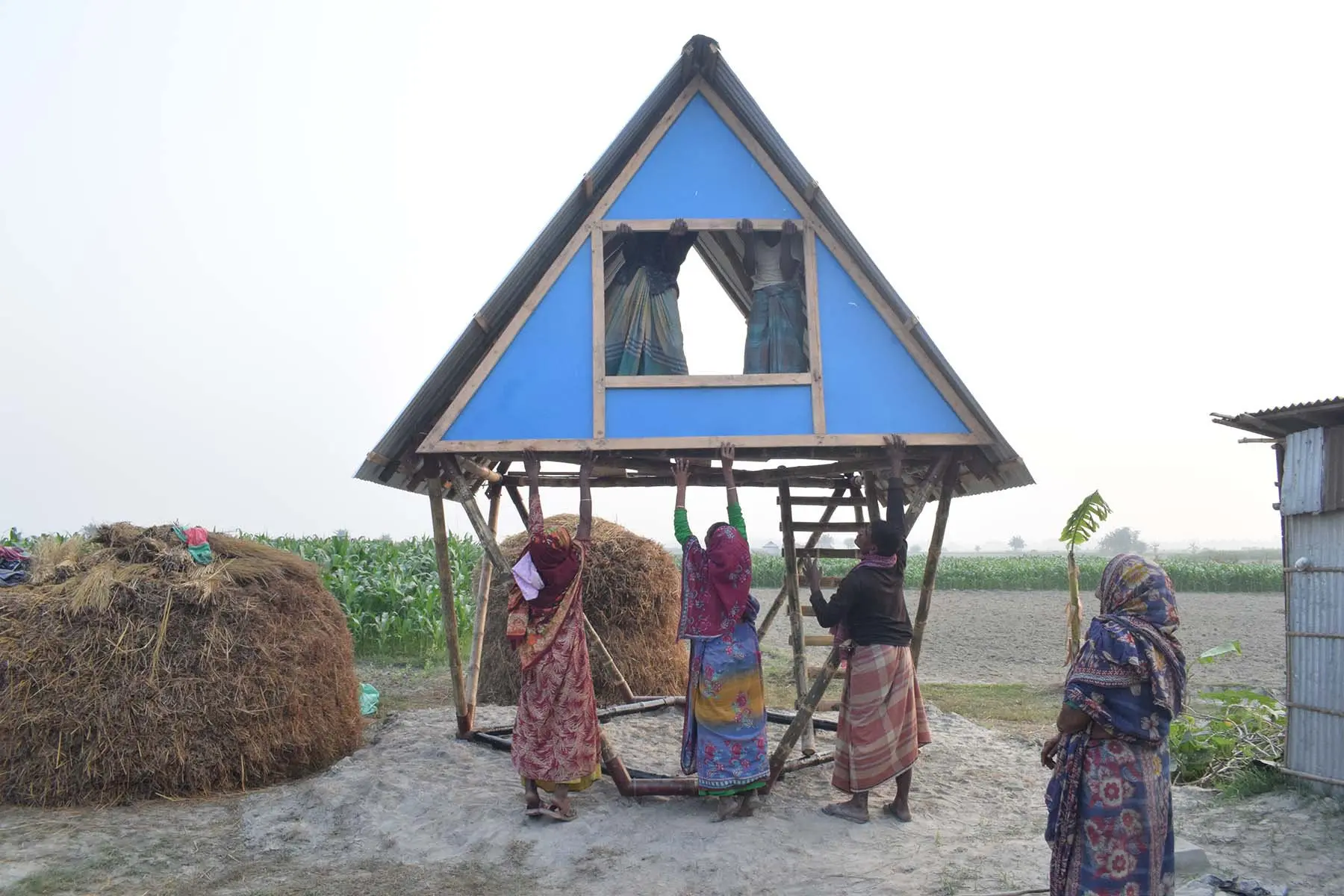
The project is “profoundly optimistic” about role architecture plays in difficult times.
As many people around the world are losing their homes and access to basic rights, Khudi Bari urges us to ask difficult but important questions about permanence, durability and security.
What is a home in an uncertain and shifting future?
Perhaps it’s not only a place that shelters us from change, but one that gives us a way to live with it.
Want to know more? This September, Marina Tabassum is bringing her practice to Melbourne as part of the Aga Khan Awards Exhibition and Melbourne School of Design's Dean's Lecture series. Register here for the event on Tuesday 8th September at 6.45pm.