
Business & Economics
How Indigenous business enterprise is rewriting Australian economics


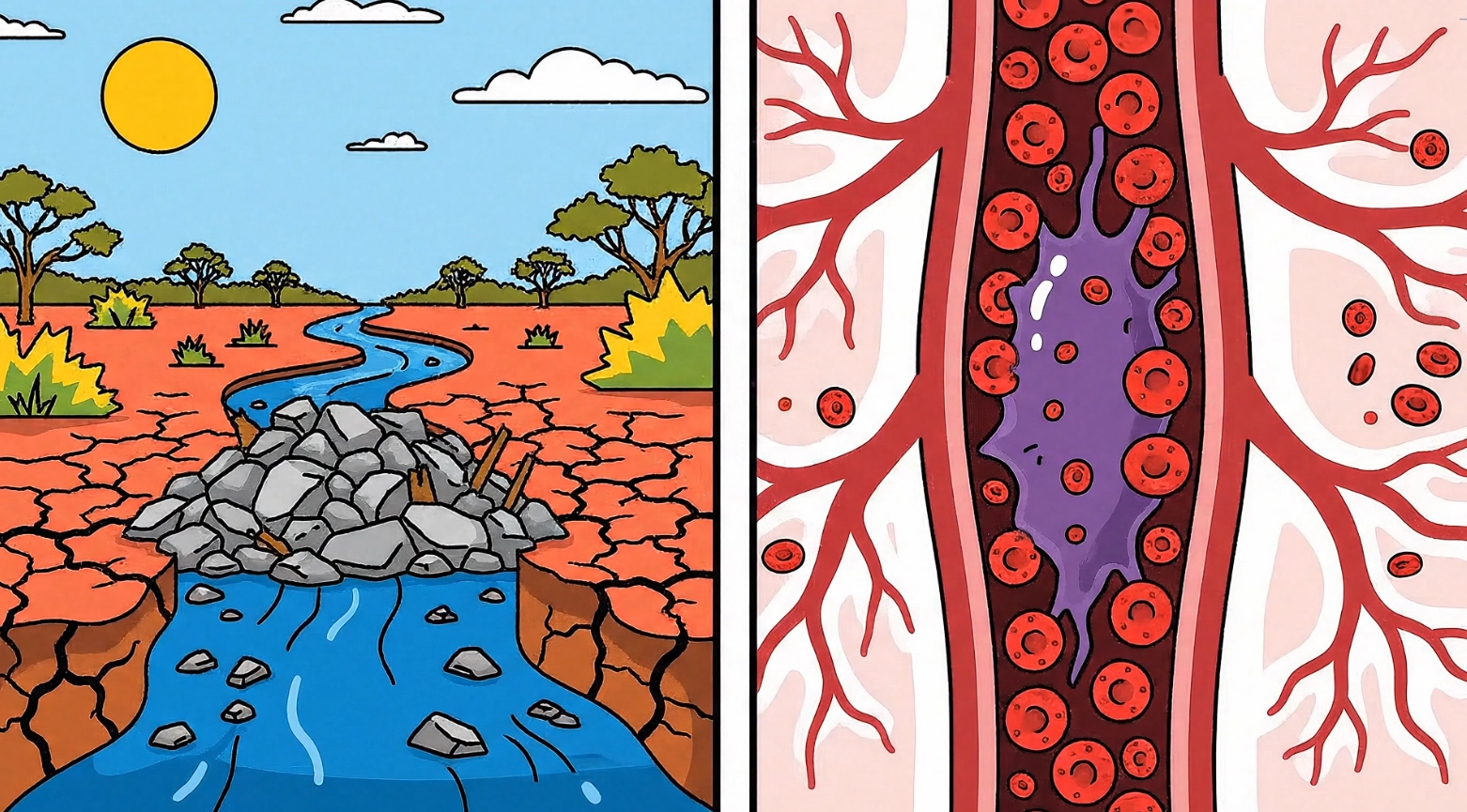
A flowing river for arteries, a bare boab tree for depression. A project in the Kimberley shows how listening before we speak can improve health outcomes for Aboriginal people


Published 3 June 2026
How health professionals communicate with First Nations patients reveals a striking pattern – the language of biomedicine is built on metaphor and those metaphors are not culturally neutral.
Consider how a doctor might explain renal disease. They will likely reach for hydraulic imagery, describing the kidneys as filters and the veins as pipes.
These images carry precision. But they also carry assumptions.
They frame the body as a machine, a collection of parts that break down and need fixing.
Used in isolation, that framing can strip away the relational, spiritual and ecological dimensions of health that are central to Aboriginal and Torres Strait Islander understandings of social and emotional wellbeing.
But the research also reveals something more hopeful when this changes.
A health professional in the Kimberley might describe arterial disease not as blocked pipes, but as a river running through the desert, slowing as rubbish accumulates on the rocks.
Business & Economics
How Indigenous business enterprise is rewriting Australian economics
Another uses the image of a boab tree bearing no fruit to talk about depression with a patient who knows that tree, who grew up near it, whose family’s story is threaded through it.
These metaphors go beyond translation. They are acts of genuine cultural alignment.
The resources we created – culturally relevant videos, explainers and training tools to improve health outcomes of First Nations peoples – are of immense importance.
But it was in how we created them that the true lessons lie.
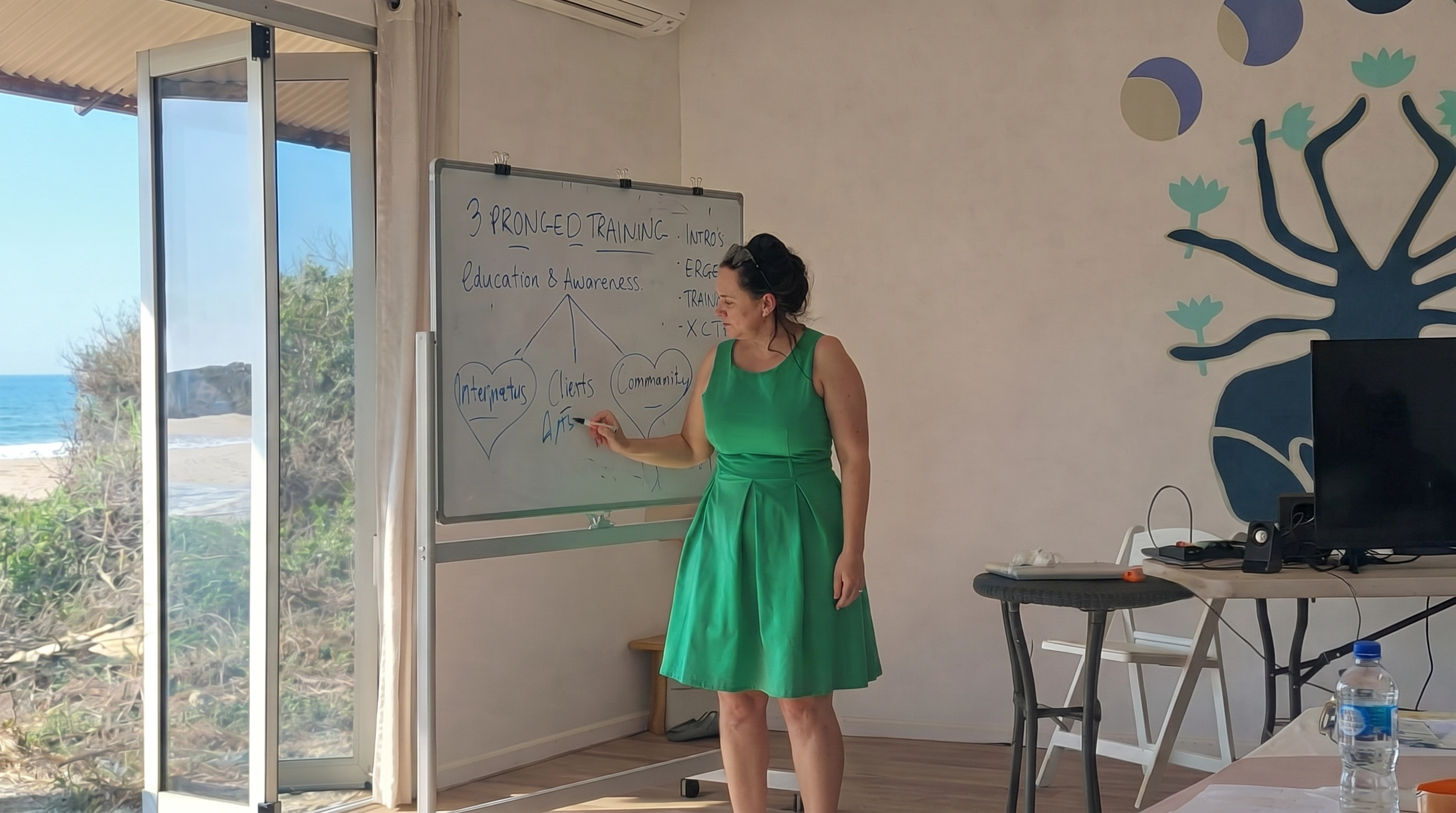
Our small group of interpreters, academics and leaders gathered in Broome, Western Australia, in late 2024 to design research that would actually serve the communities it set out to help.
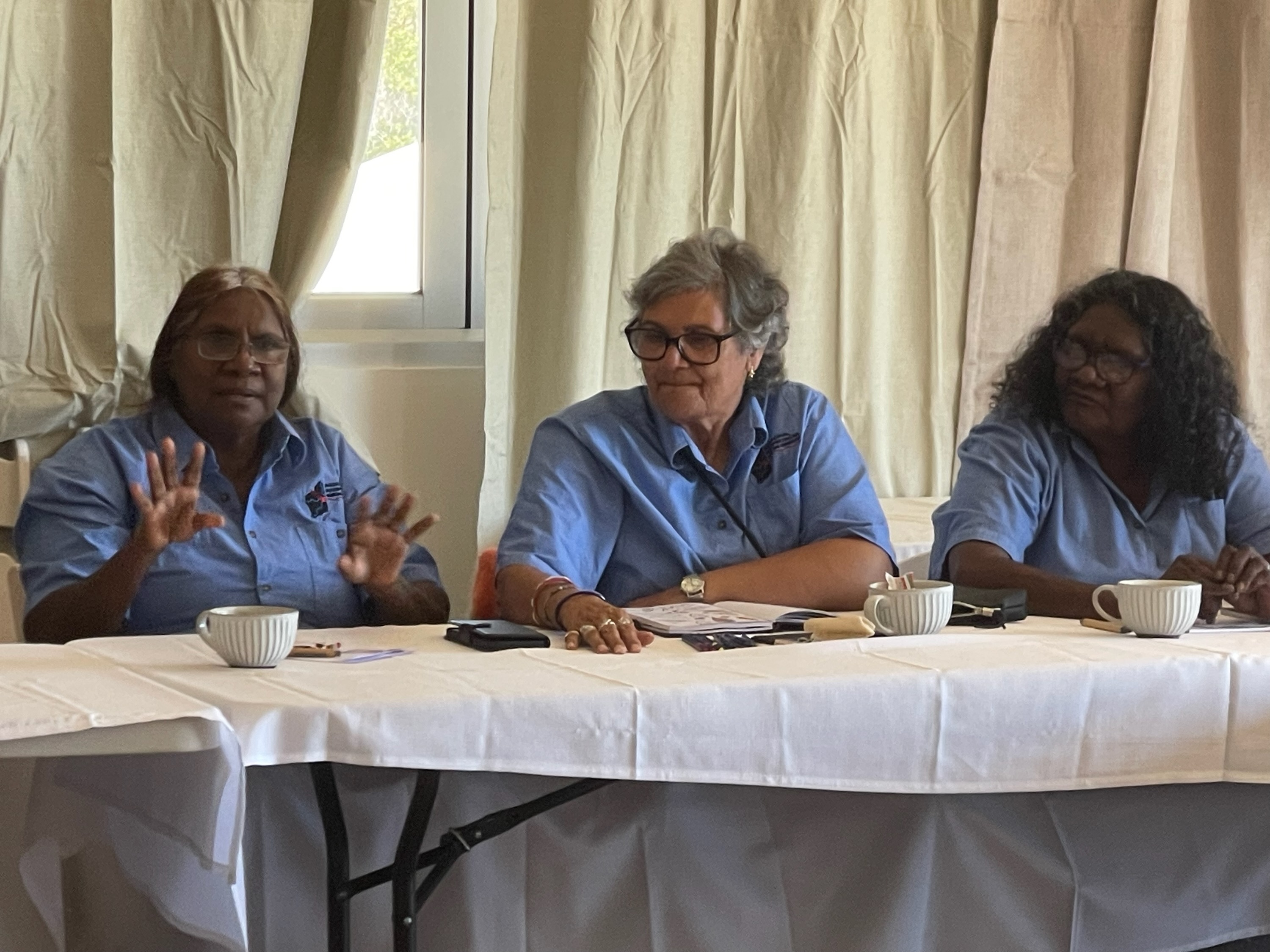
The work that happened before the research – the conversations, relationship-building, the willingness to let community needs drive the questions – is rarely talked about in academic circles.
But it may offer one of the clearest models we have for how research can be both rigorous and genuinely respectful.
Our collaboration with the Aboriginal Interpreting Western Australia Aboriginal Corporation (AIWAAC) began long before this project, growing from earlier research on the challenges of interpreting Aboriginal languages.
That foundation of trust matters. It is the reason the Broome workshop was possible and the reason it was productive.
When our team at the University of Melbourne were awarded of the Australian Research Council’s DECRA fellowship, the question was never whether to partner with AIWAAC, but how.

Politics & Society
The colonial outpost resort at the heart of Indigenous Australia
Together, we chose to ground the project in Participatory Action Research (PAR), placing community needs and priorities at the centre of the inquiry, rather than treating communities as subjects of it.
AIWAAC made clear that too many projects come and go that don’t reflect what the community actually needs.
We knew that to address interpreting challenges in healthcare for First Nations people, the research would only be relevant if the community shaped it.
Aboriginal and Torres Strait Islander patients in the Kimberley and surrounding regions are far too often navigating the healthcare system without interpreting support.
The consequences are serious.
Miscommunication around conditions like diabetes, renal disease and depression can mean the difference between a patient understanding their diagnosis and walking away confused, frightened or making an uninformed decision.

The group agreed on two key areas of action:
Role plays and explanatory videos: video-based training materials to develop the skills of both interpreters and health practitioners, covering priority health topics including diabetes, renal disease and depression. These would be produced in Kimberley Kriol, Plain English, Martu Wangka and Ngaanyatjarra.
A video-based digitised medical dictionary: a long-term goal to develop an animated reference tool in Plain English, supported by explanatory videos in Aboriginal languages spoken across Western Australia, making biomedical terminology more accessible for interpreters and health professionals.
Every decision about language, content and format was made collaboratively.
The interpreters in the room were the ones who knew what was needed. These are the people who stand, every single day, in the space between a doctor’s explanation and a patient’s understanding.

Business & Economics
How a First Nations’ approach in marketing is helping to decolonise healthcare
Research makes clear why this work is so urgent.
A lack of understanding between patient and health professional can have serious implications for the accuracy of a diagnosis and the overall quality of care for First Nation’s peoples.
Well-documented communication disparities between health professionals and First Nations patients have long been linked to conceptual mismatches – like those metaphors of the body as a machine.
When we shift to culturally-relevant approaches, we build metacultural competence – the ability to move fluidly between biomedical explanation and the relational, Country-grounded frameworks of First Nations health.
Scholars have described it as a third space of hybridity, where institutional demands and First Nations worldviews are continually negotiated.
This is precisely the kind of knowledge this project aims to cultivate – in interpreters, health professionals and the communities they serve.

What makes this collaboration truly distinctive is the structure of its relationships.
AIWAAC holds governance over the community engagement process. The research team brings linguistic analysis and academic infrastructure. Interpreters contribute practitioner knowledge that no university can replicate.
Medical translation and interpreting practitioners have been involved at every stage of content development, who are able to shape, revise and approve the materials that will bear their languages and their communities’ stories.
And crucially, the questions answered are the community’s questions, not the researchers.
When you engage in this way, the outcomes actually land. People can genuinely use them. They reflect what’s real and what has been asked for.
Health & Medicine
Australia needs to value Indigenous knowledge in medical education
Australia still faces a significant shortfall in engagement of interpreters for Aboriginal and Torres Strait Islander patients.
Addressing this is part of the National Aboriginal and Torres Strait Islander Health Plan 2021–2031 and Australia's broader Closing the Gap agenda.
The health disparities that follow from poor communication are well documented, and the need for practical, community-led responses has never been greater.
The significance of this project extends well beyond the videos themselves. It offers a proof of concept.
The role-play scenarios, the explanatory videos, the video-based medical dictionary – these are tangible, meaningful contributions to Aboriginal health communication.
The process that produced them is equally so. It sets a standard.
It shows what becomes possible when researchers arrive at the table not with answers, but with questions, and then have the patience and the humility to listen deeply.
We acknowledge the valuable contributions of AIWAAC Directors members, Chairman Tjapaljarri Robert Nanala, Co-Chair Valma Djina Milngiyarri (nee SingPoo) Banks, AIWA interpreters, Susan, AK and Leo, and Traditional Owner, Mardjardee Susan Elgar.
The project's videos will be distributed directly to healthcare clinics and interpreters to ensure the videos are used the way they were intended – in a clinical setting, alongside an interpreter, as part of a real conversation about health. Outside of that context, there's a risk that community voices could be misunderstood or that culturally sensitive content reaches people without the support needed to use it well.