

How learning grows in school gardens across the Indo-Pacific
School greening programs are bringing the latest research into classrooms – reshaping curriculum, teacher training and climate education in the Solomon Islands, Fiji and the Maldives

Published 25 June 2026
Living on a fishing island in the Maldives for eight months was a turning point in my career.
It was 2012, and I was conducting my PhD fieldwork at a school on Raa Meedhoo, exploring how teachers could embrace active learning approaches like problem solving, rather than having students simply listen and repeat information.

During this time, I experienced the scarcity of fresh vegetables firsthand, particularly leafy greens that don’t travel well on cargo boats from the capital Malé. Instead, local communities typically rely heavily on a diet based on fish and coconut.
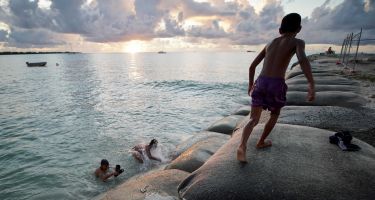
I also became acutely aware that I was unintentionally contributing to the growing mounds of waste on the beach. Because of limited infrastructure on the islands, waste accumulates on the beach until it is burned, taken somewhere or washed into the sea.
It became clear that this growing waste problem needed a waste reduction strategy.
Greening island schools
Because schools are central to island life, they presented an ideal place to promote awareness of sustainable practices.
It was here that the Greening Island Schools project started in 2024.
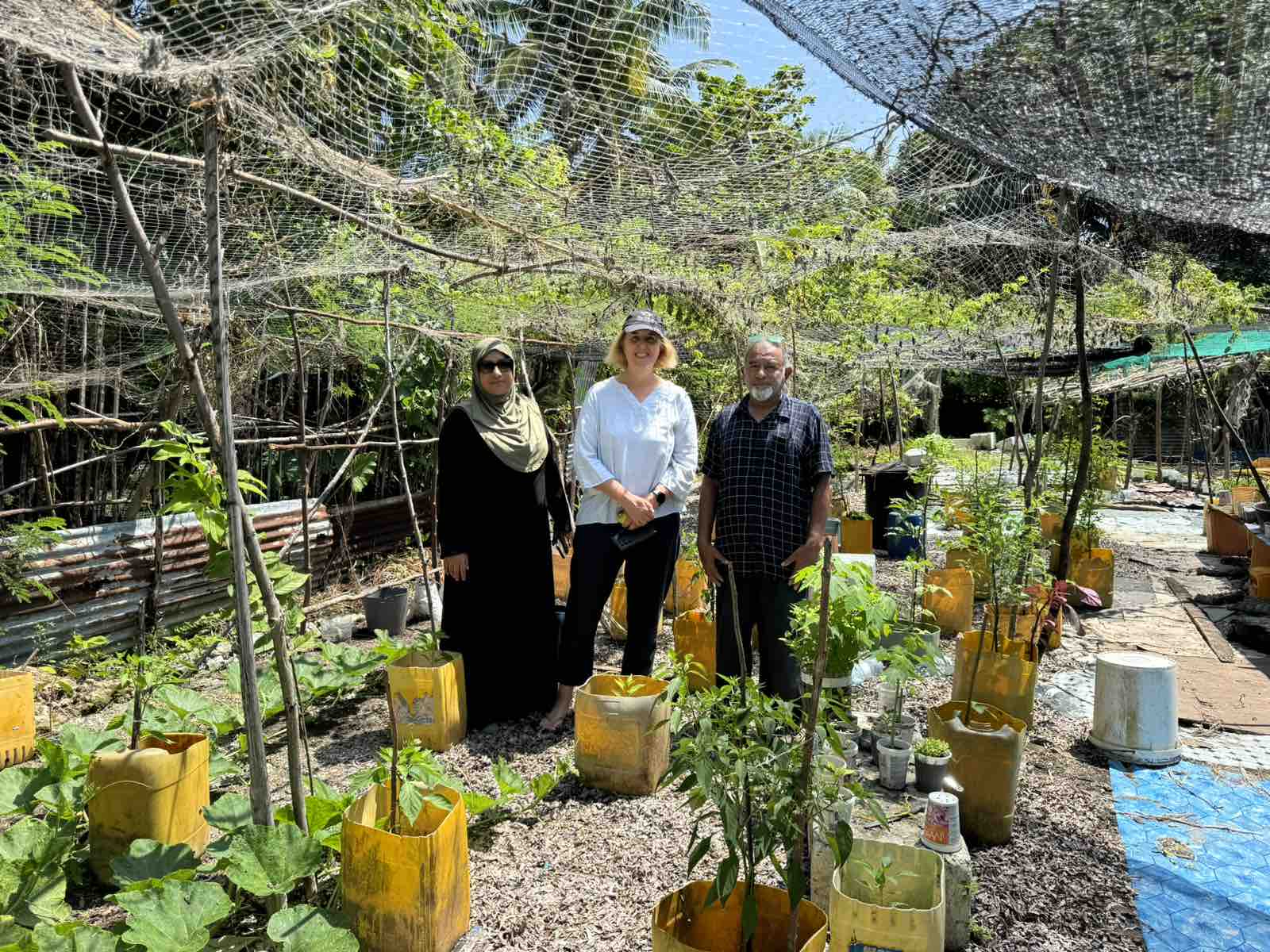
The project was designed to support schools in planning and maintaining school gardens and composting, as well as integrating the garden into the formal teaching program.
It was designed to be much more than growing vegetables.
Apart from the learning benefits, the project builds resilience, food security and community engagement for the island.
These are communities experiencing the acute impacts of climate change, food insecurity, extreme weather events and environmental degradation.
Importantly, the project explores how climate-smart school gardens can be used as a tool to promote active learning, drawing on findings from my PhD research.
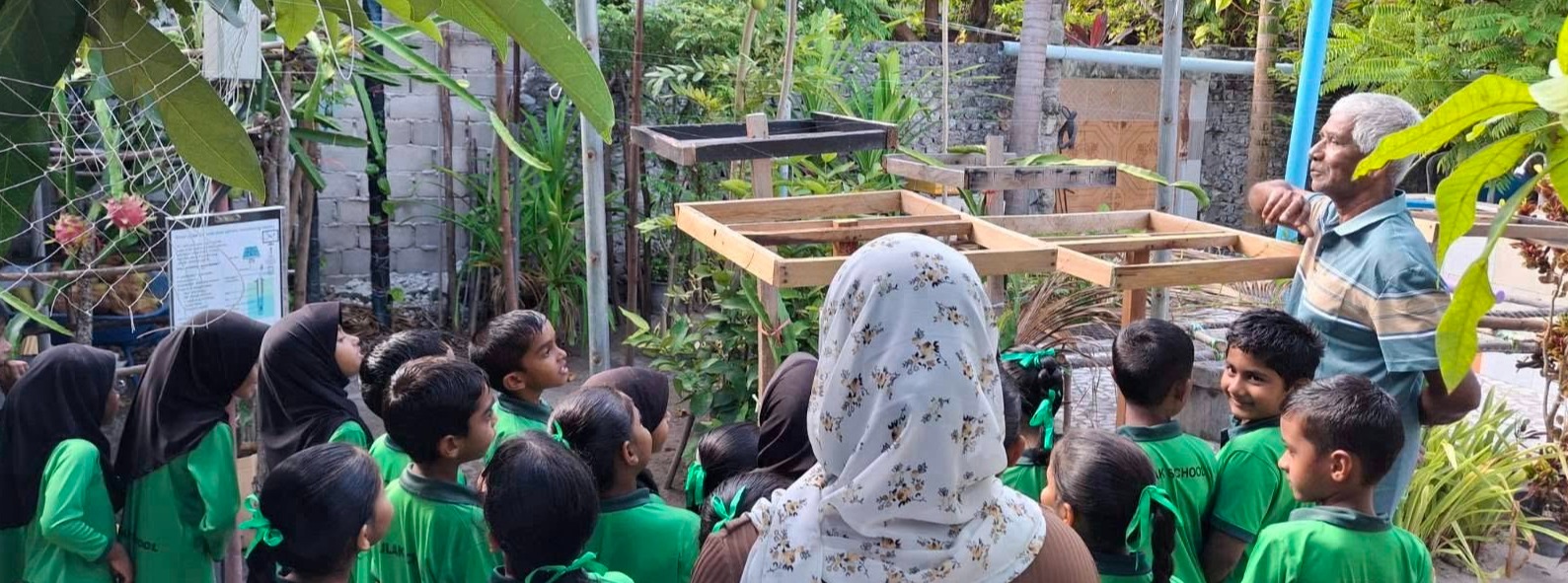
The garden becomes a teaching tool as it provides a practical means of bringing the curriculum to life in practical ways.
For example, teachers might implement lessons where students calculate the area and perimeter of garden plots in mathematics, track growth data in science and explore nutrition and health outcomes through harvested produce.
In literacy classes, students use stories to learn about gardening and composting. This alignment has enabled the garden to be protected as core learning time rather than an optional add-on.
This means that purely establishing a school garden is not the sole outcome.
Beyond the school, the garden demonstrates the value of growing your own food for food security and the benefits of composting at home.

It also becomes an ideal location for education research – examining how active learning, curriculum integration and teacher capability can be facilitated through the garden.
From policy to practice
Across the Indo-Pacific, education policies increasingly reference sustainability, climate resilience and community collaboration.
But what is less clear is how these ideas translate into everyday practices in schools and classrooms.
One of the key aims of this research project is to provide ways to bring learning to life.
School gardens can facilitate multiple positive outcomes, including nutritional literacy, healthier lifestyles, physical activity, environmental knowledge and an understanding of sustainability.

Some of the topics that can be integrated include reducing waste, understanding weather patterns and how plants grow in these conditions.
Gardens also provide different options for engaging learners and promoting a more inclusive education that acknowledges that students learn in different ways.
The curriculum can also incorporate the islands’ culture by encouraging students to draw on traditional knowledge systems, thereby improving food security and an understanding of sustainable practices, such as how seaweed can be used in gardening
Local champions make all the difference
To bring this project to life, champions embody policy intentions and turn vision into action. They ensure alignment between curriculum, assessment and daily practice.

These may be school principals who see the value in learning beyond the classroom walls, teachers who redesign lessons, or community members who support school garden activities by bridging school and local knowledge systems.
But what is critical is collaboration. Working with schools, Ministries of Education, Universities and local NGOs has been key to building momentum for the project.
Researching teacher practice
A central focus of the Greening Island Schools research is enhancing teacher capacity.
A core focus is exploring the factors that enable teachers to adopt these innovative approaches. In addition to understanding individual motivations, we explore which school factors are critical for innovation and change.
Our Grade 5 students created their own mini compost bins as part of their Soil lesson. After one and a half months of composting, they proudly added the rich, healthy soil to our school garden. A wonderful hands-on experience in caring for our environment!Mulak –Leading teacher, Maldives School
Many teachers value experiential learning but feel constrained by curriculum demands, assessment pressures and limited professional development opportunities.
With funding support from Melbourne Climate Futures and the DHB Foundation, we have developed curriculum-aligned teaching resources that explicitly map garden-based activities to formal syllabus learning outcomes across multiple subjects.
Student experiences
Across the island nations, schools report increased engagement when learning is active, collaborative and connected to practical experiences.
Greening Island Schools is gaining momentum
The Greening Island Schools project is currently working with 10 pilot schools across the Solomon Islands, Fiji and the Maldives who have either established school gardens or composting systems to explore this innovation in practice.
Data collection includes teacher reflections, classroom observations and curriculum analysis, allowing us to examine how garden-based learning can influence practice over time.
This work sits alongside my involvement in teacher education partnerships, including collaboration with the Solomon Islands National University and the Maldives National University.
Embedding these approaches into initial teacher education is critical for greater uptake to occur in schools.
The garden as a classroom is a total win for Solomon Island learners as it is centred on hands-on learning, practical skills, food security and connectivity to nature and culture.Retired principal, Solomon Islands
Designing gardens for new locations
The next phase of the project will focus on learning from the pilot schools to scale impact.
Ultimately, this research shows that greening schools is an educational design challenge. It requires attention to curriculum, teacher education and policy enactment, not just physical infrastructure.
When done well, school gardens become sites where language, mathematics, science, health and sustainability converge in ways that are meaningful for students and teachers alike.