
Sciences & Technology
Space research helps find targets for early Alzheimer’s test


A new technique is combining geochemistry and marine ecology to more accurately determine the age of sharks and reconstruct their life history

Published 1 May 2026
Not many scientific studies sound like a Bond film, but ours really does involve lasers, sharks and doctors (of research, not the evil kind).
Sharks are not the easiest species to study, but researching their life history and ecology is vital.

Overfishing and a lack of understanding about shark's ecology (and that of their evolutionary siblings, rays and chimaeras) now mean more than one-third of these species are listed as threatened with extinction.
Given the urgent need to protect them, age estimation is a pivotal piece of information for reconstructing shark habitats and life stages, and for developing appropriate strategies and policies for their protection.
Our research team has recently combined geochemistry and marine ecology to develop a new technique for estimating shark age and life history.
In the spirit of collaboration, the project team spans several research disciplines from Australian and greater Oceania universities, as well as government bodies.
Sciences & Technology
Space research helps find targets for early Alzheimer’s test
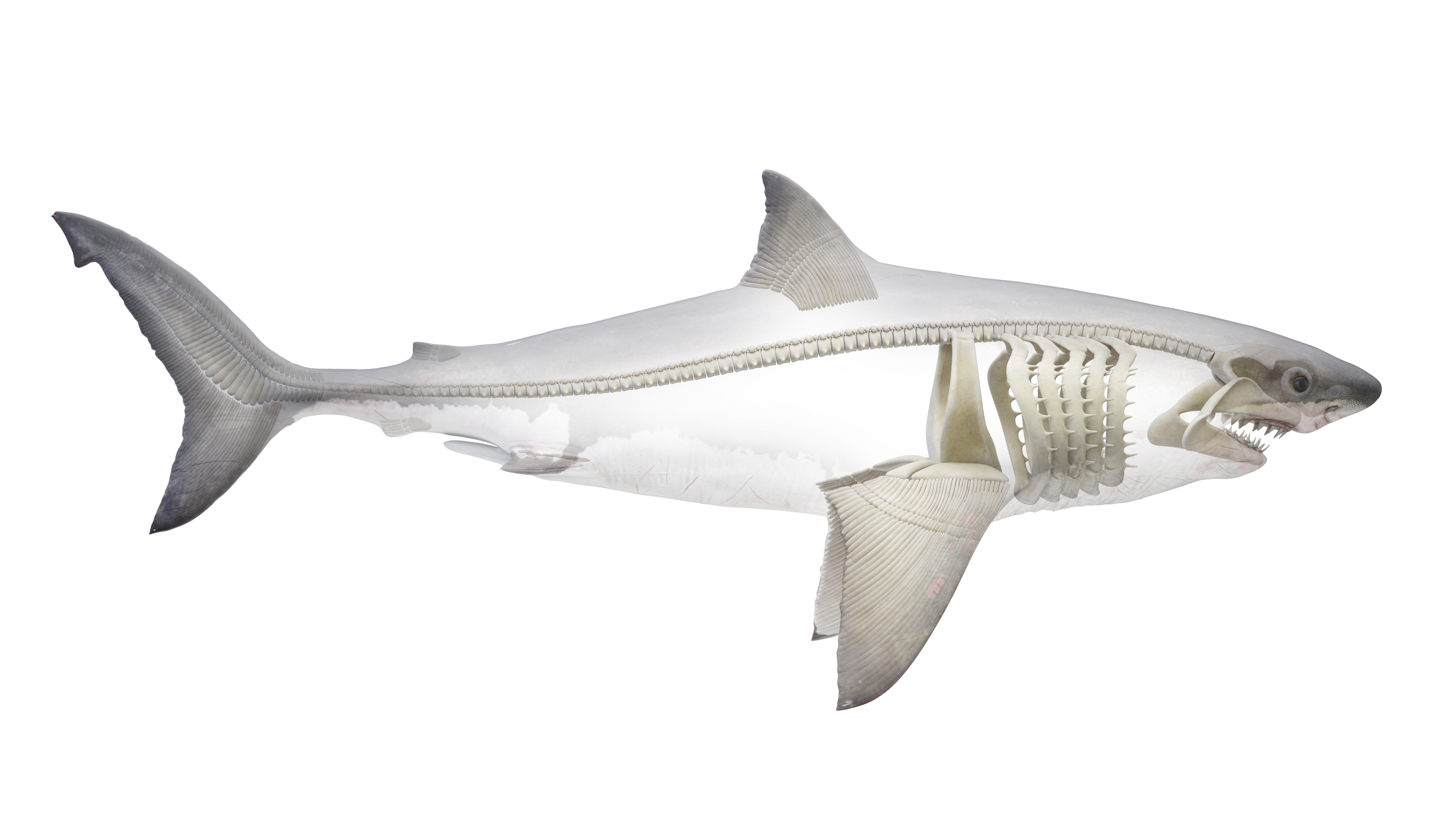
Our new method estimates the age of sharks through state-of-the-art geochemical analyses.
We analyse the chemical composition of the sharks' vertebrae and directly link these measurements to the chemistry of the land and water systems they inhabit throughout their lives.
These findings challenge conventional methods of age analysis and long-held assumptions about shark ecology, while providing novel approaches to refine future conservation practices.
This research is supported by the Save Our Seas Foundation (SOSF), with findings recently published in the Marine Ecology Progress Series.
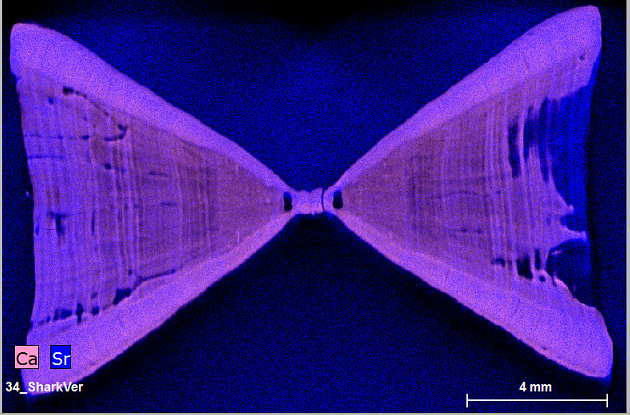
For the very first time, we combined two complementary analytical geochemistry techniques.
One uses X-rays (micro-XRF), and the other uses laser beams (LA-MC-ICP-MS) to characterise the micro-scale chemistry of shark vertebrae.
A focused laser beam removes material from the shark vertebrae sample, with the resulting aerosol being transported into the Mass Spectrometer (MC-ICP-MS) for ionization (gaining a positive or negative charge) and then detection of elements.
Like tree rings, shark vertebrae grow concentrically as the shark ages, all the while incorporating the chemistry (elements and their isotopes) of their environment.

Sciences & Technology
The great mystery of interstellar chemistry
The elements we analysed included major mineral elements like potassium (K) and calcium (Ca), as well as the trace element strontium (Sr) and its isotopes.
An element’s isotopes are atoms of the element with the same number of protons but a different number of neutrons, resulting in a different atomic mass (but identical chemical behaviour).
Different isotopes – and their ratios – are already used as natural tracers and signatures to identify sources, track movement of pollution, and determine the age of rocks, plants and archaeological artefacts.
We are now using this technology to help determine the age of organisms in ecosystems.
Conventional methods for ageing sharks, like transmitted light optical microscopy, rely on shining a bright light through thin slices of the vertebrae.
The light/dark ‘bands’ are then counted, with the darker banding interpreted as denser bone with less light getting through. This method assumes that each light/dark corresponds to one year of growth.
In our study, we applied geochemical techniques to analyse the geochemistry of the vertebrae of the Speartooth Shark(Glyphis glyphis), a vulnerable river shark species.
It is estimated that fewer than 2,500 mature individuals remain in the wild.
Study samples were collected after natural shark deaths or from animals accidentally caught in nets.
The Speartooth shark is a medium-sized shark, around 260 cm in length, that lives in rivers and estuaries of northern Australia and southern Papua New Guinea (PNG).
Although a protected species in Australian waters, the Speartooth shark is incidentally captured in commercial fisheries and by some illegal recreational fishing. In PNG, it is caught for its meat and fins, primarily by unregulated fisheries.
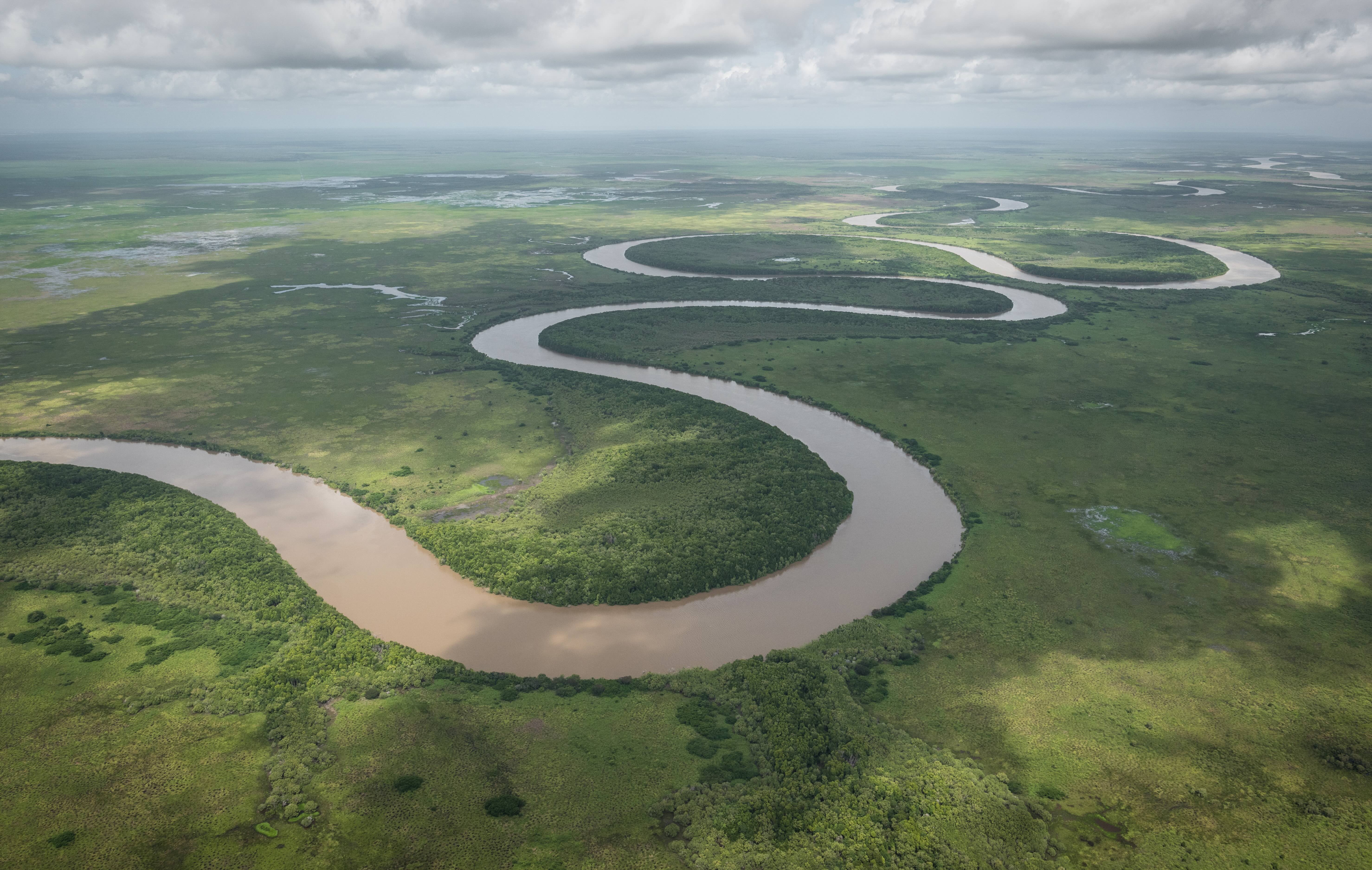
Its natural habitat includes the Adelaide River in the Northern Territory, so we combined geochemical data with existing information for the area, including precipitation records (rain, hail, sleet or snow) and the geochemistry of the surrounding land.

Our results provide the first confirmation that shark vertebrae strongly record the geochemical fingerprints of their environment, based on combined X-ray- and isotope-based analyses.
For example, strontium is incorporated from the environment into the vertebrae as sharks grow. As a result, the relative concentrations in the vertebrae depend on environmental strontium concentrations.
And because the local precipitation records provide an anchor in time, the terrestrial geochemistry establishes a relationship between land and water geochemical compositions.
These periodic variations in the elemental and isotopic composition of the shark vertebrae could then be directly linked to wet/dry seasons in the sharks’ local habitat.

Sciences & Technology
Man bites shark: How dangerous are humans to sharks?
So, in addition to providing a way to estimate shark age, our vertebral geochemical fingerprinting also differentiates between the water environments the shark inhabits during its lifetime.
Importantly, these geochemical fingerprints – tied to absolute time by modern precipitation records – were not always found to match up with light/dark ‘bands’ used by conventional aging methods.
This finding has far-reaching implications, as it indicates that, at least for the shark species we investigated, visible light/dark banding in the vertebrae is not a reliable means of estimating age.
Because age estimation is one of the most important factors in assessing and monitoring population health, as well as in developing appropriate ecological conservation practices for a given species, it is paramount that it be as accurate as possible.
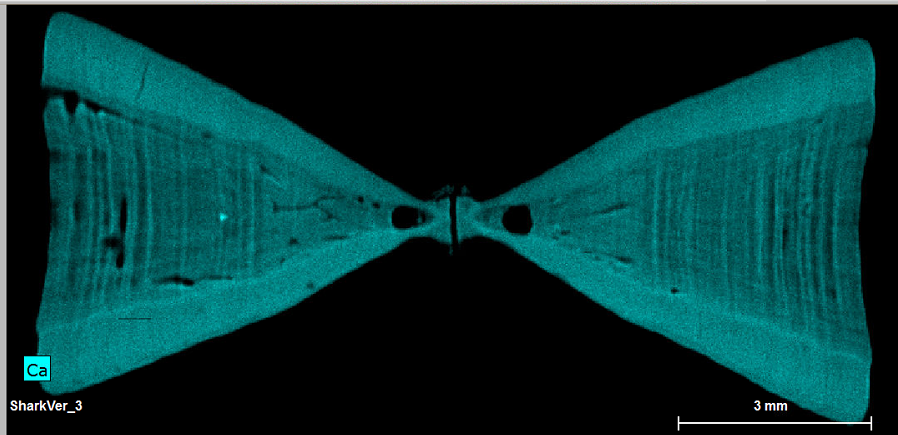 Experimental results showing variations in elemental concentrations in shark vertebrae: Ca. Picture: Melbourne Analytical Geochemistry
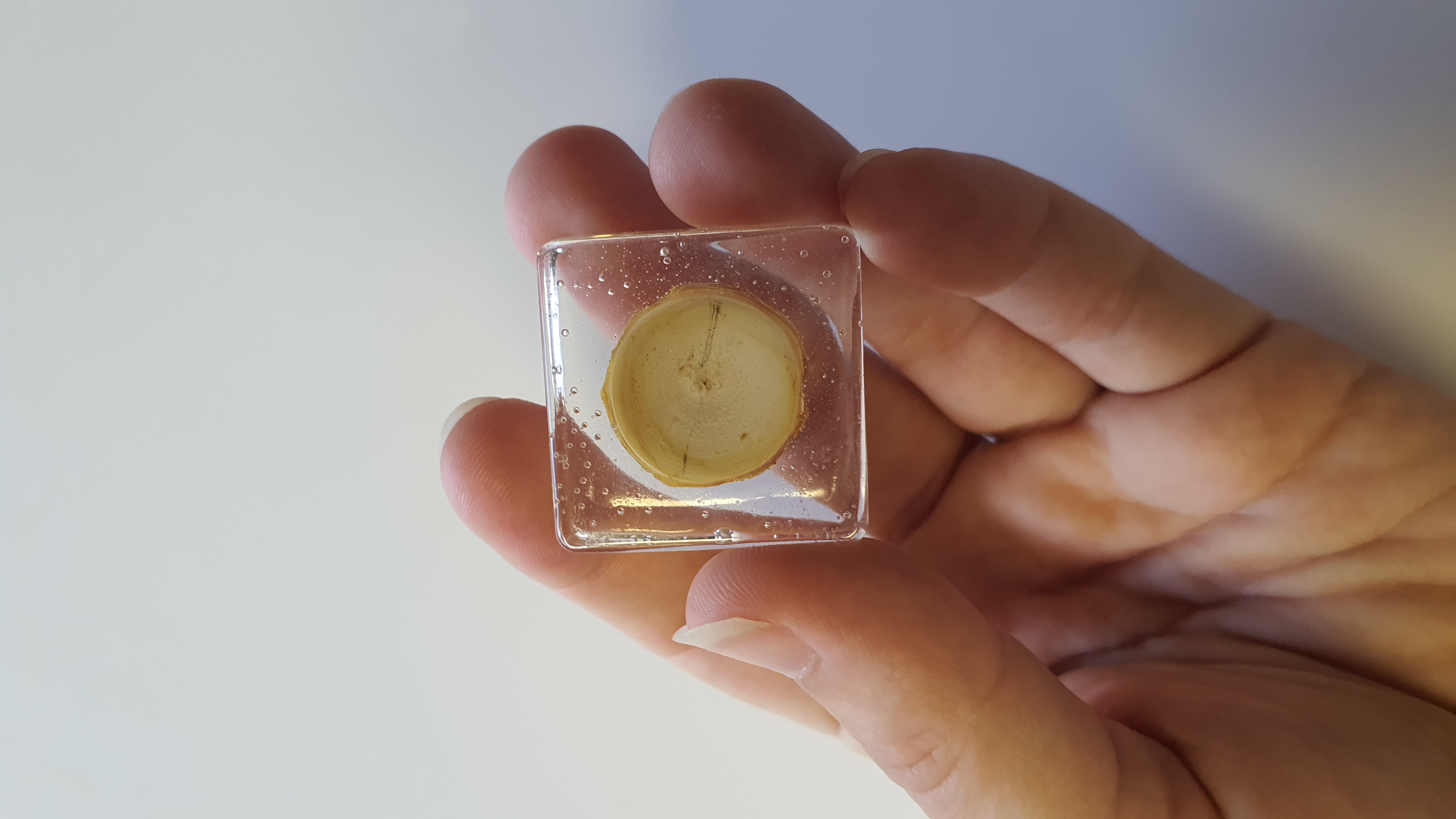 Sample of shark vertebrae prepared for geochemical analysis. Picture: Hilary Lewis
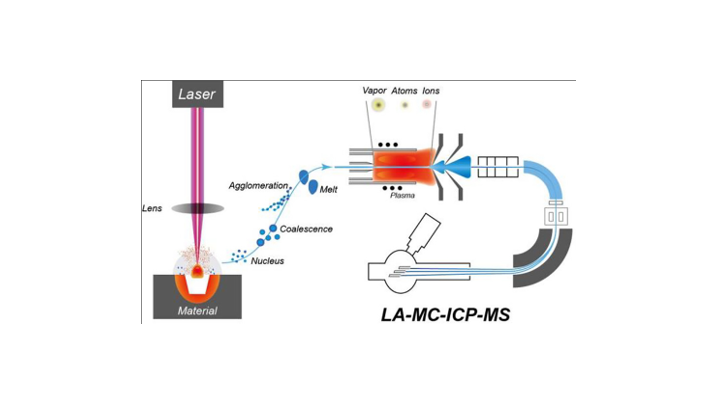 A focused laser beam (LA) removes material from the sample, with the resulting aerosol transported into the Mass Spectrometer (MC-ICP-MS) for chemical analysis. Graphic: Springer NatureExperimental results showing variations in elemental concentrations in shark vertebrae: CaSr. Picture: Melbourne Analytical Geochemistry
1 / 4
Shark vertebrae microchemistry offers us a time-resolved record of the chemical composition of the water sharks inhabit, meaning the techniques applied in this study can aid in reconstructing waterway chemistry in both the recent and distant past.
Such possibilities are incredibly exciting and help to open new frontiers in research.
This could include using vertebrate microchemistry to assess modern effects on waterways, like the accumulation of heavy metals and other contaminants, and to reconstruct past aquatic environments.
Our research team plans to continue this important work by expanding the range of geochemical analyses and applying them to more species to benefit their conservation.
If you would like to support this ongoing research or discuss a research project, please contact Dr Brandon Mahan (brandon.mahan@unimelb.edu.au). Further information can be found in a two-part article series on SOSF’s website.
The research team also included: Hilary M. K. Lewis, Michael I. Grant, Olivier Alard, Peter M. Kyne, Hui-Qing Huang, Yoann Gréau, Alastair V. Harry, Grant James Johnson and Amy Kate Kirke.
Banner: Experimental results showing variations in calcium and strontium elemental concentrations in shark vertebrae/ Melbourne Analytical Geochemistry