

Map of the Month
These maps tell us we need to cool our sweltering streets


Bees are critical to our biodiversity, but they’re in trouble. Our new Map of the Month tells us where some of our most charismatic native bees live in the City of Melbourne and the plants that support them


Published 26 June 2026
When it comes to bees, most of us can identify the ubiquitous honey bee (Apis mellifera)and that’s about it.
But with the emergence of easy identification tools like citizen-science platform iNaturalist, an amateur melittologist (a bee scientist) can now identify a range of other native bees in their local area – which could go a long way to helping support the critical role bees play in our environment.
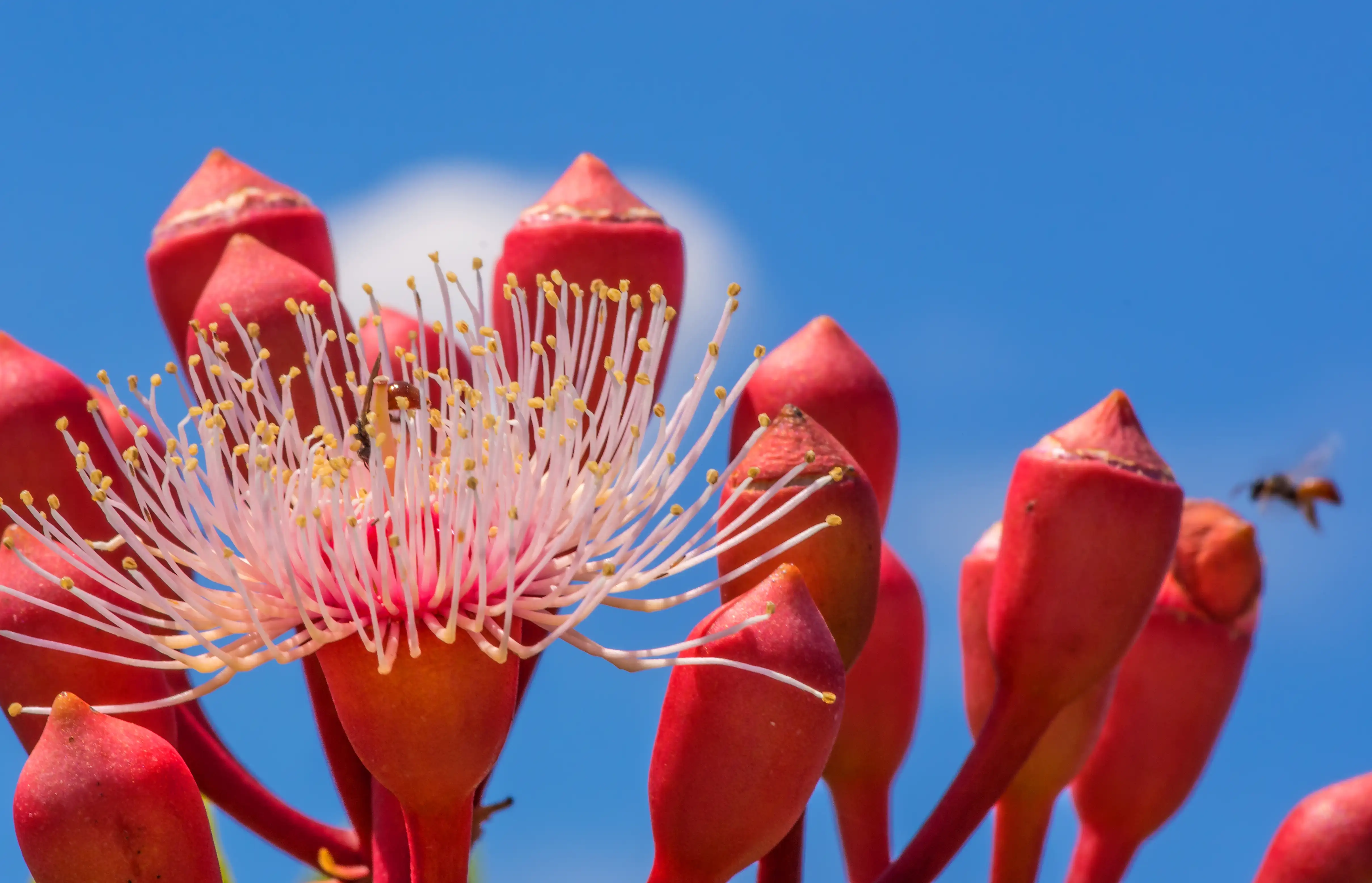
However, bee populations around the world are in trouble. Whether it’s the result of pests and diseases, climate change or loss of native vegetation, many species of bees are struggling to survive.
Bees pollinate flowering plants and, in doing so, enable plant reproduction, support global food security and the biodiversity of wild ecosystems.
Planting local species that native bees rely on is a powerful way to support biodiversity.
Here in Melbourne, when residents in the east of the city planted native rather than exotic plants in their backyards, there was an increase in native bee species – including rare species like the square-headed masked bee (Hylaeus quadriceps) that feeds mostly from native blue-bells (Wahlenbergia sp.)
For the true biodiversity enthusiast, planting natives can improve the urban environment from a bee’s point of view.
And when we consider that native bees typically only travel around 100 metres from their nests, connecting native gardens across neighbourhoods can act like a bee highway, encouraging even greater pollination and environmental health.
Even in a big city.
So, what native bees inhabit the City of Melbourne, and what plants do they love?
Over the last decade, our Biodiverse Cities group at the University of Melbourne have recorded more than 5000 interactions between bees and flowers across Melbourne.
This includes more than 100 native bee species and around 250 native and exotic plant species.
We fed this data, along with information on urban land cover, climate and the evolutionary relationships between the plant species involved in these interactions, into machine learning models.
These models predict which bee species we might find at any location in Melbourne and which plant species they are likely to visit.
We then mapped where five of our most charismatic and distinctive native bees are likely to be found in the City of Melbourne, and identified plant species that would collectively provide the greatest support for these bees.
We couldn’t look at every species – so we chose five to focus on.
The first is the blue-banded bee (Amegilla asserta) because it’s big in both body size and popularity. There’s the less well-known but no less beautiful masked bee (Hylaeus littleri), and the tiny urban emerald sweat bee (Lasioglossum urbanum).
And we’ve included the shiny buzz-pollinating metallic green nomia bee (Lipotriches flavoviridis) and industrious little red-bummed leaf-cutter bee (Megachile apicata).
The natives are not just beautiful; each species represents different challenges faced by city-dwelling bees.
Blue-banded bees are big, which means they need more flowers to survive and reproduce than smaller bees – and flowers can be scarce in the urban environment.
Masked bees are smaller, but they have some serious diet restrictions, feeding almost exclusively from banksias, gum trees and other ancient Australian plant lineages.
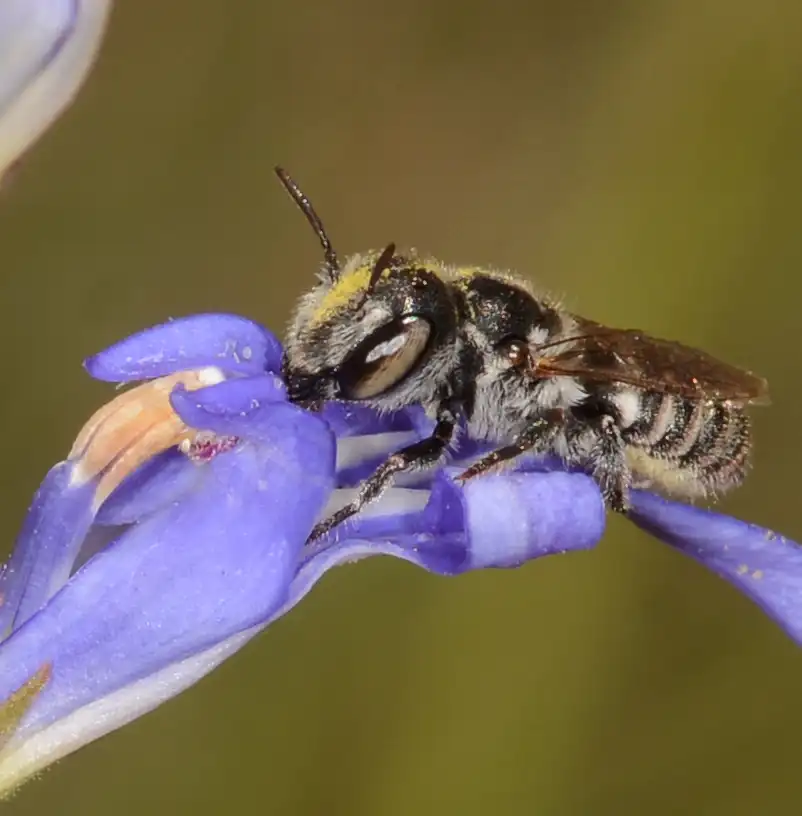 The leaf-cutter bee (Megachile apicata). Picture: iNaturalist/John Walter
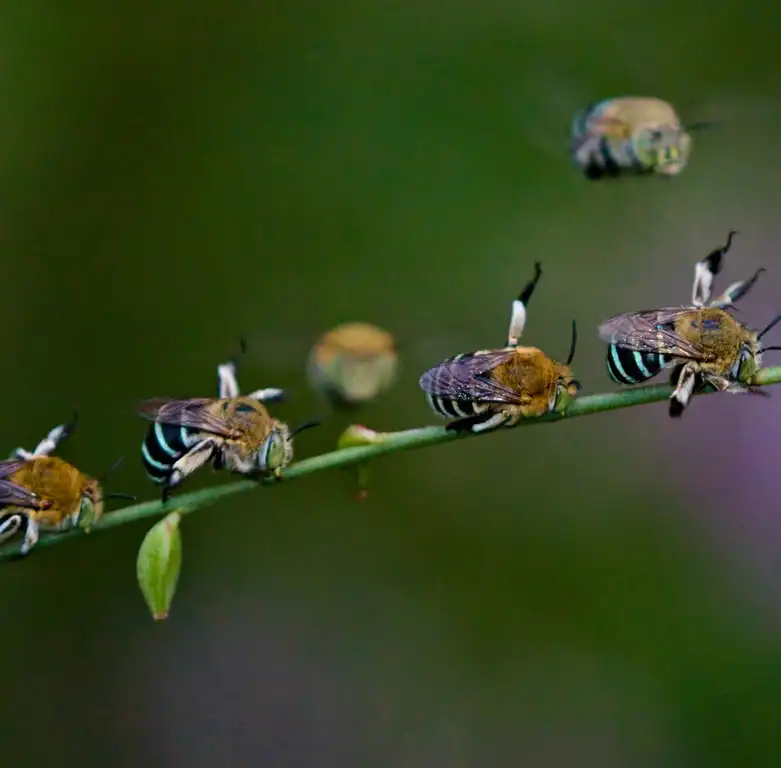 The blue-banded bee (Amegilla asserta). Picture: iNaturalist/Third Silence Photos
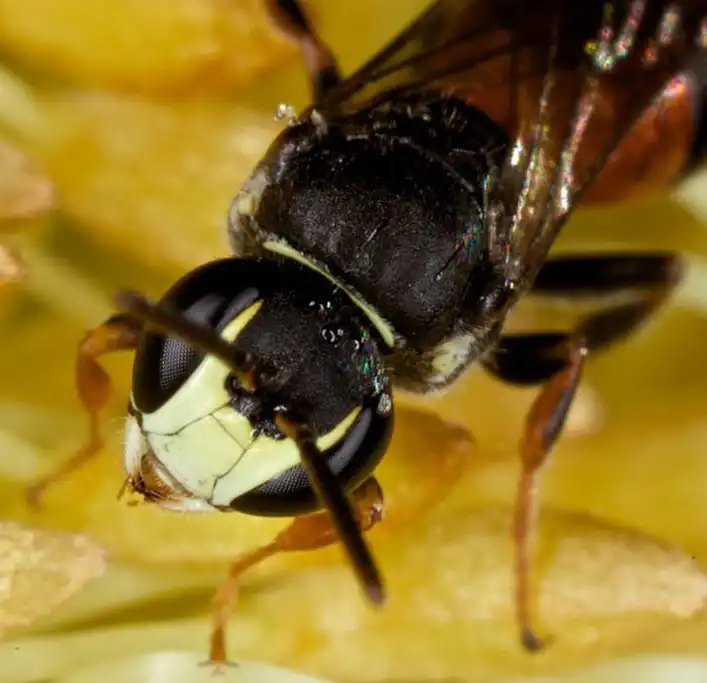 The masked bee (Hylaeus littleri). Picture: iNaturalist/Kristi Ellingsen
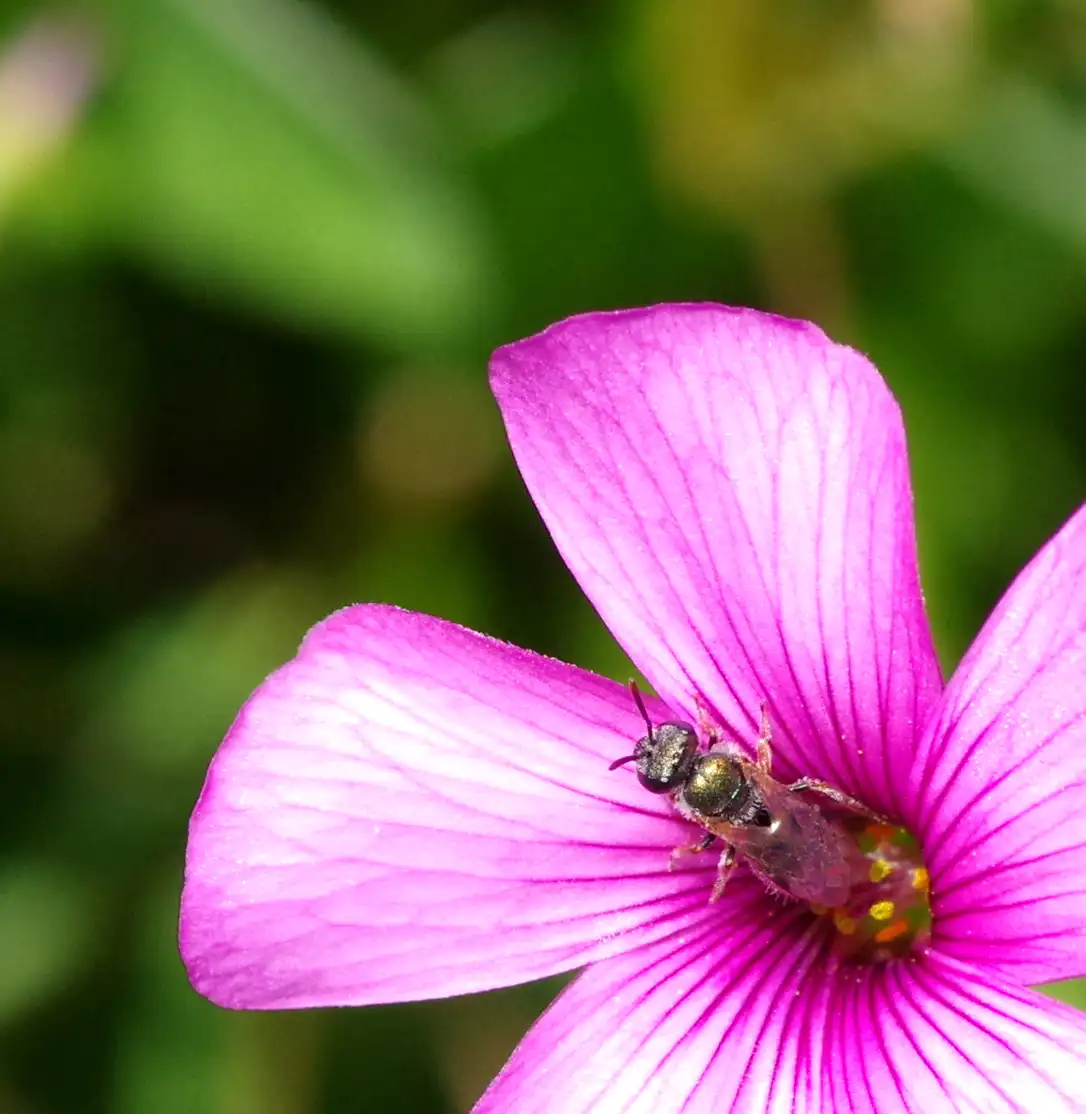 The emerald sweat bee (Lasioglossum urbanum). Picture: Flickr/Luis Mata
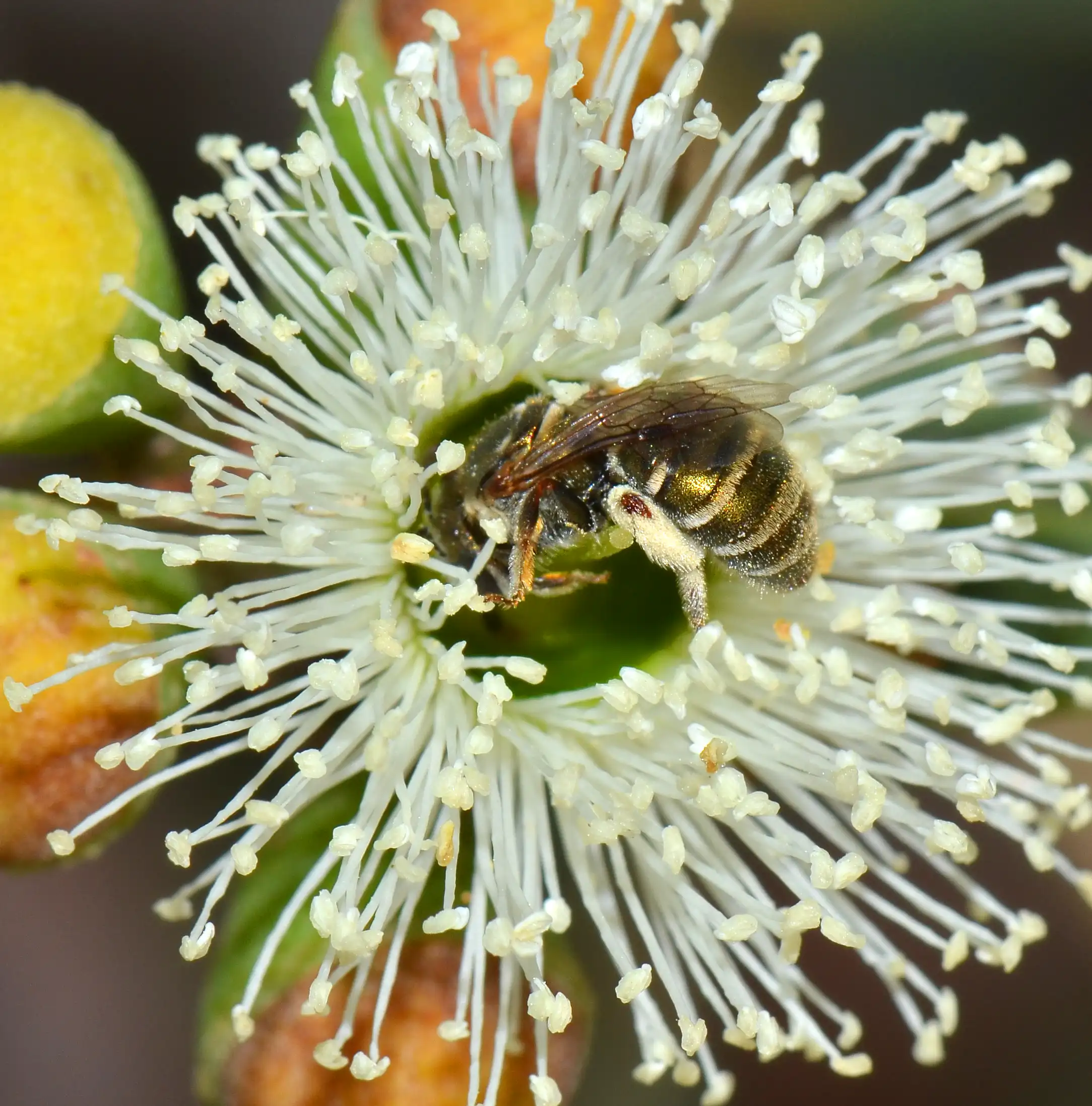 The metallic green nomia bee (Lipotriches flavoviridis) Picture: Flickr/Jean and Fred Hort
1 / 5
Sweat bees are small and have broad diets, but they nest in the soil, which can be hard to find between the concrete and asphalt.
And leaf-cutter bees nest in pre-existing holes in wood that in natural settings are made by wood-boring beetles.
We live in a busy city, so not everyone has space for a big bee-friendly garden. That's why we built our model to work at any scale.
It predicts the best plant species for small gardens, where pots and flower beds might be all that's available, as well as for larger gardens with more room.
Our initial list of plant species was limited to the 300 or so available at local Indigenous nurseries like Bili Nursery.
While this may sound like a small number, it still gave our models more than half a million possible sets of plant species to compare.
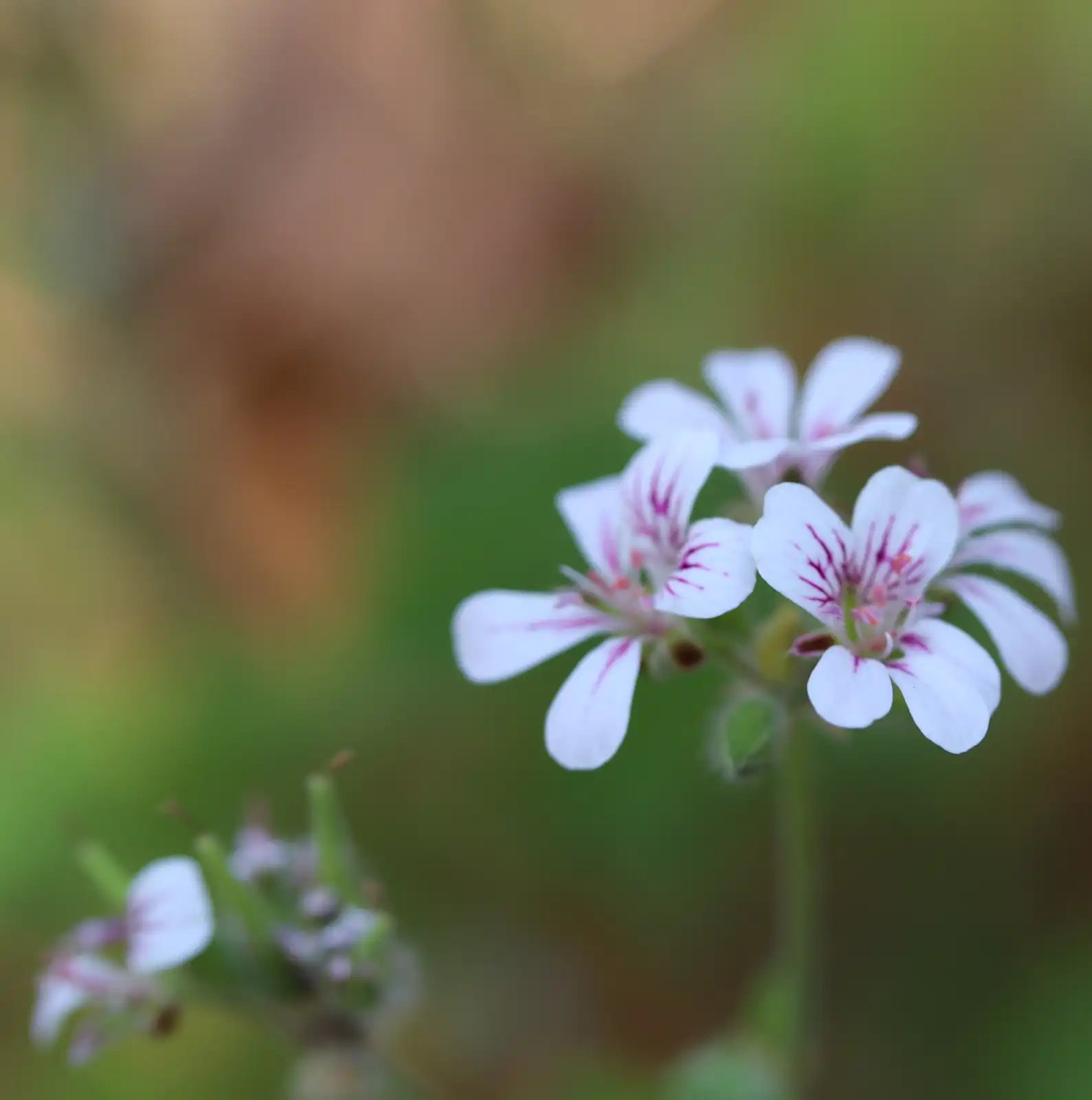 The Austral Stork’s-bill (Pelargonium australe). Picture: Dr Katherine Horsfall
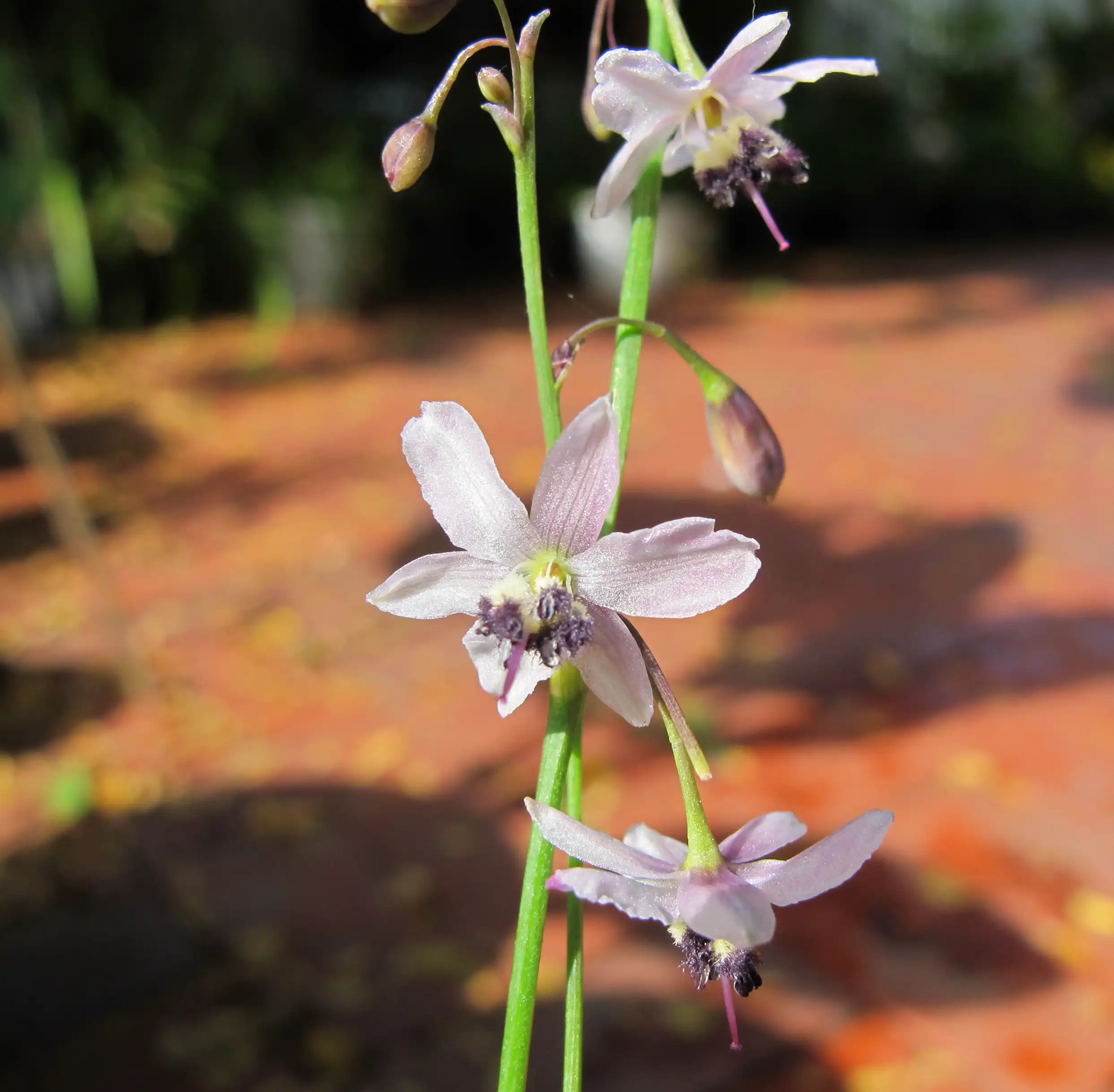 The Pale Vanilla-lily (Arthropodium milleflorum). Picture: Flickr/Nathan Johnson
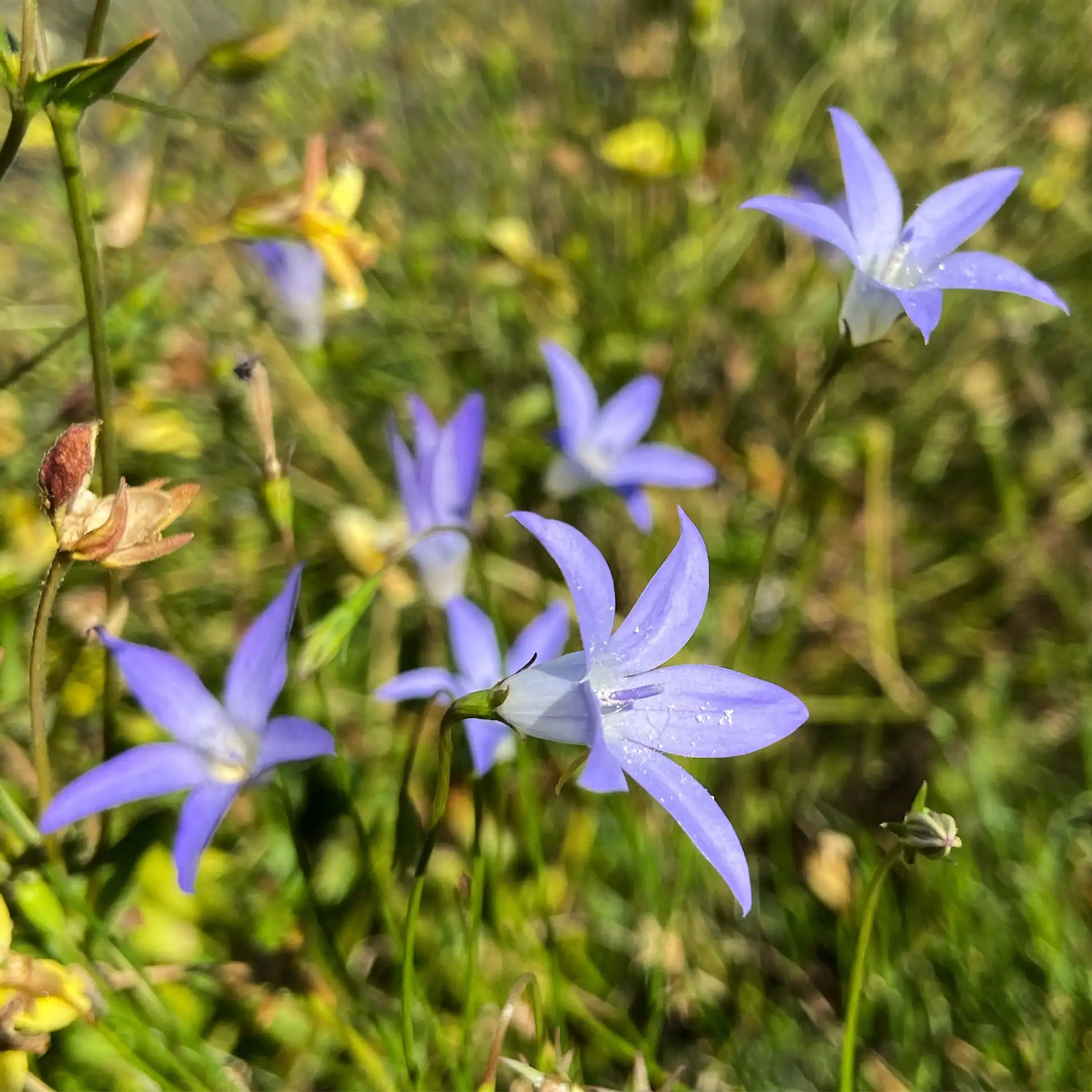 The Tufted Bluebell (Wahlenbergia capillaris). Picture: Dr Katherine HorsfallThe Austral Stork’s-bill (Pelargonium australe). Picture: Dr Katherine HorsfallThe Pale Vanilla-lily (Arthropodium milleflorum). Picture: Flickr/Nathan JohnsonThe Tufted Bluebell (Wahlenbergia capillaris). Picture: Dr Katherine Horsfall
1 / 3
Some of the plants our native bees prefer include the delicate Pale Vanilla-lily (Arthropodium milleflorum) and the Tufted Bluebell (Wahlenbergia capillaris).
These small wildflowers can be grown in the garden or in a pot, in semi-shade or full sun.
It’s worth noting that while these plants can go dormant in late summer or in dry conditions, given enough moisture, they will reshoot and provide a long season of flowering.
Another wildflower our bees like is the Austral Stork’s-bill (Pelargonium australe), which suits small and large gardens. It’s a versatile plant that grows to 50 centimetres, loves well-drained soils and can be pruned after flowering to grow new plants from cuttings.
Our map also shows a few small gaps where none of our five species of bee are found – but that doesn’t mean there aren’t any.
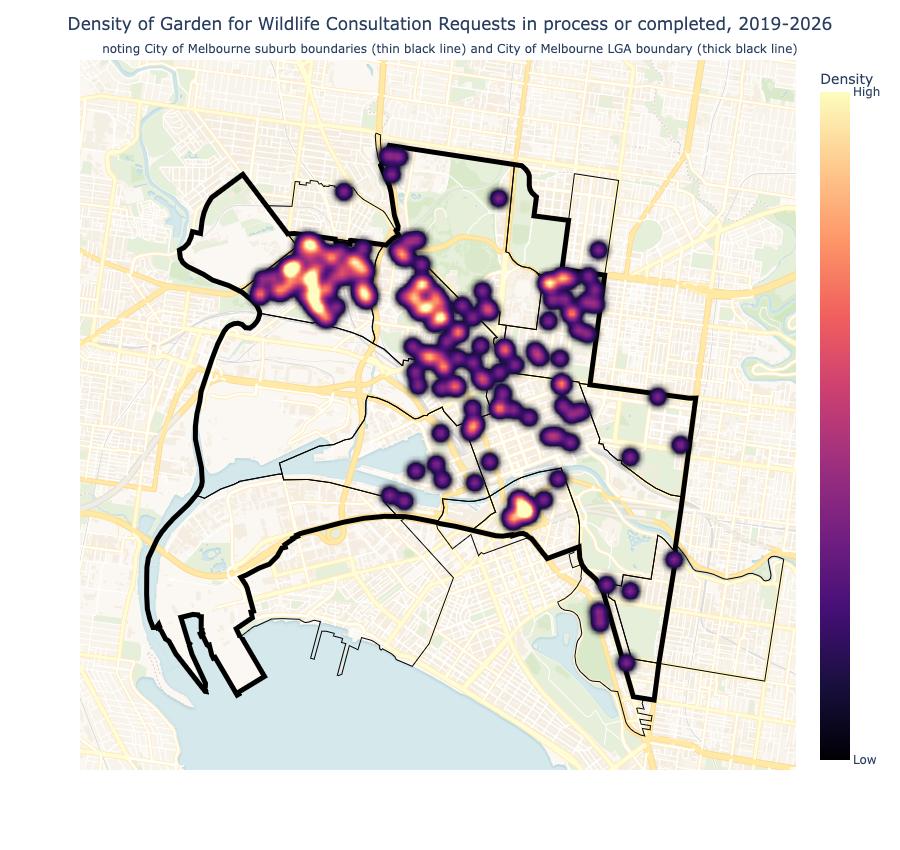
Remember, we’ve only modelled where five species of native bee might be found – but these are mobile creatures and there are many more native bee species across Melbourne.
There are plenty of Melburnians who are already planting for bees – and when we map them, it gives us an interesting insight into where the greatest need for native wildlife gardens might be.
The Gardens for Wildlife Victoria is a network of community groups and councils in townships and urban areas that support each other in involving residents, schools, and businesses to improve the habitat value of gardens and green spaces.
In the City of Melbourne, the Gardens for Wildlife Melbourne program has provided advice to more than 160 Melburnians keen to improve resources for wildlife in their gardens.
We’ve mapped these visits to show how home gardens can provide a vital bee stepping stone to other green spaces like parks, gardens and undeveloped lots.
While there’s already a lot of interest in wildlife gardening in some communities across inner Melbourne, other areas are only beginning to embrace the trend.
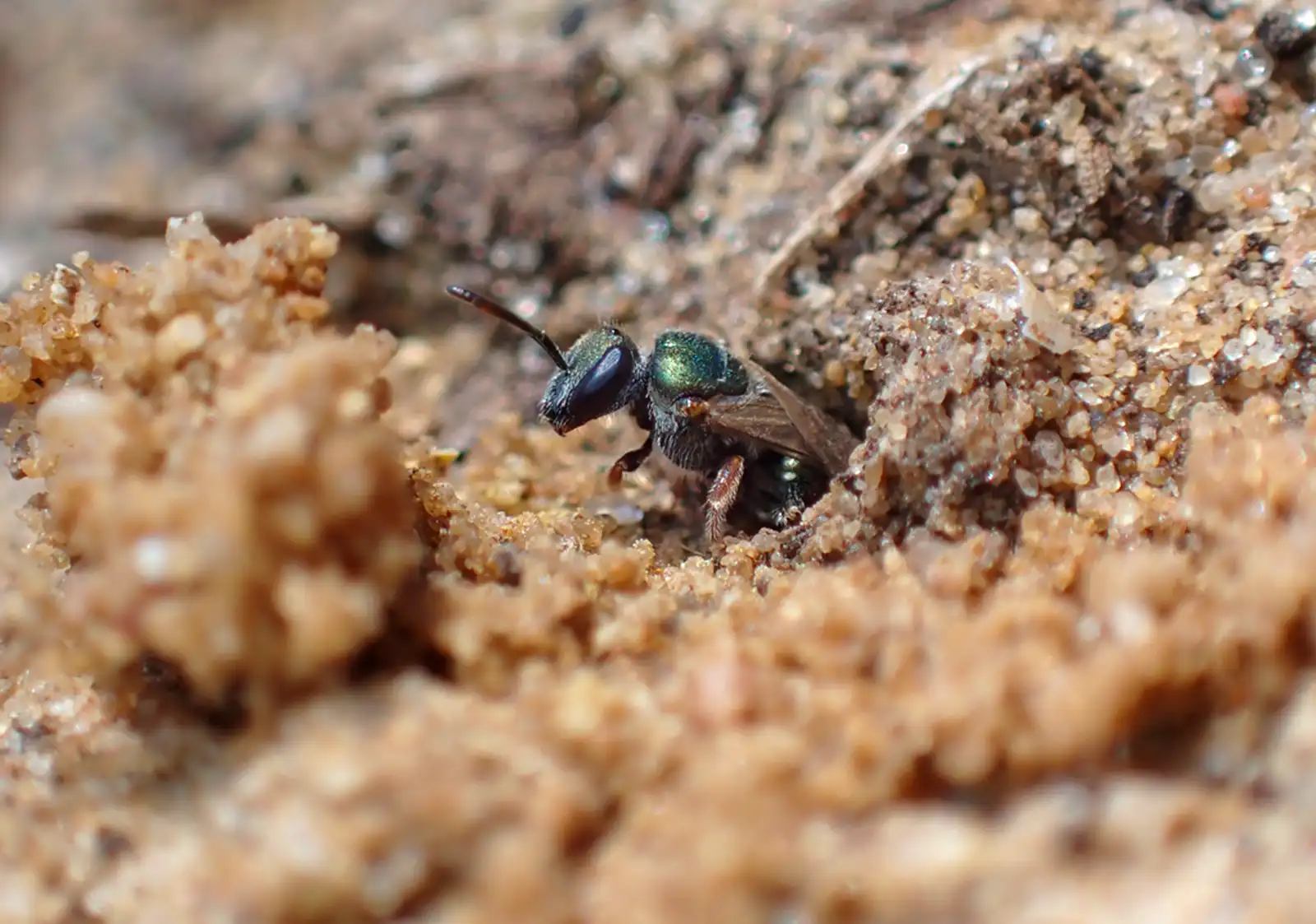
Interestingly, there are gaps between two of Melbourne’s biggest green spaces – Westgate Park, which sits under the iconic Westgate Bridge, and the Royal Botanical Gardens, just south of the CBD.
So, residential plantings in suburbs like Port Melbourne, South Melbourne and Docklands would complement the great work of groups like the Melbourne Pollinator Corridor crew, who are planting flowers on nature strips to support native pollinating insects.
One of the best things we can do for native bees is to plant locally indigenous plant species they love. These are plant species that have evolved to grow in your local area over thousands of years.
A good place to start is asking for plant suggestions at your local Indigenous nursery.
Map of the Month
These maps tell us we need to cool our sweltering streets
In council areas with an active Gardens for Wildlife program, gardeners can sign up for a visit from a volunteer guide who will provide them with tips on gardening to create a more favourable habitat for our more-than-human city residents.
They can also offer advice on plant species that are particularly beneficial to native insects.
Our science shows that Melburnians can support diverse and rare bee species in their gardens by planting the right plants.
The more wildlife gardens we can create in our city, the more we can connect and improve habitat for our native bees.
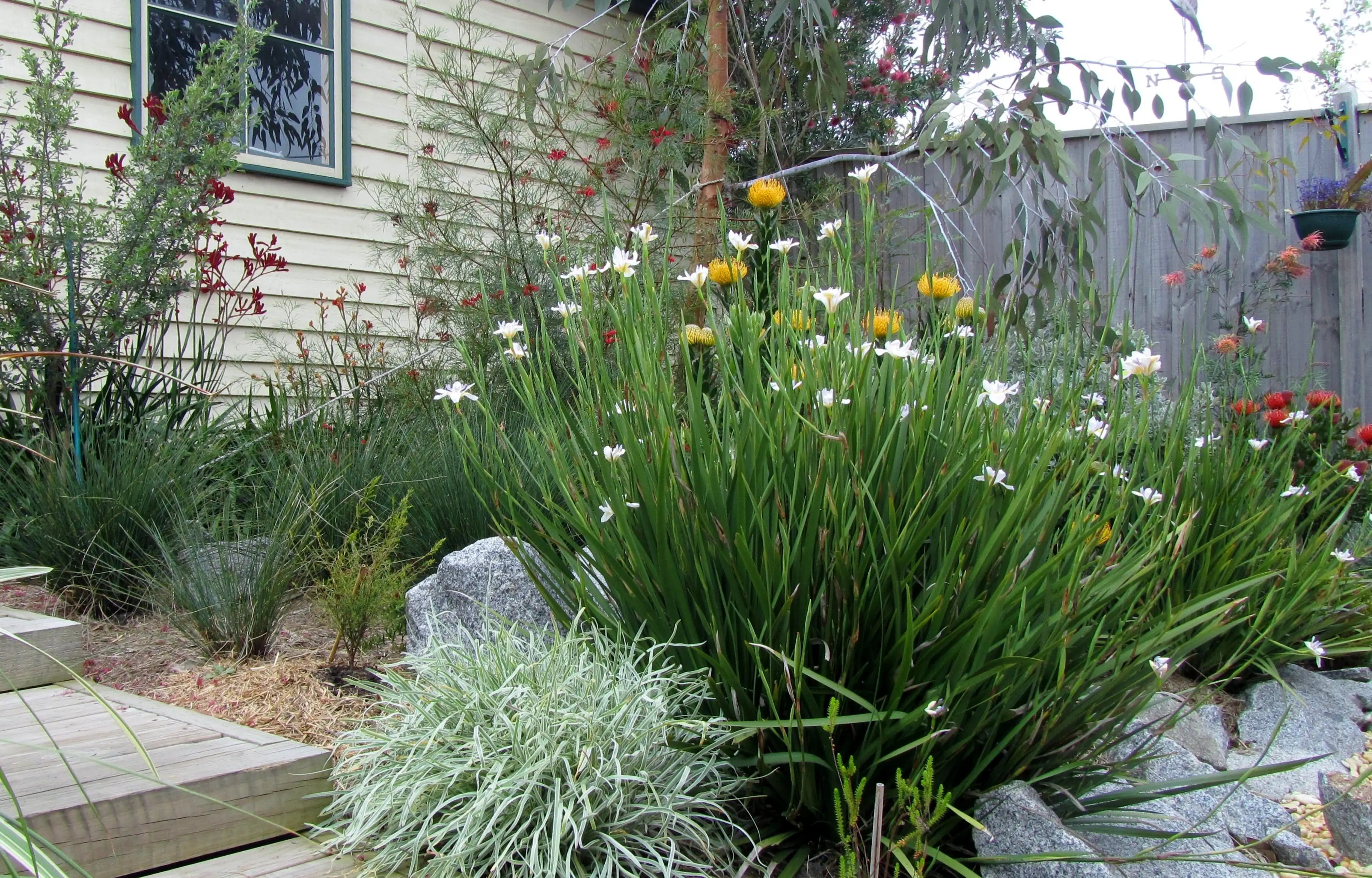
From small balconies to expansive outdoor spaces, planting the right species can help connect bees across Melbourne and support their role in our biodiversity.
While we only mapped these five species, there are likely far more around – all we have to do is pay attention.
So, keep your eyes open, plant natives in your garden, and help our native bees get across Melbourne.
Map of the Month is a project from the University of Melbourne (Melbourne Centre for Cities, Melbourne Data Analytics Platform and Pursuit) using maps to spark important policy conversations across metropolitan Melbourne. Academics, community leaders and government representatives from across Melbourne contribute to the maps and accompanying stories.
This month’s story was produced in collaboration with the University of Melbourne’s Biodiverse Cities Research Group, City of Melbourne and the Gardens for Wildlife Melbourne program. The maps were produced by Dr Emily Fitzgerald and Dr Noel Faux using data from the Biodiverse Cities Research Group, City of Melbourne and Gardens for Wildlife Melbourne.
