Politics & Society
Pacific voices call for a lifeline. And we’re listening


Climate change is taught as a global phenomenon, but young people around the world are living with its effects in their own regions. So, what should climate education look like now?


Published 21 October 2026
As young people (and political leaders) head to the United Nations' climate summit, UNFCCC (United Nations Framework Convention on Climate Change) COP31 in Türkiye, we have been reflecting on what is happening in climate education in schools.
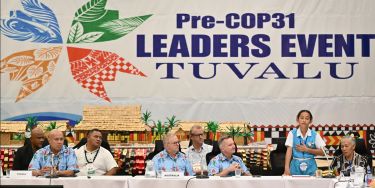
During a passionate address at the Pre-COP31 leaders' event in Fiji, Melelusi Sokotia, a 13-year-old student from Tuvalu’s Nauti Primary School, urged global decision-makers to take climate action now.

While felt by youth all over the world, those living in the Global South have an urgency rooted in particular experiences of a changing climate.
In August 2026, our SWISP (Speculative Wanderings in Space and Place) Lab visited schools in India as part of a climate education project with the Future Students team, based in the Melbourne Global Centre - Delhi.
During our creative climate education sessions, conversations kept returning to the same place: the Himalayas.
Heat, water, family, animals, food, trees, air and rhythms of everyday life were spoken about.
As were melting glaciers, changing monsoons and rivers that connect mountains to communities across South Asia.
Politics & Society
Pacific voices call for a lifeline. And we’re listening
In Australia, climate education has important foundations in science, geography and sustainability education, but there's an unfulfilled opportunity to think more expansively about what young people need to know, feel, question and imagine.
Students learn about temperature targets, emissions graphs, carbon footprints and future projections.
These are important, but what about climate change experienced through changing seasons, food systems, water availability, migration, community stories and cultural connections to place?
Our research shows that many young people want to explore uncertainties associated with their lived realities, rather than simply memorise scientific and geographical facts in school.
Our team at the SWISP Lab believes students need regional climate literacy. That means understanding climate change as a web of connections between people, places and systems, from their own backyard to the other side of the world.
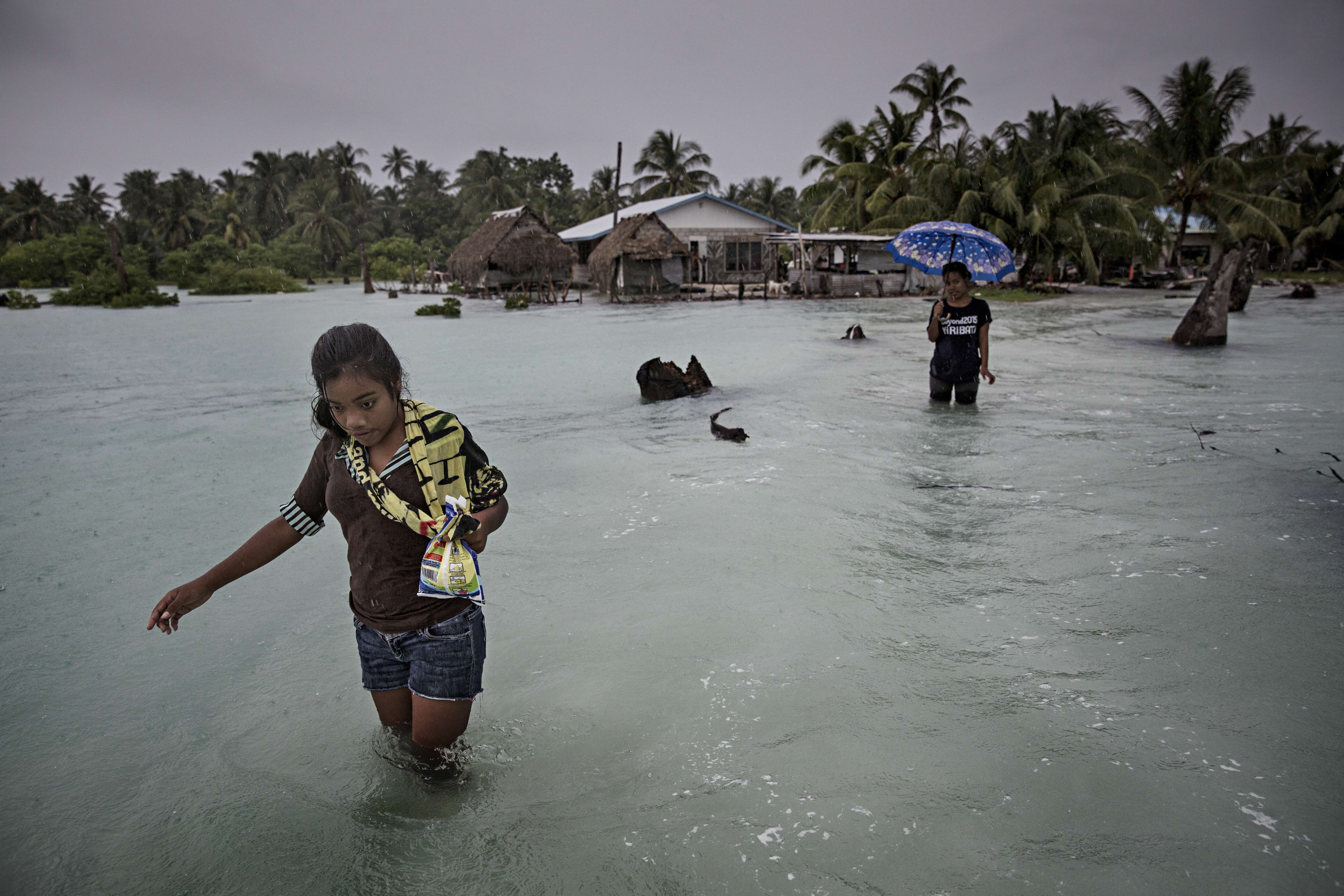
This is especially true when we understand that young people are not all encountering climate change in the same way.
SWISP climate education workshops do not begin with the global phenomenon of climate change.
They start by identifying participants' everyday experiences of climate change before connecting these experiences to local communities, national contexts and regional events.
This process can help to highlight the uneven distribution of the impacts of climate change which is dependent on a community’s wealth, infrastructure, geography and politics.
When we start to engage with young people, we ask a different question:
When did you realise you lived in climate collapse, crisis, or catastrophe?Not when did you first learn about climate change?
Not when did someone explain the science?
But when did you realise that you were already living within it?
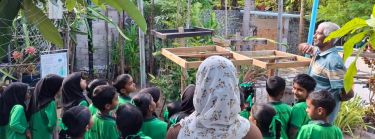
In the Indian cities of Jaipur and Delhi, young people shared everyday experiences of heat, water, food, family and place. This opened up conversations about how glaciers, rivers, monsoons, cities and communities are all connected.
These stories may be personal and local, but lead to much larger questions.
Just weeks after these conversations, catastrophic flooding struck Nepal.
The precise causes and sequence of events need careful scientific investigation.
But the scale of the melting, flooding and destruction has changed the way we talk about climate change because what happens in the mountains doesn’t stay in the mountains.
Changes to glaciers, rainfall patterns and watershed systems can affect agriculture, energy production, urban development and livelihoods across national borders.

The Nepal floods raise an urgent educational question: What does climate education owe young people living within rapidly changing regions?
Our research shows that young people want opportunities to engage with exactly this kind of question. They want to explore this complexity.
But making sense of climate change means working with incomplete information and science that is still evolving. It also means grappling with vast amounts of data and complex systems, including political ones.
This involves a shift in how we think about climate literacy.
Regional climate literacy is the ability to understand how place, ecology, culture, infrastructure and power are connected.
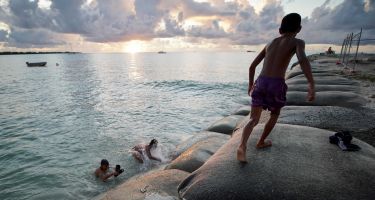
It underpins the capacity for regional responses to local climate-related issues.
It involves learning how local experiences connect to regional systems and how environmental change travels across landscapes and communities.
For Australian students, these connections matter too.
Australia is deeply connected to the broader Asia and Southeast Asia Pacific region, and climate challenges increasingly emerge through these connections.
And this interdependence is now showing up not only in our environment and societies, but in our courts.
In 2026, Australia’s High Court handed down a landmark judgment concerning the proposed expansion of the Mount Pleasant coal mine in New South Wales.

The ruling confirmed that planning authorities cannot separate the local impacts of fossil fuel extraction from the emissions generated when those fossil fuels are burned overseas.
What is extracted in one place, consumed in another and released into a shared atmosphere returns as heat, fire, flood and drought.
Australia’s climate future is inseparable from the region of which it is a part.
Teaching climate change through global statistics or local actions alone can obscure these relationships.
Education is critical in making regional relationships visible.
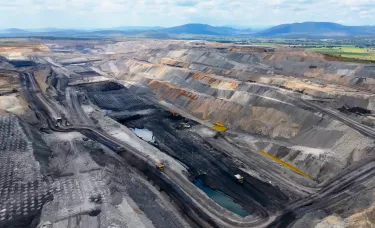
Regional climate literacy encourages students to see climate change as a network of relationships linking people, places, and systems, near and far.
The Taku Pakasoa Declaration: Strength in Unity (2026), which came out of a Pacific gathering ahead of the COP31 climate summit, underlines the urgency of recognising climate change as an interconnected ecological, cultural and political crisis.
If climate change does not stop at borders, neither can climate education.
We need a curriculum and ways of teaching and learning that connect scientific knowledge with cultural knowledge, the local with the regional, and imagination with action.
This will look different in communities already facing severe climate disruption than in those just starting to recognise their own part in it.
For Australian teachers, it means making room in every subject for young people to explore how our region is connected, think critically about uncertainty, learn from different ways of understanding the world, and imagine fairer, more liveable futures.