

Exploding stars are trying to talk to us through gravitational waves
The cataclysmic explosions of dying stars can help us unlock grand mysteries of the universe. So we’re priming our detection tools to make the most of the next one we get

Published 12 June 2026
Once charted as a ‘guest star’ in ancient China, dreaded as a harbinger of ill omens in medieval Europe, and preserved in the narratives and artworks of Indigenous cultures, these cosmic spectacles are now known as core-collapse supernovae.
The term nova, derived from Latin, means ‘new’, but a core-collapse supernova is anything but a beginning. It marks the death of a massive star – one with more than eight times the mass of the Sun.
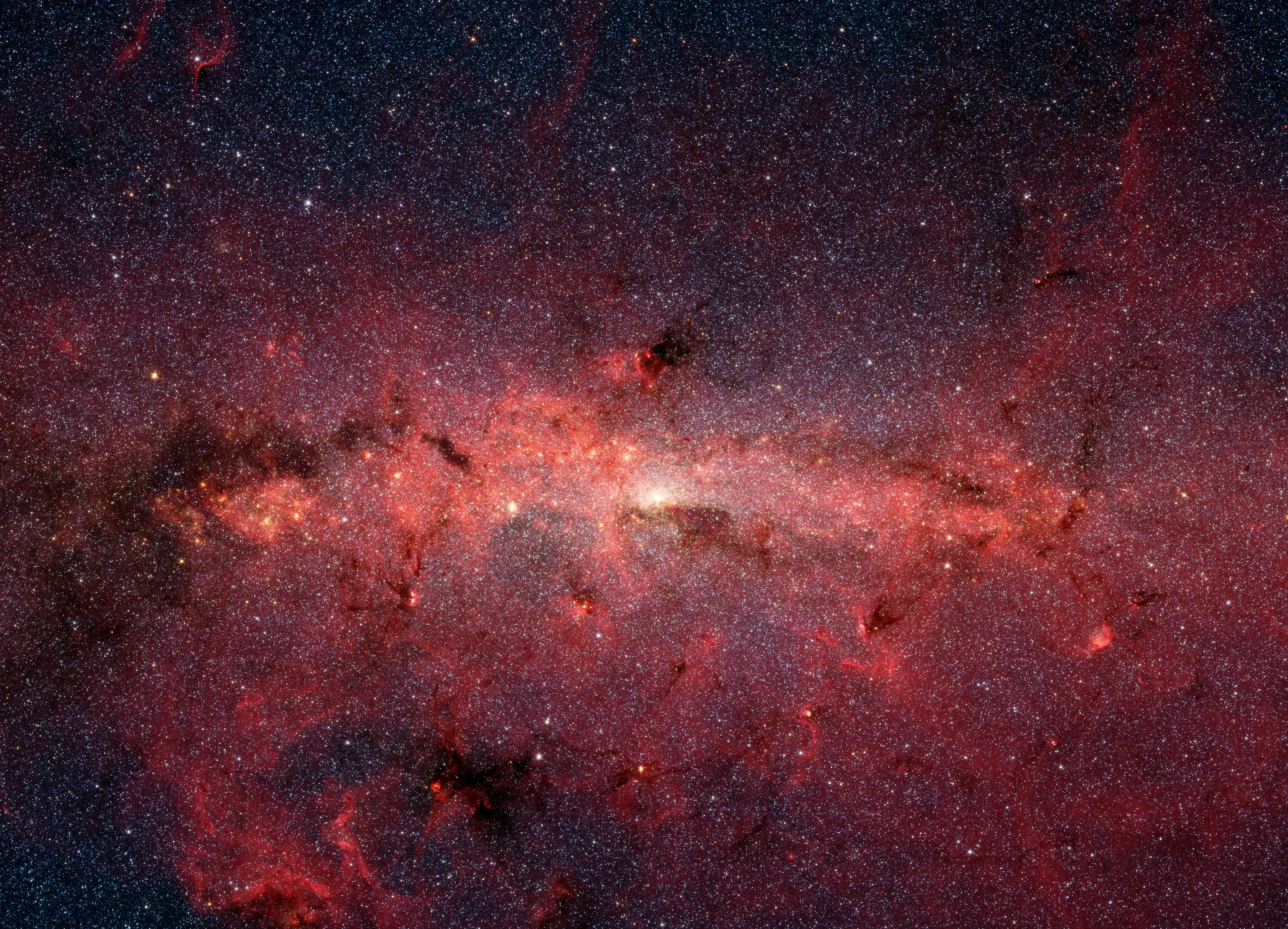
Core-collapse supernovae are among the most violent and energetic processes to ever exist, making them natural laboratories for studying the behaviour of matter and gravity under extreme conditions that cannot be replicated on Earth.
The incredible explosions – which only last a few seconds – release immense amounts of energy.
Enough energy, in fact, to create almost all the elements of the periodic table.
To put it more poetically, the science behind core-collapse supernovae may contain the details of our cosmic origin.
To uncover these secrets, we need to answer crucial questions. What happens before the explosion? And what triggers the explosion in the first place?
Electromagnetic observations provide valuable insights into the physical processes occurring during and after the explosion, but they capture an incomplete picture.
We need other ways to capture this information. The answer (we hope) is gravitational waves.
While gravitational waves are not new, we are yet to record them from a core-collapse supernova and these waves could hold critical information to complete this picture.
So, our tools must be ready to decrypt that information when it comes. And that's what our latest research aims to do.
The lifecycle of a massive star
To the naked eye, stars may appear as permanent specks of light in the night sky, but they don’t shine forever.
The illumination of stars results from the fusion of atoms within their cores to create heavier elements, but the fuel is finite and will eventually be exhausted.
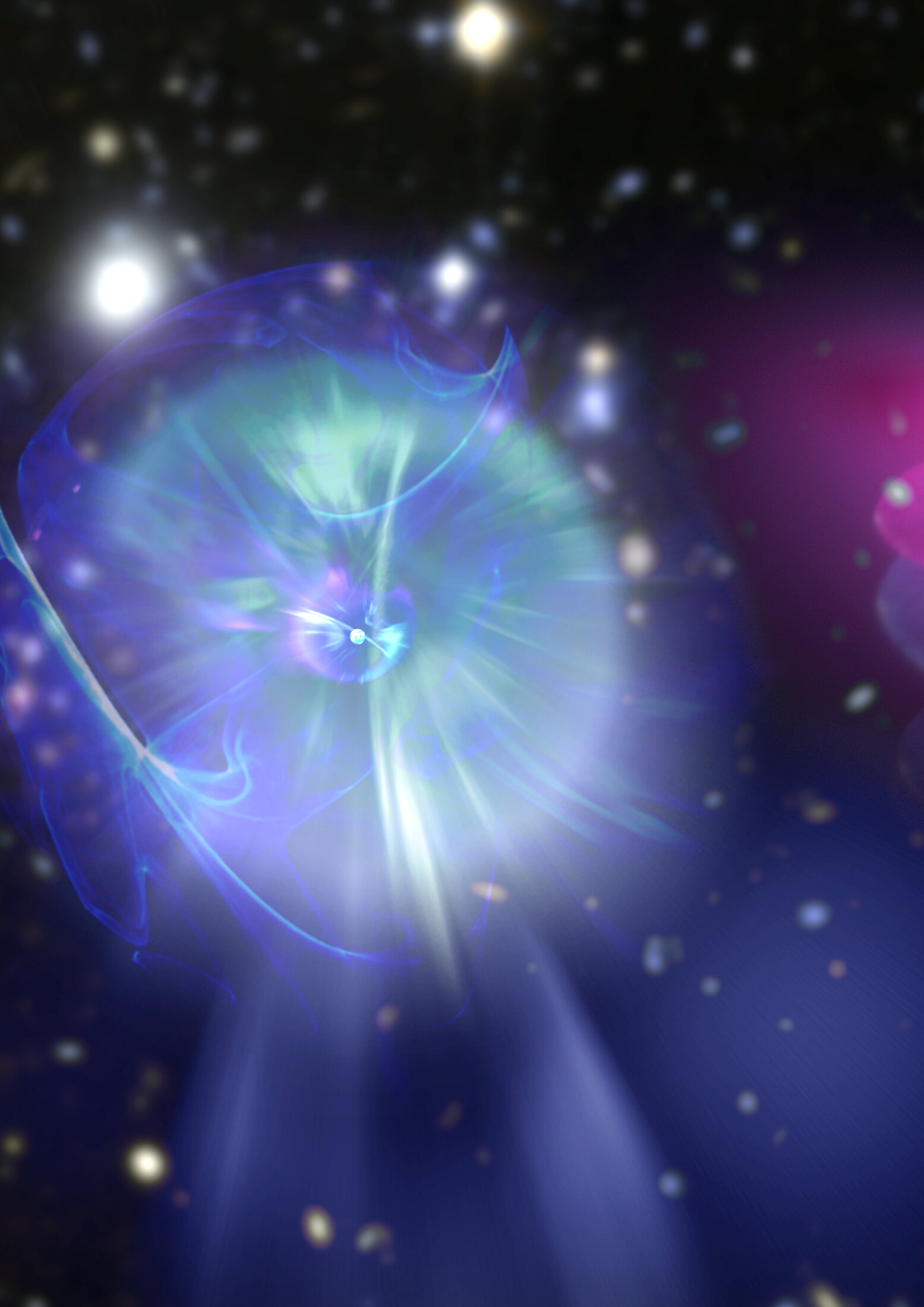
When this happens, the outward pressure holding up the star – the energy from the nuclear fusion – ceases, and materials begin to fall inwards due to the star’s own gravity.
For stars at least eight times the size of our Sun, the tremendous amount of infalling matter cannot be compressed indefinitely, so a dense proto-neutron-star forms at the core.
As the outer layers crash into this incredibly dense core, they rebound, generating a shock wave powerful enough to tear the star apart in a cataclysmic explosion.
This process is known as a core-collapse supernova.
Sciences & Technology
The great mystery of interstellar chemistry
Iron is the heaviest element that can be produced during a star’s lifetime but we still don’t know where the other heavy elements in the periodic table come from.
This is what makes core-collapse supernovae so important.
The sheer amount of energy released during the death of massive stars is enough to create the elements that make up almost everything and everyone we know and love today.
As Sir Martin Rees, a renowned cosmologist and astrophysicist, once said: “We are literally ashes of long dead stars, or less romantically, we are nuclear waste from the fuel that once made stars shine.”
There are many messengers we use to record exploding stars today, but human civilisations have been observing them for over a millennium.
In the past century, technological advances in ground- and space-based telescopes have allowed astronomers to observe core-collapse supernovae every day in galaxies near and far, across the whole electromagnetic spectrum.
Core-collapse supernova are most commonly observed through electromagnetic radiation, but this radiation is readily absorbed and scattered by materials like dust and gas.
It passes through layers of stellar materials and across large cosmic distances, so by the time it gets to us on Earth, we’ve lost a lot of information.
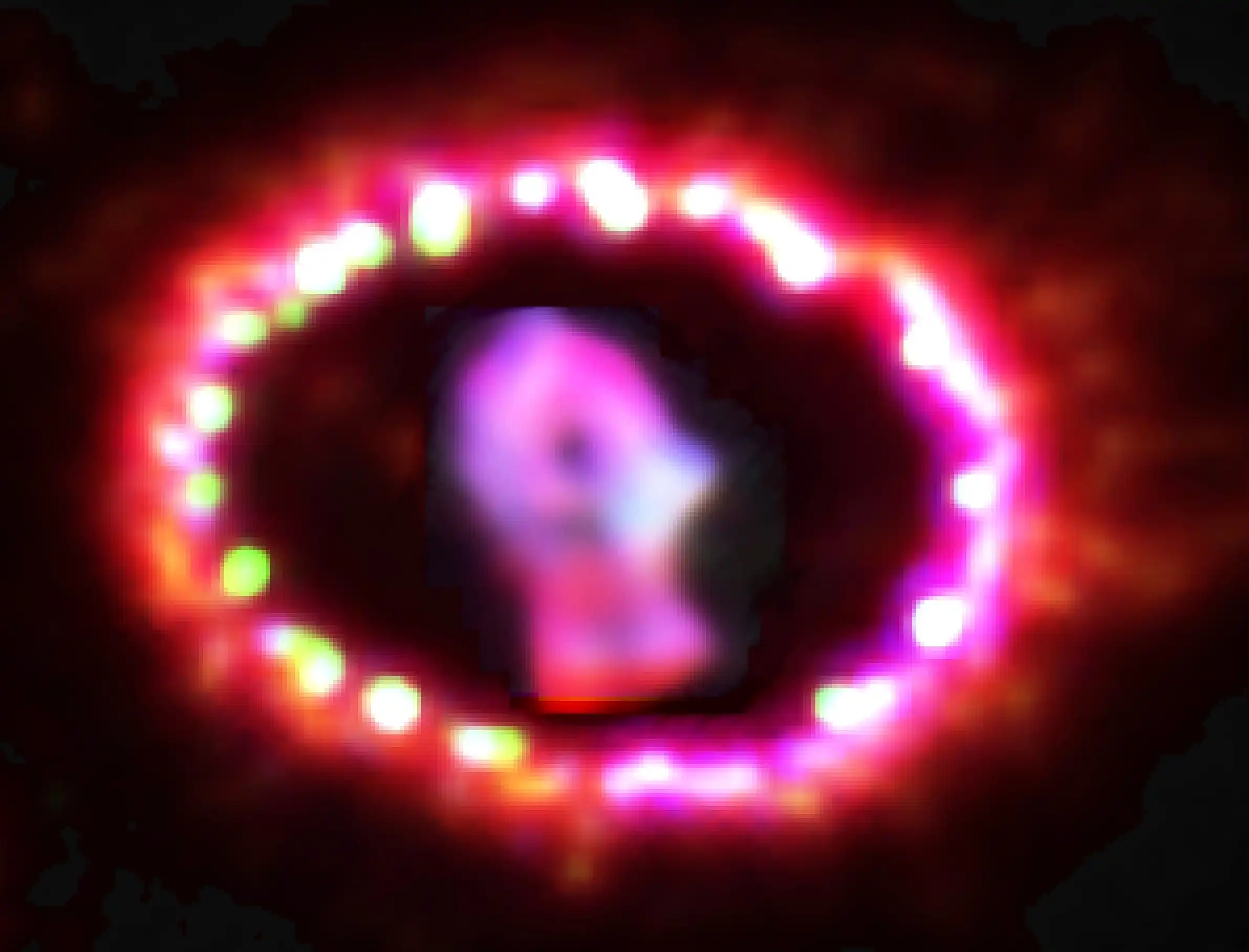
In 1987, astronomers observed a landmark core-collapse supernova (SN 1987A) in a small companion galaxy of the Milky Way.
For the first time, electromagnetic observations were accompanied by a detection of neutrinos – nearly massless elementary particles – supporting predictions that neutrinos are produced copiously during a core-collapse supernova.
In 2015, the Laser Interferometer Gravitational-wave Observatory (LIGO) detectors in the US observed a merger between two black holes through tiny ripples in the fabric of spacetime: gravitational waves.
Together, these events signaled the dawn of multi-messenger astronomy.
Both gravitational waves and neutrinos have a particular advantage when it comes to multi-messenger astronomy. They move largely unobstructed through spacetime and carry valuable information of their emitting source.

Sciences & Technology
Neutrinos are the Sun’s secret messengers
These signals offer a new observational window to the universe, enabling the study of obscured astrophysical sources and their interiors that were previously inaccessible through electromagnetic observations.
Together, they hold the key to addressing long-standing questions surrounding core-collapse supernovae.
Waiting for gravitational waves
Theory and simulations predict that core-collapse supernovae emit gravitational waves.
Yet despite a decade of searching and the detection of 390 gravitational-wave signals from merging black holes and neutron stars, the LIGO-Virgo-KAGRA collaboration has detected none from core-collapse supernovae.
That's because gravitational waves from mergers are much louder, so these signals are detectable even when their source is billions of lightyears away.
In contrast, with the sensitivity of current detectors, gravitational waves from core-collapse supernovae can only be detected if they occur within our own galaxy.
Based on past observations and scientific estimates, we expect around one per century in our galaxy. The last one observed within the Milky Way, known as Kepler’s supernova, was in 1604.
By those estimates, we are technically more than three centuries overdue.
But this uncertainty carries an important implication – the next one could happen at any time and scientists must be prepared for it.
Preparing for the next galactic supernova
At the University of Melbourne, researchers affiliated with the Australian Research Council Centre of Excellence for Gravitational-Wave Discovery (OzGrav) are on a mission to unravel mysteries of the universe through gravitational waves.
In anticipation of the next galactic supernova, our recent study with the University of Warsaw, the University of Florida and the Georgia Institute of Technology leveraged established detection tools to extract physical information from gravitational waves produced by core-collapse supernovae.
Simulations show that physical processes within a core-collapse supernova can be characterised by the frequency of gravitational waves.
In particular, the presence or absence of low-frequency (< 250 Hz) signatures can provide evidence for whether specific processes exist prior to the explosion, unlocking previously unknown information to help us answer our grand questions.
Listen above to the "sound" of gravitational waves from a simulated core-collapse supernova. Audio: Dr Jade Powell, Swinburne University and Assistant Professor Marek Szczepańczyk, University of Warsaw.
Our group used a novel method that combines two leading analysis tools – BayesWave and coherent WaveBurst – to identify this signature once a gravitational-wave signal has been detected.
It shows success in identifying low-frequency gravitational-wave signatures, which is a big tick for addressing the question of what triggers the explosion by narrowing down the possible mechanisms involved.
We’re continuing to collaborate with the broader physics community to advance analysis tools, making sure we can maximise the scientific return should the universe grant us a galactic core-collapse supernova.
If we’re lucky enough for one to occur, we need to extract as much information as possible from it, because who knows when the next one will be.
You can learn more about Dr Yi Shuen Christine Lee in her interview with The Citizen.
This research forms part of the broader vision of OzGrav. The University of Melbourne OzGrav node, led by Professor Andrew Melatos and Associate Professor Katie Auchettl, also pursues other cutting-edge research in high-energy astrophysics, gravitational-wave and extreme-matter physics, including accreting neutron stars (continuous gravitational waves and X-Ray emissions), neutron star theory (magnetic mountains and quantum fluids), and pulsar timing.