Arts & Culture
50 words in Australian Indigenous languages


The 50 Words Project is documenting Australia’s Indigenous languages by recording 50 everyday words in as many as possible. It now has 100 languages online, free for anyone to explore and learn


Published 30 June 2026
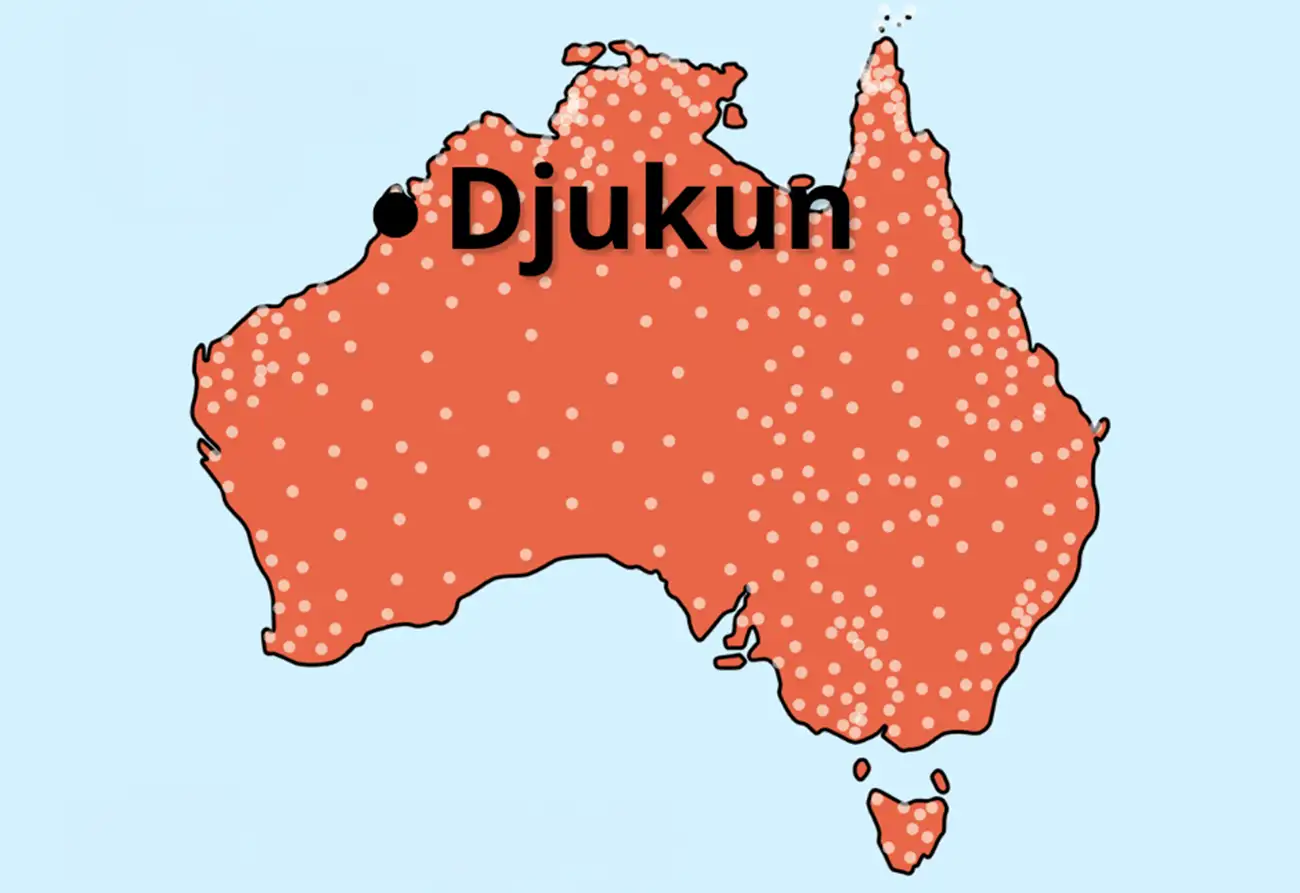
Djukun is an endangered Australian Aboriginal language spoken in the West Kimberley region of Western Australia. Proud Djukun woman and children’s author, Jaala Ozies, was concerned that the language of her people could be lost forever.
Words like wirrgin ‘tree’, yila ‘dog’ or ‘birriny’ (the star cluster, Pleiades). But it’s not just about the words. The disappearance of a language comes with an irreplaceable loss of culture, identity and scientific knowledge.
Before European colonisation in 1788, the First Peoples of this country spoke as many as 800 Indigenous languages, depending on how you divide languages and dialects.
But by 2016, just over 150 were reported in the census as actively spoken at home. And only 13 of those were still being spoken by children.
The 50 Words Project, which was launched in July 2019, aims to preserve and promote Australia’s Indigenous languages by publishing 50 words in as many languages as possible.
Seven years on from that launch, and our team has just received and published 50 words in 100 languages.
This is a remarkable achievement given the history of neglect of Indigenous languages in Australia, as well as a testament to the resilience of the speakers who have held onto this knowledge.
Arts & Culture
50 words in Australian Indigenous languages
The idea for the 50 Words Project came about through discussions with Professor Marcia Langton and the late Jeanie Bell, a Yaggera and Dulingbara linguist, to provide resources to schools to help teach students 50 words from their local Indigenous languages.
Run by the Research Unit for Indigenous Language at the University of Melbourne, the team chose 50 English words that our preliminary research showed were likely to have equivalents in Indigenous languages across the country.
This included things like names for natural features; rain, wind, sun, moon and sky. We went through body parts, animals and family terms.
And we included greetings – welcome and hello – as well as common questions; Where are you going? What is your name?
We then invited speakers to send us a recording of these 50 words in their language as well as the words in their written form.

Hearing the words spoken is essential but seeing them written at the same time avoids the common problem of trying to read a spelling system you may not be familiar with.
All of the words have been provided with speakers’ permission to make them available for others to hear and learn.
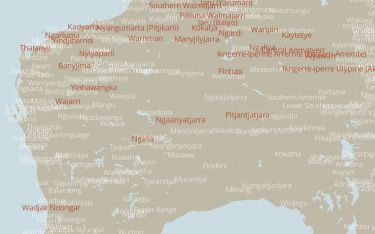
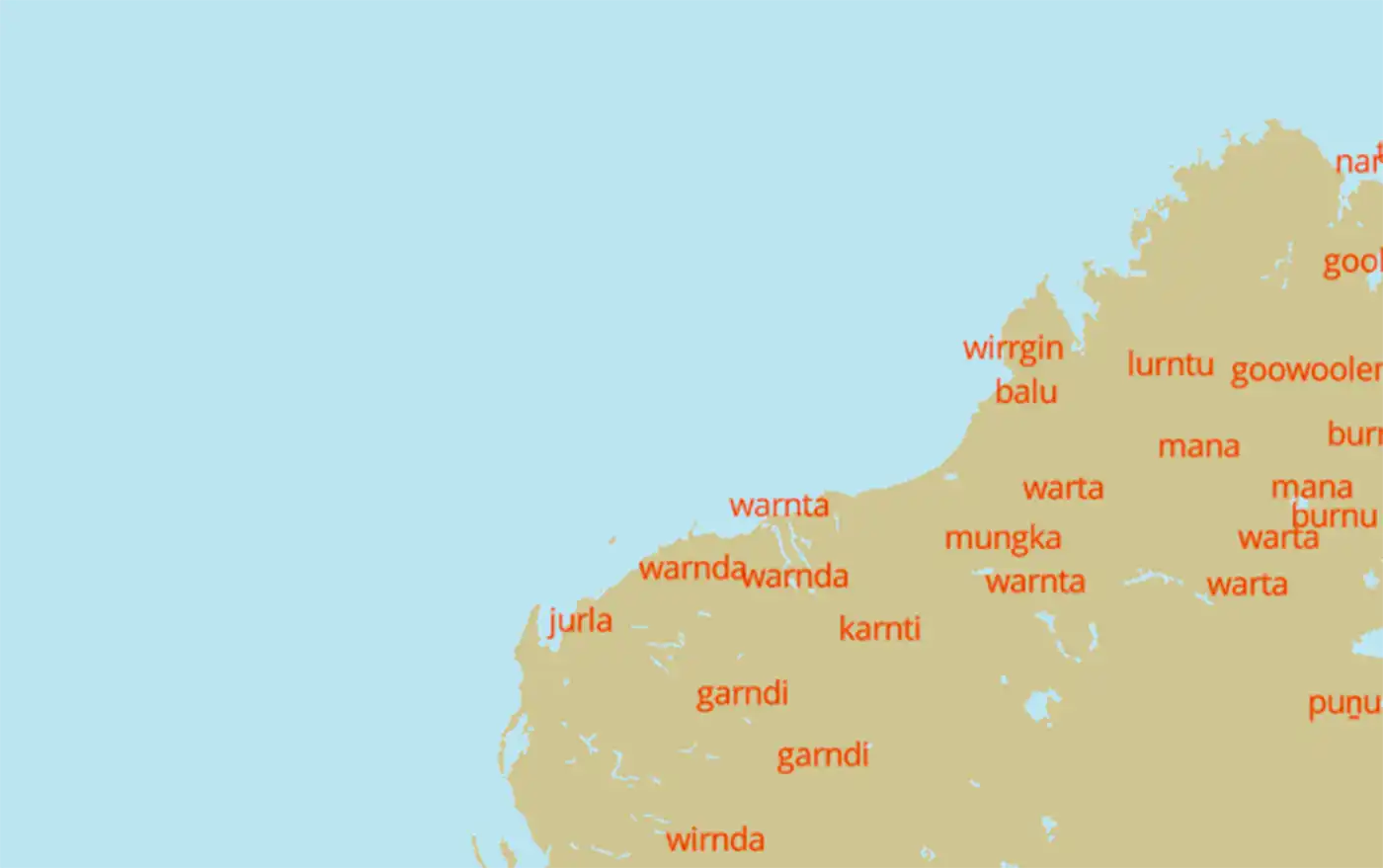
These recordings are available in an interactive online map that allows users to hear everyday words – like dog, tree and Plieades – spoken in Aboriginal and Torres Strait Islander languages and see which part of the country they come from.
While the number of languages in the online archive has grown, so has the number of visits to the website, now almost 300,000.
It’s being used in schools, at events like the Melbourne Football Club’s Indigenous round and has supported efforts to revitalise languages in several communities.
Arts & Culture
Bringing back languages from scraps of paper
Although we’re only collecting 50 words, we can learn a lot about the spelling systems and sounds in a language as well as the similarities and differences between the words across the country.
One of the great features of the language map is the ability to show a single word in each of the languages we have in the database.
It can show us the relationships between language groups, with closely related languages tending to share more words than those that are more distantly related.
It also illustrates that some words are shared across vast areas whereas others are not.
The words for ‘foot’, for example, are shared across much of the continent with some variation.
From Djabugay word ‘djina’ in the northeast of Queensland, to Woiwurrung ‘djinang’ in the south of Victoria, to Wadjak Noongar ‘djen’ in southwest Western Australia and Kariyarra ‘jina’ in northwest Western Australia.
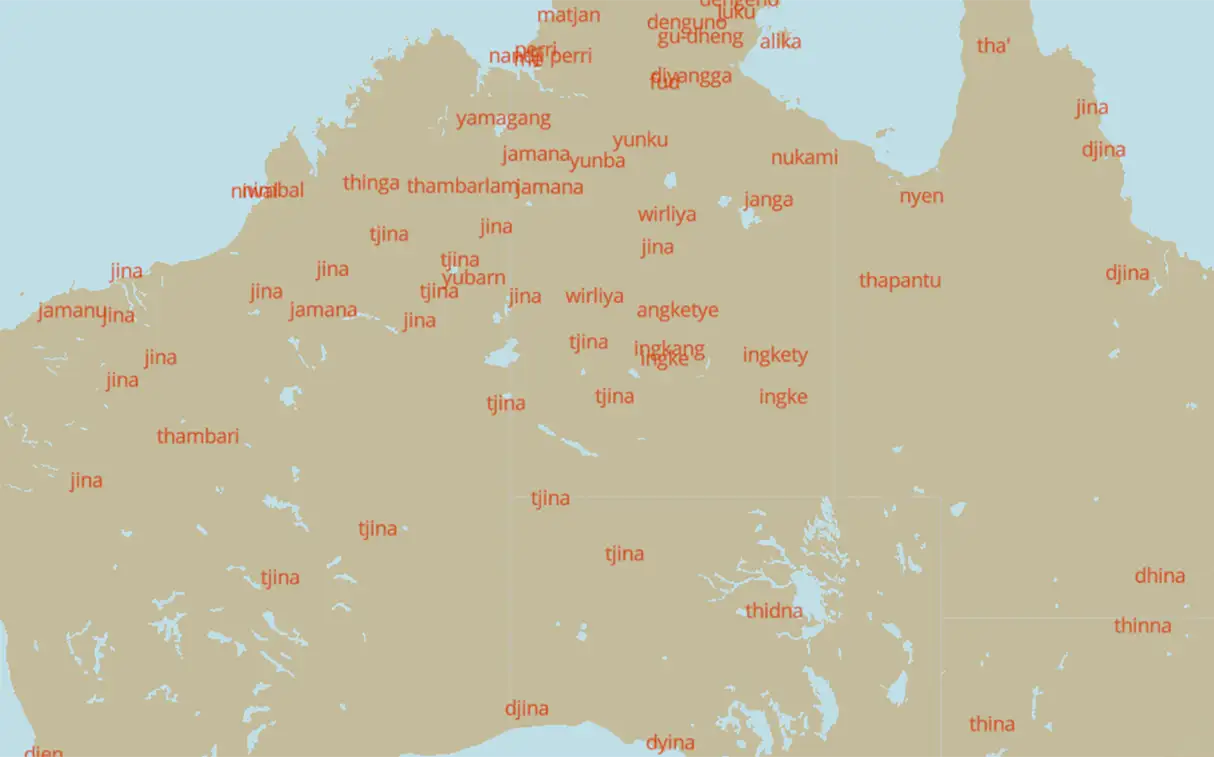
But there are also words with distinct differences. In the area now known as Victoria, words for ‘no’ are not shared by any of the language groups.
All the Indigenous languages of Australia have been affected by English to some extent.
But they vary widely in other ways too: some are still learned as a first language by children; others have only a handful of speakers left and a few we only know about from the historical records.
All of these variations are captured in the 50 Words Project.
Some of the examples preserve ancient sounds passed down over generations; others show clearly the impact English has had.
This is clearest in languages revived by English speakers, where sounds not found in English – like retroflex nasals (an ‘n’ made with the tongue curled back) and interdental stops (a ‘d’ or ‘t’ made at the teeth) – are replaced with their nearest equivalent.

Arts & Culture
How data expertise is fostering endangered languages
More broadly, the project captures the diversity of these languages while also offering a glimpse of the emergent forms they take as they come back into use.
This project highlights the resilience of the first languages of this country.
This is despite the horrific onslaught of invasion since the late 1700s and its devastating effects on the communities and languages of the original inhabitants.
Now, interest in these languages is resurging and the 50 Words Project is just one small example.
For Jaala Ozies, the project has led to a book for kids, 50 Words in Djukun – A language of the West Kimberley.
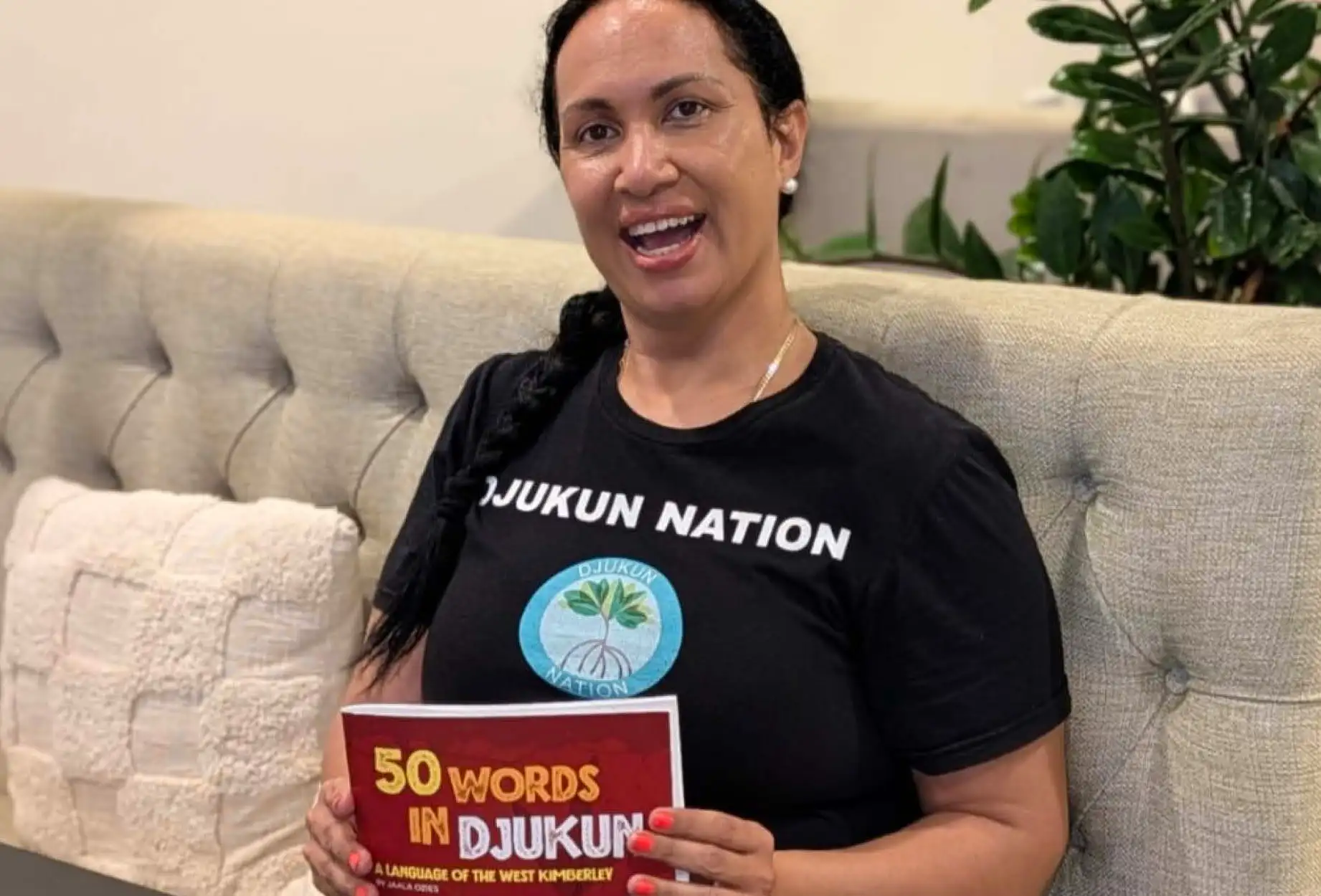
The book’s aim is to re-awaken the Djukun language, despite no longer having any fluent speakers left.
Through a collaboration with groups including the Research Unit for Indigenous Language and her family, she recorded 50 words from a 125-year-old Djukun language list.
In doing so, she reclaimed a precious part of her people’s identity, setting a profound example of cultural resilience and unity for future generations.