


Sciences & Technology
Laos jars are slowly revealing their secrets


On a remote Laos plateau, thousands of stone jars hold clues to an ancient megalithic culture. An Australian-Lao team is piecing together what survives one artefact at a time
Published 8 April 2026
Helping to preserve artefacts, some potentially 2000 years old, was an irresistible privilege.
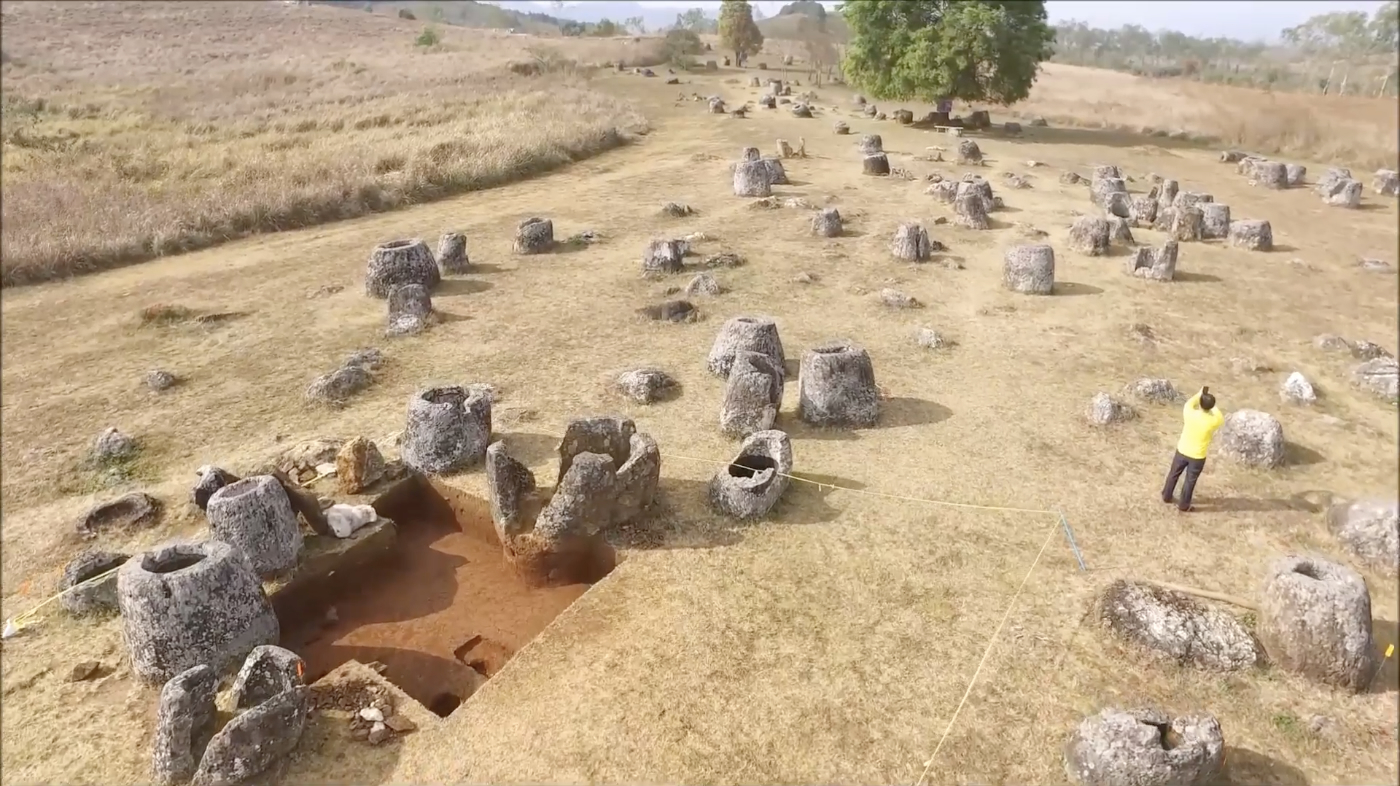
Since 2016, an Australian-Lao team led by Louise Shewan, Dougald O’Reilly and Thonglith Luangkhoth has conducted archaeological research in the mysterious ‘Plain of Jars’, located in Xieng Khouang Province, north-central Laos.
The research has involved several excavation seasons, drone surveys, radiocarbon and luminescence dating, isotopic analysis and cultural material conservation.
This has given us a greater understanding of Laos's megalithic culture and contributed to the UNESCO World Heritage inscription of the ‘Plain of Jars’.
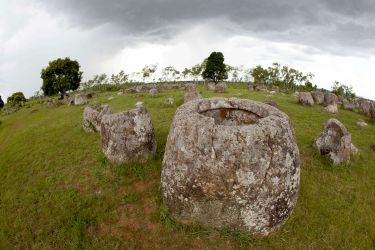
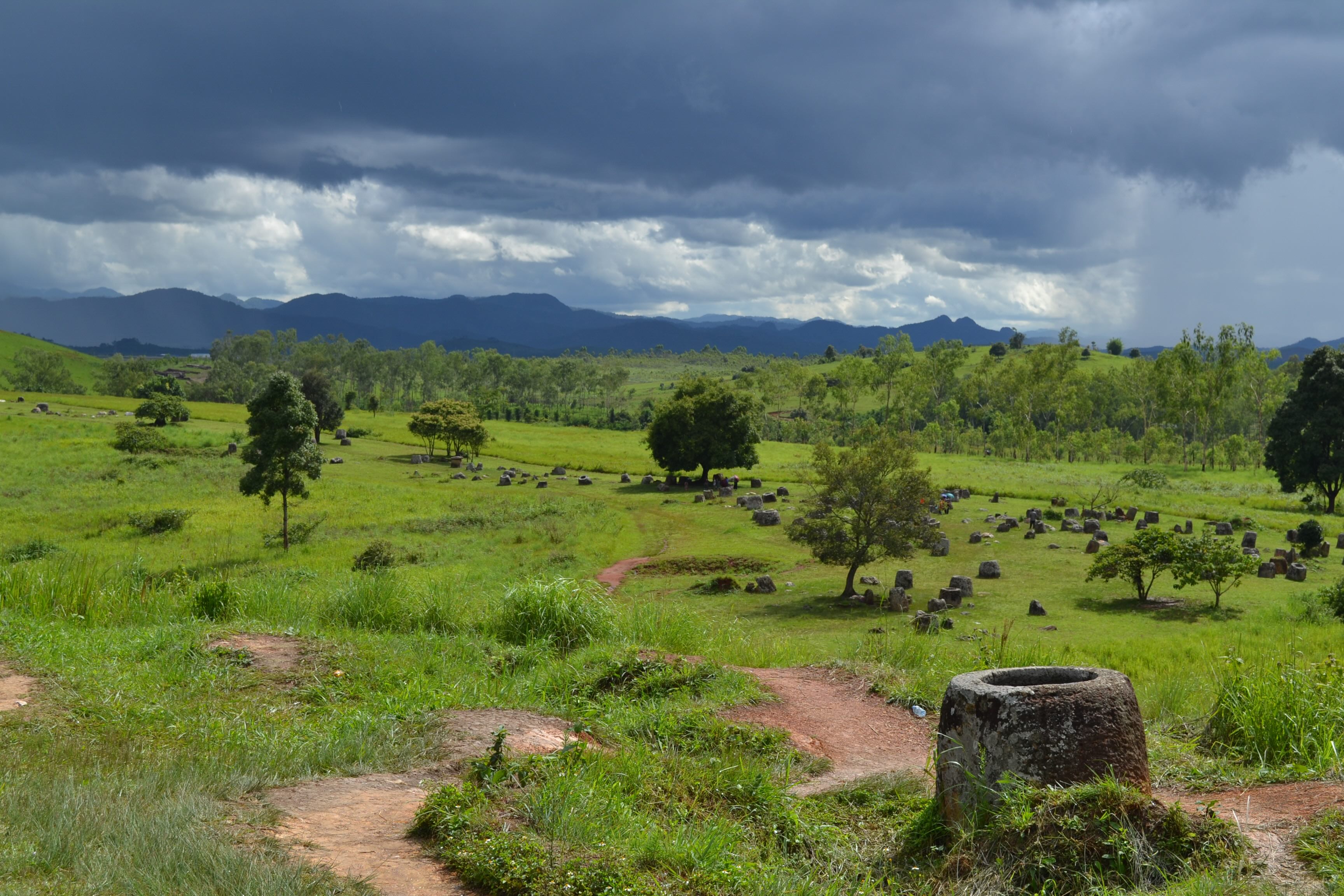
The name ‘Plain of Jars’ represents the thousands of stone jars that stand up to three metres high and weigh several tonnes, spread over the mountains and plains of upland Laos.
The stone jars – known as megaliths, which comes from the Greek words "mega" meaning huge and "lithos" meaning stone – were carved and transported from quarries up to 10 kilometres away, and appear to be part of a complex mortuary landscape.
But who carved them, when they were carved and how they were transported remain a mystery.
Sciences & Technology
Laos jars are slowly revealing their secrets
Excavation work over the last decade has also uncovered diverse cultural materials, bringing about an exciting new phase of discovery.
Ceramic vessels, stone tools and pendants, spindle whorls, iron implements, glass and stone beads, and copper alloy bangles and bells have all been found in the area.
During a recent visit to Laos, we held material conservation training to support Lao heritage custodians in preserving some of these excavated artefacts.
Equipped with conservation materials from both Laos and Australia, our international team carefully reconstructed some earthenware vessels at the Xieng Khouang Provincial Museum.
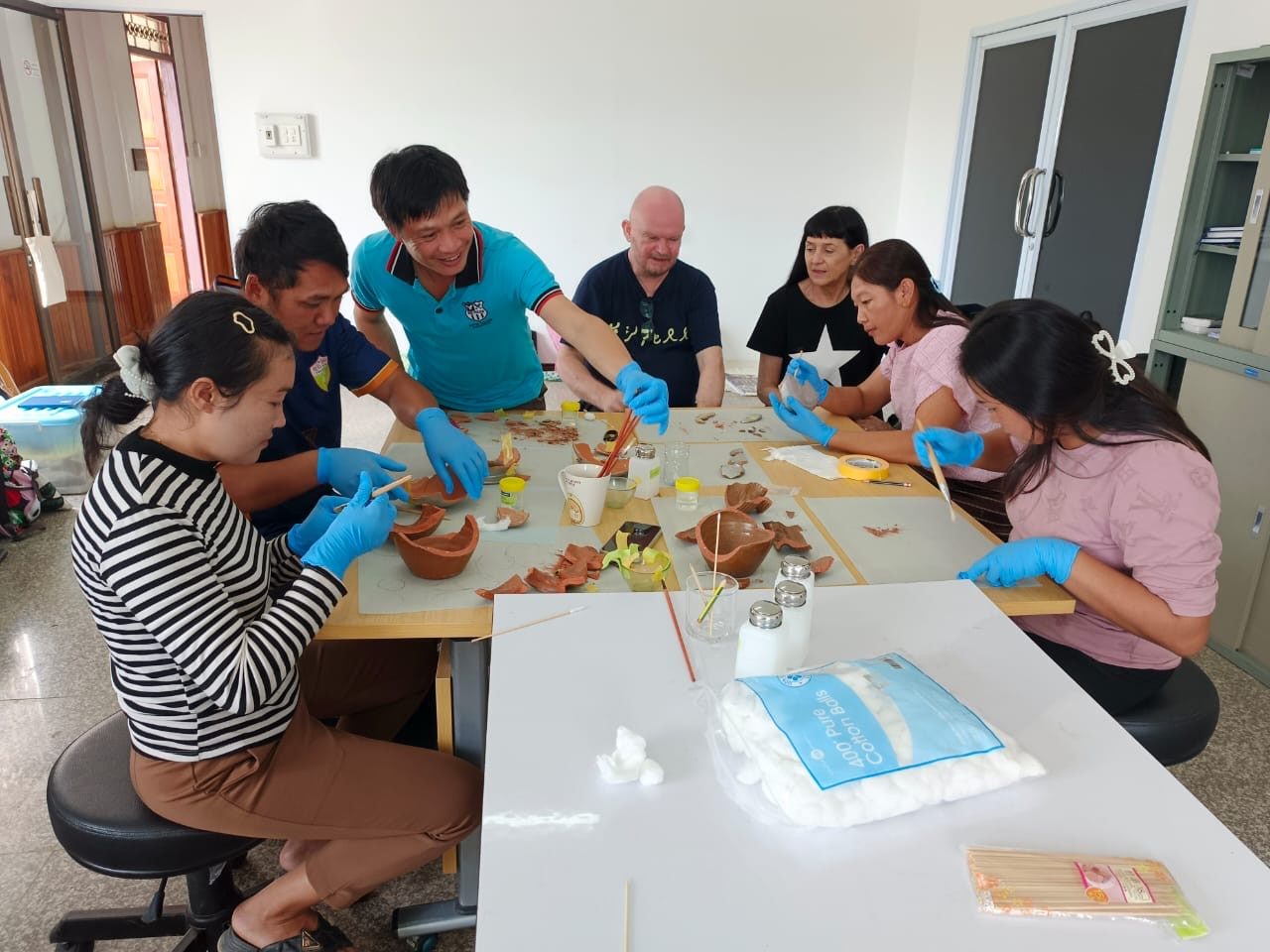 The ceramic conservation workshop supported Lao heritage custodians to preserve some of these excavated artefacts. Picture: Plain of Jars Archaeological Research Project
  Ceramic burial jars in situ during excavation Site 1, Plain of Jars. Picture: Plain of Jars Archaeological Research Project
  Jonathan Kemp and Hohi Ikeda with a completed vessel. Picture: Plain of Jars Archaeological Research Project
 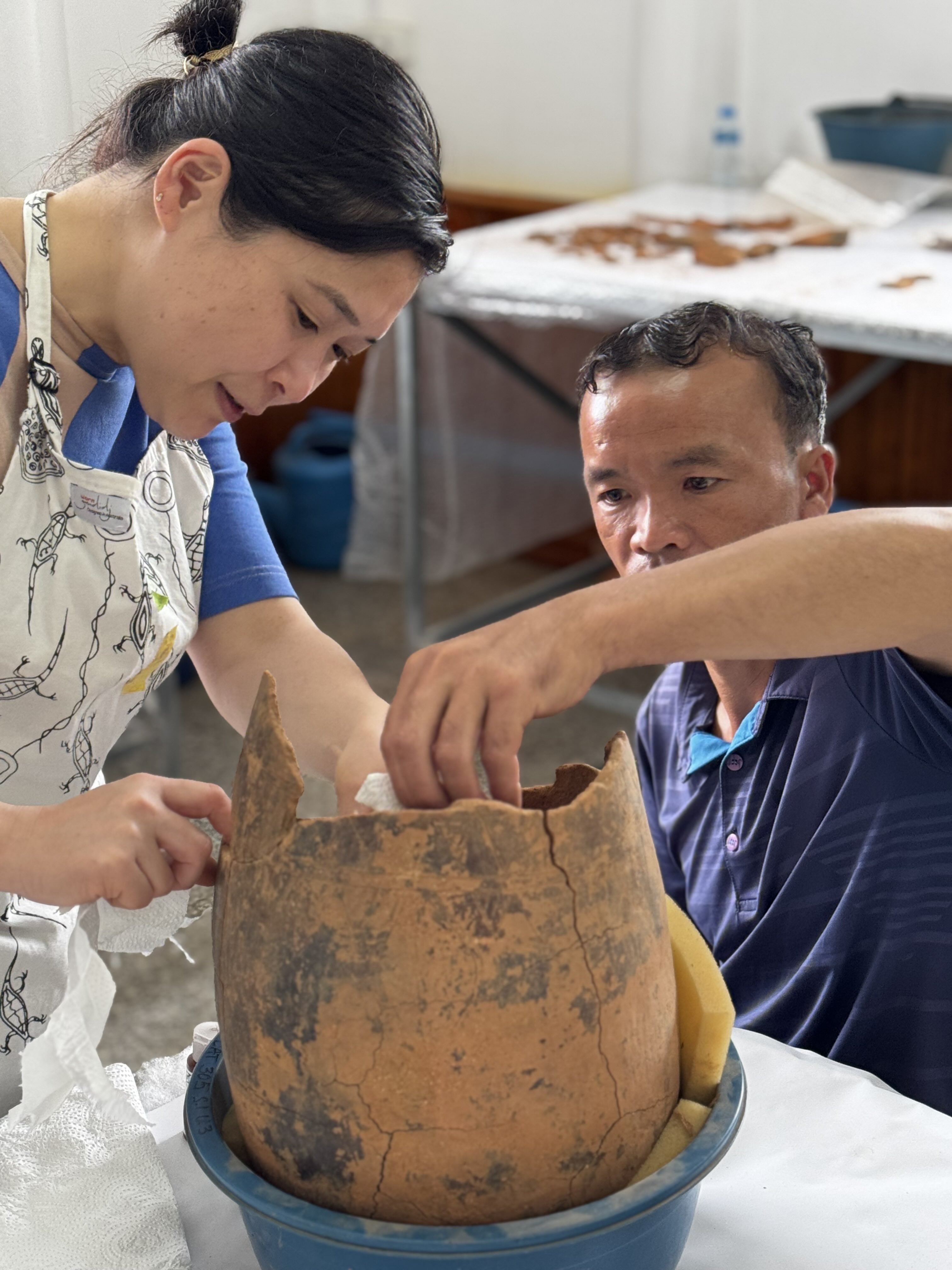 Conservation materials were sourced from both Laos and Australia. Picture: Plain of Jars Archaeological Research Project
 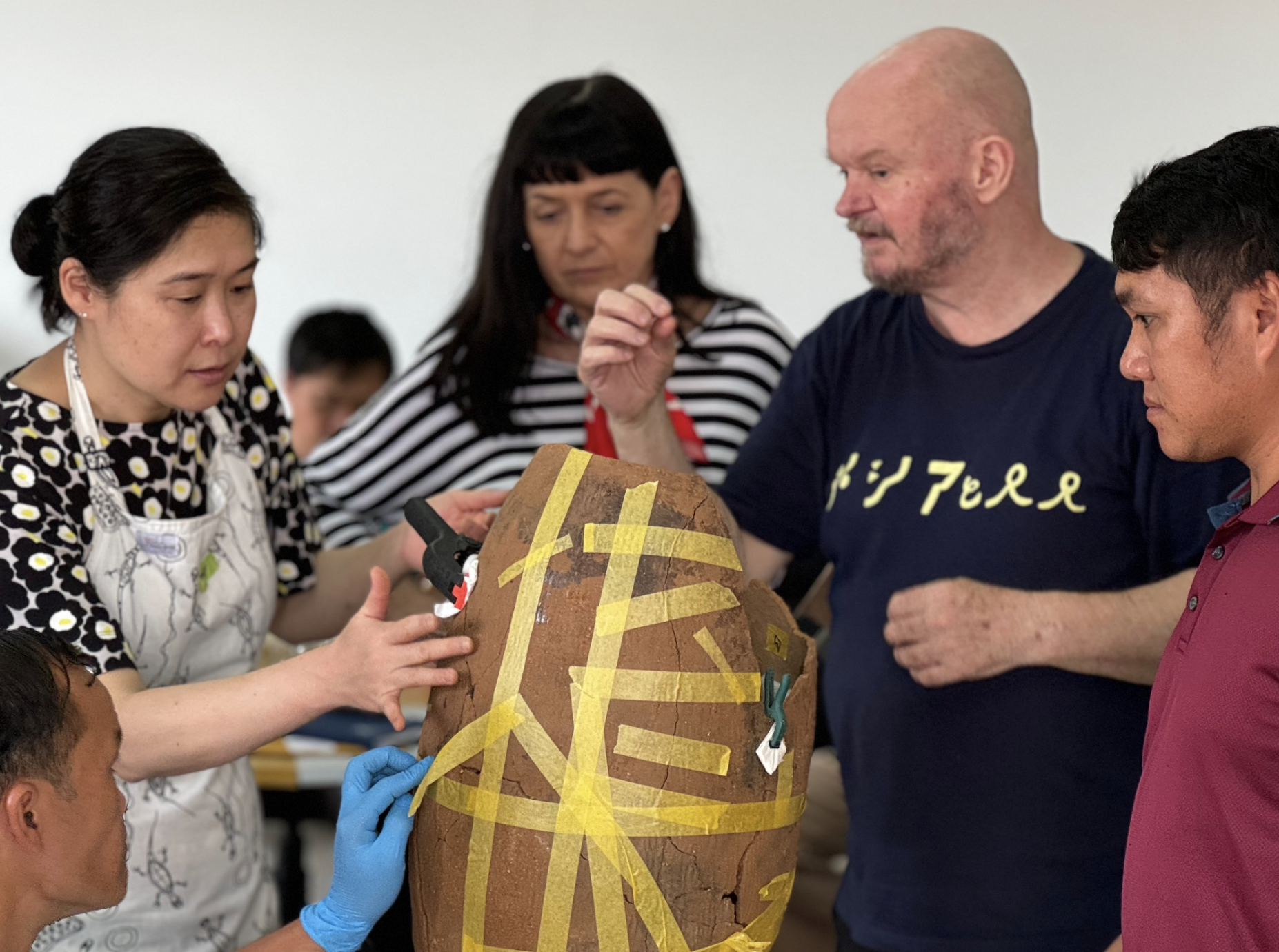 Several of the jars contained evidence of secondary burial practices. Picture: Plain of Jars Archaeological Research Project
 1 / 5
Several of the jars contained human teeth and bone fragments – evidence of secondary burial practices where the remains of the dead were placed near or within ceramic vessels and positioned close to the megalithic jars.
The vessels stand up to 60cm tall, some decorated with incised patterns. Many of them were fired at very low temperatures, making them very fragile.
To reconstruct such brittle ceramics, very specific conservation-grade adhesives are needed as these are favoured by conservators for stability and reversibility.
Colour-matched strips of Japanese tengujo paper – a uniquely versatile material – were a great way to support the most fragile areas.
Arts & Culture
Brought to life, 2000 years later
In addition to conservation workshops, our recent visits to Laos had another important goal – to return metal artefacts and glass beads that had previously been conserved at the Robert Cripps Institute for Cultural Conservation.
These items, also found in burial contexts, are encountered throughout southeast Asia from as far back as the Iron Age (500BCE - 500CE) and attest to the rich ritual significance of the site.
The metal artefacts arrived at the Cripps conservation lab in Melbourne encrusted with compacted earth and feared to carry a condition that conservators dread: bronze disease.
Tiny flakes were analysed at the University's Materials Characterisation and Fabrication Platform (MCFP) using a range of non-destructive analytical techniques, which thankfully returned negative results for bronze disease.

After this, master’s students at the Cripps Institute performed a series of treatment steps to conserve the artefacts.
The most important steps in this process are to free the bells from compacted earth and prevent corrosion.
Structural integrity is essential in this process, so the bells are coated with cyclododecane (CDD), a waxy white substance that provides the delicate structure up to 72 hours of support.
The students could then work under a microscope to carefully remove the remaining earth using fine tools.
For the final steps, the bells were consolidated with conservation-grade adhesives and Japanese tengujo tissue paper to support the fragile cracked areas.
One of the most intriguing items that students worked with was an iron implement which appeared to have a wooden shaft partially preserved within it.
This suggested that the artefact may have been a tool, a spear or a ritual object.
To keep the artefact intact, we needed to 'see through it'. This was done using two scans.
First, computed tomography (CT) scans at the University of Melbourne’s Brain Centre Imaging Unit.
These were followed by micro-CT scanning which generated 3D images of the object's interior through the Melbourne Trace Analysis for Chemical, Earth and Environmental Sciences (TrACEES) Platform.
The results from both were striking.
 Louise Shewan, Dougald O’Reilly and staff from the Museum and Xieng Khouang Department of Information, Culture and Tourism. Picture: Plain of Jars Archaeological Research Project
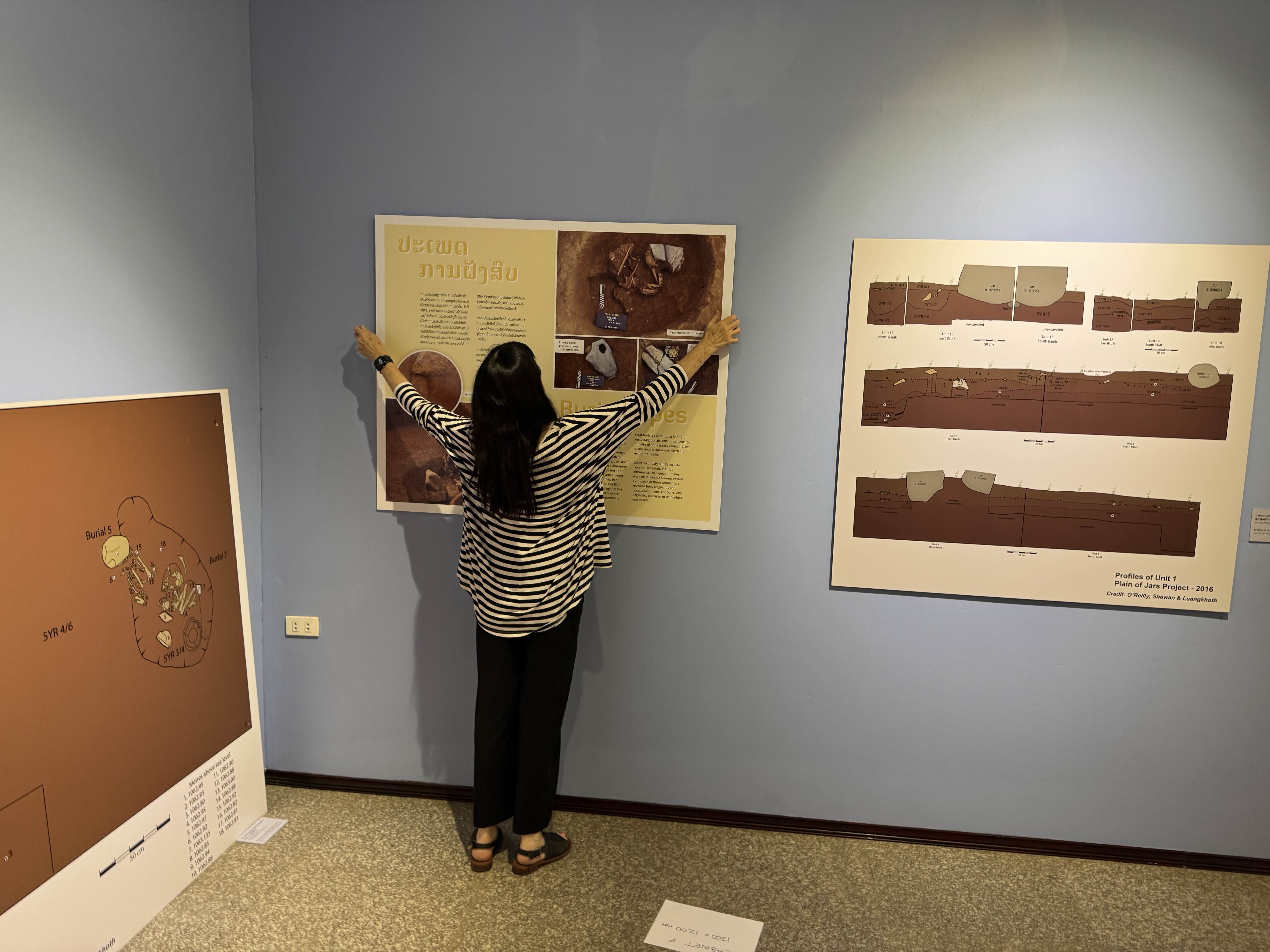 Museum poster installation. Picture: Plain of Jars Archaeological Research
 The completed burial reconstruction exhibit. Louise Shewan, Phimpha Synouanthong and Dougald O’Reilly. Picture: Plain of Jars Archaeological Research Project
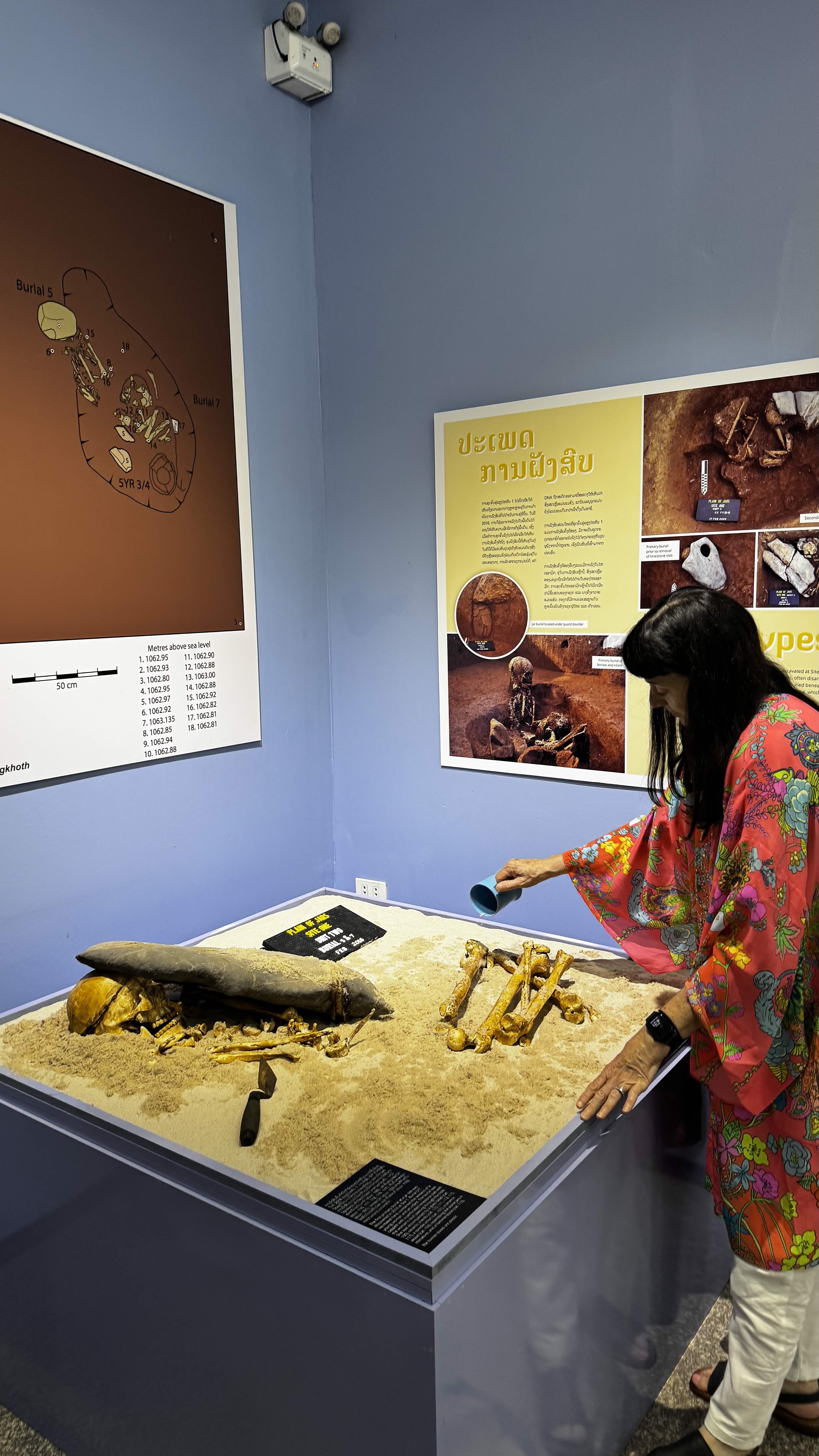 Museum exhibit preparation, placing bones and grave goods as found during the excavation of a primary burial (Site 1). Picture: Plain of Jars Archaeological Research Project
1 / 4
The scans allowed the team to produce an animated 3-D rendering, showing the hollow iron tip gradually fading away, revealing the earth and mineralized remnants of wooden particles within.
With the artefacts now returned to Laos, the team has been busy building an exhibit at the Xieng Khouang museum, showcasing the megalithic landscape, its people, chronology, technology and ritual activity.
With generous support from the Australian Embassy in Laos Small Grants program, the new installation has been created in both English and Lao language, reflecting a genuine partnership where research findings are accessible to Laotian audiences.
Highlights of the exhibit include the newly restored ceramic vessels, conserved metal objects, glass beads with informative panels about the research.
Arts & Culture
The archaeology of olive oil in the ancient world
The exhibition also includes a reconstructed human burial – displayed as it was found during excavation, surrounded by grave goods. This represents a significant contribution to understanding prehistoric funeral practice in Laos.
While the artefacts are home now, conservation does not end with repatriation.
The display cases have been fitted with humidity and temperature monitors that allow museum staff to track environmental conditions and communicate with Jonathan Kemp’s team in Melbourne when intervention may be needed.
Australia and Laos have maintained unbroken diplomatic relations for more than seventy years, but what makes our latest partnership so special is its investment in the skills of Lao heritage professionals, who will care for their sites and material culture long into the future.

The Plain of Jars still holds its central mystery.
Who carved the stone vessels, and when and how they were transported, remain subjects of our research.
In the University of Melbourne’s laboratories, research is continuing across several fronts.
Leading experts are conducting luminescence dating of rock samples from the sites. This technique measures how long a sample has been buried after exposure to sunlight and can be used to study when the jars were made and when they were placed in the ground.
Meanwhile, isotopic analysis of human dental remains is also ongoing, piecing together the life histories of the people buried at the sites.
Sciences & Technology
The hi-tech archaeological scientists
All data from the project is freely accessible through an online repository, created in collaboration with the Melbourne Data Analytics Platform, facilitating ongoing research and conservation efforts.
This provides our Lao colleagues, UNESCO, heritage personnel and other researchers and students with invaluable access to scientific data, photographs, historical data and reports.
The jars wait on their plateau, patient as they have always been. While the people charged with understanding and protecting them carry on with their work.
The research in Laos is supported by the Australian Research Council and a University of Melbourne Chancellery Asia and the Pacific Profile grant (APPG). Louise Shewan is also supported by Rock Art Australia.