

Heated Rivalry is everywhere (except it's not)

The queer Canadian hockey romance has dominated social media and cultural conversation this summer, but viewing figures tell a very different story about who's actually watching

Published 12 February 2026
This summer has once again demonstrated the power television still has to shape cultural conversation.
Heated Rivalry and its (formerly) no-name lead actors have been everywhere: presenting awards at the Golden Globes, hosting Saturday Night Live and dominating social feeds.
In Sydney recently, a look-alike competition had to be moved from a public park after the council intervened over safety concerns.
For a series that barely registered when it came out in October, this kind of acceleration is almost unheard of – a show that feels completely inescapable. Unless, of course, you’ve never heard of it.
And if you look at the numbers, a lot of people haven’t.
For those who missed it, Heated Rivalry is a Canadian television series adapted from Rachel Reid’s queer romance novel. It follows two professional hockey players whose fierce on-ice rivalry hides a steamy connection off the ice.
Since its debut, the series has become a word-of-mouth success. On HBO Max, streaming minutes grew from roughly 30 million in its first week to more than 300 million by the season finale – a striking increase by any standard.
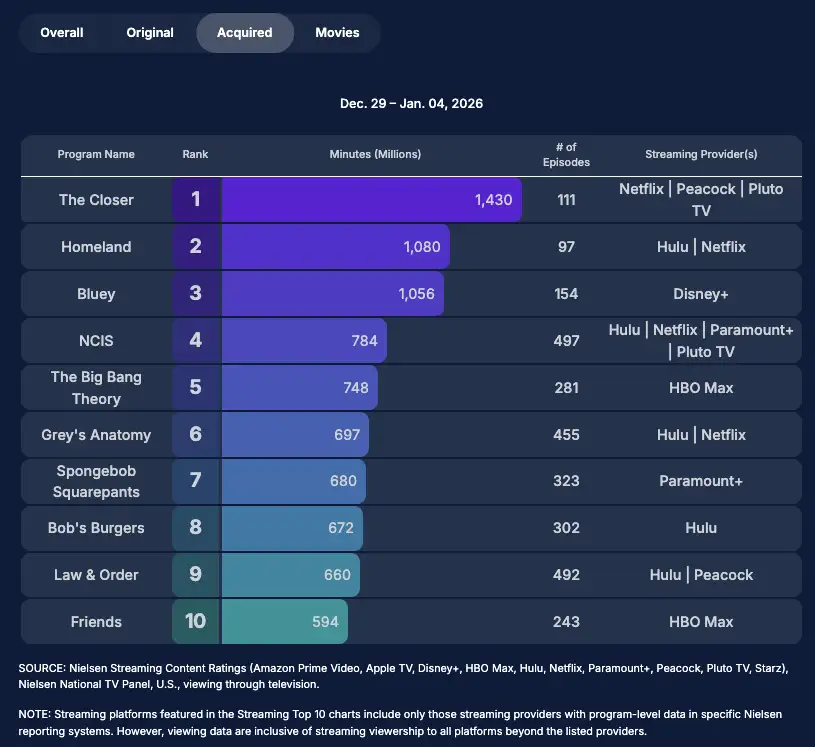
But as hot as it has been, Heated Rivalry has not approached the top tier of online viewing in the United States.
In the weeks following its finale, it did not appear among the ten most-watched streaming titles. Its average audience – around nine million viewers per episode – is solid, even impressive, for a drama.
But it’s not a mass-audience phenomenon on the level that its cultural visibility might suggest.
So, what is going on?
Part of the explanation lies in repeat viewing. Highly engaged audiences don’t just watch once.
Heated Rivalry is so popular that rewatch parties and themed nights are already popping up – like this club night in Melbourne. Rewatch culture drives streaming minutes higher without necessarily expanding the audience outward.
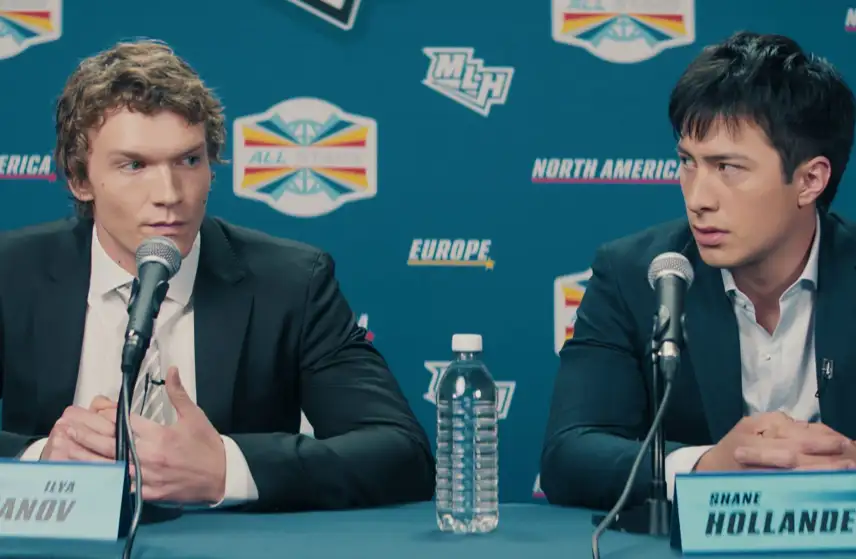
The show feels huge because attention is dense – not because it is universal.
Network effects intensify that confusion. We are far more likely to encounter new content through people who are socially, professionally and culturally like us – friends, colleagues, peers whose tastes already overlap with our own.
When a series like Heated Rivalry resonates strongly within a particular cluster, it doesn’t merely circulate; it reinforces itself.
This gap – between omnipresence and near invisibility – is worthy of consideration.
Contemporary film and television no longer produce shared mass audiences so much as intensely engaged clusters. We increasingly mistake the density of conversation within our own networks for cultural saturation, confusing ‘everyone I know is watching this’ with ‘everyone is watching this’.

Algorithmic platforms amplify this effect, but what is distinctive here is not simply how the show circulates within a single audience cluster. Heated Rivalry appears to have tapped into several overlapping networks at once.
Recommendation systems reward engagement rather than reach, meaning content travels fastest where attention is already concentrated. In this case, conversations moved simultaneously across fan communities, professional media circles and existing social networks, creating a sense of ubiquity that no single audience alone could have produced.
Heated Rivalry is not unusual in this respect. Screen history is full of vanguards: early adopters, subcultures and niche audiences whose enthusiasm precedes – sometimes by years – mainstream success.
What has changed is not the existence of niche audiences, but the way our media environments now completely collapse the distinction between centre and edge.
When the same conversations circulate relentlessly within our personal ecosystems, they begin to feel like the culture itself rather than one slice of it.
Rachel Reid’s books have been bestsellers, and this committed fan base showed up for the series and then became its promoters.
It seems odd to say, but it’s still surprising how popular books are still often passed over screen adaptation in favour of worthy ones – especially in Australian cinema and television production.
Heated Rivalry did not emerge from nowhere; it arrived pre-wired for devotion.
None of this would matter if the show weren’t any good. But Heated Rivalry sustains attention because it is carefully made.

It treats its source material seriously rather than ironically, approaching a genre often dismissed as lightweight or not worthy with cinematic intention and craft.
Despite modest budgets, the series employs a coherent cinematic visual language – controlled compositions, expressive camera movement, and performances that are committed rather than self-conscious – allowing tension to accumulate through gesture and proximity rather than exposition.
This cine-literate construction encourages rewatching. It creates scenes that invite circulation, discussion and attachment – precisely the conditions that generate dense engagement in contemporary media systems.
It’s tempting to read this apparent popularity as evidence of a broader cultural shift.
Some commentators have begun to talk about Heated Rivalry as a bellwether, using its visibility to make claims about the state of contemporary culture. But we should be cautious about overreaching.
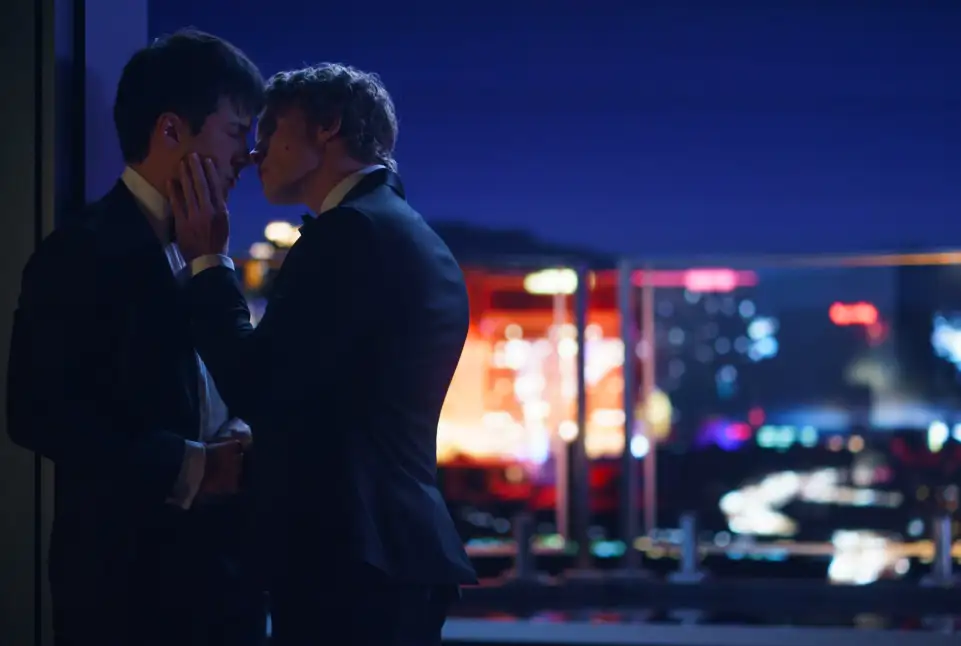
What the series demonstrates most clearly at this moment in its life is not a unified cultural moment, but how easily concentrated attention within overlapping networks can be mistaken for mass consensus.
As we start our next re-watch or share memes of Shane and Ilya, the lesson from Heated Rivalry should be to remind us that attention now travels differently.
Intensity, not scale, has become the dominant signal of cultural significance, and our feeds are unreliable guides to what ‘everyone’ is watching.