
Sciences & Technology
The science of flavour


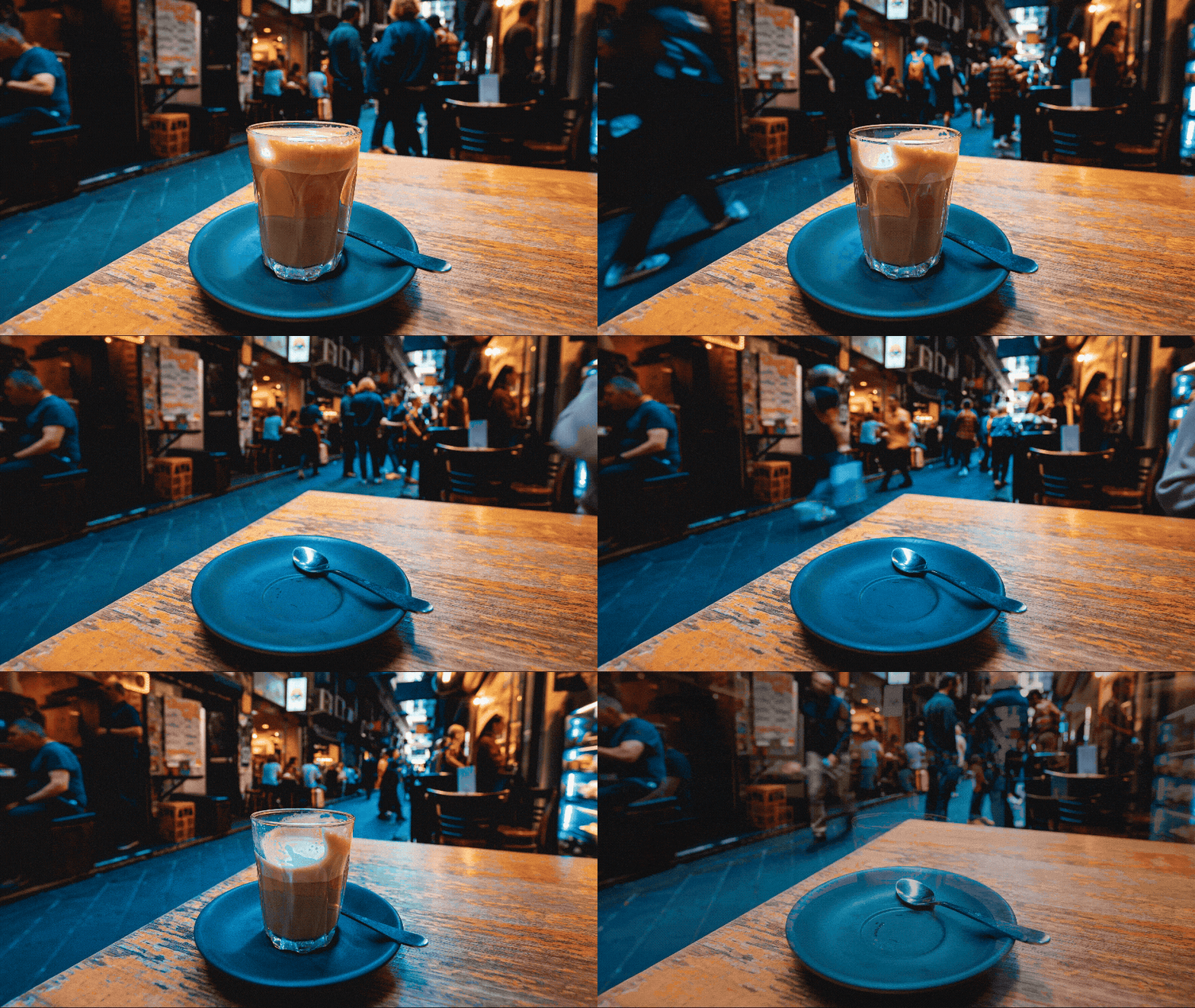
A lot goes into taking your coffee beans from a distant farm to a Melbourne café. Knowing what’s real and what’s marketing can help you support everyone from farm to cup

Published 19 August 2026
Melbourne has been a coffee capital for a long time – longer than you may think.
From the elaborate coffee palaces of the 1880s, born out of the anti-alcohol temperance movement, to the current maze of laneways and hole-in-the-wall cafés, coffee culture is central to the city’s identity.
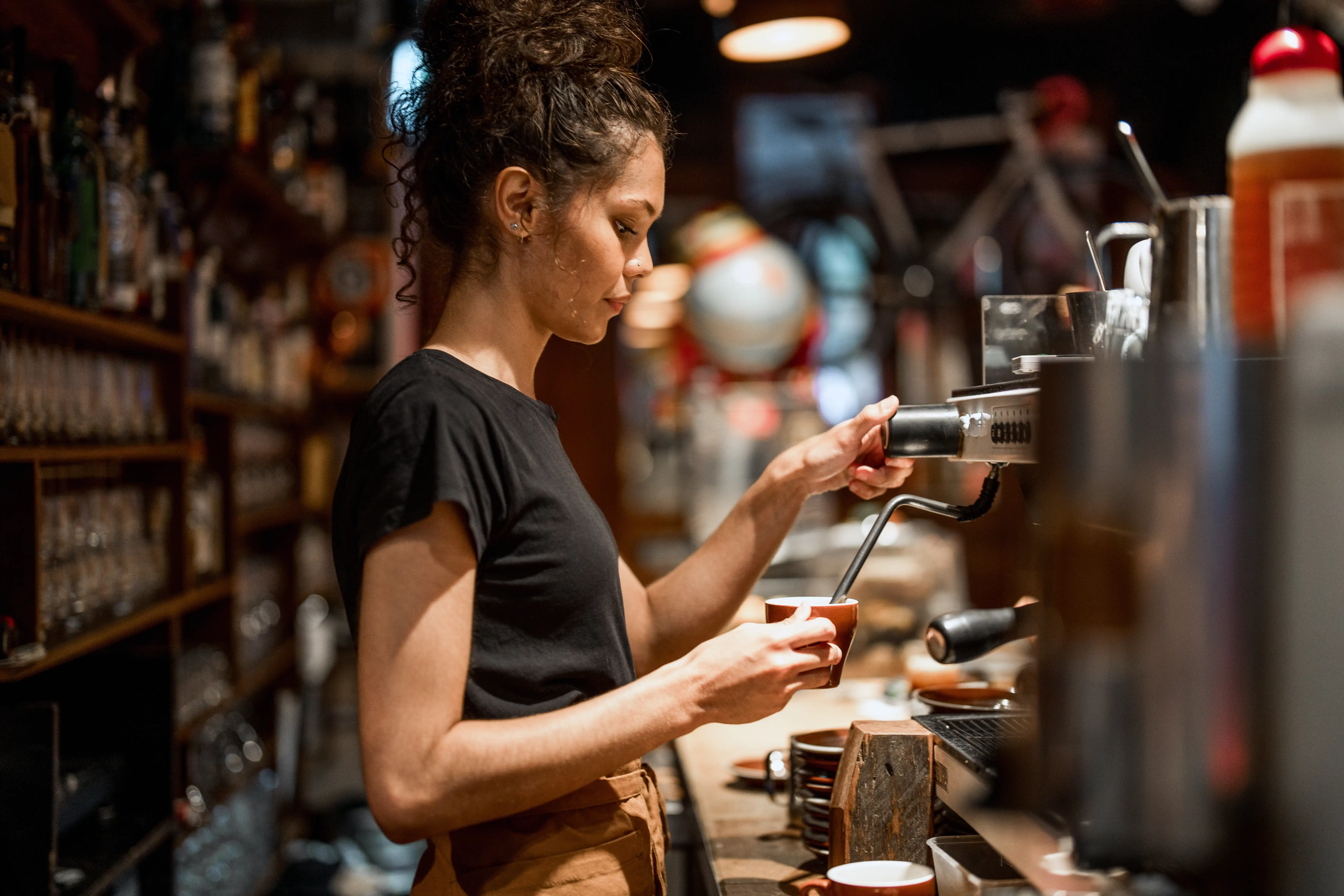
But what actually goes into making each cup? Single-origin, organic, fair trade, direct trade, micro-lot – there’s so much to digest when it comes to understanding the many gears of the industry.
Everyone wants to make sure their morning brew is ethically sourced, supporting both their local café and those at the other end of the line – the coffee growers.
Knowing what’s real, what’s marketing and where your money is really going can help make your choice a little easier.
A coffee ‘bean’ is actually the seed of a coffee cherry, which is grown on coffee trees, and each coffee tree only produces between 500 and 900 grams of roasted coffee a year.
So the average coffee farmer can expect to produce no more than 4500kg of coffee beans in a good year – and it’s often a lot less.
Sciences & Technology
The science of flavour
80 per cent of the world's coffee beans are produced this way – by 25 million smallholder farmers (with under two hectares of trees).
Much of the work that turns these coffee cherries into the cup on our table is hand labour.
Smallholder farmers prune, weed, pick and sort largely by hand. These harvests are labour-intensive and time-consuming work for comparatively small returns.
To manage processing and gain some leverage, many smallholders band together into cooperatives. These cooperatives allow farmers to pool cherries, share processing facilities and collectively sell to exporters with a greater bargaining platform than they would have alone.
Processing is an especially crucial step: how cherries are pulped, fermented, washed and dried directly affects cup quality and price.
But just how much of what we pay for our coffee actually reaches the farmer?
The short answer is, not much.
Depending on the supply chain, the coffee variety and the coffee quality, farmers frequently receive only a small fraction of the final retail price.
Broadly speaking, a farmer’s share of a standard cup’s retail value ranges from around 7–15 per cent, often far less if middlemen and multiple processing steps capture margins.
Translated into familiar terms: the farmer might receive as little as 40 cents from an AU$6 cup of coffee. Those figures of course depend heavily on whether beans are sold as commodity-grade, specialty or under a premium scheme.
Despite the effort and the fragility of returns, for many coffee-growing countries in Africa, Latin America and Asia, owning and working a coffee farm is considered a good living.
Over 125 million people globally rely on the coffee supply chain for their daily income, from farmers and pickers to processors, transporters, exporters and roasters.
Ethiopia and Uganda are two prominent examples where coffee earnings underpin national export receipts and rural incomes.
The coffee supply chain is complex: numerous intermediaries (local buyers, processors, exporters, importers, roasters and retailers) each take a slice.
This is where Fairtrade schemes have attempted to intervene.

Discussion & Debate
Q&A: Is the world really running out of chocolate?
Fairtrade seeks to protect certified small farmers from exploitation by providing a safety net of minimum prices and premiums. It also promotes improved labour standards and cooperative empowerment.
Despite all its good, Fairtrade is not a panacea.
Critics point out that certification costs, market access limits and the concentration of buyers can blunt its impact.
Fairtrade-certified coffee can still be sold at low prices when the global market is weak, and not all farmers can meet certification requirements or afford to participate.
Roasters in countries like Australia can go beyond Fairtrade certification by forming direct, long‑term partnerships with growers.
But is this any better?
Forming relationships with farmers or cooperatives and buying directly from them encourages bespoke price agreements that often pay well above commodity baselines while benefiting buyers as well.
These arrangements can also provide funding and support for projects like replanting, processing upgrades and training, and enabling farmers to trial climate- and disease-resistant varieties to diversify.
Support like this can be crucial given newly planted trees can take up to seven years to yield reliably.
But direct trade is not a regulated certification, so it depends on transparency and good faith; without clear terms, documented premiums and traceability, the label can become mere marketing.
Fairtrade and direct trade are two good things to look for when considering your ethical coffee purchase – even better if they have third-party verification from places like FLOCERT or Earthworm Foundation.

But the most important thing is that partnerships must be sustainable for both farmer and roaster to be truly transformative.
While Fairtrade and direct trade efforts have improved conditions for many, real progress requires more than labels.
It needs sustained partnerships, investment in long‑term farm improvements and market systems that reward quality and resilience, not just volume.
That will often mean paying a little more for your cup of coffee, a modest premium that reflects the true cost of sustainable production.
When roasters, buyers and consumers recognise that a sustainable coffee future depends on investing where coffee is grown, the link between cup and farmer can finally become fairer.
The University of Melbourne has just launched a new subject on the subject of coffee, the only subject of its kind in the southern hemisphere. Learn more: Coffee: Science, Trade & Culture