
Sciences & Technology
Exploding stars are trying to talk to us through gravitational waves


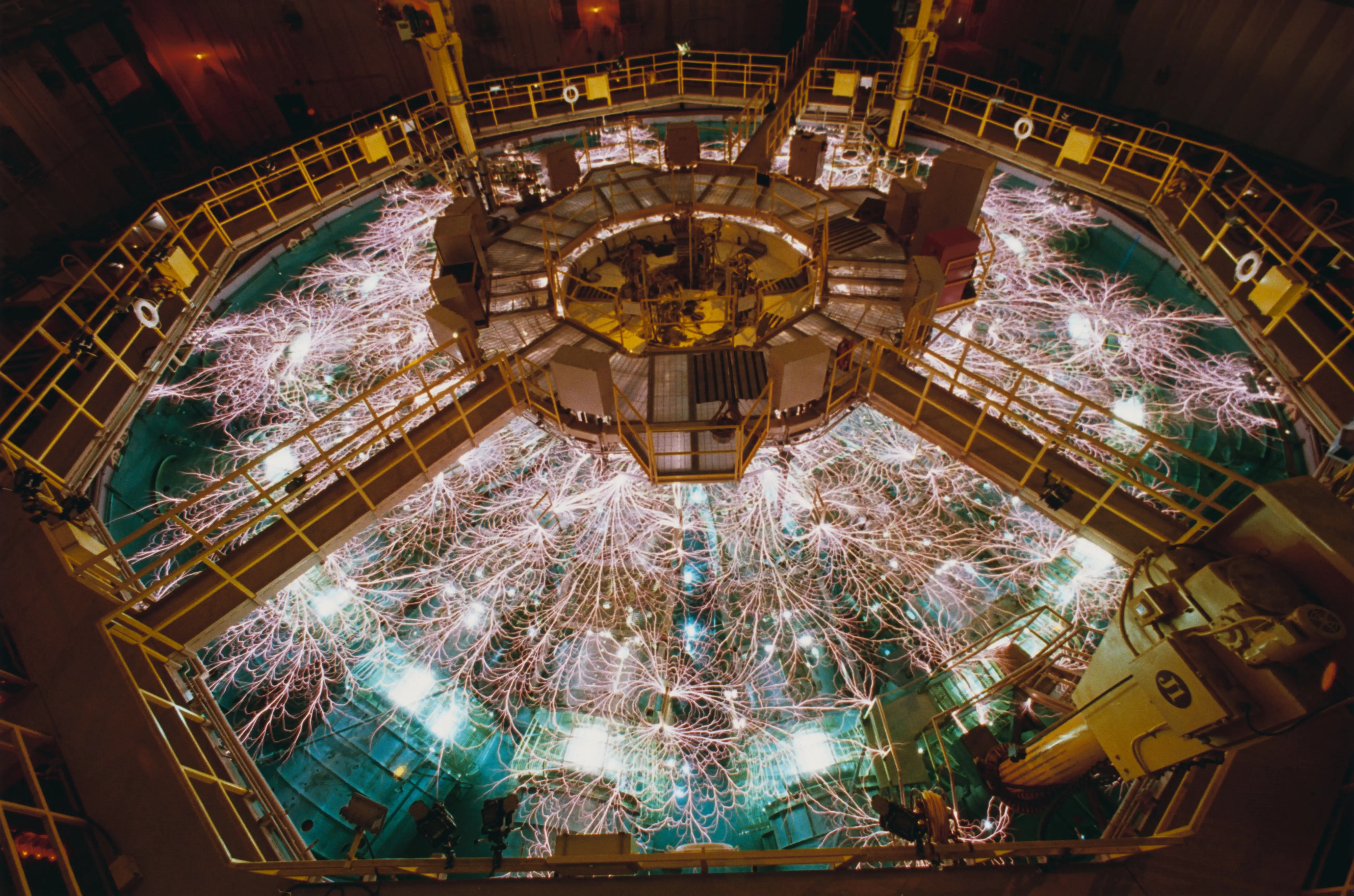
Only the sun and stars reach fusion naturally. Now, the push for carbon-free, waste-free energy on Earth could become a reality by the 2030s, with real opportunities for Australia


Published 24 August 2026
For decades, nuclear fusion has been the physicist's dream: abundant, carbon-free power drawn from the same reaction that keeps the sun burning. Now it might be shifting from scientific ambition to industrial reality.
The 2025 Global Fusion Industry Report offers the clearest picture yet of this transition.

Drawing on information from more than 50 fusion companies, the report describes an industry growing quickly in terms of investment, workforce and commercial confidence.
While technical hurdles remain, the data suggests the 2030s could be the decade we find out whether fusion can move from the bench to the electricity grid.
Perhaps the most encouraging aspect is the extent to which Australia is positioned to play a role in that journey. We have real strengths in plasma physics, advanced materials, advanced computational modelling and high-power lasers, all of which the international effort needs.
As the industry grows, fusion's carbon-free, base-load output could also sit neatly alongside the intermittent supply from our fast-growing renewables.
If fusion makes the jump, both our energy transition and our economy stand to benefit.
Sciences & Technology
Exploding stars are trying to talk to us through gravitational waves
Fusion works by forcing light atomic nuclei, usually two forms of hydrogen called deuterium and tritium, together at enormous temperatures, releasing energy as they fuse.
The fuel comes from abundant sources like seawater and lithium.
Unlike conventional nuclear power, it doesn’t rely on long-lived radioactive fuel, and also produces no greenhouse emissions as it runs.
Although some nuclear waste is produced, it poses a much lower risk to the environment and human health than the high-level radioactive materials from fission power plants. It is expected to cost less than conventional nuclear, too.
Fusion's base-load power matters in a world scrambling for affordable low-carbon electricity, with demand pushed up by energy-hungry AI data centres and the shift to electrify homes, industry and transport.
But achieving fusion on Earth is extraordinarily difficult.
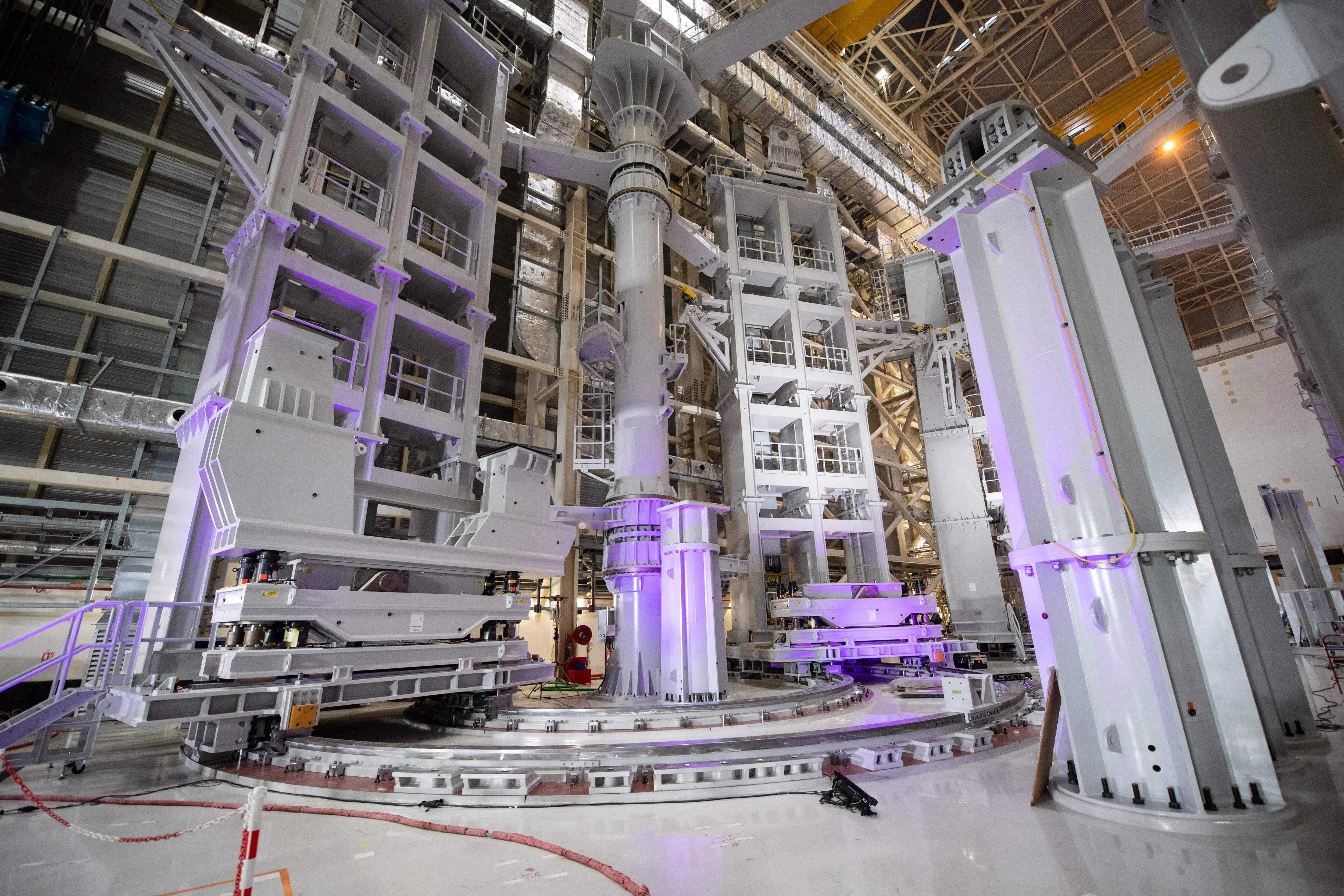
The fusion device must hold plasma at temperatures many times hotter than the core of the sun, beyond 15 million degrees, while withstanding intense neutron bombardment.
Scientists and developers are still working on generating enough fusion power gain (getting more energy out of the reaction than goes in to sustain it), securing a tritium fuel supply and building materials that can take the conditions inside a reactor.
There are several ways to attempt this.
Most rely on magnetic confinement, holding the plasma in place with powerful magnetic fields. The best-known design is the doughnut-shaped tokamak; another, the stellarator, which does the same job with intricately twisted coils.
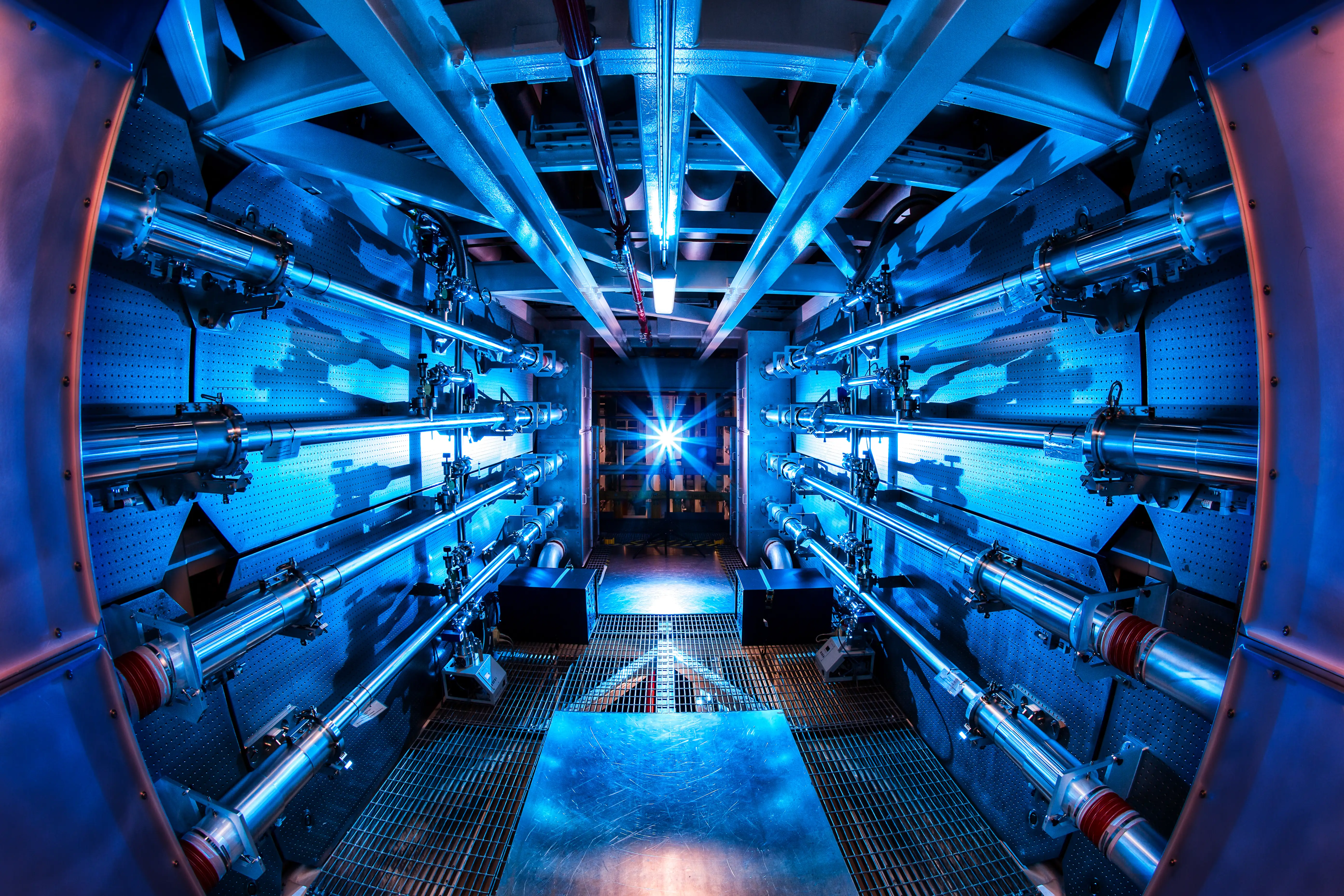
Other methods use lasers to crush fuel pellets to fusion conditions in a fraction of a second, known as inertial confinement systems.

Sciences & Technology
Neutrinos are the Sun’s secret messengers
A third group blends the two. And two recent breakthroughs have changed what looks possible.
High-temperature superconducting magnets have opened up new ways to contain plasmas burning at millions of degrees. At the same time, AI paired with Graphic Processing Unit (GPU)-accelerated computing has sharply improved our ability to model and simulate what happens inside a reactor.
Fusion is still a nuclear technology, but a fundamentally different one from nuclear fission.
And while nuclear fission is banned in Australia, federally and in every state, fusion is not prohibited, so a working plant would not have to overturn a ban to get built.
The pace of investment is the clearest sign the shift towards fusion is now underway.
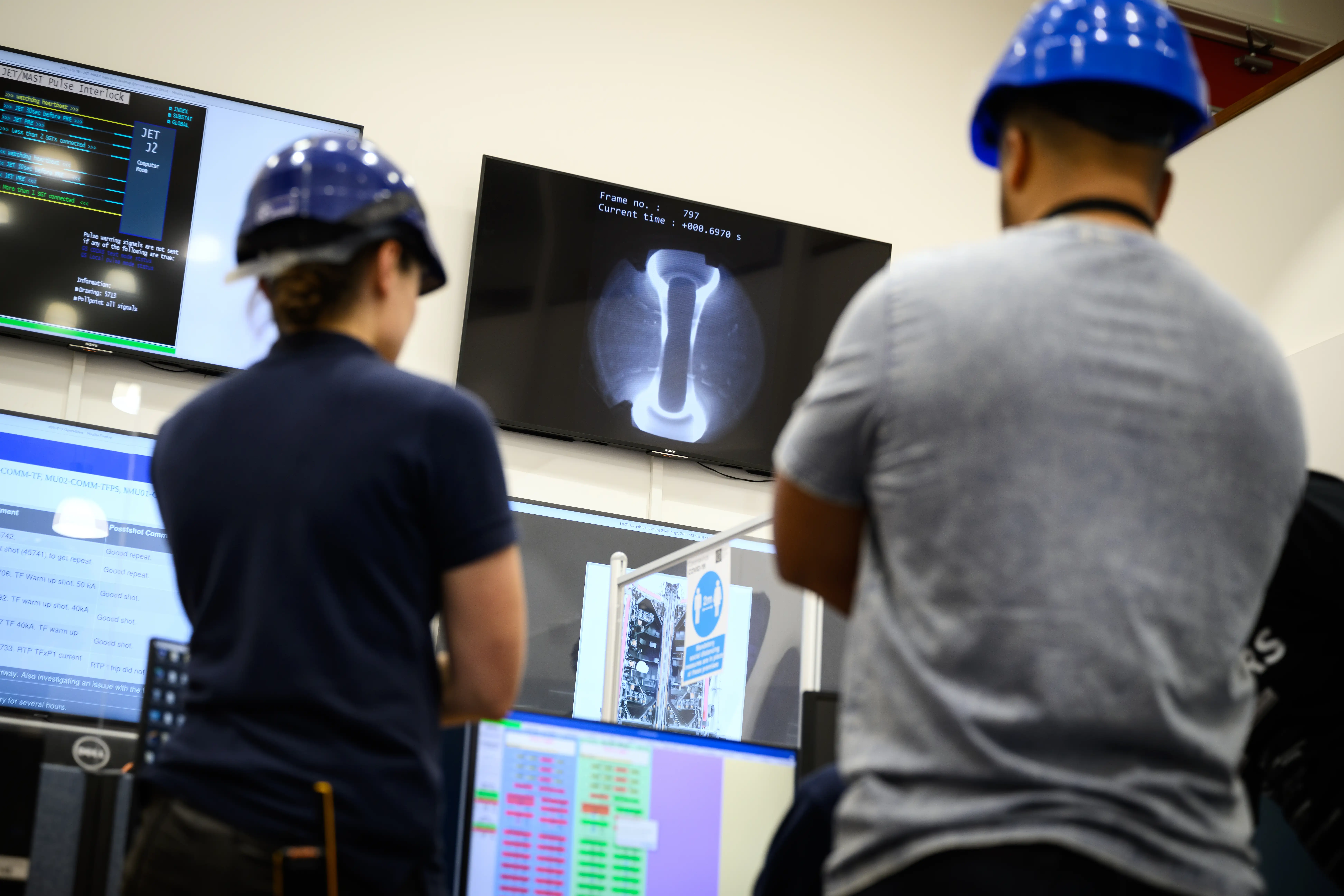
Total public and private investment in fusion has reached US$9.7 billion, with US$2.6 billion of that raised in the past year. Five years ago, the entire sector had attracted less than US$2 billion.
The number of companies chasing commercial fusion has more than doubled, from 23 in 2021 to 53 in 2025.
The workforce is growing just as fast: private fusion companies now employ more than 4600 people directly, with another 9300 or so jobs across the supply chain.
As pilot plants start going up later this decade, that could climb beyond 18,000.
The expansion suggests fusion is moving closer to commercialisation, but significant hurdles remain. Ambitious technologies often encounter unforeseen technical challenges that increase costs and delay development.

Sciences & Technology
Tech can do a lot, but won’t get us to net zero on its own
Fusion also faces a materials challenge.
The intense neutron radiation produced by the reaction can damage reactor components, potentially limiting its competitiveness against nuclear fission and other energy technologies in many countries.
Fusion scientists have faced criticism for promising a breakthrough "in 30 years" and saying so for the past 30 years. That window finally seems to be closing.
Governments across North America, Europe, Asia and Oceania are increasingly in the mix through public-private partnerships, shifting from funding early research to de-risking the last steps toward demonstration.
In the past year alone, public funding reported by companies rose 84 per cent, approaching US$800 million.
The standout milestone came from Helion Energy in Washington state, the first privately developed machine to demonstrate deuterium-tritium fusion and reach a plasma temperature of 150 million degrees Celsius.
Other companies are further along the regulatory road, with Type One Energy progressing their licence for a Tennessee plant and Proxima Fusion planning what could be Europe's first commercial stellarator in Germany.
Australia is in the race too.
HB11 Energy, based in Sydney, is chasing a laser-driven approach using hydrogen-boron fuel, developing high-energy short-pulse lasers and advanced fuel concepts aimed at commercial reactors in the 2030s.
The superannuation fund Hostplus has taken a different route, backing the international frontrunner. It recently invested around US$232 million for a four per cent stake in Commonwealth Fusion Systems, a Boston company near the front of the commercial pack.
Fusion is still a nuclear technology but it’s fundamentally different to a fission reactor.
That difference matters for how the public sees it and it may be the reason they prove far more willing to accept it.

Sciences & Technology
Australian-made, renewable fuel for a resilient energy future
That social licence depends on transparency, regulation and clear explanation of how the technology works.
Success will also depend on people.
Building a highly technical new industry and supply chain is a real opportunity for our universities, which are known internationally for world-class research and sought-after graduates.
Fusion is not a distant dream anymore but a technology being built right now, in laboratories and companies around the world.
The question is whether the coming decade delivers on fusion’s promise of abundant, affordable and clean energy to the world, and how Australia can play a part in it.