
Arts & Culture
The poem behind the Green Knight


The new movie, The Death of Robin Hood, insists its weary, violent outlaw is the real man behind the myth, buried by centuries of sanitising. But the medieval Robin was a moral compass, not a villain

Published 22 June 2026
It doesn’t feel like a coincidence that a near 1000-year-old oak tree that has long been romantically imagined as sheltering the medieval English hero, Robin Hood, has died just as a new film about his life and times arrives in cinemas.
Because lately, it feels like the bold outlaw of Sherwood Forest has gotten a bum rap. From novels to film, we are constantly told that Robin Hood wasn’t who we thought he was.
This trend is usually used to signpost an origin story.
We see it in 2010’s Robin Hood starring Russell Crowe, which claimed to be “the untold story of the man behind the legend”. Then 2018’s Robin Hood, starring Taron Egerton, billed itself as “the story you don’t [know]”.
Now, a new film The Death of Robin Hood, written and directed by US filmmaker Michael Sarnoski, makes its own claim more emphatically: “He was no hero”.
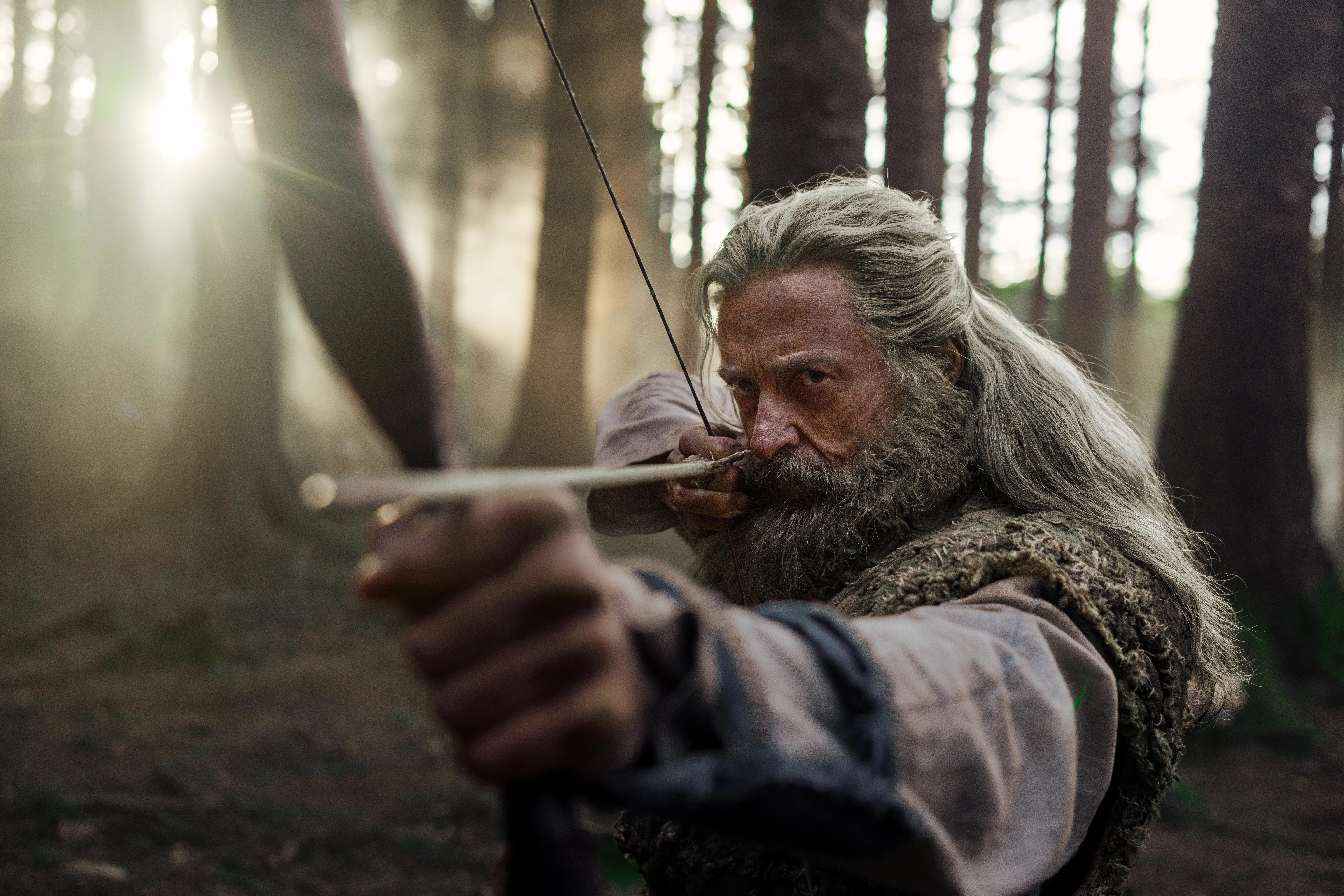
Set in the mid-thirteenth century, the film shows a weary, aging Robin (Hugh Jackman) forced to reflect on his life of bloodthirsty crime.
In this film, tales of Robin Hood are nothing but lies: Robin’s true life was as selfish and bloody as it gets. Every time someone asks about one of the old stories, Robin tells them it never happened.
Arts & Culture
The poem behind the Green Knight
A string of blood debts follows him to the English-Scottish borderlands, with the cycle of violence taking its toll on his body.
He emerges at an ancient priory where Sister Bridgid (Jodie Comer) heals the sick and gives comfort to the needy. Robin is her latest patient, but his dark past threatens to unbalance the tranquillity of the priory.
The film is not the first to take a more serious look at life as a medieval outlaw.
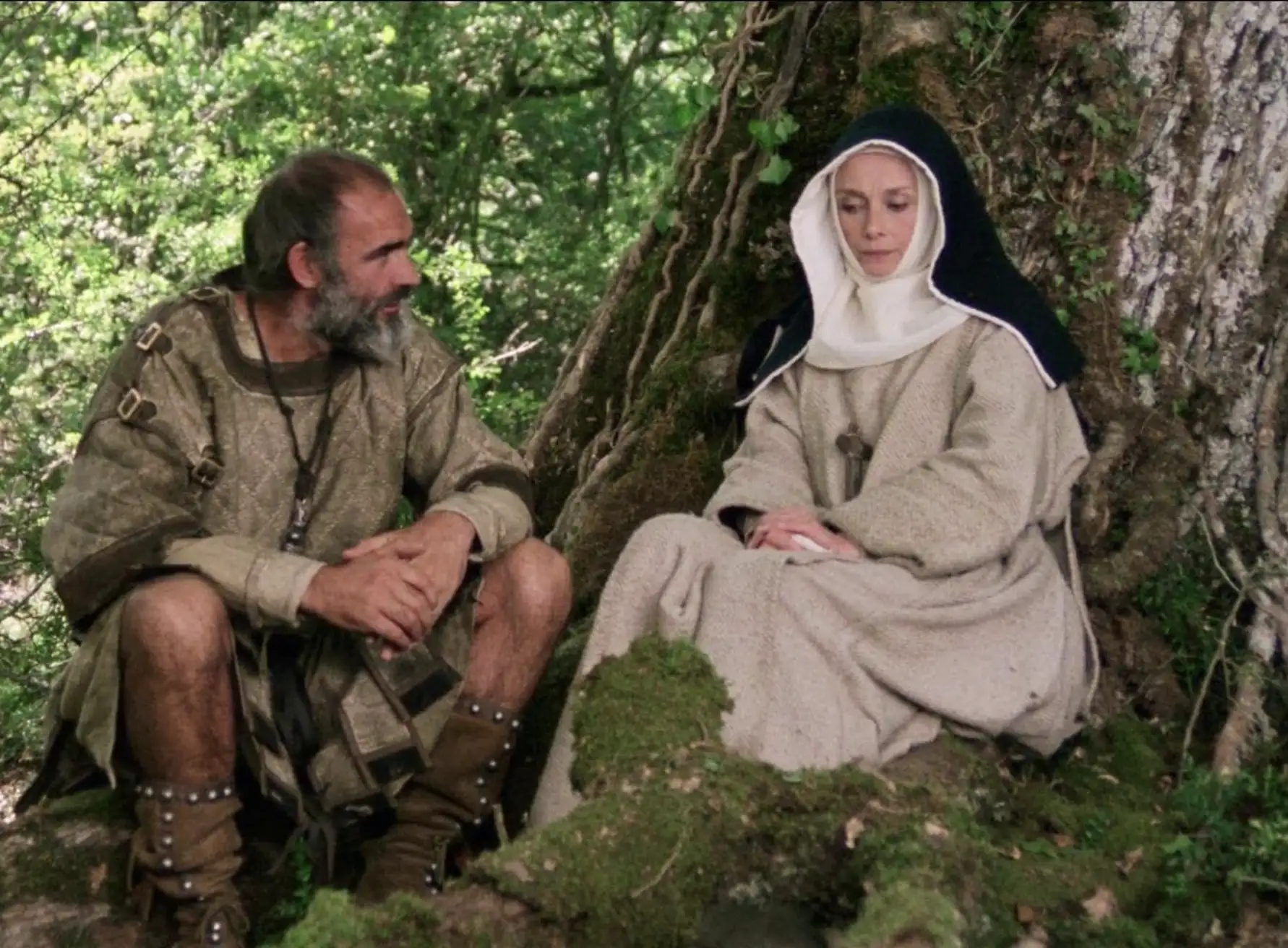
The last film to show Robin’s traditional demise, 1976’s Robin and Marian, also featured an aging Robin (Sean Connery) reflecting on his past.
The stories of old inspire him to renew his old friendships and rivalries, tragically culminating in his merciful death at the hands of the Prioress of Kirklees, Maid Marian (Audrey Hepburn).
Using Robin Hood to reflect on themes of mortality and legacy isn’t new, but The Death of Robin Hood claims that its own dark take is, in fact, utterly faithful to the earliest traces of the character.
While this simply isn’t the case, the problem with the film isn’t how it present its own take on the outlaw, but how it depicts the legend itself.
The film’s final movement is hauntingly calm. While I won’t give it all away, Robin tells a child, Little Margaret (Faith Delaney), a story about her recently killed father, Little John (Bill Skarsgård).
It’s the classic tale of the two outlaws meeting while attempting to cross a river. Neither would give way to the other, and they fought ferociously until John knocked Robin into the river.
They embraced and laughed and remained firm friends forevermore.
But, in the movie, the reason Robin is telling this story is to provide a bandage over a wound for a grieving child.
Robin says that they only stole from bad people, but a quick look at Sister Bridgid shows that this is a lie.
It’s a distraction, rather than an alternative world in which good things happen to good people, and bad things only to bad people.
In this movie, the old tales of Robin Hood are treated not as simple stories but as unconscionable lies that cover up the truth and make them complicit in these crimes.
The film's message seems to be that old stories exist only because the truth is too awful.
This would be a powerful theme to explore if we saw the positive power of those lies, but they’re presented as hollow.
“Robin Hood helps the meek”, insists one character; “No one helps the meek”, Robin says. And no one will.
There is no final redemption for Jackman’s outlaw.
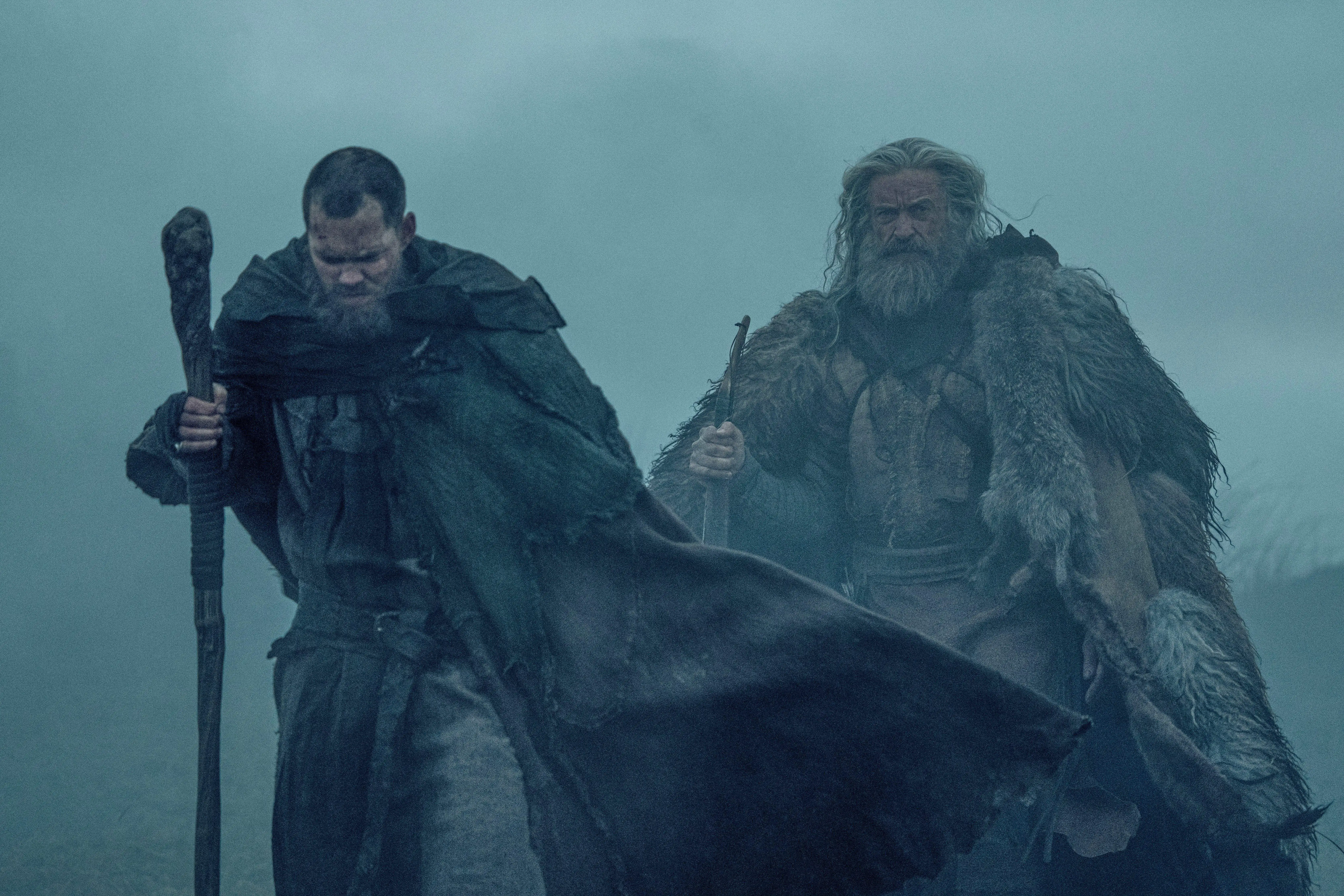
The only way to end the cycle of violence is for Robin to die rather than choose to be a better man. The power of stories to inspire, to comfort, is as much a mirage as the stories themselves.
I can’t help but think of one of the best-known speeches about the power of stories in another medievalist work, the film adaptation of J.R.R. Tolkien’s The Two Towers (2002).
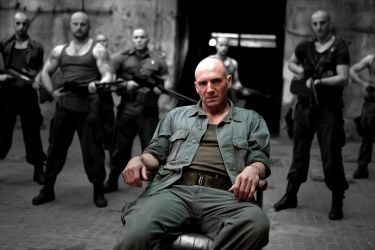
Trapped in a city under siege, with their weariness turning them against one another, Frodo (Elijah Wood) and Sam (Sean Astin) wonder how they got into this mess:
“It’s like in the great stories, Mr. Frodo. The ones that really mattered. Full of darkness and danger, they were. And sometimes you didn’t want to know the end. Because how could the end be happy? […] But in the end, it’s only a passing thing, this shadow. Even darkness must pass. A new day will come. […] Those were the stories that stayed with you. That meant something, even if you were too small to understand why. […] There’s some good in this world, Mr. Frodo. And it’s worth fighting for. “
Arts & Culture
Seven Shakespeare movies you cannot miss
The Death of Robin Hood had the chance to make this same point: that the stories we tell ourselves don’t hide the pain of life but inspire us to be better, to see and to be the good in the world.
But it doesn’t.
The core problem isn’t the film’s darker vision in itself, but its claim that this is the original, medieval Robin Hood and not a modern medievalism.
A recent BBC article maintains that a villainous Robin was “erased” during the sixteenth century, with media adaptations finally “restoring his dark side”.
What the sixteenth century erased, however, was not some hidden, violent Robin Hood, but the ways in which the tradition allowed ordinary people to emulate the outlaw in their own neighbourhoods.
Both public performances of Robin Hood and the literary tradition surviving from the mid-fifteenth century emphasised positive community values.
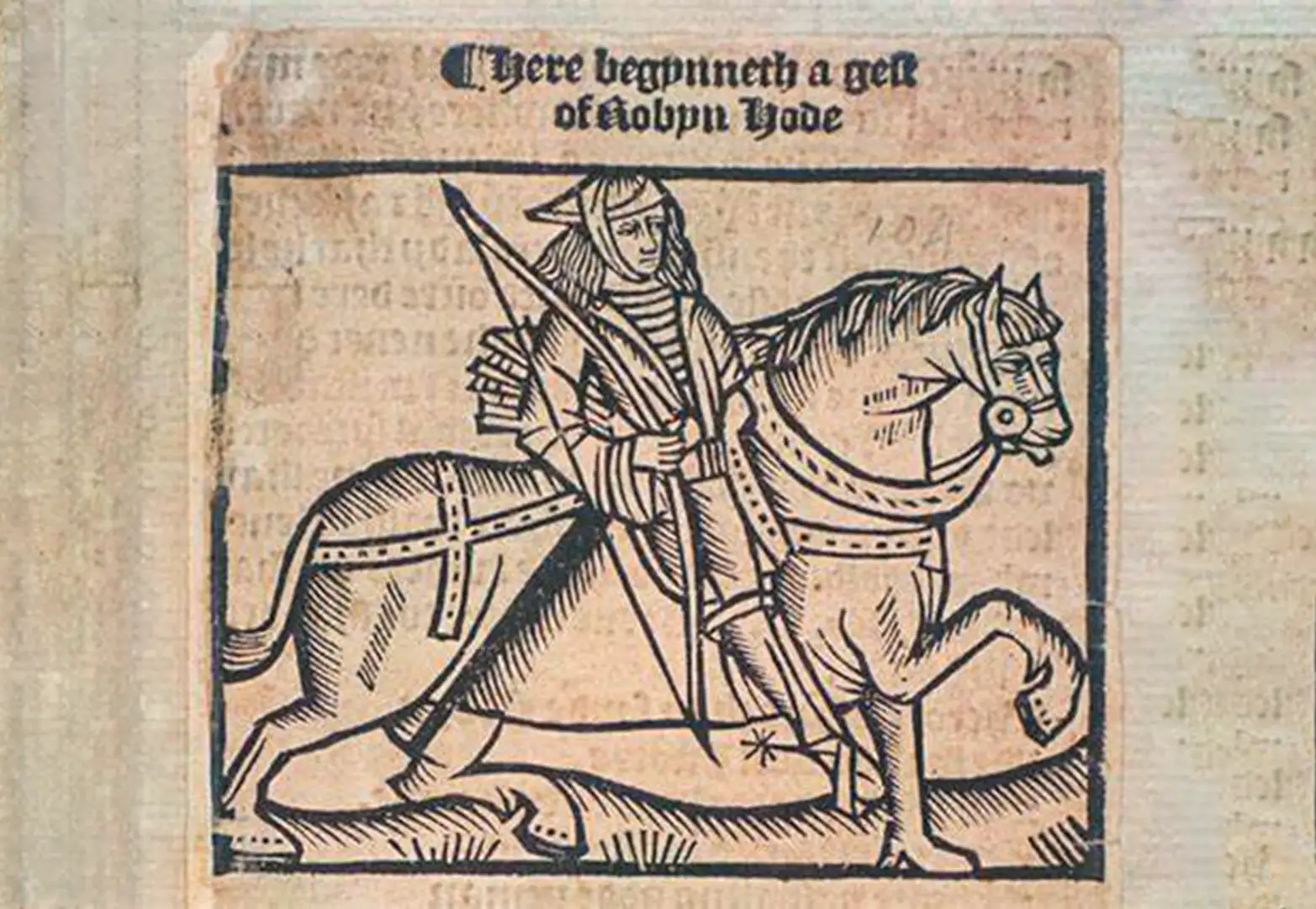
The outlaw would fundraise for community projects, with men dressing as Robin Hood and his merry men and delivering their goods to local officials: “Presented in of the sport of Robart Hode and hys company”, record churchwardens’ accounts in around 1506.
The literary tradition features a new adventure in every story, but its core themes of rewarding the good and punishing the bad, regardless of the social rank of these people, mirrored this performance tradition.
This sometimes did result in violence when people played the outlaw for selfish ends.
A knight took advantage of his own Robin Hood performance in 1498 to engage in common assault, claiming in court he was simply “gathering money [for] the profit of the churches [...] according to the said old custom”.
But cases like this are outliers in the historical record, preserved as petitions and court submissions. The positive legacy of Robin Hood’s mythic life is instead preserved within the records of parishes and the moral core of the literary tales themselves.
Arts & Culture
Ancient teens were full of existential angst too
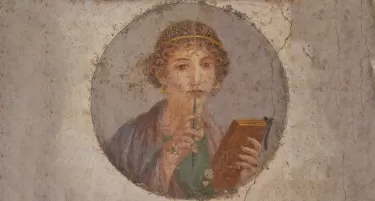
Whether it’s dressing as the outlaw, sharing Robin Hood stories or making the pilgrimage to Sherwood’s Major Oak, it’s people interacting with the world of Robin Hood that made him the hero he is today.
To say that Robin was originally a violent, morally misguided outlaw robs the Middle Ages of a figure who was a moral compass.
Insisting that the gentrified, conservative Robin is at once morally superior, but also entirely false, leaves no Robin Hood left to celebrate.
Jackman’s Robin might be no hero, but in our divided century, we still need the real Robin Hood to be one.