
Arts & Culture
Have you heard of the ‘Twin Film Phenomenon’?


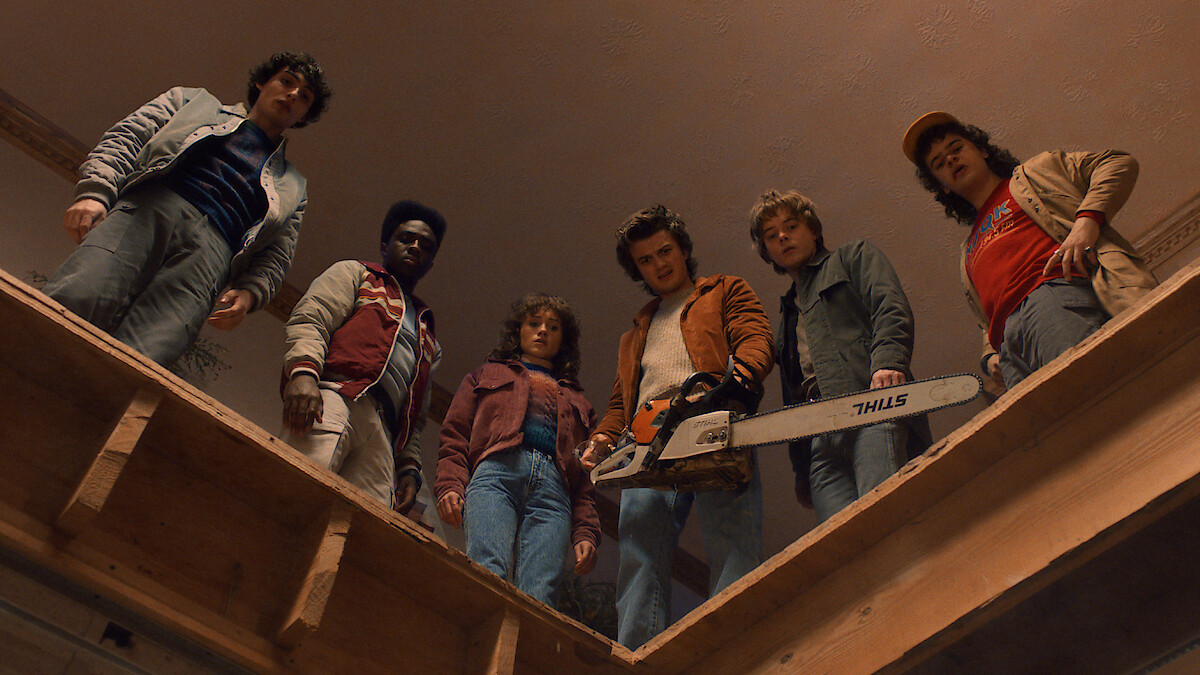
The final season has arrived. So, have the Duffer Brothers orchestrated an ending that satisfies our nostalgia for the '80s, the fragility of adolescence and the power of friendship?

Published 24 November 2025
A 12-year-old Will shivers, cowering in a fort of sticks behind his childhood home. No idyllic playground, but a twisted shadow of everything he loves. Falteringly, he sings to comfort himself, a musical incantation to protect misfits.
A terrifying shriek... Will freezes in fear. It’s the creature he dreads. It tears his shelter asunder. Dripping maw glistening with a thousand poison spines…
So begins the much-awaited final season of Netflix’s Stranger Things, starting 26 November (or 27 November for Australians).
Warning: From here on, this article contains spoilers from Seasons One to Four of Stranger Things.
To recap ten years of Stranger Things lore (yes, it's been ten years), it all began in 1950s Indiana…
Victor Creel moves his family to sleepy Hawkins for a fresh start after his son Henry develops dark obsessions: black widow spiders and torturing animals.
Henry tests his psychic powers, haunting his family’s nightmares. One day, Henry murders his family in cold blood.
Locked away for decades in Hawkins’ Lab, the government exploits the psychic powers of prodigious children.
Henry manipulates a gifted girl, Eleven, into freeing him. Witnessing Henry slaughter the children, Eleven banishes him to another dimension. But trauma wipes her memory.
Arts & Culture
Have you heard of the ‘Twin Film Phenomenon’?
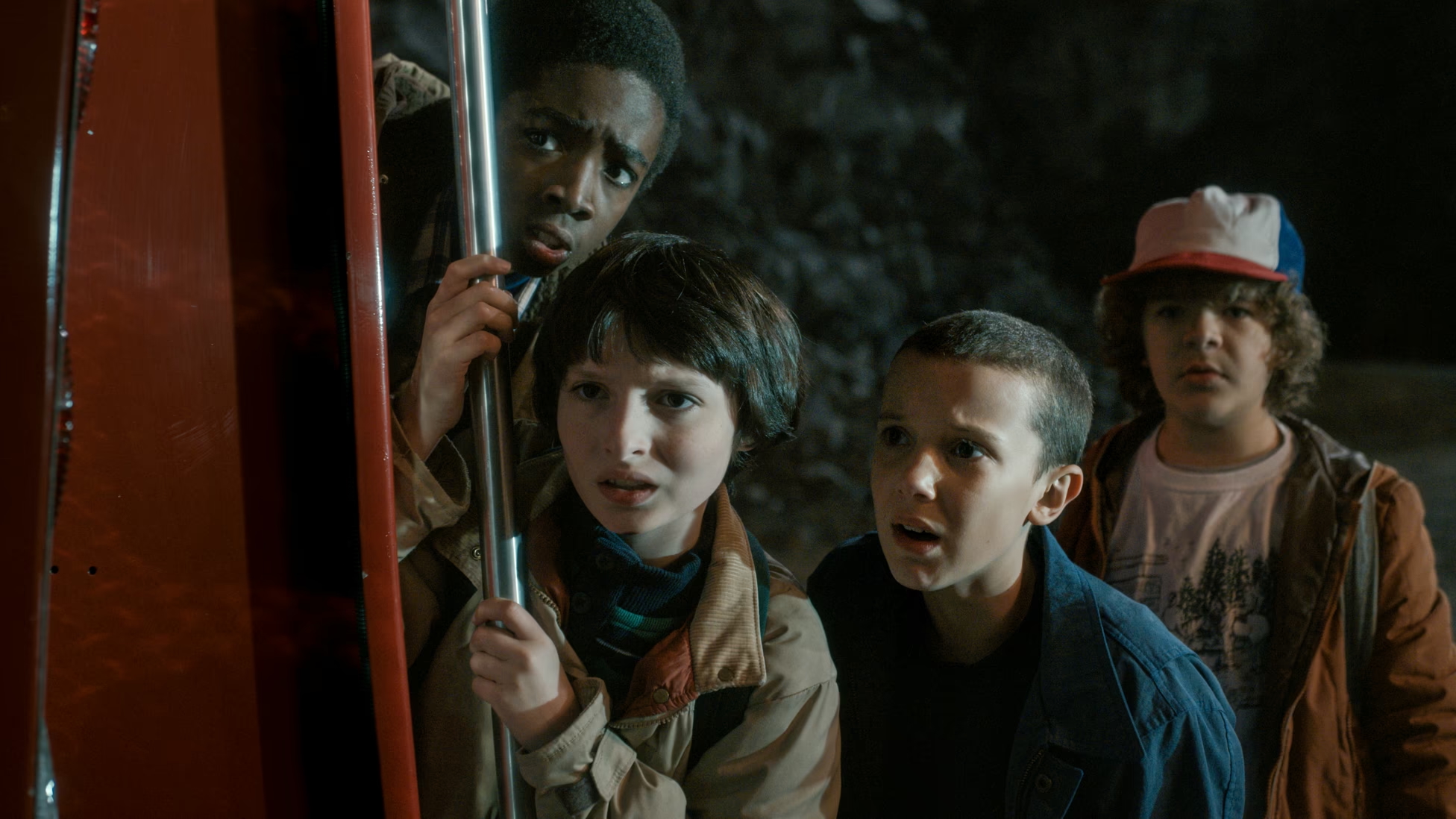
In 1983, the series proper begins. Middle-schoolers Mike, Lucas and Dustin befriend Eleven (nicknamed El) when she escapes the Hawkins' Lab.
Meanwhile, Will is haunted by a ghastly force – unwittingly, Eleven left a door open to Hawkins’ shadow-world, The Upside Down. Eleven and the gang save Will, before battling successive monsters that break through the fissure.
By Season Four, we discover it was Henry all along, exploiting townsfolk’s nightmares, letting minions slip through.
Henry (aka Vecna) grows in might as Season Four ends, creating permanent rifts between worlds – threatening Hawkins and all of humanity.
The first moments of Season Five bring us back to Season One, Will sheltering from monsters (and metaphorically, his impending adolescence, clinging to the childish games his friends cast aside).
We learn that Henry made Will central to his plans from the start.
Stranger Things borrows from classic sci-fi, horror and action/adventure films of the late 70s and 80s, with nods to movies inspiring creators Matt and Ross Duffer (The Duffer Brothers).
This includes E.T.(1982), Poltergeist (1982), Ghostbusters (1984), The Goonies (1985), The Lost Boys (1987) and Beetlejuice (1988).
These were also all the VHS tapes my sister and I rented repeatedly as kids, until we knew the dialogue by heart. It wasn’t pure spectacle that made those films great - it was the melding of well-crafted comedy/drama with genre.
Great characters, with emotional depth. Human themes transposed onto stories about vampires, ghosts and aliens.
Steven Spielberg’s magic formula was, by 1990, forsaken by Hollywood in favour of the film franchise.
Newly christened a teenage Gen X cynic, I recall cringing at '80s movies I had loved, crushing out on indies and arthouse instead.
Film culture and economics had bifurcated: industry integrated movies and merchandising, abandoning auteurs to cobble together international financing to negotiate the human condition.
But by 2016, a humanistic storytelling approach to genre was ripe for reinvention. And made for high-definition streaming.
Character journeys suited to the series format could be streamed to televisions big enough for cinematic spectacle.
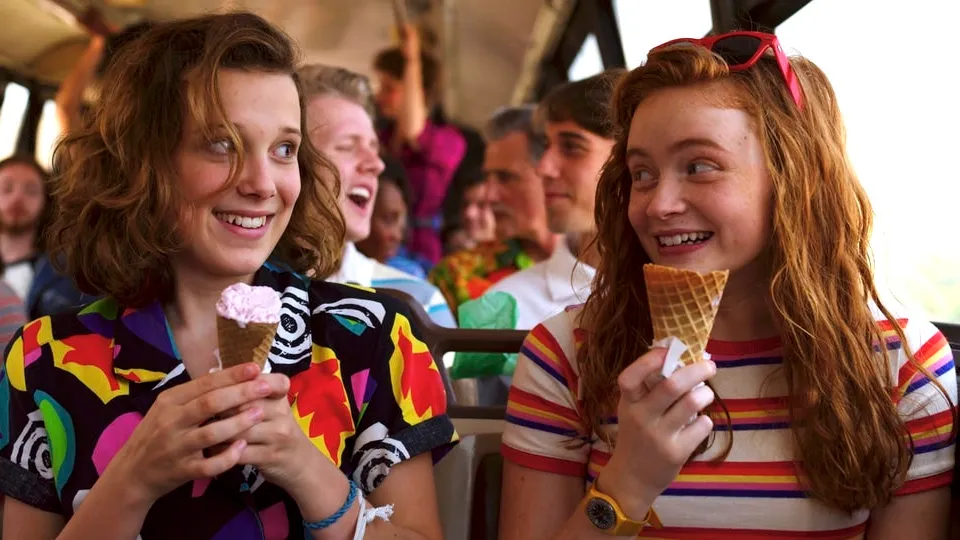
The Duffer Brothers may not have realised, but they had the perfect vehicle to exploit the production values and creative freedom Netflix offered – and its virtual streaming monopoly.
Despite modest marketing, the ubiquity of Netflix meant that when word of mouth caught fire on social media, the Stranger Things audience exploded into a mass culture phenomenon.
Nostalgia pulled in older audiences, while a new generation was captivated by a charismatic young cast.
All were mesmerised by the visually dazzling ride, referencing a Blockbuster full of '80s films. Clearly a labour of love for cast and crew, the series won countless awards for screen craft (and more than a few fans here at VCA Film and Television).
Arts & Culture
After 50 years, why Stephen King is still relevant
Outsider stories now included a more heterogeneous (and female) ensemble of loveable weirdos, with a touch of contemporised John Carpenter sci-fi social critique.
But Stranger Things owes its heart and soul to Rob Reiner’s Stand by Me (1986), a movie my sister and I watched over and over.
It's a film that Stranger Things quotes liberally – from junkyards to train tracks, classic four-kid gangs to a psycho older brother (played with scene-stealing brilliance by Australian actor, Dacre Montgomery) to nostalgia for the love of true friends that will break your heart in two.
Stranger Things is a coming-of-age story, infused with yearning for childhood’s lost innocence and fear of the encroaching corruption of adulthood.
Mike fears his feelings for Eleven leave him vulnerable. Lucas fears the part of himself that wants to blend in, the temptation to abandon his true self. Dustin wonders if anyone will want him, if he gives up being the clown.

Eleven, Stranger Things’ heroine, faces another fight between good and evil: within herself. More powerful than anyone, she fears her power in a world without female role models wielding real strength.
Even in 2025, audiences rallying behind a girl with the power to save (or destroy) the world is transformative in ways hard to measure.
Will longs for simpler days, when his sexuality didn’t quietly threaten his universe.
Must Will embrace his true self for Hawkins’ nightmare to end? Do Will and Henry have more in common than we know?
Max, let down by everyone in her life and accustomed to looking after herself, finds it easier to stay a cynic than to let herself have faith in people again.
But how can fans forget Max playing back memories of purest joy and heartfelt kinship and belonging, as Henry tries to drown her in the undertow of guilt, grief and chronic betrayal?
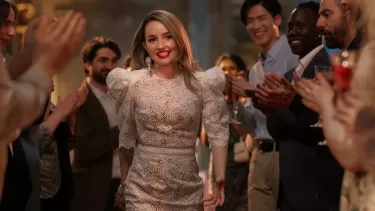
Max running, worlds crashing... towards her people, to a tiny glimpse of hope, Kate Bush’s Running Up That Hill blasting on her Walkman.
Someone so burned by injustices at her tender age, taking that leap of faith, to believe in love’s transcendence, was so universally affecting that it pushed Kate Bush to the top of the charts, decades after release.
The authenticity of that scene is tangible: any true teenage outsider will tell you music can absolutely save your life. So, can the final season match such heights of emotion?
The cast grew up making Stranger Things, they’ll be struggling to say goodbye, choking back nostalgia, just like us.
And we need not fear the magic fades if David Harbour’s fires still burn, as in his 2016 acceptance speech at the SAG awards, voice ragged with emotion, urging filmmakers to use our stories as a 'reminder to folx, that when they feel broken, and afraid, and tired.. they are not alone'.