Sciences & Technology
New dimensions in colour


An artist and scientist explore how cats see digital media – through lenses of colour, attention and imagination – in ‘Cat Island’, an artwork for Science Gallery Melbourne

Published 19 March 2026
Humans love cat videos. Perhaps obsessively. But what happens when cats watch videos of themselves?
My recent artwork ‘Cat Island' explores that question by merging animal vision research with interactive digital art.
Commissioned for Science Gallery Melbourne’s exhibition DISTRACTION, the work invites audiences to see the world through feline eyes and to feel the playful power of art and science in conversation.
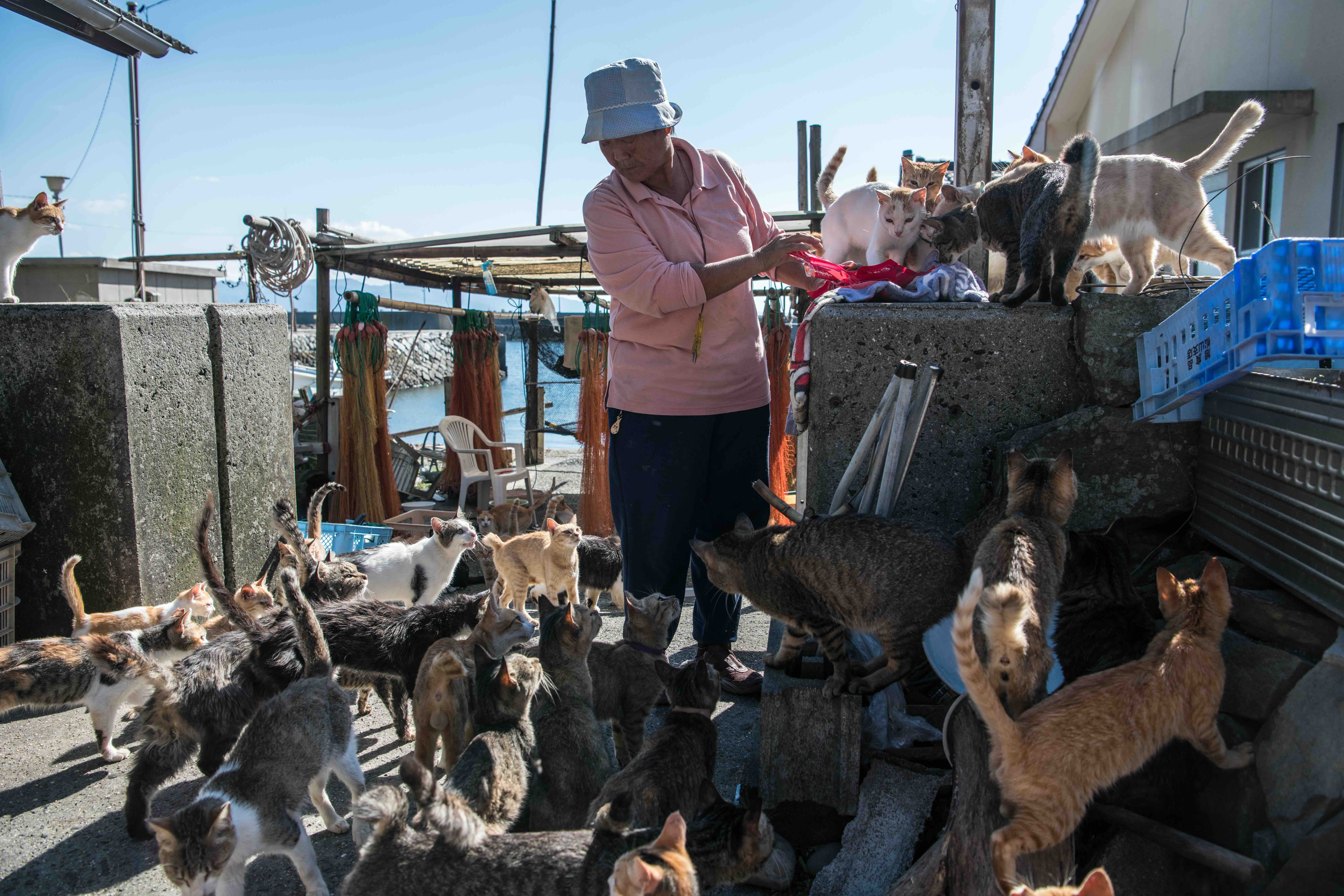
As an artist who tests the intersections between art and nature, I filmed the work on Ainoshima, known as ‘Cat Heaven Island’, off the coast of Fukuoka, Japan.
To capture genuine feline reaction, the exhibit needed cats that hadn’t been conditioned by digital screens. Domestic cats often encounter TVs, tablets or phones, so they’re used to the digital glow.
Japan is home to a unique phenomenon of ‘Cat Islands’– small islands where cats often outnumber humans and where feline life unfolds largely outdoors, in semi-feral and screen-free environments.
Sciences & Technology
New dimensions in colour
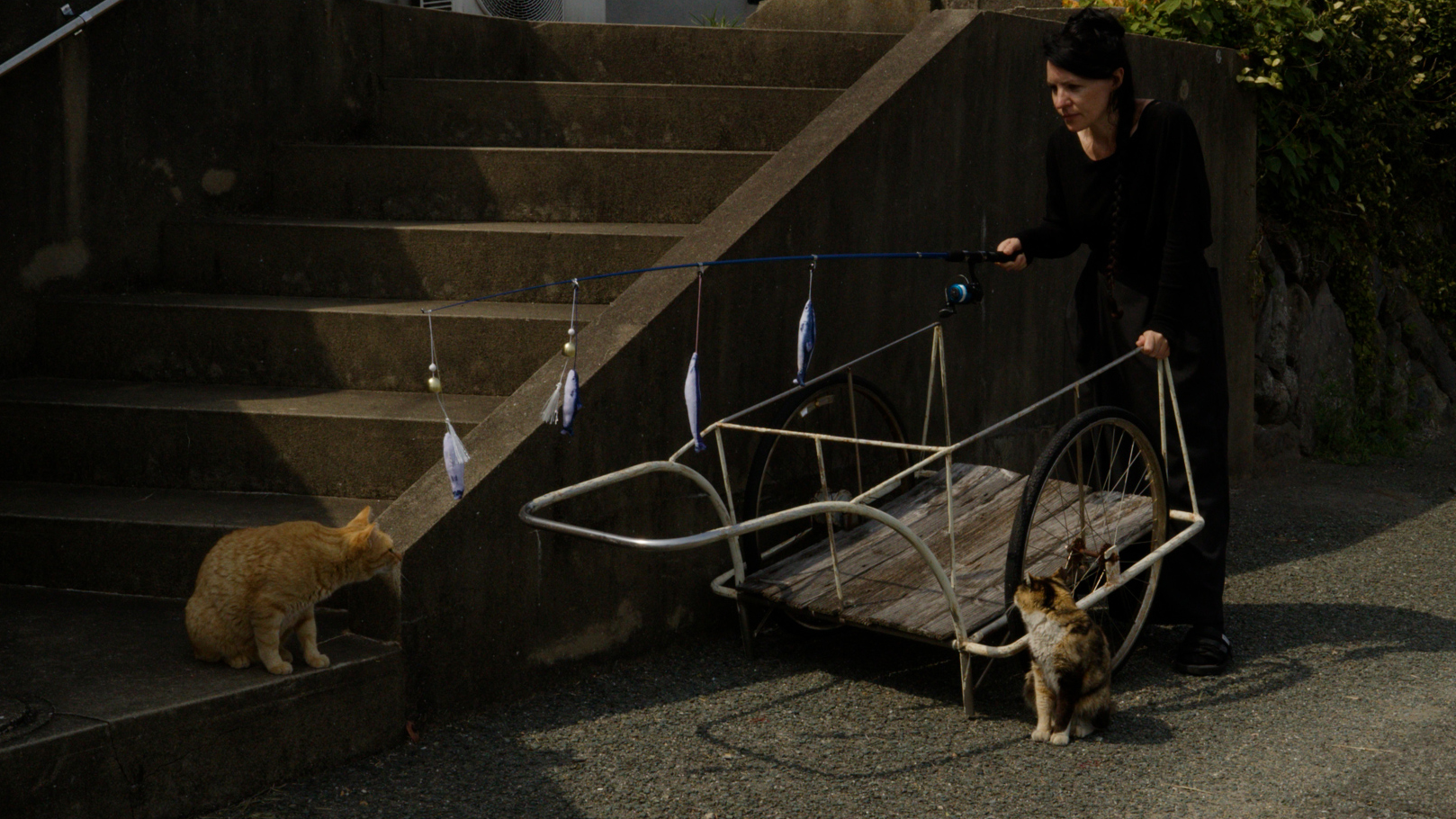
To begin, I created bespoke toys, odd sculptural lures of bells, tassels and faux fish, to help spark initial interactions. Some cats played; others ignored me entirely.
These moments then formed the content to be shown back to the cats during a second stage of filming – creating videos featuring their own image, made specifically for them.
While many of the cats remained indifferent, others became absorbed – circling screens, peering behind them, and tracking motion with intensity. A few appeared as captivated by their own image as humans often are.
The final installation layers these encounters into a single, immersive work.
Original footage of cats at play is combined with clips of them watching those videos, creating a metameme in which many memes are nested within one epic cat video, featuring 81 videos in simultaneous motion.
Although the raw footage spans more than 34 minutes, the exhibition compresses it into a dense, hypnotic loop lasting one minute and 49 seconds.
It feels like watching every scene of a film at once: chaotic, immersive and strangely mesmerising.
To deepen the artwork, Cat Island incorporates research from the University of Melbourne’s Stuart-Fox Lab in the School of Biosciences, who study animal colour perception and its ecological and evolutionary consequences.
I was fascinated after reading about Professor Devi Stuart-Fox's research, so the Science Gallery organised an introduction, and we began working together.
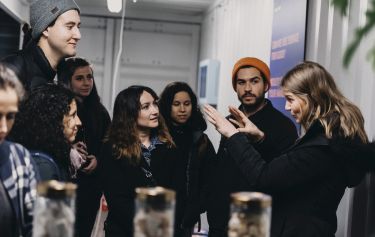
Professor Stuart-Fox explains, “Although colour has a physical basis, it is all in the mind. Exactly the same object will be perceived differently by different viewers, and animals have very different colour perception from us.”
“Compared to our three photoreceptors sensitive to red, green and blue wavelengths, cats have only two – one sensitive to blue and the other to yellow.”
They have limited sensitivity to red and ultraviolet wavelengths and see the world in muted shades of violet-blue and yellow-green.
Because cats are often active at night, their visual systems are tuned for low light. This results in a trade-off where cats are less able to perceive fine detail, and distant objects appear slightly more blurred than they do to humans.
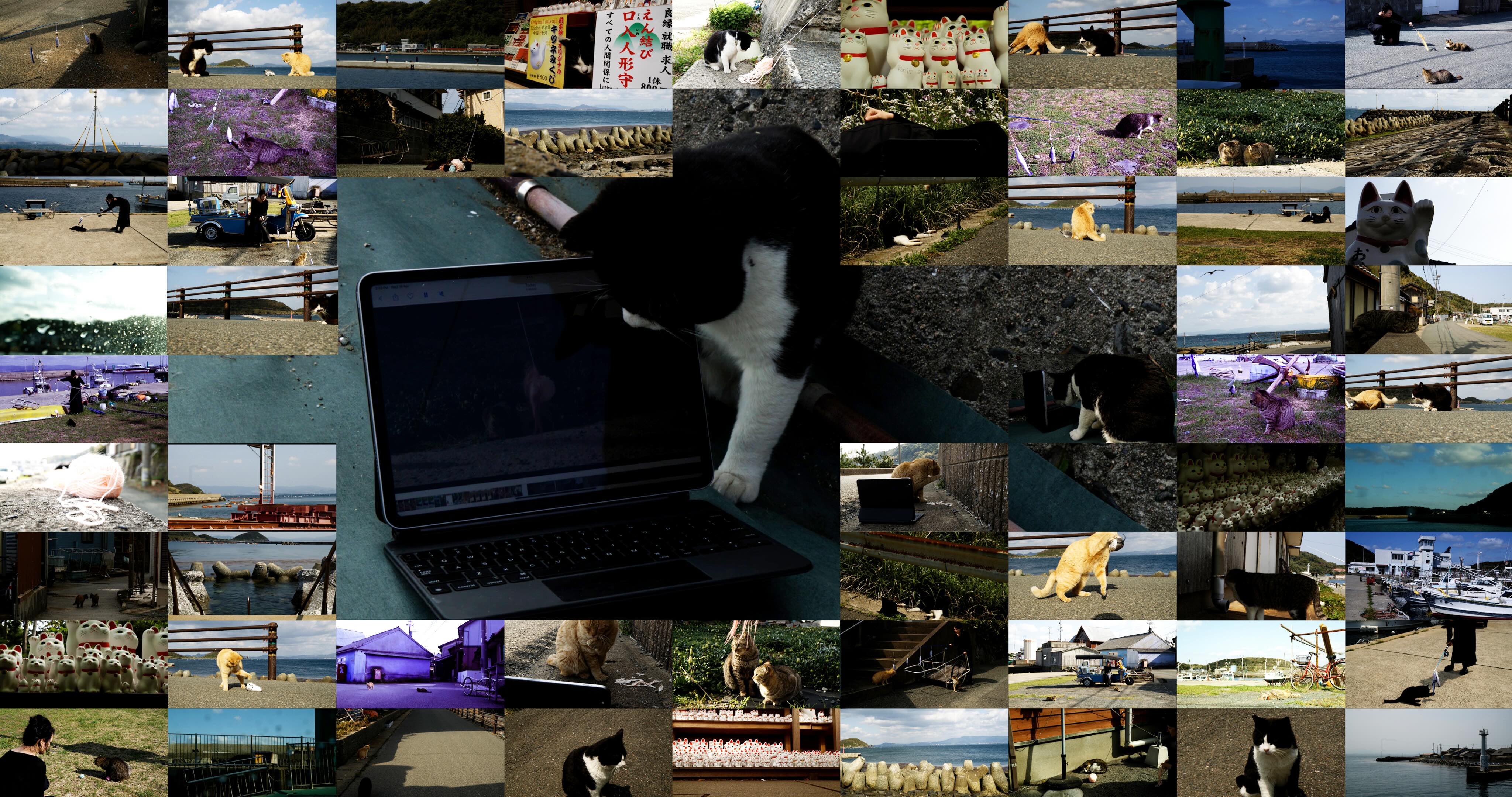
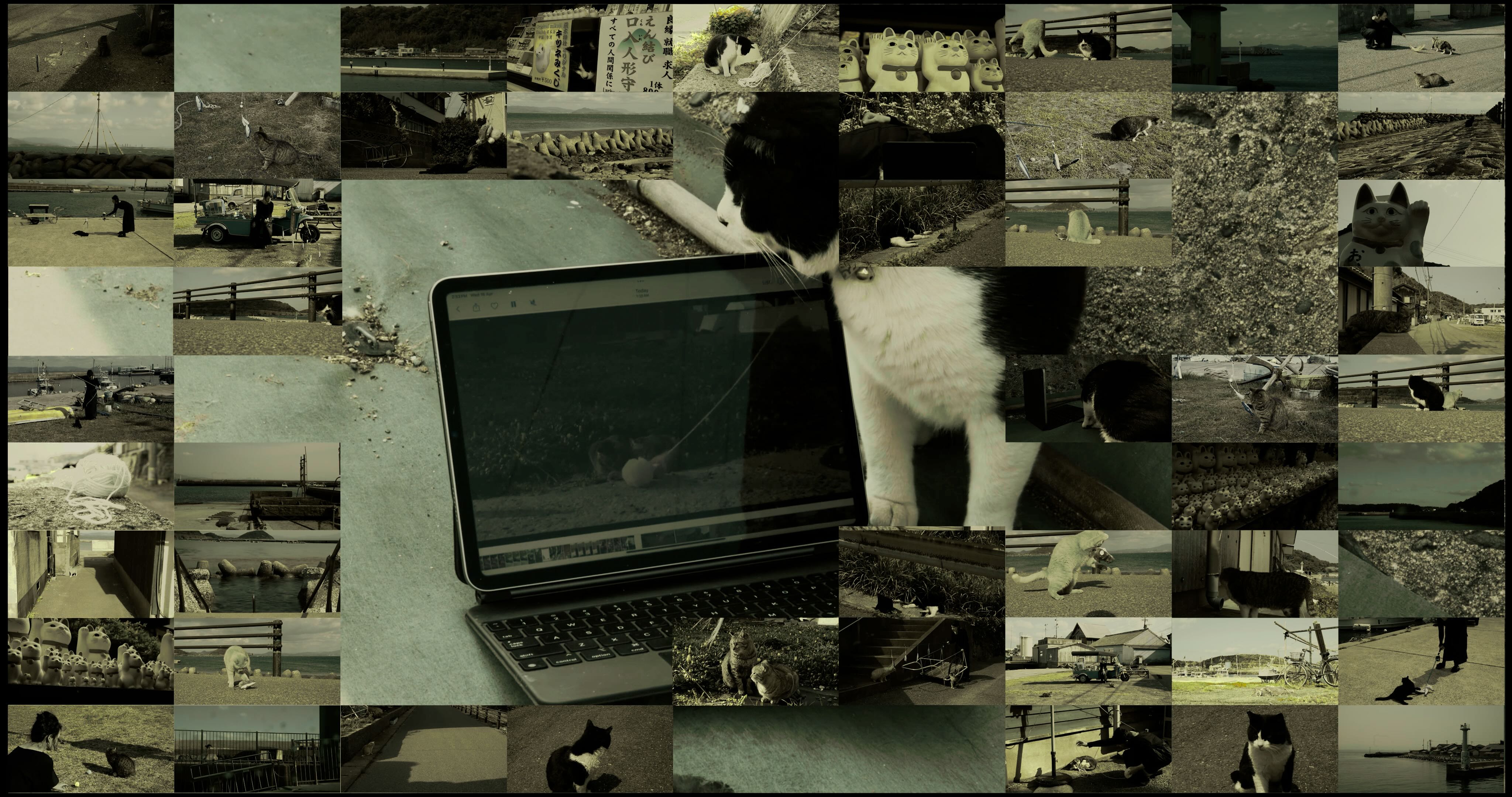
Cats have limited sensitivity to red and ultraviolet wavelengths and see the world in muted shades of violet-blue and yellow-green. Pictures: Jen Valender
To estimate how animals may see a scene, researchers can render images in animal vision by converting each pixel based on the known visual sensitivities and a model of visual processing.
In practice, human yellow and blue are mapped to the cat’s long‑ and short‑wavelength cones, and images can be adjusted for reduced acuity under low light.
These models inform the exhibition’s interactive moment – if you make cat ears with your hands, the installation briefly switches from human vision to a scientifically-informed ‘cat vision’.
It is not a literal replication, but an evocative rendering grounded in current research. It gives us just a taste of what the world (and memes) look like through a cat’s eyes.
Sciences & Technology
If these walls could talk
Professor Stuart-Fox’s research also explores how cats appear to other animals – to both predators, including wedge-tailed eagles, and prey, like lizards. This can reveal how coat colours influence survival in different environments.
From studying feral cats in the Australian environment, as-yet unpublished research from the Stuart-Fox group found that tabby cats, with their broken, banded patterns, are superbly camouflaged almost everywhere.
While black cats tend to thrive in dense forests, ginger cats may gain an advantage in deserts because their fur reflects heat more effectively.
These findings highlight that colour isn’t just about appearance – it shapes behaviour, adaptation and perception, echoing the themes explored in Cat Island.
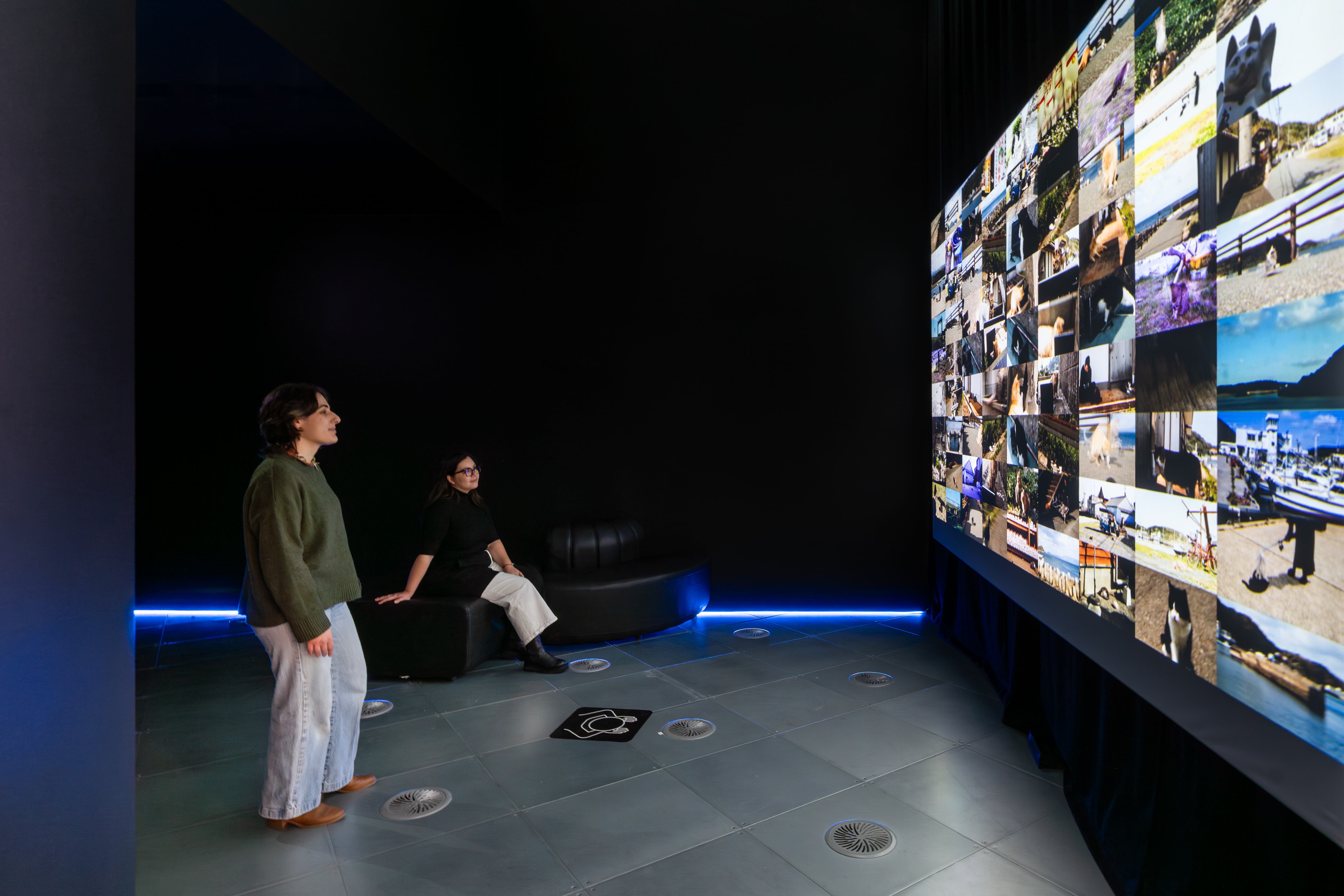
The artwork Cat Island is an invitation to feel and imagine the world differently.
Science provides scaffolding – by briefly trying on a feline worldview, audiences are reminded that human perception is not the singular ‘true’ view; it is one of many.
In the context of digital culture, that shift matters.
When attention is fragmented, Cat Island uses the familiar language of the meme to ask unfamiliar questions about perception and interspecies curiosity.
Cat Island is part of DISTRACTION! at Science Gallery Melbourne, which is open until 2 May 2026.
