
Sciences & Technology
The 100-year journey from quantum science to quantum technology


With names like the Neutron Howitzer, MUVEC, and the Pelletron, Melbourne’s particle accelerators have been the hidden engines driving research for almost a century

Published 7 November 2025
This story starts in the early 1900s, with the discovery of the atomic nucleus.
We had found the building blocks of matter, but there was no way to study them systematically.

This changed in 1932, when Cockcroft and Walton built the first particle accelerator in a Cambridge laboratory, to probe how atomic nuclei break up when bombarded with high-energy particles.
Today, there are over 50,000 accelerators worldwide, with applications ranging from microchip manufacture to cancer treatment.
The earliest accelerators used a constant electric field to impart energy to particles, much like rolling a ball down a hill. Machines developed since then use time-varying electric and magnetic fields, more like a surfer cresting a moving wave, but the idea is essentially the same.
When you think of particle accelerators, you probably think of ultra-expensive, kilometres-long rings like the Large Hadron Collider at CERN. However, most can fit in a regular laboratory, and our School of Physics has had its fair share of particle accelerators over the years.
Just six years after Cockcroft and Walton split the atom, Martin and Hill at the University of Melbourne were able to replicate their achievement, building Australia’s first particle accelerator – a 200,000 Volt machine for producing neutrons, known as the ‘Neutron Howitzer’.
Sciences & Technology
The 100-year journey from quantum science to quantum technology
We measure the maximum energy per particle in an accelerator using a unit called an electronvolt, or eV. The Neutron Howitzer could impart up to 0.2 million electronvolts, or 0.2MeV. Not a bad start, but we got better.
For many years, accelerator science in Melbourne was a homegrown affair.
In the 1940s, researchers wanted a source of X-rays that could be produced by bombarding a target with an electron beam. For this, they built a 2.8 MeV betatron.
As this was Melbourne’s first electron accelerator, they had to figure it all out from scratch, leading to some surprising solutions to the problems they faced.
An important component in these machines is the vacuum pipe containing the electron beam, aptly named a ‘doughnut’ (due to the shape, not the ingredients).

William ‘Bill’ Lasich and his colleague John Riddiford made the doughnut themselves by cutting glass saucers from the bases of two conical flasks, which were then sealed together, heated, shaped, and finally coated with silver.
Though this first betatron only operated for three years, the original glass doughnut can still be seen in the Physics Museum at the University of Melbourne.
This early betatron was rapidly superseded by other technologies. Around 1950, Ed Muirhead built a new electron betatron, which was soon upgraded to a more powerful synchrotron, with a maximum electron energy of 18MeV.
Sixty years later, the machine now known as ‘The Australian Synchrotron’ started operation in Clayton. Though the newer accelerator is hundreds of times larger and reaches energies 150 times greater than Muirhead’s synchrotron, it would not have been possible without these early machines.
While Muirhead was thinking about electron accelerators, Melbourne’s proton programme was also progressing.

Sciences & Technology
Neutrinos are the Sun’s secret messengers
By the late 1950s, there were two Van de Graaff accelerators in operation, taking over from the Neutron Howitzer. However, these electrostatic machines were limited to maximum energies just below 1MeV, and physicists wanted more.
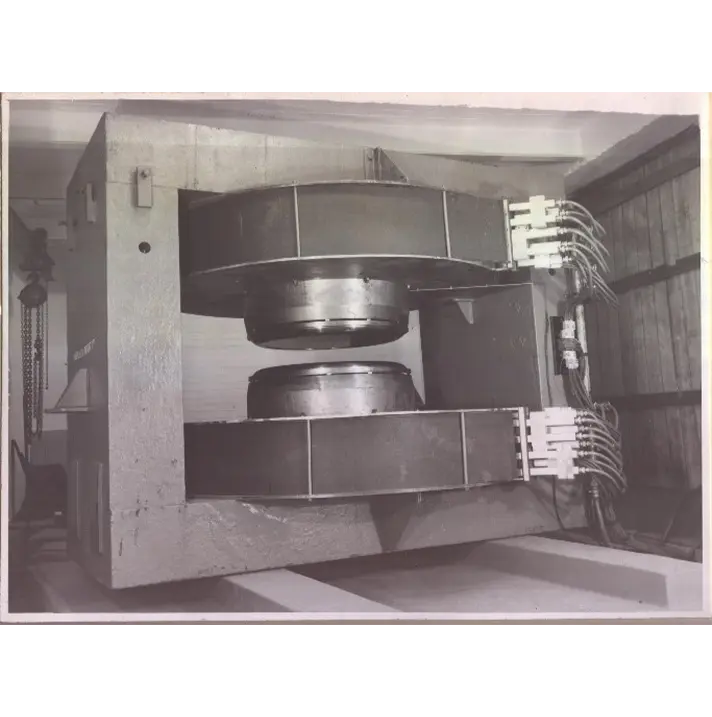
In 1953, the decision was made to design and construct a variable-energy cyclotron, a project spearheaded by David Caro and John Rouse. This was the first such machine to be designed anywhere in the world, although it was beaten to the finish line by an American team.
The Melbourne University Variable Energy Cyclotron (MUVEC to its friends) had a long and storied life. Starting in 1959, it provided proton beams for a range of nuclear physics experiments.
When the School of Physics moved location in 1974, MUVEC was no longer required. It was soon purchased by the University of Aberdeen, Scotland, where it was used for medical research for many years.
At this point, accelerator construction had moved from an in-house operation to a commercial activity.
In 1962, the electron synchrotron was replaced by a 35MeV betatron from Siemens, the first accelerator at the University of Melbourne to be purchased commercially.
It still sits on display outside the School of Physics, with a plaque proudly proclaiming that “experiments performed using this accelerator led to 55 post-graduate degrees, and 130 research papers” – not bad for just one machine.
With the move to ‘New Physics’ – today known as the David Caro Building, renamed for MUVEC’s co-designer – there was an opportunity to renew the proton accelerator programme. To this end, a ‘Pelletron’ accelerator was purchased to replace MUVEC.

Even though the Pelletron has a lower maximum energy (up to 5MeV for protons), it makes up for it with a high current and capability to accelerate not just protons, but various positively charged atoms.
The Pelletron is still in operation, and it is now part of Heavy Ion Accelerators, a component of Australia’s National Collaborative Research Infrastructure.
Initially, the Melbourne Pelletron was mainly used to study atomic nuclei, much like MUVEC and its other successors.
Later, it enabled pioneering work on nuclear microprobes, creating beams more than 50 times narrower than a human hair. Such small beams are used to make pixel-by-pixel maps of the elemental composition of rock samples, and for investigating the properties of quantum devices.
Most recently, it has been used to demonstrate a method to improve proton therapy for cancer treatment. Even after 50 years, the Pelletron remains central to research at the School of Physics.
The most recent addition to the Melbourne accelerator menagerie is the new X-Band Laboratory for Accelerators and Beams (The X-LAB). X-Band accelerators allow us to obtain higher energies with more compact machines.
The X-LAB is the first facility of its kind in the Southern hemisphere, and will enable studies into a new generation of scientific tools that would not otherwise be possible in Melbourne.
For almost ninety years, accelerators have been at the core of our research.

Sciences & Technology
We’re taking selfies from space
During this time, we have moved from custom-built machines for nuclear studies to commercial accelerators for materials analysis, through to our current work advancing the boundaries of fundamental accelerator science.
Since their invention, particle accelerators have moved from a niche technology to an industrial and medical workhorse.
We don’t know yet what the next accelerator at the University of Melbourne will be, or how it might be used, but there’s one thing for sure – there will be more accelerators here.