
Arts & Culture
Heated Rivalry is everywhere (except it's not)


As climate concerns grow, the film and television industry is trialling new sustainable practices, with one new series focusing on eco-friendly materials to reduce carbon footprint

Published 27 February 2026
As you pass the popcorn or settle in to binge a new series, the carbon footprint of the on-screen world is unlikely to be at the front of your mind.
But the reality is that, like many industries, film and television production can be startlingly resource-hungry.
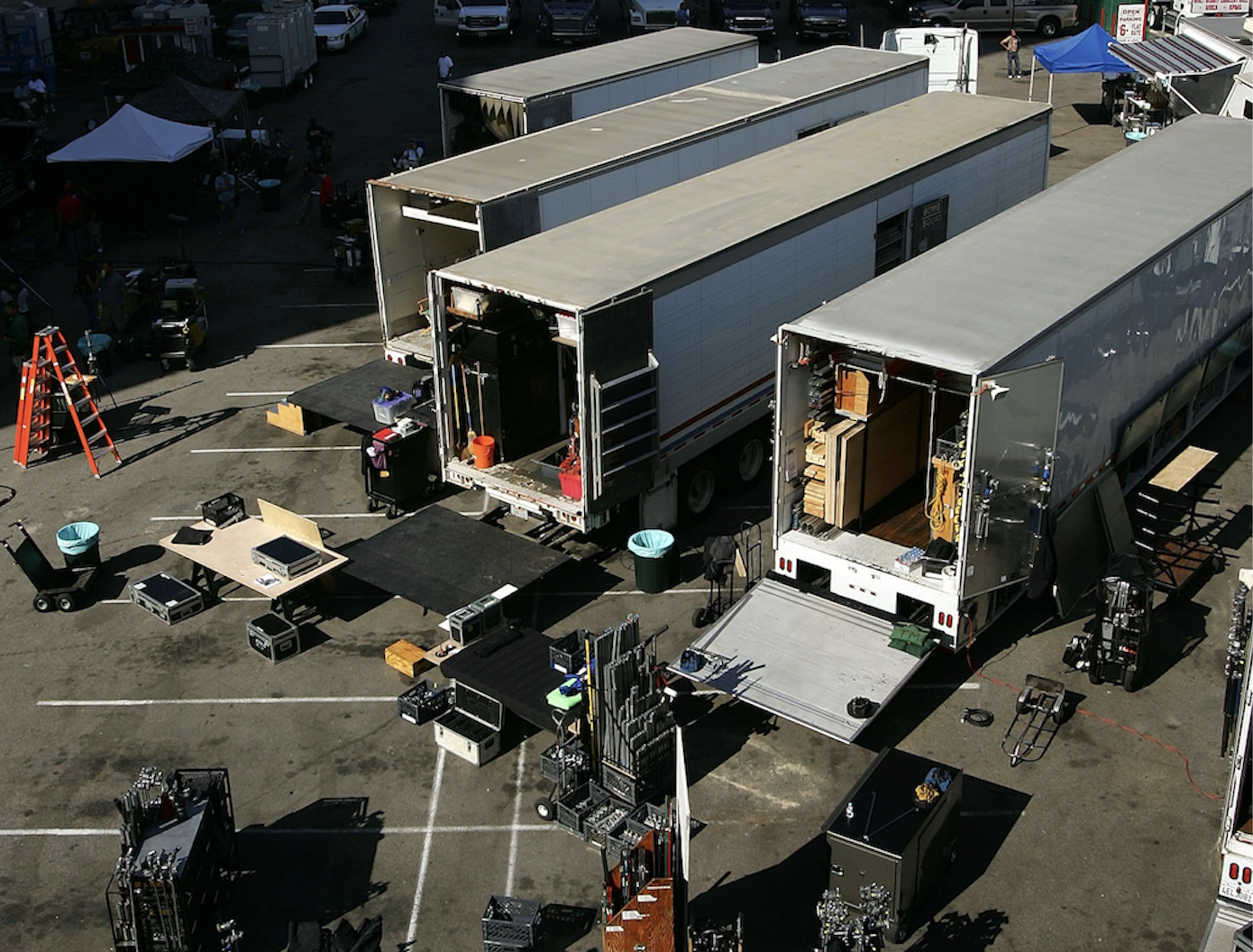
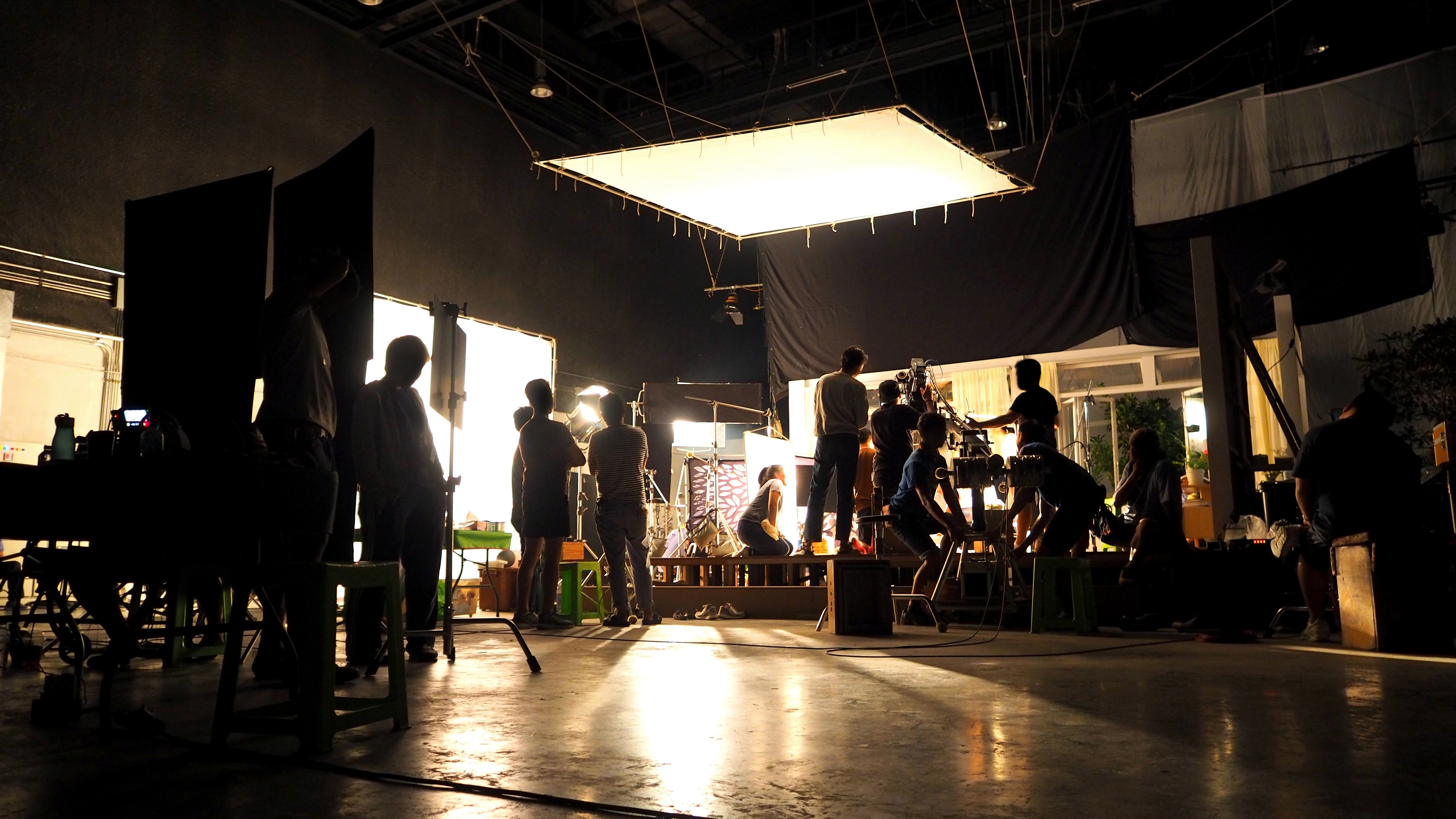
Part army, part circus, freelance film crews mobilise to set up base after little more than a few phone calls.
They swiftly begin sourcing and building everything they need to realise the script – be it camera rigs, prosthetic noses, virtual environments or, increasingly, AI assets.
This production sprint carries a cost: rapid consumption that generates carbon emissions rarely seen on‑screen.
Emissions accumulate across the production timeline to form a production’s overall carbon footprint.
Screen industry organisation BAFTA Albert sourced voluntarily shared data from more than 2,500 UK productions over two years, with alarming results.
Arts & Culture
Heated Rivalry is everywhere (except it's not)
They estimate that travel and transport comprise 65 per cent, and energy use contributes 21 per cent of the total average UK production’s footprint.
To make those figures tangible, if a US blockbuster averages 3,370 tonnes of CO2 emissions, then the travel, transport and energy component could be estimated at 2,560 tonnes.
That's equivalent to one car circling the globe some 335 times.
So, we can track a production’s fuel and energy use in kilowatt-hours and litres (respectively), then convert into CO₂ using recognised emissions factors.
However, the embodied carbon in materials used in the creative process is far more complex to quantify.
Sources, material types and end‑of‑life treatment vary, making it difficult to convert all materials and waste used into carbon dioxide equivalent (CO₂e) – the standard unit used to measure and compare the total warming impact of various greenhouse gases.
To do this requires detailed life‑cycle data that filmmakers – whose priority is storytelling – often do not have the time, or the systems in place to track comprehensively.
But the amounts are significant – BAFTA’s report estimates some 800,000 tonnes of materials from UK productions were sent to landfill over the period – or roughly half the Melbourne Cricket Ground volume.
The art department, which creates the physical world of the story, is frequently the largest contributor to this waste generation overall.

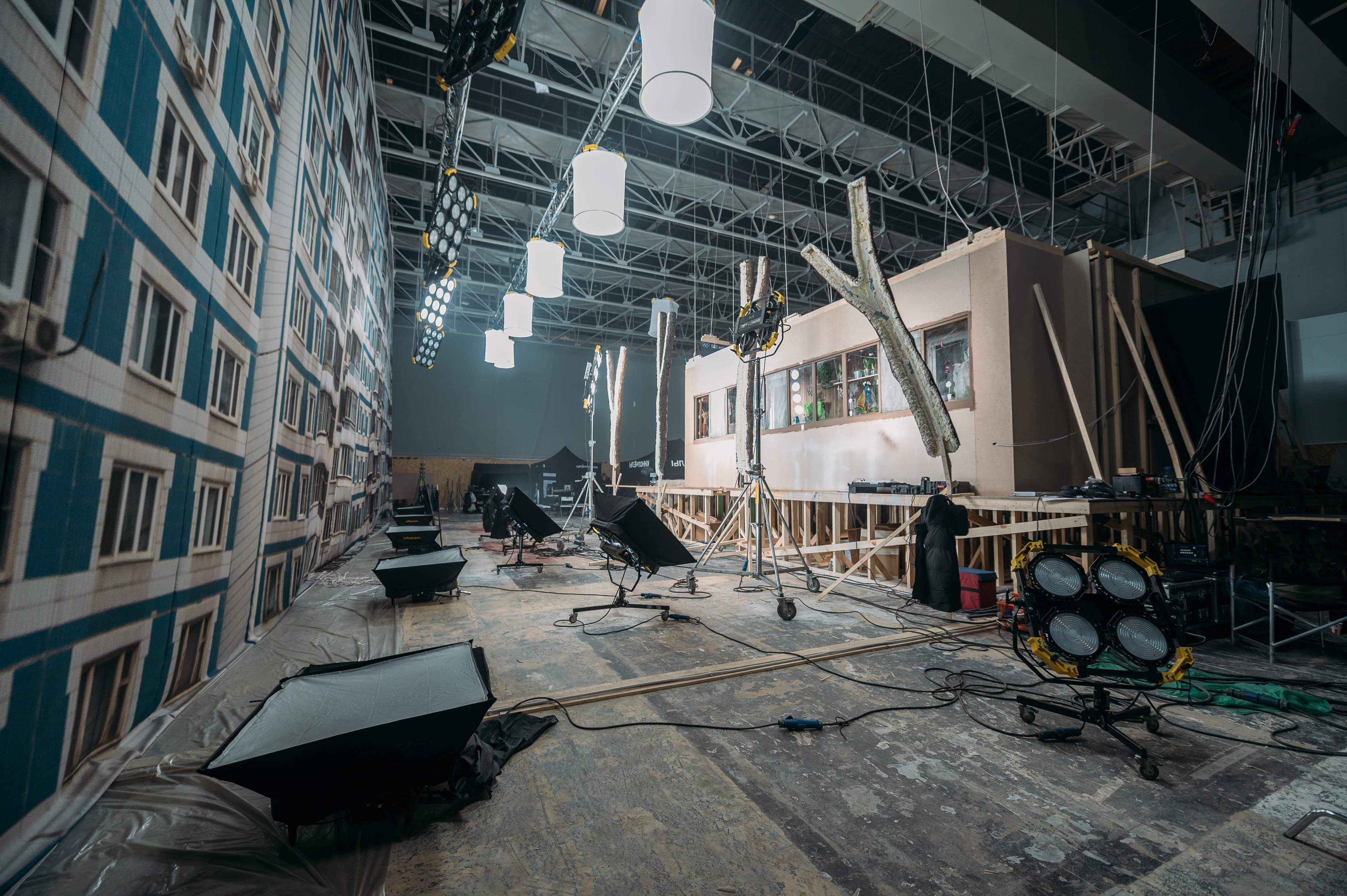
Led by the production designer, an art‑department construction team typically builds and dresses bespoke sets that bring the script to life.
These creations can be wondrous, but the material reality is often less lofty.
It may be a subterranean cave sculpted from polystyrene and fibreglass; a 1920s New York apartment simulated with MDF and imported rainforest timber; or a moody laneway built from vacuum‑formed PVC sheets.
Talented scenic artists then finish these sets using a smorgasbord of compounds to create cinematic colours and textures.
This less-than-ideal use of materials is not born of ignorance.
Workshop teams are driven by both the pursuit of great storytelling and beholden to the demands of visual excellence and total efficiency.
This means materials are often selected because they are affordable, proven to work and immediately available in reliable quantities.
Compounding the issue, a set decorator who might personally prefer to source second‑hand items can be required to purchase 20 identical desk lamps from a major global retailer to meet the creative brief.
To meet the tight schedule, they may also opt for express delivery, further increasing the item’s embodied carbon.
These lamps, like many similar purchases, may then be cast aside when the director calls cut.

Environment
The tech turning farm waste into furniture
So why can’t the sets and their contents simply be reused on another production?
Tight budgets and schedules, intellectual property concerns, design specificity and expensive storage often consign them to landfill once filming finishes.
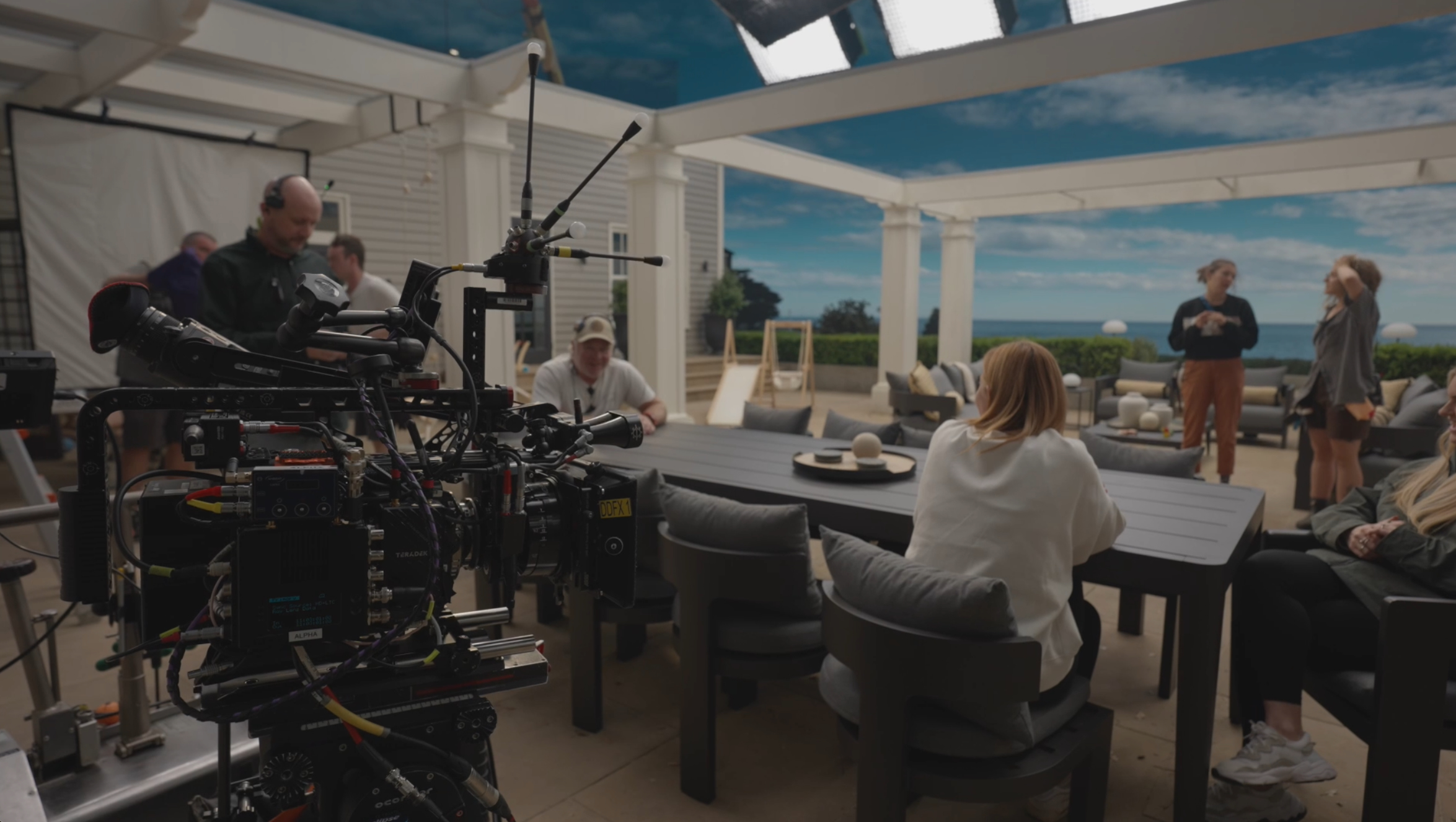
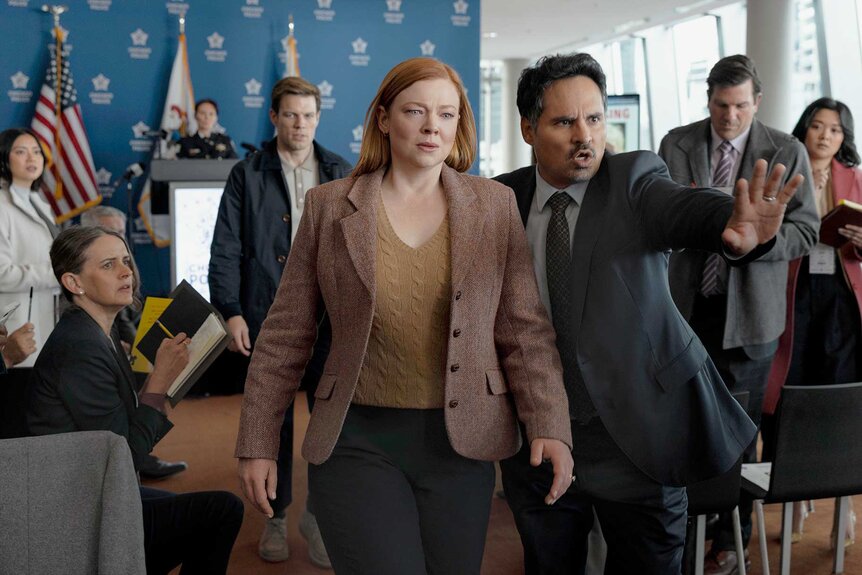
The sustainably ambitious All Her Fault (NBC Universal, Carnival Pictures, Matchbox Pictures), filmed locally at Melbourne’s Dockland studios, illustrates how reducing emissions from travel, transport and energy can work in practice.
Beyond those broader emissions savings, the art department assumed responsibility for reducing materials and waste by adopting a hierarchical decision-making framework grounded in circular‑economy principles.

Could an item or material be hired, produced locally, sourced second‑hand, carry certification (e.g. Forest Stewardship Council timber) or be of sufficient quality for reuse after the production?
On wrap, disposal then followed the same logic: could items be ethically donated or treated in such a way that maintained their value and functionality to be put back into the world as appealing second-hand items?
This type of questioning led to practical trials for the set‑building team, who explored replacing conventionally used materials with a locally‑produced panel made from post-industrial waste known as Saveboard.

Health & Medicine
Daily decisions can reduce the carbon footprint of our health sector
The approach was based on the logic that the whole set could be pulped and remade into new panels at the end of use, regardless of its surface treatment.
The trial proved viable, and then, building on this work, other productions have since iterated with similar materials and explored further possible circular building methods.
Electric vehicles, renewable electricity, biofuels like hydrotreated vegetable oil, LED lighting, and material-tracking are available and proven to deliver significant emissions savings.
However, implementing these technologies and practices across an entire screen production requires a shift in leadership mindset.
A firm commitment to decarbonisation, supported by appropriate budgeting, timelines, and investment in equipment, skills, and processes are essential from the outset.
In recent years, many larger content producers and distributors have published public sustainability statements, but outlines for near-term tangible action vary – for example, comparing Paramount’s commitments with those of NBCUniversal, the makers of All Her Fault.
Real change on any production relies on top‑down leadership, adequate resourcing and the commitment of each department head and crew member.
By embedding sustainability into filmmaking from the outset, meaningful shifts are underway as the urgency of the climate crisis can no longer be sidelined.
More information on sustainable action behind the scenes of 'All Her Fault'.
Read about the Master of Design and Production at the Victorian College of the Arts.