

What it’s like to do your PhD with a future Nobel Prize winner
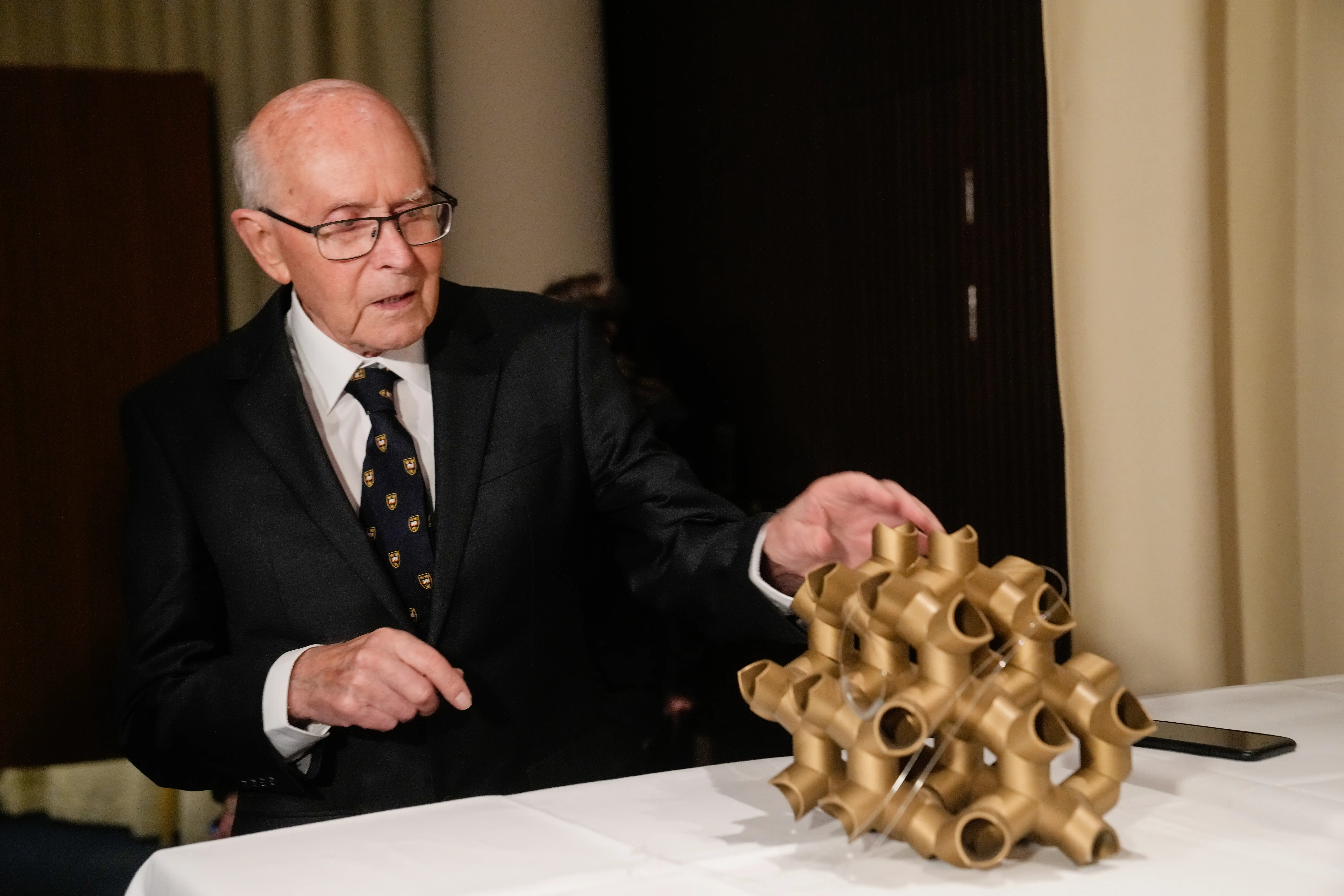
‘Inventive’, ‘rewarding’, ‘uncharted’. Professor Richard Robson's former PhD students knew they were part of something special, well before he was awarded the 2025 Nobel Prize in Chemistry
Published 10 December 2025
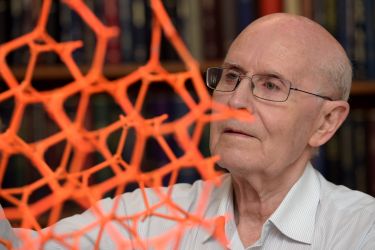
Professor Richard Robson was one of three scientists who won the 2025 Nobel Prize in Chemistry for inventing a new kind of solid called metal-organic frameworks (MOFs), remarkable crystalline structures with seemingly limitless potential.
But he didn't do it alone.
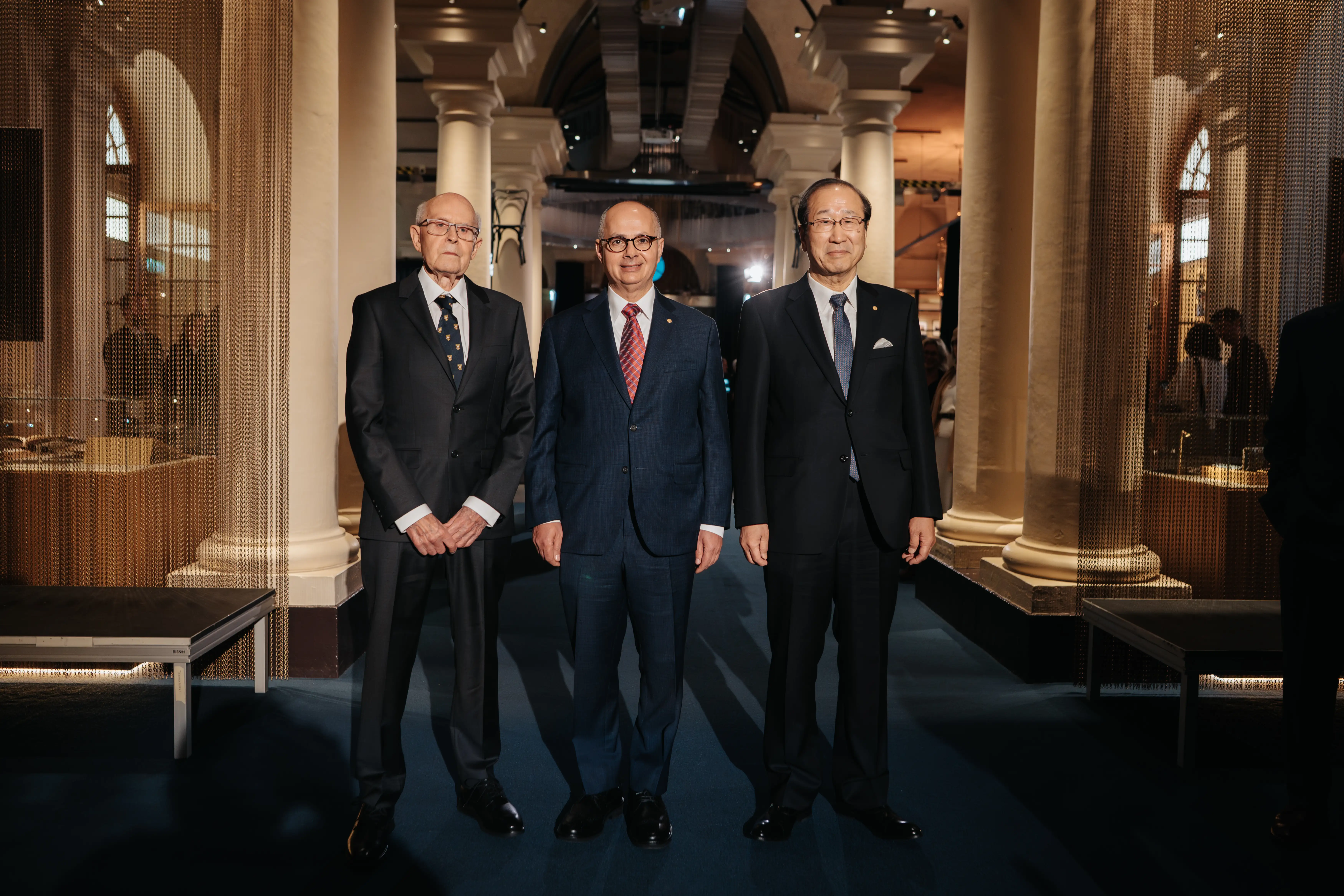
Colleagues like Professor Brendan Abrahams and the late Professor Bernard Hoskins were long-time close collaborators.
But over the years, Professor Robson supervised and supported a succession of PhD students, many working on various problems and opportunities in MOFs.
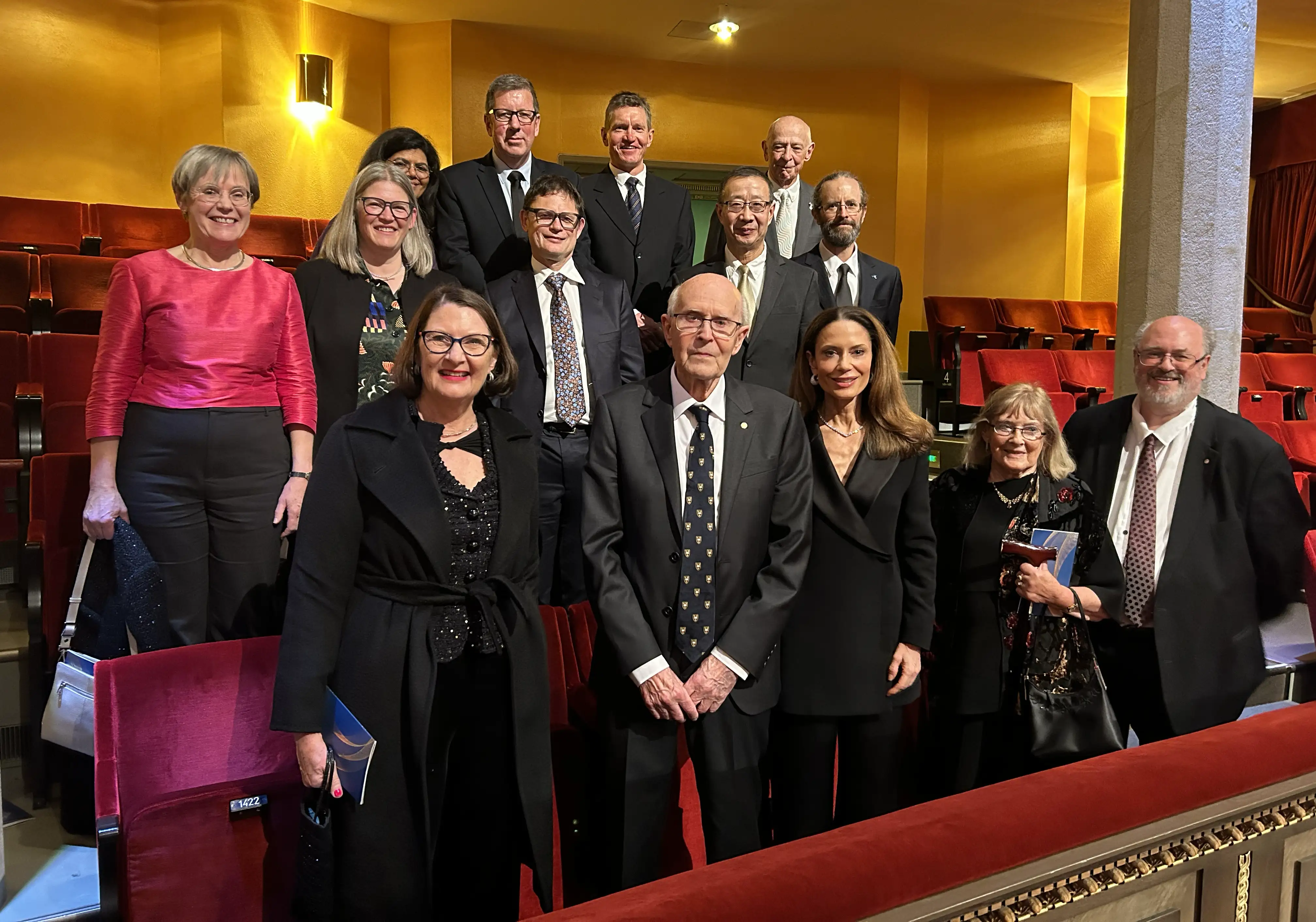
Some of Professor Robson’s former students have travelled to Stockholm to join the celebrations.
They sent us some of their reflections on their time working with Professor Robson and their feelings about his historic award.
Professor Stuart Batten
Professor of Chemistry, Monash University
PhD: Making coordination polymers (MOFs) of two trigonal ligands – tricyanomethanide and tripyridyltriazine
Your PhD in one word: Uncharted
We felt like early explorers, with a whole continent of chemistry unexplored, just waiting for someone (i.e., us) to walk through the landscape and see what we could find.
Every reaction, every crystal structure was like unwrapping a Christmas present – you never quite knew what it was going to be, though you knew what you hoped it would be.
I think one of the big takeaways from Richard’s award is the value of fundamental blue-sky research and the synergy of teaching and research.
This whole field started with Richard building models for teaching and allowing his imagination to wander. There were no thoughts of how to create a new gadget or the next big gizmo, just a curiosity about some fundamental ideas of chemistry.
What if I tried this? Would it work like it should in my head?
Thirty-five years later, there are numerous applications and startup companies addressing major world problems with this technology, but it started with a simple, fundamental question. Would the molecules behave like I think they should?
New applications and new industries first need new knowledge.
Sciences & Technology
The Nobel Prize winner who built a whole new field of chemistry
Professor Michaele Hardie
Professor of Supramolecular Chemistry, University of Leeds
PhD: Understanding how MOFs made from metal cyanides can be prompted to change structure while staying as crystals
Your PhD in one word: Inventive
Working in Richard and Bernard's group was a really supportive and fun experience – it was a great group of people.
I think we were aware that what we were doing was pretty new and exciting. The work itself was really varied, so it always felt like you were learning.
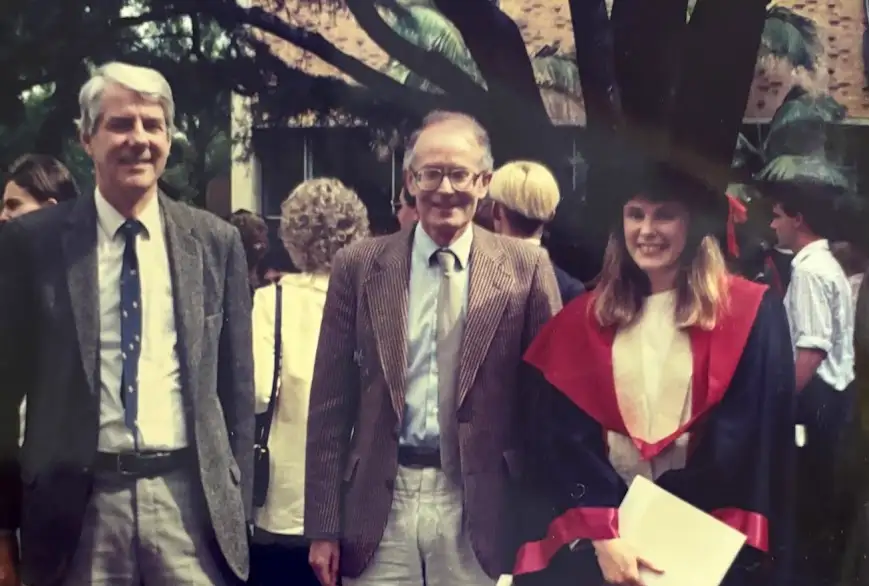
 Back, from left: Michaele Hardie, Brendan Abrahams, Martin Grannas, Richard Robson, Nikki Scarlett. Front, from left: Dianne Michail, Stuart Batten, Elizabeth Sutherland (now Houlihan), Bernard Hoskins. Picture: Supplied
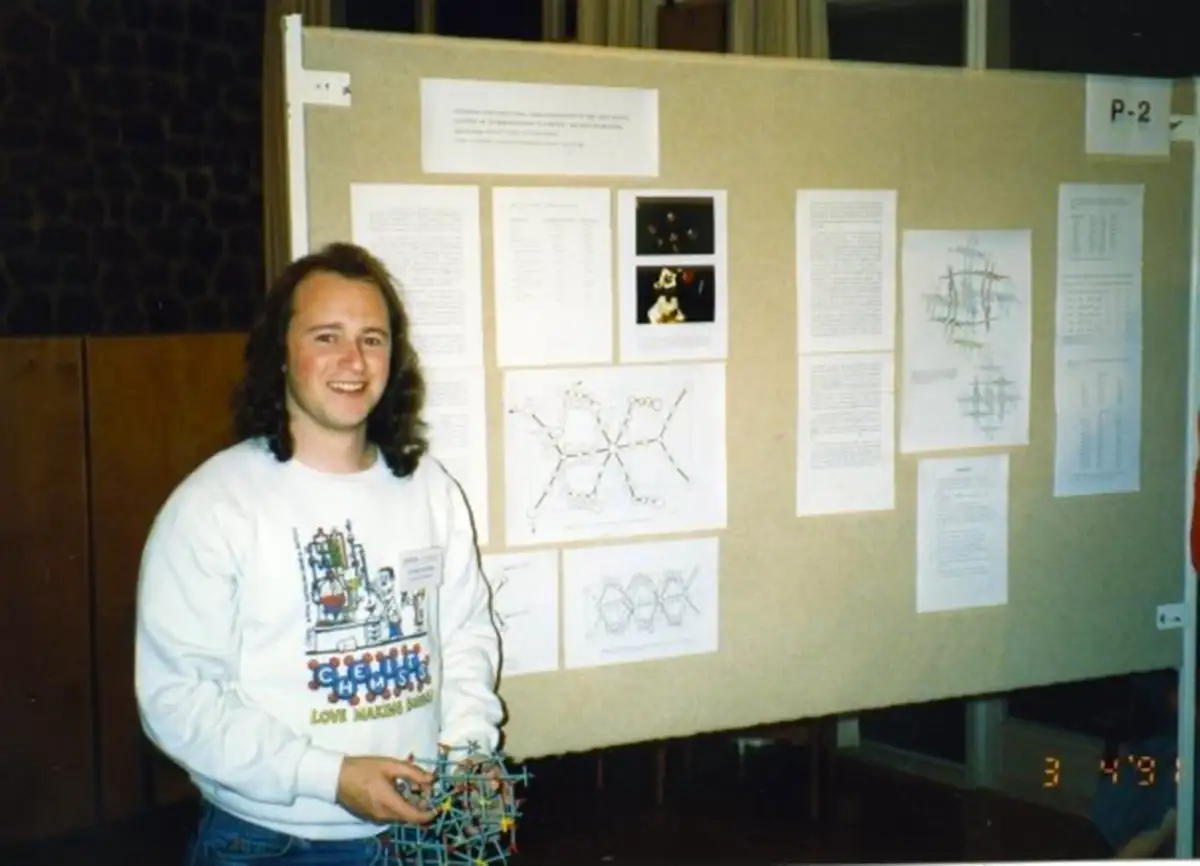 Stuart Batten as a student felt like an "early explorer". Picture: Supplied
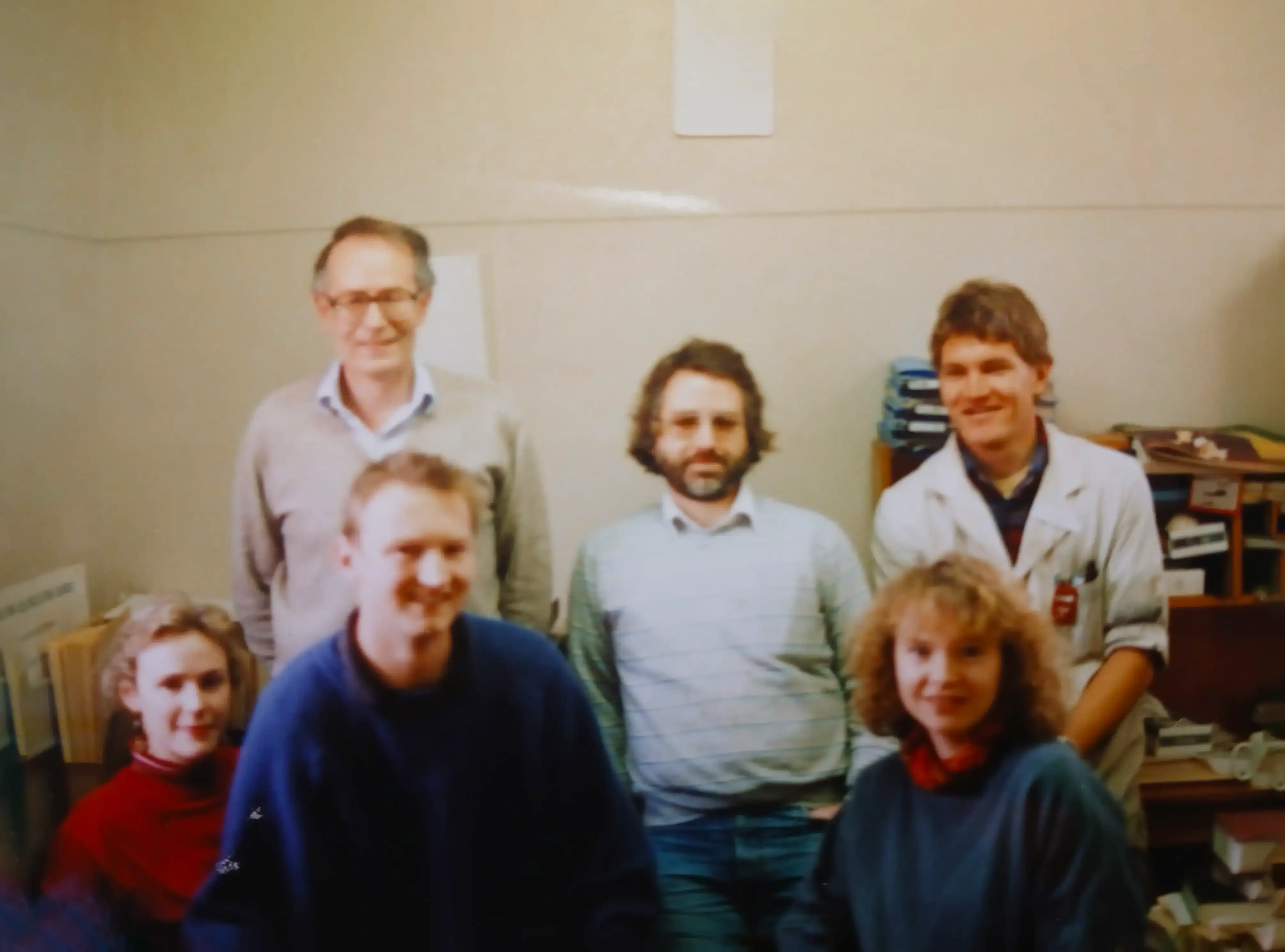 Back row, from left: Richard Robson, Dr Robert Gable (post-doctoral researcher), Martin Grannas (in the labcoat).
Front row, from left: Christine Mckenzie, Paul Smith (BSc Hons. student), Jennifer Wilson (PhD student). Picture: SuppliedBack, from left: Michaele Hardie, Brendan Abrahams, Martin Grannas, Richard Robson, Nikki Scarlett. Front, from left: Dianne Michail, Stuart Batten, Elizabeth Sutherland (now Houlihan), Bernard Hoskins. Picture: SuppliedStuart Batten as a student felt like an "early explorer". Picture: SuppliedBack row, from left: Richard Robson, Dr Robert Gable (post-doctoral researcher), Martin Grannas (in the labcoat).
Front row, from left: Christine Mckenzie, Paul Smith (BSc Hons. student), Jennifer Wilson (PhD student). Picture: Supplied
Back row, from left: Richard Robson, Dr Robert Gable (post-doctoral researcher), Martin Grannas (in the labcoat).
Front row, from left: Christine Mckenzie, Paul Smith (BSc Hons. student), Jennifer Wilson (PhD student). Picture: SuppliedBack, from left: Michaele Hardie, Brendan Abrahams, Martin Grannas, Richard Robson, Nikki Scarlett. Front, from left: Dianne Michail, Stuart Batten, Elizabeth Sutherland (now Houlihan), Bernard Hoskins. Picture: SuppliedStuart Batten as a student felt like an "early explorer". Picture: SuppliedBack row, from left: Richard Robson, Dr Robert Gable (post-doctoral researcher), Martin Grannas (in the labcoat).
Front row, from left: Christine Mckenzie, Paul Smith (BSc Hons. student), Jennifer Wilson (PhD student). Picture: Supplied1 / 3
As well as the science, I have really fond memories of roof lab tea breaks, inorganic section pub lunches and the forest of structural models hanging from the ceiling in Richard's office.
Working with Richard and Bernard was where I learned to be a scientist – the thought processes, the creativity, and most importantly, the scientific rigour.
And I still use Richard's gentle enquiry of, "So what were you trying to say with this sentence?" when I’m discussing report drafts with students.
Dr Tim Hudson
Lighting specialist and former Senior Research Fellow
PhD: The design, synthesis and characterisation of coordination polymers using oxyanions
Your PhD in one word: Passion
I could not have asked for a better supervisor. His contagious enthusiasm and the depth of his knowledge made it a thoroughly enjoyable experience.
Sciences & Technology
Standing up for science
He instilled in me a great passion for chemistry, particularly synthesising and elucidating the structures of never-before-seen compounds.
I have always been inspired by his passion and dedication for science.
Richard receiving a Nobel Prize means a great deal to me and I am thrilled that he is getting the recognition he thoroughly deserves.
Dr Dianne Michail
Key Account Manager, Amcor
PhD: Microporous, PTS-related polymeric solids
Your PhD in one word: Privilege
In the early 1990s, I had the great privilege of undertaking my PhD studies under Professor Richard Robson.
He's a humble visionary whose ideas, razor-sharp intellect and tireless work ethic helped establish foundations for fields that are now driving solutions to today's (and tomorrow's) environmental and energy challenges.

His pioneering work has also created meaningful employment for countless scientists and professionals working in these areas.
Throughout my studies, I was fortunate to benefit from Richard's exceptional guidance, patience and wisdom.
The outcomes of those years continue to be an immense source of pride for me, even 30 years on, as is Richard's receiving the Nobel Prize.
Richard's significant contributions and achievements are a win for every Australian.

Sciences & Technology
The great mystery of interstellar chemistry
Dr Martin Grannas
Senior Product Technologist, Puma Bitumen Australia
PhD: Complexes of tetranucleating macrocyclic ligands, and later, Postdoctoral researcher working on MOFs
Your PhD in one word: Rewarding
I was delighted and excited to learn about Richard's Nobel Prize win. It gives international recognition to his pioneering work that opened a whole field of chemistry.
It makes me feel a small part of chemistry's history.
It was a highly enjoyable and rewarding time studying under Richard. He was always very interested in what was going on, dropping by at least daily to discuss the work and offer advice.
It never felt pushy, he was genuinely curious.
Richard showed with our work that often creative ideas can be made real.
Professor Christine McKenzie
Professor, University of Southern Denmark
PhD: Synthesising new compounds where two transition metal atoms are positioned in close proximity to catalyse reactions that a single metal centre could never achieve
PhD in one word: Diligence
I’m thrilled that a quiet achiever has been recognised.
Richard was deeply engaged in my work, he followed my progress daily, often looking over my shoulder.
I remember him early on saying he could "see the bonds forming" in my reaction to encourage me. For a split second, I thought he meant it.
Health & Medicine
Peter Doherty, 20 years after the Nobel Prize
His steady involvement ensured the research stayed on track. His ideas were independent of trends – we weren't racing against other groups.
We also weren’t just following recipes. We were designing and forcing atoms to bond in ways that had never been achieved before.
That was only the beginning; uncertainty was part of the process.
We had to determine whether we had made the molecules we intended or, more often than not, something unexpected.
So, we were detectives, determining structures, probing reactivity and uncovering physical properties.

Dr Damian Slizys
Director of Intellectual Property at Telix Pharmaceuticals Ltd and founder of life sciences investment fund Kobold Capital
PhD: The use of flexible components in MOFs
PhD in one word: Serendipitous
The first inkling I had that Professor Robson had won the Nobel Prize was when I was chatting with a group of friends on my phone on Zoom and a news alert popped up at the top of the screen.
I was blown away.
My family said that I started to walk around the house trying to explain it to them, but that I was practically incoherent. I didn't turn off the Zoom, so my friends had no idea what the hell was going on.
Sciences & Technology
The changing face of science
I was a bit of a mess. I still am a little.
It's easy to look at my career and think that I moved away from chemistry, but that isn't the case. It underpins my understanding of the patents that I deal with at Telix and the companies that I invest in through my fund.
It's one of the strengths that I have brought to every role in my professional career.
I hope Richard’s win gives people who study, teach and research chemistry in Australia a bit of a boost. We aren't as sexy as the life sciences – but occasionally we can give them a run for their money.


