
Sciences & Technology
A world-first clinical trial is studying exactly what works for IBS (and how)



A new study finds night-shift workers experience gut disorders at far higher rates than most of us

Published 7 January 2026
Every night, millions of people work hard to keep our essential services running – treating patients, responding to emergencies, operating transport networks and maintaining 24-hour industries.
While society depends on this overnight workforce, our new research shows many are paying a hidden biological cost. And it’s all to do with our guts.

Our large cross-national study spanning the UK and Australia found that people who routinely work night shifts face dramatically higher rates of irritable bowel syndrome (IBS) and functional dyspepsia (FD).
In fact, we found night-shift workers experience gut health issues at three to five times higher than the general population.
These problems are part of a group known as disorders of gut–brain interaction, where symptoms arise from the complex communication pathways between the gut and the brain.
Sciences & Technology
A world-first clinical trial is studying exactly what works for IBS (and how)
For the 392 night-shift workers we surveyed across Australia and the UK the rate of gut issues was far greater than we expected.
Twenty one per cent met the criteria for IBS, 30 per cent met the criteria for functional dyspepsia and nearly one in four of those affected had both conditions at the same time.
If we compare these statistics to the general population, whose rates for IBS sit at 4 per cent and rates of FD sit at 7 percent – the results are alarmingly high.

On top of this, more than half the people we surveyed said night shifts made their gut symptoms worse, and 16 per cent had considered leaving night work altogether.
For healthcare, emergency services, hospitality, security, mining and manufacturing – all industries where staff retention is already challenging – this is a substantial issue.
Human biology is tuned to a day–night cycle.
Overnight, our digestion is naturally slower; hormones and gut motility – the muscular contractions that move food through the body – follow a circadian pattern, and our microbiome operates on a 24-hour rhythm.

Politics & Society
Mapping the hidden lives of Melbourne’s night workers
Night-shift work disrupts our systems in several ways:
Circadian misalignment, where gut processes operate ‘out of time’
Altered gut motility, contributing to bloating, constipation or nausea
Increased visceral sensitivity, making normal gut sensations feel painful
Changes in gut barrier function and microbiota
Poor sleep, which heightens pain perception and stress signalling
Irregular eating patterns, with snacking at night more common than structured meals
These mechanisms create an ideal environment for IBS and FD symptoms to emerge and escalate.
For rotating shift workers – those who switch between day and night – it can be even worse, likely because their biological clocks never have the chance to adapt.

IBS and FD affect far more than digestion – they can interfere with concentration, sleep, social life, mental health and job performance, potentially leading to significantly worse depression, anxiety and stress, more medication use and greater food avoidance.
Our research shows that workers who meet diagnostic criteria for IBS or FD can experience overall lower quality of life scores than those without.
So it’s clear that the effect on their gut is felt well beyond the hours night-shift workers spend on the job.

Arts & Culture
The microbiota and our mental health
And it’s not just what night-shift workers eat (or don’t eat). When we looked closely at their dietary patterns – including energy intake, macronutrients, fibre and even fermentable carbohydrates (FODMAPs) – there were no meaningful differences between people with and without gut disorders.
So the issue may lie less in what people are eating, and more in the broader physiological load of working against the body’s natural rhythm.
Nearly 40 per cent of night-shift workers in our study meet criteria for one or both gut conditions, which highlights a serious gap in occupational understanding and support.
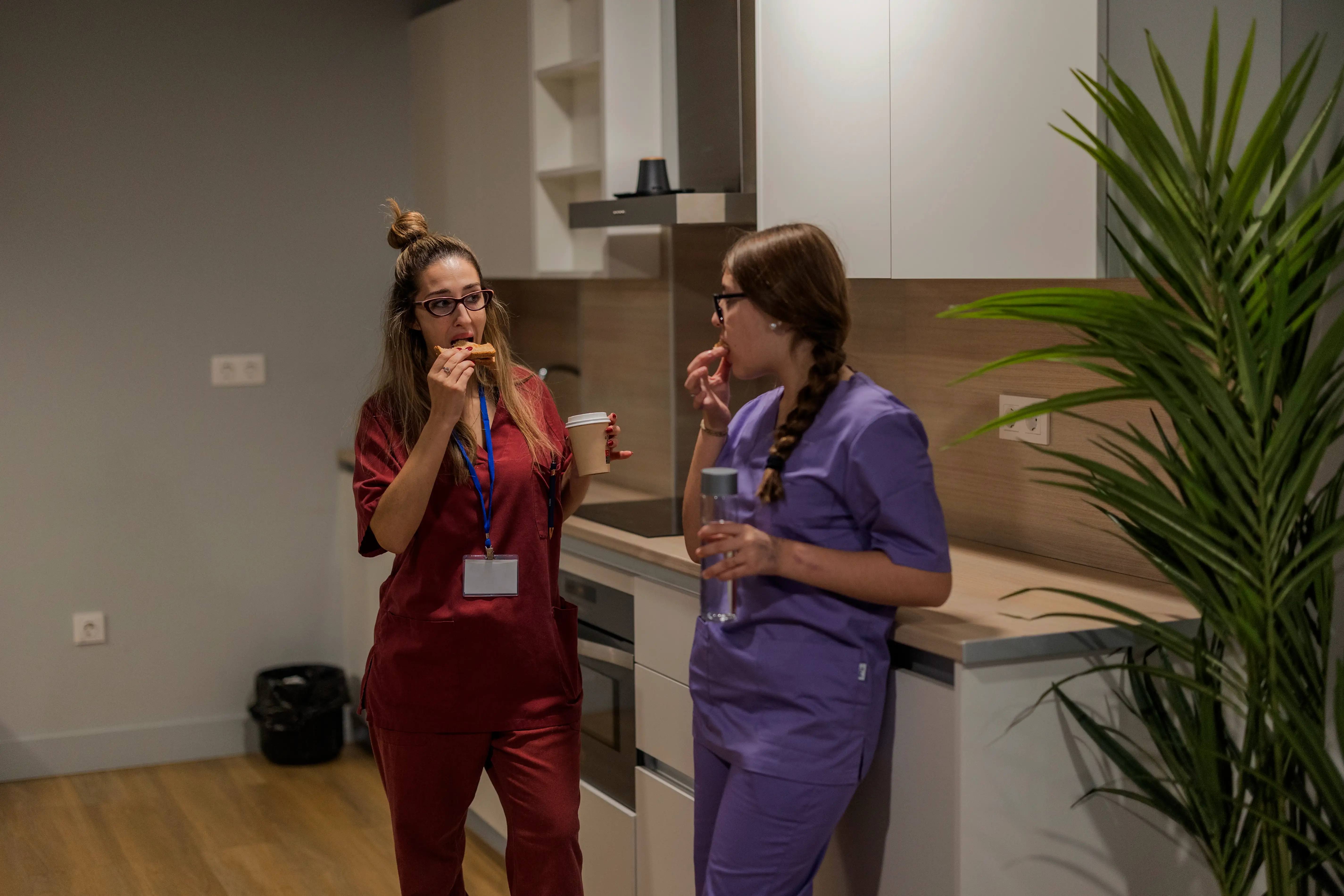
Our study suggests that we need integrated care to address both diet and the gut–brain axis. This could include things like psychological strategies for gut-focused anxiety, evidence-based dietary guidance, tailored advice on meal timing, as well as stress and sleep support.
At work, protected break times, access to suitable food and rosters that reduce frequent flipping between day and night shifts may also help to provide necessary support.
This is the first study to use contemporary diagnostic tools to understand gastrointestinal disorders in night-shift workers across a range of industries.

Sciences & Technology
What’s behind gluten sensitivity when coeliac tests are negative?
It clearly tells us that gut problems in people who work nights are common, significant and often overlooked.
The next step is developing targeted interventions – from chronobiology-informed meal planning to psychological support and workplace policy changes – so that people working through the night are better supported.
Because while many of us sleep, night-shift workers keep the world moving, and their guts shouldn’t have to pay the price.