


Business & Economics
The power of the Indigenous business sector



Indigenous businesses employ 135,000 people and provide one in five jobs for Aboriginal workers – but is government procurement policy missing the mark?
Published 26 February 2026
In contemporary Australia, jobs are a vital socio-economic vehicle. Having a job brings benefits to people and their families beyond the simple economic transaction of financial reward for effort.
For Aboriginal and Torres Strait Islander people, their removal from Country, disenfranchisement from traditional economic practices and increasing dependence on the imposed capitalist economy has established a hierarchy of labour in Australia that places Aboriginal and Torres Strait Islander people at the bottom of the ladder.

Five years ago, the Federal Government signed the National Agreement on Closing the Gap, setting a target to increase the proportion of employed Aboriginal and Torres Strait Islanders aged 25-64 to 62 per cent by 2031.
If we look at the latest data (2021), this measure is at 55.7 per cent, with 6.3 percentage points to reach this target in the next five years.
Our latest Snapshot report shows that the economic and entrepreneurial strength of Indigenous-owned businesses and corporations across Australia is a great opportunity to close this gap.
Since 2021, the Dilin Duwa Centre for Indigenous Business Leadership has partnered with the Australian Bureau of Statistics (ABS) and Indigenous data custodians to compile annual statistics to understand the Indigenous business ecosystem.
Business & Economics
The power of the Indigenous business sector
The Indigenous Economic Power Project has subsequently led to the compilation of a unique database of businesses and corporations listed on Indigenous registries and those owned by Indigenous people that self-identify in census or Centrelink records.
Alongside colleagues from the Melbourne Institute and the University of Queensland, we used that data to develop Snapshot 4.0, which focuses on the role the ecosystem plays in Indigenous employment and the impact of the Indigenous Procurement Policy.
In 2021-22, the Indigenous business and corporation ecosystem employed 135,733 nationally. This is more than some of Australia’s big banks – Westpac, NAB and CommBank – combined.
Of that workforce, one in three are Aboriginal and Torres Strait Islander, an estimated 46,718 employees.
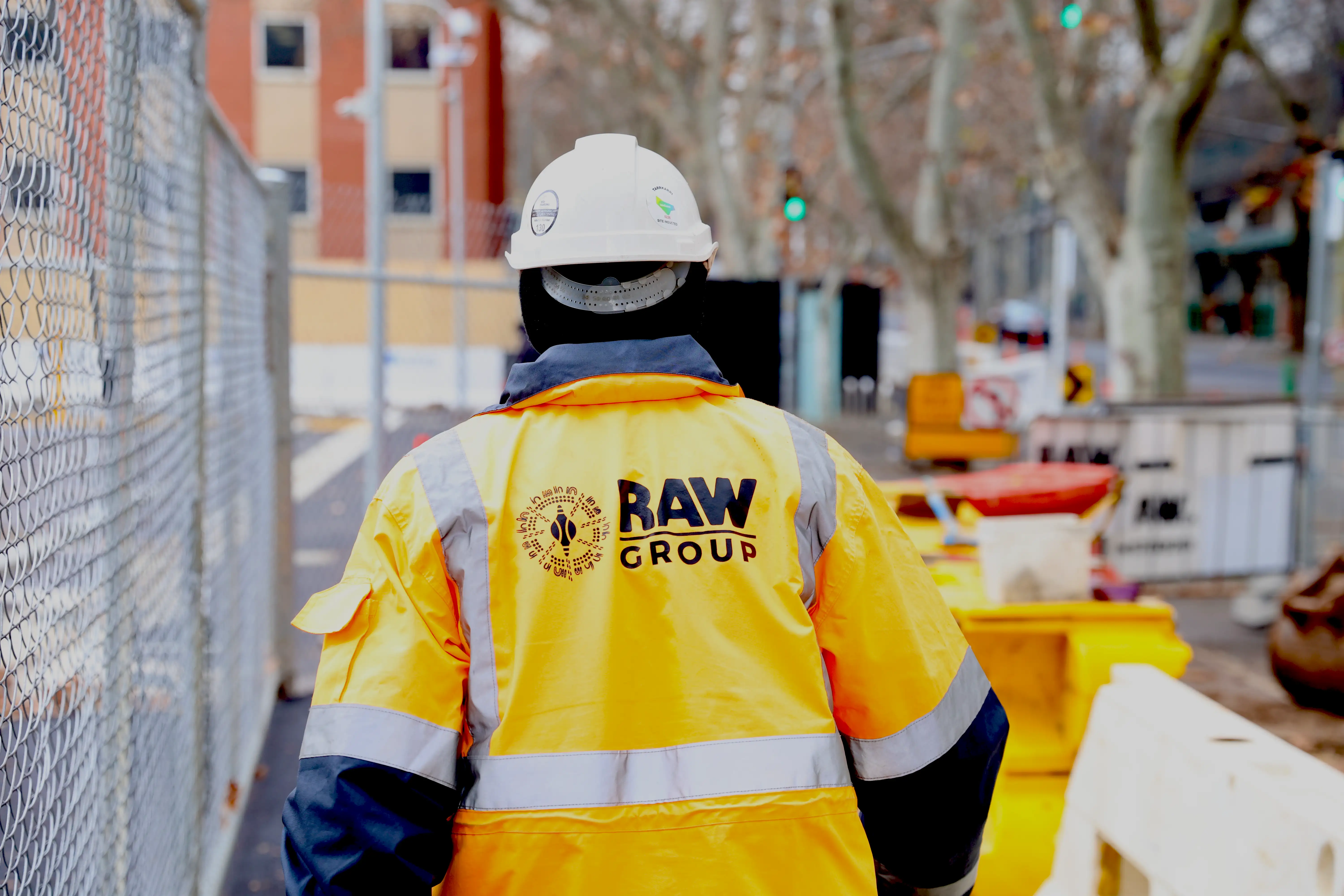
Total employment within this ecosystem represents 20 per cent of employed Aboriginal and Torres Strait Islanders across the country.
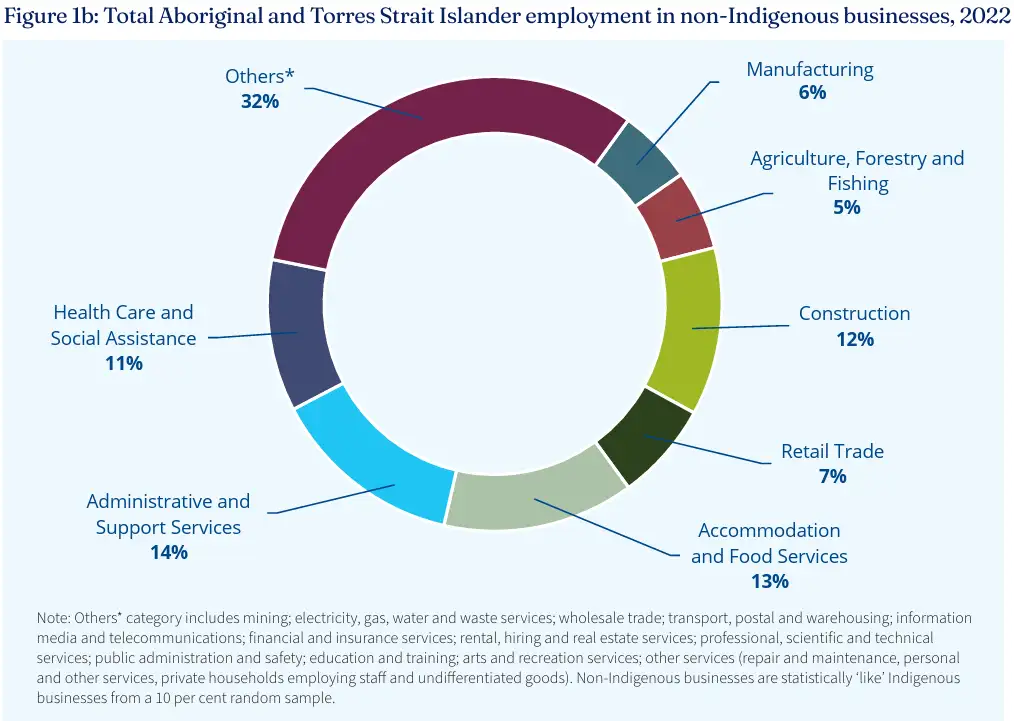
Compared to the non-Indigenous business sector, the Indigenous ecosystem employs Aboriginal and Torres Strait Islander people at 12 times the rate – one in three workers are Aboriginal and Torres Strait Islanders, compared to one in 36.
It’s a contribution that becomes even more pronounced when you consider Indigenous businesses and corporations make up less than one per cent of total Australian businesses trading today.
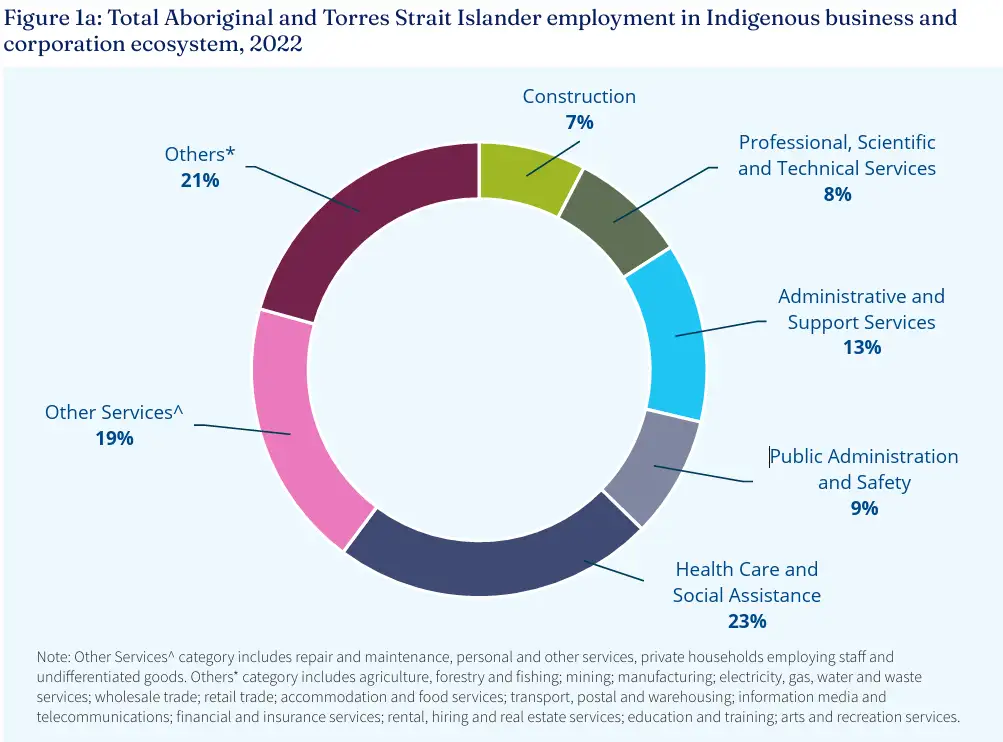
Within the ecosystem, the biggest employers of Aboriginal and Torres Strait Islander workers are health care and social assistance, administrative and support services (includes hiring, building, cleaning and gardening services) and public administration and safety (includes government program delivery and community services).

Business & Economics
Closing the gap in the Indigenous business sector
On average, Indigenous businesses and corporations pay their Aboriginal and Torres Strait Islander employees around seven per cent more than non-Indigenous firms.
They’re also more likely to offer full-time and higher skilled jobs, even when Indigenous and non-Indigenous workers have similar work resumes.
This is particularly true for Aboriginal and Torres Strait Islander women in the workforce.
What’s more, 65 per cent of the jobs available in the Indigenous-owned ecosystem are in rural and regional areas, allowing people to work while living on Country.
Introduced in 2015 by the Abbott government, the Indigenous Procurement Policy (IPP) seeks to stimulate entrepreneurship by setting annual targets for the volume and value of contracts awarded to Indigenous businesses by the Commonwealth.
And the policy is meeting its objective.
Since its implementation, the average number of contracts won by Indigenous businesses and corporations more than doubled, rising from 3589 a year (between 2007/8 and 2014/15) to 8197 a year (2015/16 to 2018/19).
This is a big increase, but the overall numbers don’t show a reliance on government contracts across the ecosystem. Only four per cent of the total revenue generated by Indigenous business and corporations was through the IPP.
The IPP also seems to provide valuable experience to businesses on the rise, with many first-time recipients going on to receive larger contracts outside of the policy.
Our analysis of the IPP suggests that while it’s increasing the access Indigenous businesses have to government contracts, it cannot and should not, be relied upon as the only policy aimed at closing the employment gap.
When we compare both the awarding and value of contracts among Indigenous firms, we see that the biggest employers in the ecosystem are not necessarily bidding for, or being awarded, contracts through the IPP.
This is important – it speaks to the nature of procurement and the kind of outcomes that can be expected from this kind of policy intervention.
Businesses that work in sectors that draw a lot of government contracts, like construction or professional, scientific or administrative services, are most likely to secure contracts through the IPP.

Politics & Society
Going beyond healing to build Indigenous power
Firms in these sectors tend to be in the city, away from regional areas where almost two-thirds of Aboriginal and Torres Strait Islanders live – and where jobs are needed the most.
If closing the employment gap is an objective behind growing the Indigenous business and corporation ecosystem, then other means are necessary on top of the IPP, especially to grow the ecosystem in rural and remote areas.
Future snapshots will continue to focus analysis on understanding the outcomes of IPP including employment, but also business-level and community-level outcomes.
Like others in the sector, we have concerns over black cladding and the verification of a business’ ownership.

This snapshot shows that 29 per cent of the IPP spend went to businesses that are recognised as Indigenous for the purpose of the IPP but are not registered with Supply Nation (Australia’s largest directory of Indigenous businesses) or listed as corporations by the Office of the Registrar of Indigenous Corporations.
From July next year, the IPP is moving towards a system requiring 51 per cent Indigenous ownership, which raises questions around how 50 per cent Indigenous-owned businesses may be affected and possible changes to ownership.
Future snapshots will also focus on understanding how education can accelerate performance and individual talent in the ecosystem, as well as how the influence of female-run Indigenous businesses can drive employment for Indigenous women.